United Kingdom
Snowdonia
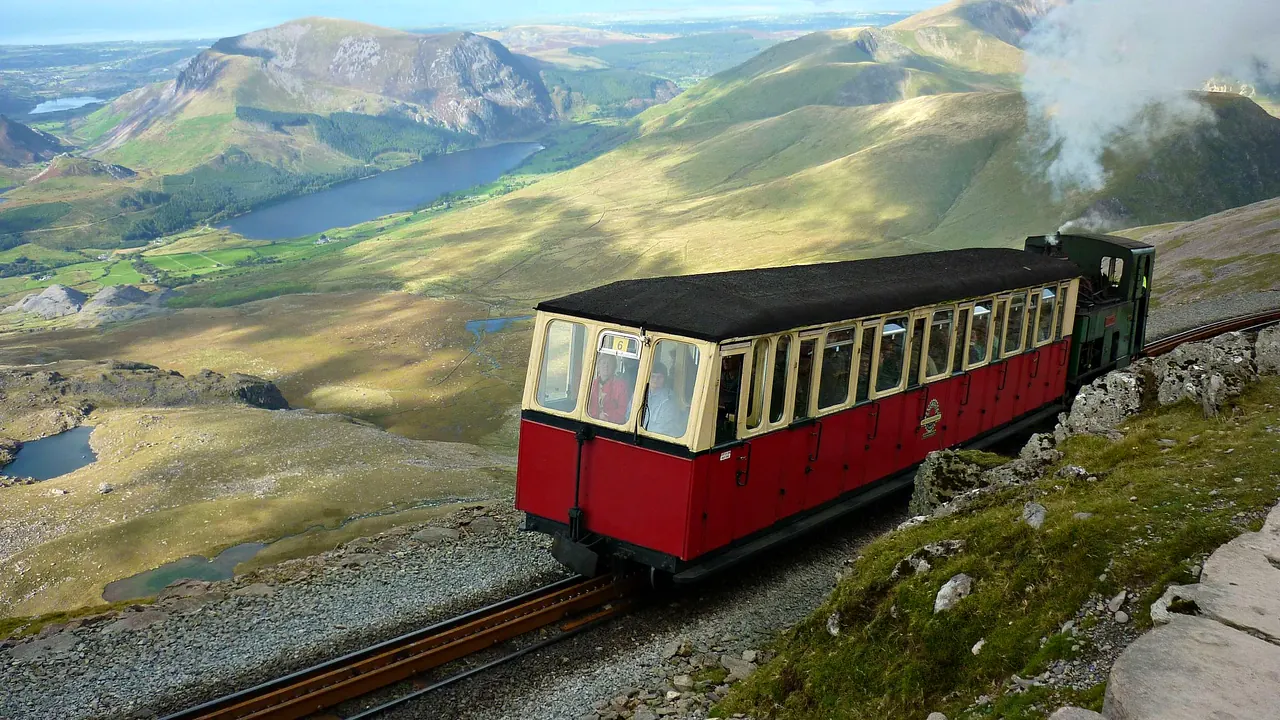
The Snowdon Mountain Railway near the summit of Yr Wyddfa
- Nature & outdoors85
- Day trips66
- Families56
Photo: Porius1, CC BY-SA 3.0, cropped
Match
39
Every category weighted equally
- Beach & sun39
- Culture & arts38
- Food & nightlife30
- Family trip47
- Outdoors50
- Relax & unwind41
- Shopping & style33
- On a budget40
Snowdonia in twelve categories
Our verdict on each, scored 0 to 100 against the same fixed benchmark cities, so a score means the same thing on every page.
Beaches & swimming. Scores 32 out of 100.
Food & drink. Scores 30 out of 100.
Culture & sights. Scores 50 out of 100.
Nightlife. Scores 7 out of 100.
Nature & outdoors. Scores 85 out of 100.
Day trips. Scores 66 out of 100.
Good for families. Scores 56 out of 100.
Getting around. Scores 40 out of 100.
Shopping & style. Scores 17 out of 100.
Affordability. Scores 42 out of 100.
Live music & performing arts. Scores 16 out of 100.
Wellness & relaxation. Scores 30 out of 100.
Snowdonia category by category
Beaches & swimming
32The park reaches the sea along Cardigan Bay, and the beaches there are better than many visitors expect. Harlech has miles of sand backed by dunes with the castle above, Black Rock Sands near Porthmadog is broad enough to drive onto, and Barmouth and Aberdyfi have long, gently shelving strands at river mouths. The Llŷn Peninsula just to the west adds sheltered coves.
The sea is the limit. Even in August the Irish Sea sits around 15-16°C, wind is common and settled beach weather comes in spells rather than seasons. Swimming is brisk and short, often in a wetsuit, and the mountain lakes appeal to cold-water swimmers more than to sunbathers. Beaches here are a fine-weather afternoon, not the reason for the trip.
Food & drink
30Eating here is mostly rural and hearty: pub dinners of Welsh lamb and slow-cooked beef, cawl in winter, bara brith and Welsh cakes in tea rooms, and walkers' cafés in Llanberis, Betws-y-Coed and Capel Curig serving big breakfasts before a climb. Small breweries supply many village pubs, and the coast brings mussels from Conwy and oysters and seafood from the Menai Strait.
A few country-house hotels and restaurants on the fringes cook seriously with local produce, but the range is thin, villages have only a handful of options and kitchens can close early outside summer. It suits visitors who want a good pub after a long day on the hills, not those planning a trip around food.
Culture & sights
50The heritage here is written into the landscape. Harlech Castle, one of Edward I's great fortresses and a World Heritage Site, stands on a crag above the dunes, and the native Welsh princes left smaller castles such as Dolwyddelan and Dolbadarn in the valleys. The slate industry shaped much of the north of the park, and its quarries, terraced villages and inclines form a World Heritage landscape; the National Slate Museum at Llanberis and the caverns at Blaenau Ffestiniog tell that story well.
The narrow-gauge railways, above all the Ffestiniog and the Snowdon Mountain Railway, are heritage in themselves, and Portmeirion, the Italianate fantasy village on the estuary near Porthmadog, is unlike anything else in Britain. Welsh is the everyday language in many villages, which gives the area a strong identity. Sights are spread out, though, and a visit is a few good stops rather than a dense itinerary.
Nightlife
7Evenings mean the pub. Llanberis, Capel Curig, Betws-y-Coed and Bala have inns where climbers and walkers dry out by the fire and compare routes, and on summer weekends these can be cheerful and busy. Beyond that there is very little: no clubs, few late bars, and most villages are quiet soon after closing time. People come here for early starts on the hills, and the nights follow from that.
Nature & outdoors
85This is Wales's great mountain landscape and one of the best walking and climbing areas in Britain. Yr Wyddfa, at 1,085m the highest peak in Wales and England, can be climbed by half a dozen paths, from easy railway-side routes to the Crib Goch knife-edge. Tryfan and the Glyderau above the Ogwen Valley offer some of the finest scrambling in the country, the cliffs of the Llanberis Pass and Idwal are historic rock-climbing ground, and in the south Cadair Idris and the rough Rhinogydd are quieter and wilder.
The offer goes well beyond walking. Coed y Brenin and the slate tips around Blaenau Ffestiniog are known for mountain biking, the dam-fed Tryweryn near Bala runs white water for rafting and kayaking, Llyn Tegid is good for sailing and paddling, and the Mawddach estuary has an easy, beautiful cycle trail. The weather is the catch: it is one of the wettest places in Britain, cloud often hides the summits, and winter brings real mountain conditions. Late spring and early autumn are often the best times.
Day trips
66The edges of the park hold some of the best outings in Wales. Caernarfon and Conwy, each with a great Edwardian castle and town walls, are under an hour from the northern valleys, and Beaumaris, the last of the group, lies across the Menai Strait on Anglesey along with island villages and coastal paths. Victorian Llandudno, with its pier and the Great Orme above it, makes a contrasting seaside day.
Closer to the park, Penrhyn Castle near Bangor and Plas Newydd on the Menai show the houses the slate and estate fortunes built, and Bodnant Garden in the Conwy Valley is one of Britain's great gardens. The Llŷn Peninsula offers fishing villages and pilgrim churches, and from the south of the park Machynlleth and the coast towns of mid Wales are within reach. The walled city of Chester is about an hour and a half by road or rail. A car makes it far easier to combine these.
Good for families
56Families with children who like being outdoors do well here. The steam railways are the obvious favourite, from the Snowdon Mountain Railway to the Ffestiniog and Welsh Highland lines, and the old slate workings around Blaenau Ffestiniog and Bethesda have been turned into underground tours, cavern adventure courses and some of the longest zip lines in Europe. Woodland adventure parks, lake paddling at Llanberis and Bala, and the big sands at Harlech and Black Rock fill out a week.
The difficulties are rain and distance. Wet days are common even in August, attractions are spread across the valleys, and the higher walks are for older, fitter children. Caravan parks and self-catering cottages make stays easy, and with a car and a few indoor options in reserve it works well.
Getting around
40Most visitors drive. Distances are short on the map, but the roads are narrow and winding, they clog on summer weekends, and trailhead parking at places like Pen-y-Pass and Ogwen fills early. There is useful public transport for those willing to plan: the Conwy Valley line runs down to Betws-y-Coed and Blaenau Ffestiniog, the Cambrian Coast line follows the sea past Harlech and Barmouth, and the Sherpa'r Wyddfa buses link the main paths around Yr Wyddfa. Main-line trains reach Bangor and Llandudno Junction on the northern edge. Villages are small and easy on foot, but getting between valleys without a car takes patience.
Shopping & style
17Shopping is small-scale and practical. Betws-y-Coed has a cluster of outdoor gear shops that walkers and climbers use, and around the park there are slate crafts, woollen mills selling blankets and Welsh tapestry weave, and the pottery associated with Portmeirion. Village galleries sell local landscape art. Beyond that it is gift shops and supermarkets, and nobody comes for retail.
Affordability
42The best things here are free: the mountains, paths, lakes and beaches cost nothing to use. Accommodation is where the money goes. Self-catering cottages and country inns in the popular villages are priced at British summer levels and book up for school vacations, and pub meals and attractions such as the zip lines and railways add up for a family. Campsites, bunkhouses and youth hostels are plentiful, so walkers on a budget can keep costs low, and spring and autumn are noticeably easier than high summer.
Live music & performing arts
16Live performance is mostly community-based and Welsh in character. Male voice choirs in the villages and slate towns often welcome visitors to their rehearsals, local eisteddfodau bring singing, poetry and harp competitions, and pubs sometimes host folk sessions. For theatre and concerts visitors go to arts centres in Bangor and Caernarfon or the large theatre in Llandudno, all outside the park. It is a modest offer, best for those curious about Welsh-language culture.
Wellness & relaxation
30There is no spa tradition here, and wellness means a handful of country-house hotel spas and small retreats offering yoga or massage. What the region does offer is calm: quiet valleys, stone cottages with log burners, and long days that end tired and early. Cold-water swimmers use the lakes and rivers, and a slow week walking and reading in a village such as Beddgelert or by the Mawddach can be deeply restful, but anyone wanting thermal baths or a proper spa will find little.
Where to stay in Snowdonia
For a first visit, most people stay in the north, where the highest mountains are. Llanberis sits at the foot of Yr Wyddfa, with the mountain railway, the slate museum and lake paddling close by, and its pubs and walkers' cafés suit climbers and active families alike. Betws-y-Coed, in the wooded Conwy Valley, is the more central and comfortable choice, with outdoor gear shops, a station on the Conwy Valley line and easy drives to Conwy and Caernarfon. Smaller Capel Curig puts serious walkers close to Tryfan and the Ogwen Valley.
Beddgelert suits a quiet stay, a stone village between the peaks and Porthmadog that works well for slow days of walking and reading. On the coast, Harlech and Barmouth give families wide sands, the Cambrian Coast railway and a gentler pace, with Black Rock Sands and Portmeirion nearby.
The south makes a good second visit. Bala, beside Llyn Tegid, is the base for sailing, paddling and rafting on the Tryweryn. Dolgellau, below Cadair Idris near the Mawddach estuary, suits quieter hill days and the estuary cycle trail. One base is enough for a week in either half, though a car makes it far easier to move between valleys.
When should you go?
Pick a month to see what it is like. The climate figures are measured averages, not a forecast.
Snowdonia in July
Daytime high, °C
Rainfall in the month, mm
The whole year
Shaded against this destination’s own year: the deepest cell is its best month for that figure and the palest its weakest.
Where the figures come from
Snowdonia's temperatures are measured 52 km from the centre, at Valley.
Snowdonia has no rain gauge within 25 km of the centre, so its rainfall comes from a gridded climate dataset read at the destination rather than from a gauge further away.
Temperature and rainfall are climate normals, averaged over the years shown. Snowdonia: 1991-2020 normals, Valley (51.8 km from centre).
Before you go
| Measure | Snowdonia |
|---|---|
| Official language | English |
| Currency | Pound Sterling (GBP) |
| Sockets | G230 V, 50 Hz |
| Driving side | Left |
| Time zone | UTC, UTC+1 in summer |
| Emergency number | 112 or 999 |
| Main airport | Liverpool John Lennon Airport (LPL)75 non-stop destinations |
| Public holidays this year | 8 days |
By the numbers
| Measure | Snowdonia |
|---|---|
| Swim season, months above 21 °C | None |
Compare Snowdonia with
Every comparison with a written verdict behind it.
- Cornwall
- Cotswolds
- Devon
- Isle of Skye
- Lake District
- Normandy
- Peak District
- Scottish Highlands
- Yorkshire Dales