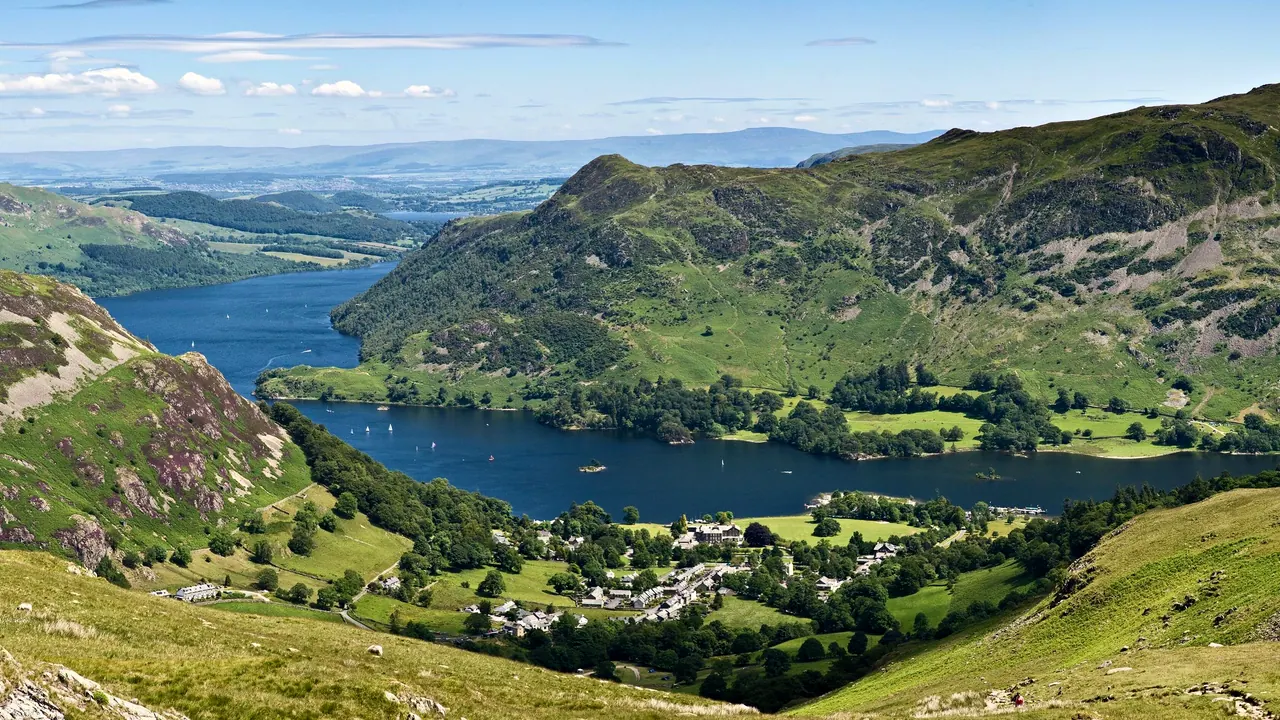
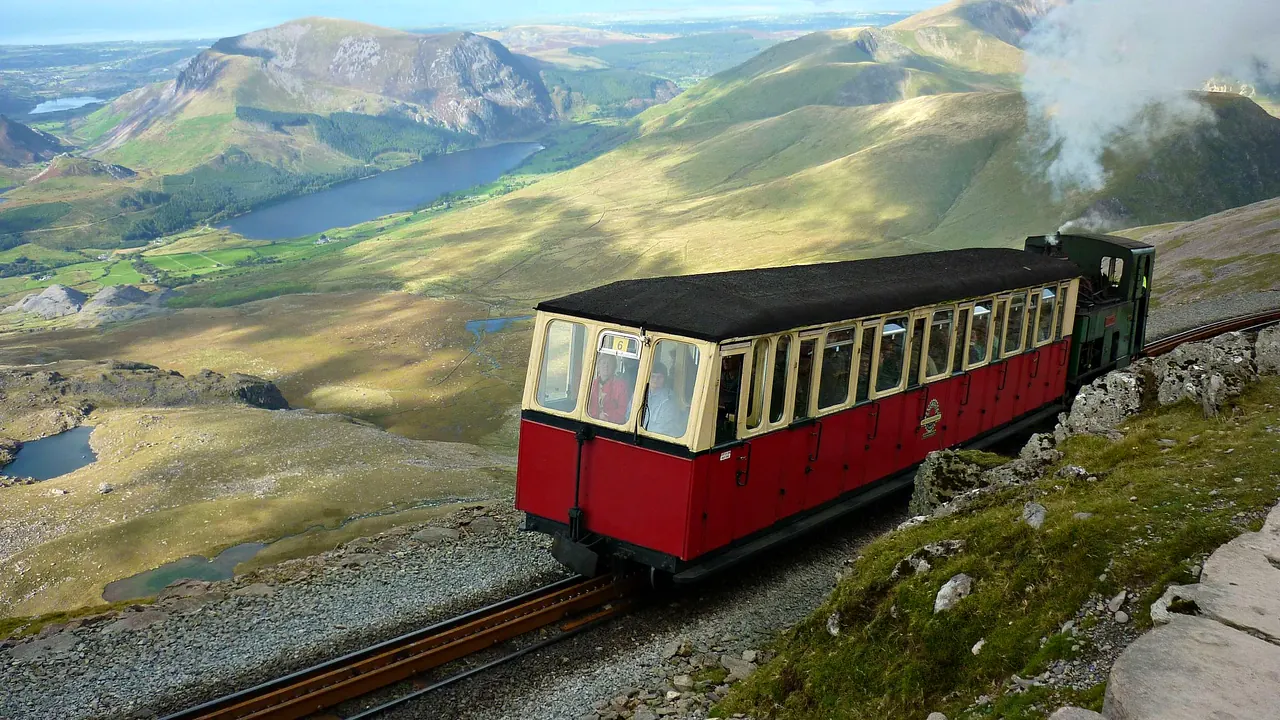
Photos: Lake District by Diliff, CC BY-SA 3.0, cropped; Snowdonia by Porius1, CC BY-SA 3.0, cropped.
Lake District or Snowdonia?
Our verdict in twelve categories, each scored against the same fixed benchmark cities, and the climate month by month, so you can choose for your trip.
Choose Lake District for
- food and drink
- wellness
- shopping
The Lake District suits walkers who want the rest of the trip to be comfortable as well. The country-house and farm-to-table cooking around Cartmel and Windermere, the lakeside hotel spas and Theatre by the Lake in Keswick give it softer evenings than the Welsh hills. Lake steamers and buses make a car-free week in the central valleys realistic, and the Wordsworth and Beatrix Potter houses suit a gentle day between walks.
Choose Snowdonia for
- beaches
- prices
- day trips
Snowdonia is the better pick for a more varied outdoor week on a tighter budget. As well as the walking, you get scrambling on Tryfan, mountain biking at Coed y Brenin and white water on the Tryweryn. Real sand at Harlech and Black Rock Sands is close by, and the castles at Caernarfon and Conwy sit on the park's edges. Welsh is spoken every day in the villages, and the measured weather is noticeably drier and sunnier than in the central Lakes.
Scoreboard
Twelve categories on one fixed scale from 0 to 100. The shaded stretch is the gap between the two.
Your match
Pick a travel style or drag the sliders, and both match scores follow your weighting.
Wins on food and drink and wellness with your weighting.
Wins on beaches and prices with your weighting.
What matters to you?
Category by category
What the scores mean for a trip.
Beaches & swimming
Snowdonia has the real beaches. The park meets Cardigan Bay at Harlech, where there are miles of sand under the castle, and at the broad Black Rock Sands, Barmouth and Aberdyfi, with sheltered coves on the Llŷn Peninsula nearby. A sunny afternoon there feels like a proper seaside day, even if you will want a wetsuit for the water.
In the Lake District, swimming means lakes and tarns with shingle shores and jetties, at Buttermere, Ullswater or Derwentwater. The Cumbrian coast is too far from the fells and too exposed to be part of most stays.
Food & drink
The Lake District eats noticeably better. Beyond the fireside inns with Cumberland sausage and Herdwick lamb, the southern Lakes around Cartmel and Windermere have destination cooking that people travel across Britain for. There are also local sweets to take home, such as Grasmere gingerbread and sticky toffee pudding.
Snowdonia's food is more basic: Welsh lamb in the pub, cawl, bara brith, and big breakfasts in the walkers' cafés of Llanberis and Betws-y-Coed. Its best feature is seafood from Conwy and the Menai Strait. Outside summer, village kitchens can close early.
Culture & sights
The two are broadly level, but the heritage is different. The Lake District's is literary: Wordsworth's Dove Cottage at Grasmere, Beatrix Potter's Hill Top and Ruskin's Brantwood above Coniston Water, plus the Castlerigg stone circle.
Snowdonia's is built and industrial. It has Edward I's great castle at Harlech, the slate quarries and the National Slate Museum at Llanberis, and narrow-gauge railways such as the Ffestiniog. Portmeirion adds a touch of Italianate fantasy, and the everyday Welsh language gives the villages a living identity that the Cumbrian valleys don't have.
Nightlife
Neither place is for going out, but the Lake District has a little more to offer. Ambleside, Keswick and Bowness have a few livelier bars in summer, and Kendal adds a bit more on top of the fireside pubs.
In Snowdonia, the inns of Llanberis, Capel Curig and Bala can be cheerful on a summer weekend, but most villages go quiet soon after closing time.
Nature & outdoors
These are two of Britain's great mountain areas and equally strong. The Lake District is about long glacial lakes under steep fells. Striding Edge onto Helvellyn and Scafell Pike from Wasdale are the classic walks, and sailing and paddling on Windermere and Ullswater fill the summer.
Snowdonia has Yr Wyddfa, the highest peak in Wales and England, and rougher scrambling on Tryfan and the Glyderau. Its range is wider, with mountain biking at Coed y Brenin, rafting on the Tryweryn and the Mawddach estuary cycle trail. Both lose their summits to cloud often.
Day trips
Snowdonia has slightly better outings beyond its borders. The Edwardian castles and town walls of Caernarfon and Conwy are under an hour from the northern valleys, and Beaumaris and the Anglesey coast lie across the Menai Strait. Bodnant Garden and Victorian Llandudno, with the Great Orme above it, make a change from castles.
From the Lake District, the best trips beyond the boundary are to Carlisle's castle and cathedral and the central stretches of Hadrian's Wall, with Furness Abbey and the Yorkshire Dales to the south. Inside the region, Kendal's old yards, Cartmel Priory and the little steam railway up Eskdale fill a quieter day. Both regions are far easier to explore this way with a car.
Good for families
Both work equally well for outdoor families, with different treats. The Lake District has the gentler kind: steamers on Windermere, the Beatrix Potter connection, an aquarium and easy circuits such as Tarn Hows. That makes it the better fit for small children.
Snowdonia has more excitement for older children, with steam railways, underground tours of old slate mines and some of Europe's longest zip lines, plus big sandy beaches. Rainy days are the problem in both regions.
Getting around
Both regions are equally manageable, but the Lake District is easier to do without a car. The branch line to Windermere, buses through Ambleside, Grasmere and Keswick, and the lake steamers make it possible to stay car-free in the central valleys. Wasdale and Eskdale still need a car and the steep passes.
In Snowdonia most people drive. Car-free visitors who plan ahead can use the Conwy Valley and Cambrian Coast lines and the Sherpa'r Wyddfa buses around Yr Wyddfa, but crossing between valleys is slow.
Shopping & style
Shopping is not a reason to visit either place, though the Lake District has a little more. Ambleside and Keswick have streets of outdoor gear shops, and Kendal has ordinary high-street shopping. Snowdonia has a small cluster of gear shops in Betws-y-Coed, plus woollen mills selling Welsh tapestry blankets and Portmeirion pottery.
Affordability
Snowdonia is the cheaper of the two, mainly because its cottages and inns cost less than those in the popular Lakes villages, which are priced for high demand from July to September. Both regions have plenty of hostels, bunkhouses and campsites, and in both the hills themselves are free. In Snowdonia, the zip lines and railways are where a family's budget goes.
Live music & performing arts
The Lake District has more of a stage. Theatre by the Lake in Keswick runs a season of plays by the water, and Kendal's arts centre and its November mountain festival add to it.
Snowdonia's live culture happens within its communities. You can sit in on male voice choir rehearsals in the slate towns, or catch harp and poetry at local eisteddfodau. For theatre you have to go outside the park, to Bangor, Caernarfon or Llandudno.
Wellness & relaxation
For a restful break, the Lake District has the edge. Lakeside hotels around Windermere and Ullswater have spas with pools and treatment rooms looking out over the water.
Snowdonia offers quiet more than pampering. A slow week of walking and reading in Beddgelert or by the Mawddach is deeply restful, but there are only a few hotel spas and small yoga retreats. Neither region has thermal baths, and in both the cold-water swim is the local habit.
When should you go?
Pick your month. The climate figures are measured averages, not a forecast.
Lake District in July
Snowdonia in July
Daytime high, °C
Rainfall in the month, mm
Where the figures come from
Lake District's temperatures are measured 37 km from the centre, at Walney Island.
Lake District has no rain gauge within 25 km of the centre, so its rainfall comes from a gridded climate dataset read at the destination rather than from a gauge further away.
Lake District's sunshine is measured 90 km from the centre, at Leeming.
Snowdonia's temperatures are measured 52 km from the centre, at Valley.
Snowdonia has no rain gauge within 25 km of the centre, so its rainfall comes from a gridded climate dataset read at the destination rather than from a gauge further away.
Temperature and rainfall are climate normals, averaged over the years shown. Lake District: 1991-2020 normals, Walney Island (36.8 km from centre). Snowdonia: 1991-2020 normals, Valley (51.8 km from centre).
Neither place is ever hot. Both reach their warmest in July and August at around 18-19°C, which is ideal for long days on the hills and never too warm for walking. The big difference is rain. Measured where most visitors stay in the central Lakes, the Lake District is wet in every month and very wet from October to January, with up to 208mm in December. Snowdonia's figures are much lower all year, and May is its driest month at 66mm. Snowdonia also gets clearly more sunshine from spring to early autumn, and May and June are its brightest months.
Late spring is the best time for both, and especially for Snowdonia. In the Lake District, April to June gives the best chance of dry days before the rain builds again in late summer. The Irish Sea peaks at about 16-17°C in August on both coasts, so a swim is a brisk dip at best. From November to February both places are cold, dark and wet, and they suit only walkers who are properly equipped for winter conditions on the tops.
Which traveller are you?
On a food and nightlife trip, the Lake District is the stronger choice. Country-house cooking around Cartmel and Windermere sits alongside slate-floored inns pouring Cumbrian ales, and Ambleside, Keswick and Kendal stay up a little later than Snowdonia's quiet climbers' pubs.
On a relaxing and wellness trip, the Lake District suits travellers who want some comfort along with the quiet: a massage and a warm pool after a lakeside stroll, then supper by the fire. Snowdonia's valleys are just as peaceful, but you have to find the pampering yourself.
For a beach and sun trip, neither region is a real answer, but Snowdonia is the better of two weak options. Harlech's dunes and Black Rock Sands make a good sandy afternoon in a sunny spell, and the sea stays brisk. The Lake District mostly has shingle lake shores.
Before you go
| Measure | Lake District | Snowdonia |
|---|---|---|
| Official language | English | English |
| Currency | Pound Sterling (GBP) | Pound Sterling (GBP) |
| Sockets | G230 V, 50 Hz | G230 V, 50 Hz |
| Driving side | Left | Left |
| Time zone | UTC, UTC+1 in summer | UTC, UTC+1 in summer |
| Emergency number | 112 or 999 | 112 or 999 |
| Main airport | Manchester Airport (MAN)211 non-stop destinations | Liverpool John Lennon Airport (LPL)75 non-stop destinations |
| Public holidays this year | 8 days | 8 days |
By the numbers
| Measure | Lake District | Snowdonia |
|---|---|---|
| Swim season, months above 21 °C | None | None |
Where else could you go?
Every comparison below shares a destination with this one, so you can follow Lake District or Snowdonia somewhere new.
- Yorkshire Dalesvs Lake District
- Peak Districtvs Snowdonia
- Peak Districtvs Lake District
- Yorkshire Dalesvs Snowdonia
- Cotswoldsvs Snowdonia
- Cotswoldsvs Lake District