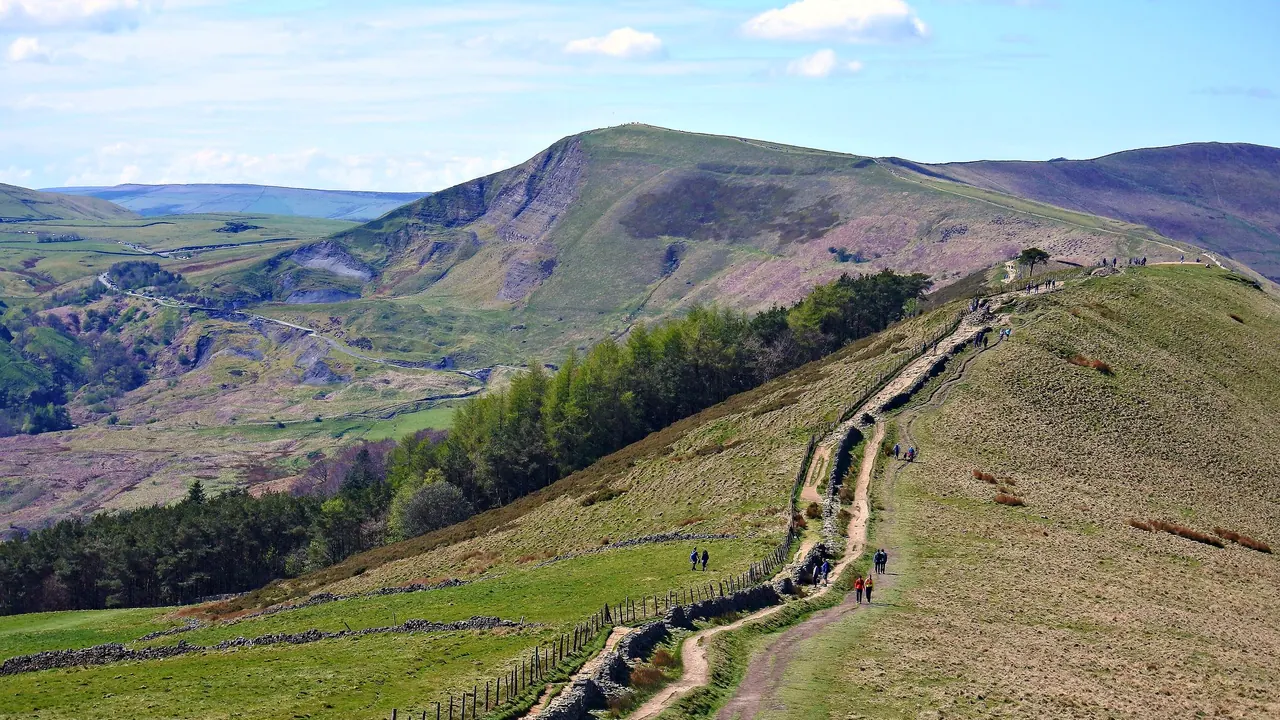
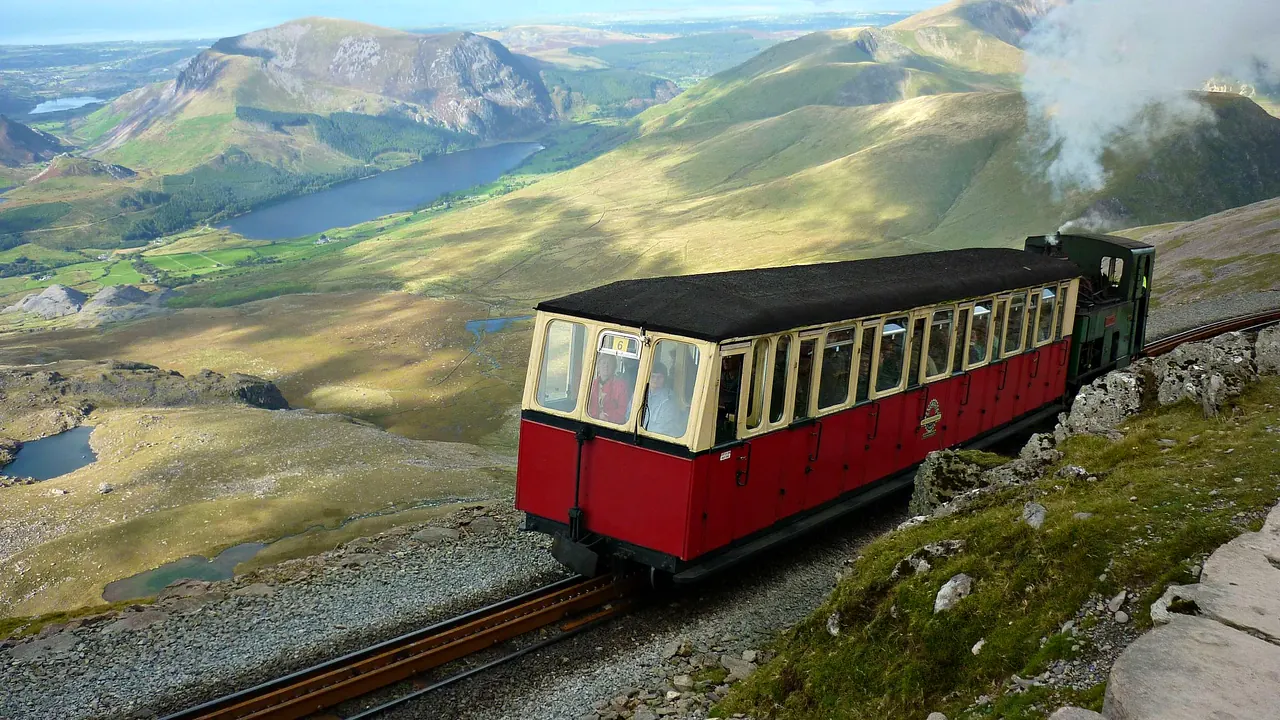
Photos: Peak District by Donnchadh H, CC BY 2.0, cropped; Snowdonia by Porius1, CC BY-SA 3.0, cropped.
Peak District or Snowdonia?
Our verdict in twelve categories, each scored against the same fixed benchmark cities, and the climate month by month, so you can choose for your trip.
Choose Peak District for
- wellness
- live music and the arts
- families
The Peak District suits travellers who want the hills together with plenty to do around them. Its walking is gentler and easier to reach, and the region adds Chatsworth and Haddon Hall, the Georgian spa town of Buxton with its opera house and thermal water, and Manchester and Sheffield close by on the train. It works well for families, couples who want to slow down, and anyone who likes a stately home in the morning and a moorland edge in the afternoon.
Choose Snowdonia for
- beaches
- nature and the outdoors
Choose Snowdonia if the mountains are the reason for the trip. Yr Wyddfa, the scrambles of Tryfan and the Glyderau, and some of Britain's best climbing, mountain biking and white water give it the bigger and wilder outdoors. It also has real beaches along Cardigan Bay, and many villages speak Welsh day to day. Expect more rain and a smaller range of evening options and cultural stops.
Scoreboard
Twelve categories on one fixed scale from 0 to 100. The shaded stretch is the gap between the two.
Your match
Pick a travel style or drag the sliders, and both match scores follow your weighting.
Wins on wellness and live music and the arts with your weighting.
Wins on beaches and nature and the outdoors with your weighting.
What matters to you?
Category by category
What the scores mean for a trip.
Beaches & swimming
The Peak District is about as far from the sea as you can get in England. A swim there means the heated lido at Hathersage or a cold dip in a limestone river, and the reservoirs are best left alone.
Snowdonia actually has a coast. Harlech's dunes with the castle above them, the broad sweep of Black Rock Sands and the estuary beaches at Barmouth and Aberdyfi make good fine-weather afternoons. The Irish Sea stays chilly, though, so this is sand and paddling rather than a beach trip.
Food & drink
Neither is a place to plan a trip around food, but the Peak District offers a little more range. Bakewell pudding, Hartington cheese and the farm shops around Chatsworth give it some local flavour, and there are more ambitious village kitchens, mostly in the market towns.
Snowdonia's best food is on the coast, with Conwy mussels and Menai Strait oysters. Inland it is mainly lamb, cawl and walkers' breakfasts, and kitchens there often close early out of season.
Culture & sights
The Peak District has the richer heritage, built around great houses. Chatsworth and Haddon Hall are among England's finest, and Buxton's Georgian spa quarter, plague-village Eyam and Arkwright's mills at Cromford fill a couple of good days.
Snowdonia's history is about castles and industry instead. There is Harlech on its crag, the slate landscape told at Llanberis and Blaenau Ffestiniog, and the narrow-gauge railways. Portmeirion and the everyday Welsh language give the region an identity all its own, even if its sights are fewer and further apart.
Nightlife
Evenings are quiet in both, and in both they end by the pub fire. The Peak District has a couple of small towns, Buxton and Matlock, where a few bars stay open later at weekends, and Sheffield or Manchester are near enough for a proper night out.
In Snowdonia the evening scene is the climbers' inn at Llanberis or Capel Curig, which can be lively on summer weekends, with no city close enough to go out in.
Nature & outdoors
Snowdonia has the bigger landscape: real mountains over 1,000m, knife-edge ridges, historic climbing cliffs and wild ranges such as the Rhinogydd. It adds mountain biking on the slate tips, white-water rafting and sailing on Llyn Tegid, but it pays for all this with heavy rain and cloud on the summits.
The Peak District is hill country rather than mountains. It has gritstone moors and the climbing edges of Stanage in the north, and green limestone dales such as Dovedale in the south. Its old railway trails make for easier, gentler days.
Day trips
Both have strong outings on their doorsteps, but they are different in kind. From the Peak District the day trips are to cities, with Manchester, Sheffield, Nottingham and Derby all close, plus a ring of grand houses such as Hardwick Hall and Kedleston.
From Snowdonia they lead to castles and the coast: Caernarfon, Conwy and Beaumaris, Victorian Llandudno, Bodnant Garden and the Llŷn Peninsula. Chester is within reach of both.
Good for families
The Peak District is the easier choice with younger children. Dovedale's stepping stones make a short walk that small legs can manage, Matlock Bath has a little hillside theme park pitched at their age, and most outings are only a short drive apart. Rain still sends families indoors on some days, but it comes less often than across the border in Wales.
Snowdonia offers bigger thrills for older children. The old slate workings hold cavern adventure courses and some of the longest zip lines in Europe, and there is lake paddling at Llanberis or Bala. It also has something the Peak cannot offer at all: a sandy beach day at Harlech or Black Rock Sands when the weather allows.
Getting around
In both regions a car makes life easier, roads are narrow and the busiest spots fill up on summer weekends. The difference is in the trains. The Peak District's Hope Valley line puts walkers straight onto paths from Edale and Hathersage, between two big cities.
Snowdonia relies more on the Sherpa'r Wyddfa buses around the mountain, the Conwy Valley line and the scenic Cambrian Coast railway past Harlech and Barmouth.
Shopping & style
Neither is a shopping destination, but the Peak District offers a bit more to browse. There is Blue John jewellery in Castleton, antique shops in Ashbourne and Leek, Bakewell's market and Buxton's small high street. In Snowdonia, the Betws-y-Coed gear shops, woollen mills, slate crafts and Portmeirion pottery are the main finds.
Affordability
Costs are much the same in both: rural British prices, with free hills and expensive summer cottages. Where the money goes is a little different. In the Peak District it tends to be stately home and show cave tickets. In Snowdonia it tends to be zip lines and mountain railways, although its spring and autumn are noticeably cheaper.
Live music & performing arts
The Peak District has a real stage in Buxton's Frank Matcham opera house, which runs a year-round programme, and the town's July festival and fringe. Concerts at the great houses add to the summer.
Snowdonia's live culture is smaller and more personal: village male voice choirs welcoming visitors to rehearsals, eisteddfodau with harp and poetry, and folk nights in the pub. For theatre you have to leave the park.
Wellness & relaxation
The Peak District has a spa town of its own. Buxton's warm mineral springs feed a spa in the Georgian Crescent, and you can fill a bottle at St Ann's Well, while country-house hotels across the dales add more pampering.
Snowdonia's rest comes from the setting rather than treatments: a log burner in Beddgelert, cold lake swims and quiet weeks by the Mawddach. Anyone wanting thermal baths will find little there.
When should you go?
Pick your month. The climate figures are measured averages, not a forecast.
Peak District in July
Snowdonia in July
Daytime high, °C
Rainfall in the month, mm
Where the figures come from
Peak District's temperatures are measured 43 km from the centre, at Manchester Airport.
Peak District has no rain gauge within 25 km of the centre, so its rainfall comes from a gridded climate dataset read at the destination rather than from a gauge further away.
Snowdonia's temperatures are measured 52 km from the centre, at Valley.
Snowdonia has no rain gauge within 25 km of the centre, so its rainfall comes from a gridded climate dataset read at the destination rather than from a gauge further away.
Temperature and rainfall are climate normals, averaged over the years shown. Peak District: 1991-2020 normals, Manchester Airport (43.1 km from centre). Snowdonia: 1991-2020 normals, Valley (51.8 km from centre).
Both regions are at their best from late spring to early autumn, and neither ever gets too hot for walking. The Peak District is slightly warmer in high summer, with highs around 21°C in July, and noticeably drier. Its rain builds in autumn and winter rather than arriving in sudden heavy spells. Snowdonia is a degree or two cooler and much wetter, with well over 100mm a month from October to January, so winter there means hard mountain conditions and short, grey days.
May is the standout month in Snowdonia, the sunniest of the year at around 219 hours, and dry enough to make it the pick for the high peaks. For the beach, its sea warms only to about 16°C in August and September, so even in high summer swimming is brisk. In the Peak District, the long sunny stretch from May to August suits the dales and edges, and September stays mild and fairly settled.
Which traveller are you?
On an outdoors trip, Snowdonia is the stronger choice. It has proper mountains, with Yr Wyddfa, the Crib Goch ridge and the Ogwen scrambles, along with mountain biking at Coed y Brenin and rafting on the Tryweryn. The Peak District is gentler hill walking country.
For a relaxing and wellness trip, the Peak District wins. Buxton's Georgian Crescent has a spa fed by natural thermal water, and quiet stone villages surround it. Snowdonia offers calm valleys but almost nothing in the way of spas or warm springs.
On a family trip with children, the Peak District has more to fill the days. Show caves, the cable car at Matlock Bath, Crich's vintage trams, Chatsworth's farmyard and the flat railway trails are all close together, and Alton Towers is near. Snowdonia's zip lines and steam trains are great fun but more spread out and rain-prone.
Before you go
| Measure | Peak District | Snowdonia |
|---|---|---|
| Official language | English | English |
| Currency | Pound Sterling (GBP) | Pound Sterling (GBP) |
| Sockets | G230 V, 50 Hz | G230 V, 50 Hz |
| Driving side | Left | Left |
| Time zone | UTC, UTC+1 in summer | UTC, UTC+1 in summer |
| Emergency number | 112 or 999 | 112 or 999 |
| Main airport | Manchester Airport (MAN)211 non-stop destinations | Liverpool John Lennon Airport (LPL)75 non-stop destinations |
| Public holidays this year | 8 days | 8 days |
By the numbers
| Measure | Peak District | Snowdonia |
|---|---|---|
| Population | 35,901 | - |
| People per km² | 25 | - |
| Swim season, months above 21 °C | - | None |
Where else could you go?
Every comparison below shares a destination with this one, so you can follow Peak District or Snowdonia somewhere new.
- Yorkshire Dalesvs Peak District
- Cotswoldsvs Peak District
- Lake Districtvs Peak District
- Lake Districtvs Snowdonia
- Yorkshire Dalesvs Snowdonia
- Cotswoldsvs Snowdonia