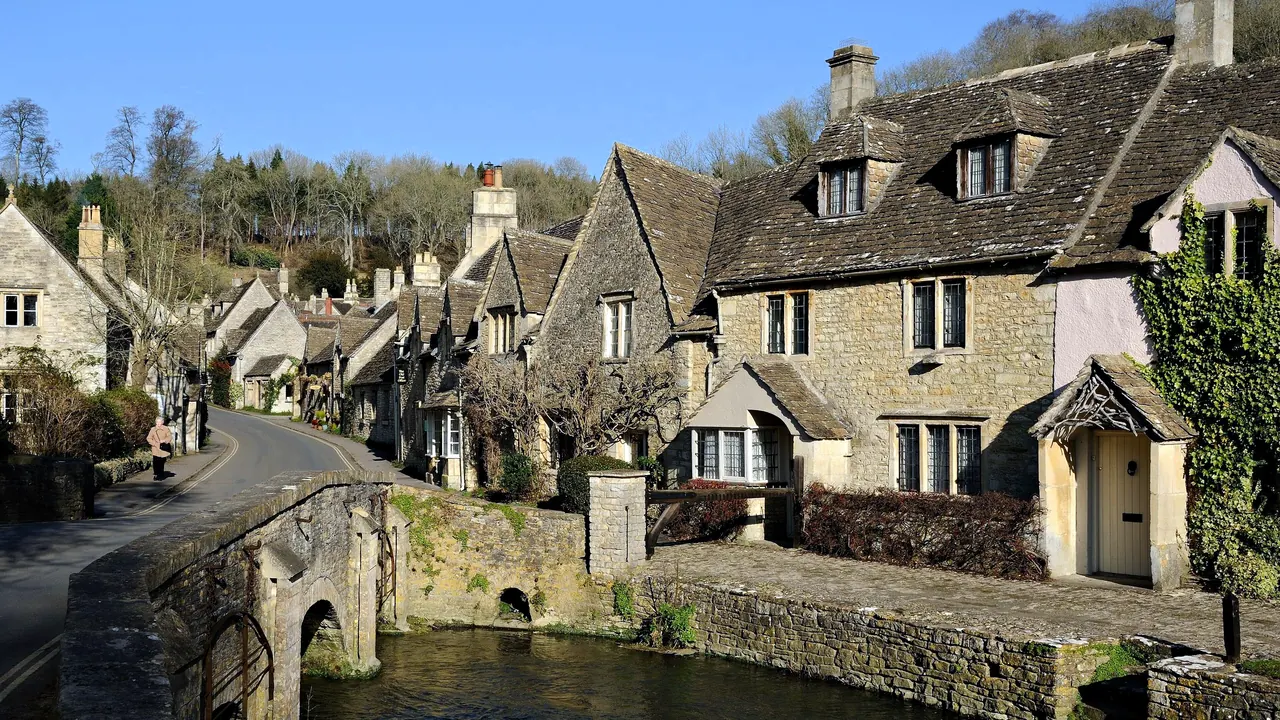
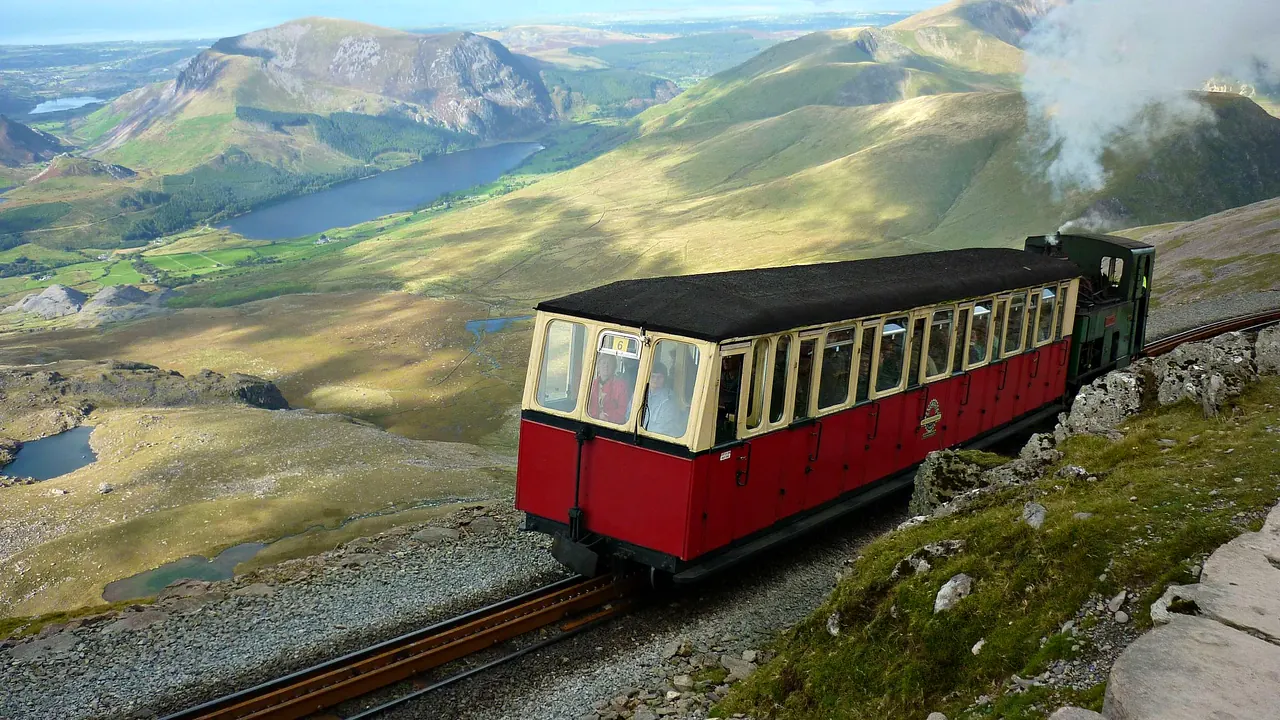
Photos: Cotswolds by Saffron Blaze, CC BY-SA 3.0, cropped; Snowdonia by Porius1, CC BY-SA 3.0, cropped.
Cotswolds or Snowdonia?
Our verdict in twelve categories, each scored against the same fixed benchmark cities, and the climate month by month, so you can choose for your trip.
Choose Cotswolds for
- shopping
- wellness
- live music and the arts
Choose the Cotswolds for a slower, more comfortable trip built around honey-stone villages, wool churches, good pub dinners and country-house spas. It also makes the better base for sightseeing further afield, with Oxford, Bath and Stratford close enough for an easy day out. Cheltenham adds the theatre, the festivals and the only real night out in either region. Expect to pay well for all of it.
Choose Snowdonia for
- beaches
- nature and the outdoors
- prices
Snowdonia is for people who want to spend their days on the hills. Its peaks, scrambles, climbing crags, bike trails and white water are in a different league from the gentle wolds. It also has a real coast, with long sandy beaches on Cardigan Bay. Evenings are quiet, the food is hearty rather than refined and rain is part of the deal, but campsites and bunkhouses keep the cost down.
Scoreboard
Twelve categories on one fixed scale from 0 to 100. The shaded stretch is the gap between the two.
Your match
Pick a travel style or drag the sliders, and both match scores follow your weighting.
Wins on shopping and wellness with your weighting.
Wins on beaches and nature and the outdoors with your weighting.
What matters to you?
Category by category
What the scores mean for a trip.
Beaches & swimming
The Cotswolds have no sea of their own. Below the escarpment the Severn Estuary is all mudflats and fast tides, so the nearest thing to a beach is the lake beach at the Cotswold Water Park near Cirencester, with open-water swimming in summer.
Snowdonia at least has a coast. Harlech's dune-backed sands below the castle, the wide expanse of Black Rock Sands and the long strands at Barmouth and Aberdyfi make good afternoons in fine weather. The Irish Sea stays cold, though, and many people swim in a wetsuit.
Food & drink
Both regions are pub country, but the Cotswold pubs cook to a higher standard. Village inns around Stow, Chipping Campden and the Coln valley serve local lamb and autumn game, and the farmers' markets in Stroud and Cirencester add cheeses, cider and ales. Cheltenham brings a town's range of fine dining and international cooking.
Snowdonia feeds walkers: big breakfasts in Llanberis and Betws-y-Coed, cawl and Welsh lamb in the pub, and bara brith in the tea rooms. Conwy mussels and Menai oysters are the highlight of the coast. Choice in the villages is thin, though, and kitchens close early outside summer.
Culture & sights
The Cotswolds have the denser set of sights. The wool-trade villages of Chipping Campden, Burford and Bibury, the great wool churches, and Blenheim Palace, Sudeley Castle and Hidcote are all a short drive apart, so the days move easily from one golden street or country house to the next.
Snowdonia's heritage is rougher and more distinctly Welsh. It has Harlech Castle above the dunes, the native princes' castles in the valleys, and slate quarries and towns that form a World Heritage landscape. The Ffestiniog railway and Portmeirion are memorable, and Welsh in everyday use gives the region a strong identity, but the stops are fewer and further apart.
Nightlife
Neither region suits a big night out, but the Cotswolds have Cheltenham. Its cocktail bars and late venues around the Promenade and Montpellier fill up at weekends and on race days. Elsewhere evenings mean a pint by the fire and an early night.
Snowdonia has no such town inside the park. The climbers' inns in Llanberis, Capel Curig and Bala can be cheerful on summer weekends, and that is all there is.
Nature & outdoors
This is where Snowdonia pulls well ahead. The Cotswolds offer rolling wolds, beech woods, spring bluebells and long views from the escarpment along the Cotswold Way. The walking is pleasant and fits easily around lunch.
Snowdonia is true mountain country. Yr Wyddfa can be climbed by half a dozen paths, Tryfan and the Glyderau offer serious scrambling, the Llanberis Pass has historic climbing, and Cadair Idris is quieter and wilder ground. Add mountain biking at Coed y Brenin, white water on the Tryweryn and sailing on Llyn Tegid. The catch is the rain and summits lost in cloud.
Day trips
The Cotswolds sit in the middle of a remarkable ring of places. Oxford's colleges, Bath's Roman baths and Georgian crescents, Stratford-upon-Avon and Warwick Castle are each within about an hour, with Gloucester Cathedral, Tewkesbury Abbey, Worcester and Wells close behind. Oxford, Bath and Worcester can also be reached by train.
Snowdonia's outings are good but more alike. They include the Edwardian castles and town walls of Caernarfon and Conwy, Beaumaris across the Menai Strait, Victorian Llandudno under the Great Orme, Bodnant Garden and the fishing villages of the Llŷn Peninsula. Walled Chester, about an hour and a half away, is the largest city within reach, and a car makes it far easier to fit several of these into a trip.
Good for families
Both regions suit families who are happy outdoors, and the difference lies in the kind of fun. The Cotswolds are gentler, with rhinos and giraffes at the Cotswold Wildlife Park, the model village and paddling river at Bourton-on-the-Water, spring lambing at the farm parks, and Warwick Castle just to the north.
Snowdonia suits older, more adventurous children, with steam railways, underground slate-mine tours, cavern courses and huge zip lines, plus the big sands at Harlech. It is also wetter, so a few indoor options in reserve matter more.
Getting around
Both are car country, with narrow lanes that clog up in summer. The Cotswolds have London trains to Moreton-in-Marsh, Kingham and Charlbury, and footpaths that make walking from village to village a real way to travel. Rural buses are thin, though, and parking in Bourton and Bibury is a summer frustration.
Snowdonia has the more scenic railways, the Conwy Valley and Cambrian Coast lines, and the Sherpa'r Wyddfa buses run to the main paths up Yr Wyddfa. Even so, getting between valleys without a car takes patience, and trailhead car parks such as Pen-y-Pass fill early.
Shopping & style
The Cotswolds are far the better place to browse. Tetbury and Stow-on-the-Wold have antique dealers, Burford, Broadway and Chipping Campden have galleries and homeware shops, and Cheltenham has Regency arcades and boutiques in Montpellier.
Snowdonia's shopping is practical: outdoor gear in Betws-y-Coed, woollen mills, slate crafts and Portmeirion pottery, and little else beyond gift shops.
Affordability
The Cotswolds are an expensive corner of rural England. Manor-house hotels and cottage rentals are priced high, and the stately homes and gardens each charge a full admission. A shared cottage, a chain hotel in Cheltenham and picnics from farm shops are the main ways to save.
Snowdonia is easier on the wallet. Campsites, bunkhouses and youth hostels let walkers keep costs low, and the mountains, lakes and beaches are free. Cottages and pub meals in summer still cost what they do elsewhere in Britain.
Live music & performing arts
Cheltenham gives the Cotswolds a proper arts calendar. It has the Victorian Everyman Theatre and festivals of jazz, classical music and literature, there is summer opera in a barn at Longborough, and the Royal Shakespeare Company at Stratford is about half an hour from the northern villages.
Snowdonia's offer is smaller and more local. Male voice choir rehearsals, eisteddfodau with harp and poetry, and folk nights in the pubs give a real taste of Welsh-language culture. For theatre, though, you have to go out to Bangor, Caernarfon or Llandudno.
Wellness & relaxation
For pampering, the Cotswolds are well ahead. Country-house hotels across the wolds run serious spas in converted barns and gardens. Bath's rooftop thermal pool, fed by Britain's only natural hot springs, is an easy trip from Tetbury.
Snowdonia's restfulness is of another kind: quiet valleys, a log burner in a Beddgelert cottage and cold lakes for hardy swimmers. Beyond a handful of hotel spas and small retreats, there is little treatment on offer.
When should you go?
Pick your month. The climate figures are measured averages, not a forecast.
Cotswolds in July
Snowdonia in July
Daytime high, °C
Rainfall in the month, mm
Where the figures come from
Cotswolds has no rain gauge within 25 km of the centre, so its rainfall comes from a gridded climate dataset read at the destination rather than from a gauge further away.
Cotswolds's sunshine is measured 46 km from the centre, at Lyneham.
Snowdonia's temperatures are measured 52 km from the centre, at Valley.
Snowdonia has no rain gauge within 25 km of the centre, so its rainfall comes from a gridded climate dataset read at the destination rather than from a gauge further away.
Temperature and rainfall are climate normals, averaged over the years shown. Cotswolds: 1961-1990 (sunshine 1991-2020, rainfall 1991-2020) normals, Fairford Royal Air Force Base (22.5 km from centre). Snowdonia: 1991-2020 normals, Valley (51.8 km from centre).
The Cotswolds are warmer in summer and drier in every month of the year. July reaches about 22°C around the villages, rain is spread fairly evenly through the year, and late spring to early autumn is comfortable for walking from village to village. Winters are cold and grey with short days, though a crisp dry day is still good for a walk. The only swimming is in the Water Park lakes, and only in high summer.
Snowdonia's figures are taken on lower ground. Winters there are milder than in the Cotswolds but summers are cooler, peaking at around 19°C, and the region is far wetter. Rainfall climbs from about 66mm in May to 134mm in November. May is both the sunniest and the driest month, which makes late spring the best time for the summits, with early autumn next. The sea is warmest in August and September at about 16°C, which most swimmers will still find cold.
Which traveller are you?
On an outdoors trip, Snowdonia is the clear choice. You can climb Yr Wyddfa, scramble on Tryfan, climb the crags of the Llanberis Pass, ride the Coed y Brenin trails and raft the Tryweryn. The gentle Cotswold footpaths and lanes cannot match days like these.
For a relaxing and wellness trip, the Cotswolds suit better. Country-house hotels with spas, pools and saunas are a mainstay of the region, and Bath's rooftop thermal pool is close to the southern wolds. Snowdonia is calm but offers little pampering.
On a culture and arts trip, the Cotswolds give you more to fill the days: wool-trade villages and churches, Blenheim Palace, Cheltenham's festivals and Everyman Theatre, and the Royal Shakespeare Company nearby. Snowdonia's castles and slate heritage are fine but thinly spread, and it has little theatre.
Before you go
| Measure | Cotswolds | Snowdonia |
|---|---|---|
| Official language | English | English |
| Currency | Pound Sterling (GBP) | Pound Sterling (GBP) |
| Sockets | G230 V, 50 Hz | G230 V, 50 Hz |
| Driving side | Left | Left |
| Time zone | UTC, UTC+1 in summer | UTC, UTC+1 in summer |
| Emergency number | 112 or 999 | 112 or 999 |
| Main airport | Bristol Airport (BRS)117 non-stop destinations | Liverpool John Lennon Airport (LPL)75 non-stop destinations |
| Public holidays this year | 8 days | 8 days |
By the numbers
| Measure | Cotswolds | Snowdonia |
|---|---|---|
| Swim season, months above 21 °C | - | None |
Where else could you go?
Every comparison below shares a destination with this one, so you can follow Cotswolds or Snowdonia somewhere new.
- Peak Districtvs Snowdonia
- Peak Districtvs Cotswolds
- Lake Districtvs Snowdonia
- Yorkshire Dalesvs Snowdonia
- Devonvs Cotswolds
- Yorkshire Dalesvs Cotswolds