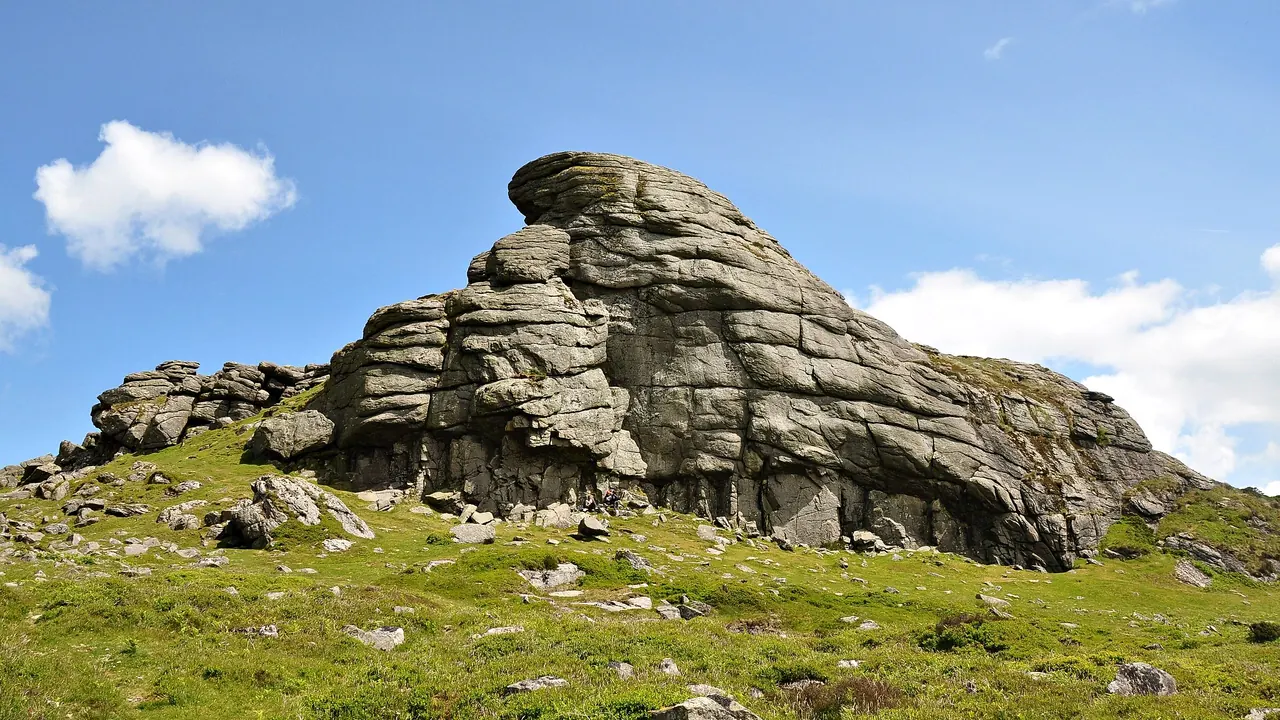
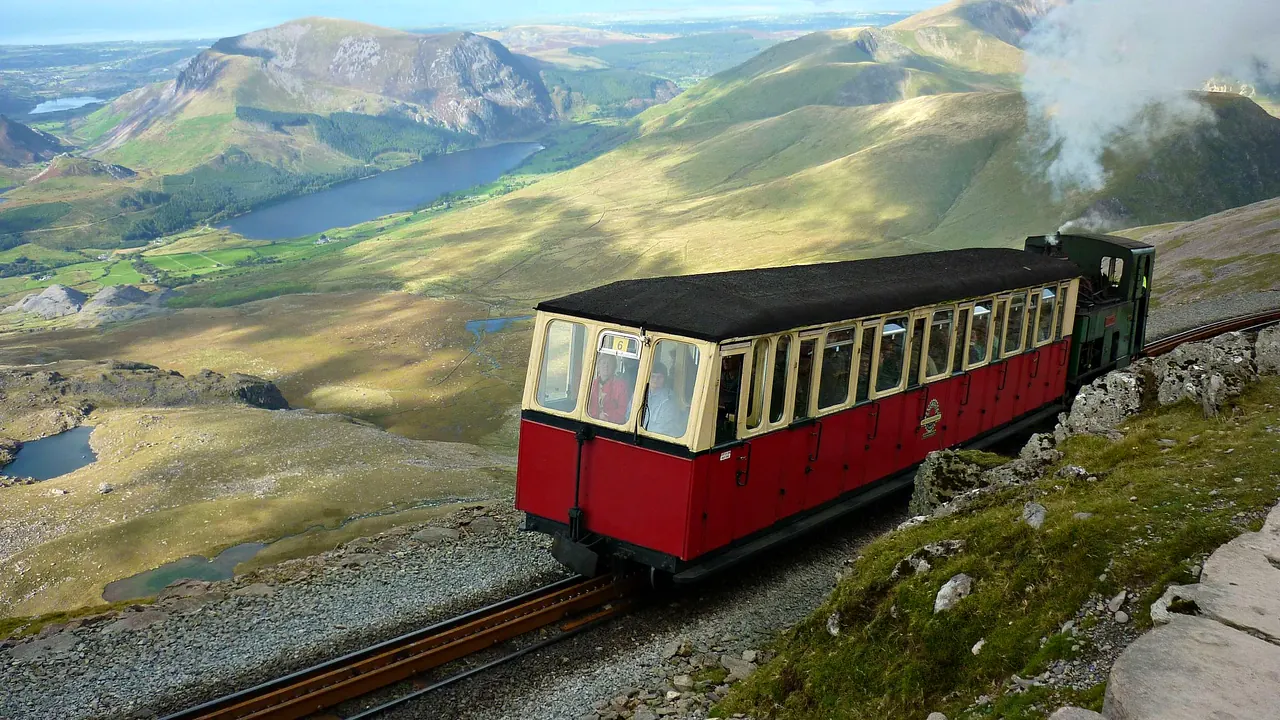
Photos: Devon by Nilfanion, CC BY-SA 3.0, cropped; Snowdonia by Porius1, CC BY-SA 3.0, cropped.
Devon or Snowdonia?
Our verdict in twelve categories, each scored against the same fixed benchmark cities, and the climate month by month, so you can choose for your trip.
Choose Devon for
- food and drink
- live music and the arts
- nightlife
Devon suits a classic summer vacation by the sea with a broader mix around it. It has two coasts to choose between, surf sand in the north and sheltered estuary beaches in the south, plus harbour towns that eat well, the theatres and evening life of Exeter and Plymouth, and plenty to keep children busy on a grey day. Families, couples who want good seafood and a cream tea, and anyone who likes a choice between beach, moor and town each day will find more of it here.
Choose Snowdonia for
- nature and the outdoors
- prices
- getting around
Snowdonia is the pick when the mountains are the point of the trip. Yr Wyddfa, the scrambles above the Ogwen Valley and the climbing cliffs of the Llanberis Pass make it serious hill country, with mountain biking and white water as well. Castles, slate villages and the Welsh language give it a strong character of its own. The trade-off is plainer food, almost no nightlife and a wetter summer, so it rewards walkers and climbers who are happy to end the day early in a pub by the fire.
Scoreboard
Twelve categories on one fixed scale from 0 to 100. The shaded stretch is the gap between the two.
Your match
Pick a travel style or drag the sliders, and both match scores follow your weighting.
Wins on food and drink and live music and the arts with your weighting.
Wins on nature and the outdoors and prices with your weighting.
What matters to you?
Category by category
What the scores mean for a trip.
Beaches & swimming
Devon gives far more choice for a beach vacation. The north coast has long surf beaches at Woolacombe, Saunton and Croyde. The south has sheltered estuary sands at Bantham and Bigbury, shingle coves and the family resort beaches of Torbay, so there is usually a beach to suit the wind and the children.
Snowdonia's Cardigan Bay shore is better than its mountain image suggests, with dune-backed Harlech below its castle and the broad expanse of Black Rock Sands. Still, there are fewer beaches, the sea is slightly colder and the wind is more persistent, so they make a fine afternoon rather than the shape of the week.
Food & drink
Devon is the better place to eat. Fish landed at Brixham, crab from Dartmouth and Salcombe, estuary mussels, farmhouse cider and clotted cream give it a real local larder. The harbour towns of the South Hams and the pubs on the edge of Dartmoor cook it well, and farm shops make self-catering a pleasure.
Snowdonia feeds walkers rather than food lovers. Expect Welsh lamb, cawl and bara brith in pubs and tea rooms, with Conwy mussels and Menai seafood on the fringes. Choice in the villages is thin, and kitchens can close early outside summer.
Culture & sights
The two are evenly matched but offer different kinds of heritage. Devon's lies largely in its cities and houses: Exeter Cathedral with its great Gothic vault, Plymouth's Elizabethan Barbican and the Mayflower Steps, and country houses such as Castle Drogo, Buckland Abbey and Greenway.
Snowdonia's heritage is in the landscape itself. Harlech Castle and the slate quarrying country are both World Heritage, and the Ffestiniog and Snowdon Mountain railways and the Italianate oddity of Portmeirion add to it. Welsh spoken as an everyday language gives it a sense of place Devon cannot match. In both, the sights are spread out and need a car.
Nightlife
Neither is a place for a big night out, but Devon at least has options. Exeter and Plymouth have student-driven weekend scenes around the Barbican and Union Street, and Torquay has seaside bars in summer, on top of the harbourside pubs of Dartmouth and Salcombe.
In Snowdonia the evening is the inn in Llanberis, Capel Curig or Betws-y-Coed, where climbers dry out by the fire. There are no clubs, and the villages go quiet early because everyone is up for the hills.
Nature & outdoors
Snowdonia has the bigger, wilder outdoors. Real mountains define it: Yr Wyddfa by half a dozen routes, the Crib Goch ridge, Tryfan's scrambles and the climbing cliffs of Idwal. It also has white water on the Tryweryn and mountain biking on old slate tips, so a fit, adventurous visitor gets more challenge here.
Devon's outdoors is gentler and more varied, and better for mixing land and sea. You can walk all day on the open granite of Dartmoor or the high sea cliffs of Exmoor, follow the South West Coast Path along two coastlines, or surf at Croyde. The Tarka Trail is there for easy cycling.
Day trips
Both have good outings, but they look in different directions. From Devon you can reach a wider part of England: Bath is a train ride from Exeter, Lyme Regis and the Dorset coast lie to the east, and Cornwall's Eden Project and Fowey are within reach to the west. Inside the county, a boat down the Dart from Totnes to Dartmouth makes an easy day.
Snowdonia's best days out are castle towns. Caernarfon, Conwy and Beaumaris on Anglesey are close by, and Bodnant Garden and Victorian Llandudno add variety, with Chester at the far edge. In both, a car makes these trips practical.
Good for families
Devon is the easier family choice, and it has been a traditional British family destination for generations. It has lifeguarded sands with rock pools at Woolacombe and Bigbury, Paignton Zoo, the aquarium in Plymouth and a steam line to Kingswear, all within reasonable driving distance of a rented cottage.
Snowdonia suits families who like to be active. Slate cavern adventures, long zip lines and the mountain railways thrill older children. Attractions are scattered across the valleys, though, rain is common even in August and the bigger walks are beyond small legs.
Getting around
Getting around is much the same in both: most visitors drive, and both have narrow lanes that clog on summer weekends. The rail networks differ. Devon's main line links Exeter, Plymouth and Torbay along the Dawlish sea wall, which helps for town-to-town trips, while its moor and coast are hard to reach without a car.
Snowdonia's railways and buses are more use to walkers. The Conwy Valley and Cambrian Coast lines and the Sherpa'r Wyddfa buses reach the main trailheads, which matters because parking at Pen-y-Pass and Ogwen fills early.
Shopping & style
Devon has more to browse. Totnes has its independent high street and market, Honiton is known for antiques, Dartmouth and Salcombe have galleries, and Exeter and Plymouth cover the usual chains. Snowdonia is practical: outdoor gear in Betws-y-Coed, woollen mill blankets, slate crafts and Portmeirion pottery, with little beyond that.
Affordability
Snowdonia is a little easier on a budget, mainly because cheap beds are easy to find. Campsites, bunkhouses and youth hostels are plentiful, so walkers can keep costs low, although cottages and inns in the popular villages are priced at British summer levels.
Devon's sought-after harbour towns and north coast surf villages are expensive in the school summer break, and parking and attractions add up. Torbay, Plymouth and inland villages offer better value. In both, the moors, paths and beaches cost nothing, and spring and autumn stays are cheaper.
Live music & performing arts
Devon has the proper stages. Plymouth's Theatre Royal, one of England's largest regional theatres, brings touring musicals, opera and ballet. Exeter has the Northcott and choral evensong in the cathedral, and Dartington keeps up its summer music tradition.
Snowdonia's live culture is communal and Welsh. You might sit in on a male voice choir rehearsal, catch a local eisteddfod or find a folk session in a pub. For theatre, you have to leave the park for Bangor, Caernarfon or Llandudno.
Wellness & relaxation
Neither has a spa tradition, but Devon offers more for a restful stay. It has spa hotels in country houses and on cliff tops, the Art Deco Tinside Lido below Plymouth Hoe, and a sociable year-round swimming habit in the south coast coves.
Snowdonia's calm is rawer: a log burner in a stone cottage in Beddgelert, quiet walks by the Mawddach and lake swims for the hardy. There are only a few hotel spas, so anyone wanting treatments will find little.
When should you go?
Pick your month. The climate figures are measured averages, not a forecast.
Devon in July
Snowdonia in July
Daytime high, °C
Rainfall in the month, mm
Where the figures come from
Devon's temperatures are measured 31 km from the centre, at Exeter Airport.
Devon has no rain gauge within 25 km of the centre, so its rainfall comes from a gridded climate dataset read at the destination rather than from a gauge further away.
Devon's sunshine is measured 44 km from the centre, at Plymouth.
Snowdonia's temperatures are measured 52 km from the centre, at Valley.
Snowdonia has no rain gauge within 25 km of the centre, so its rainfall comes from a gridded climate dataset read at the destination rather than from a gauge further away.
Temperature and rainfall are climate normals, averaged over the years shown. Devon: 1973-2025 (sunshine 1981-2010, rainfall 1991-2020) normals, Exeter Airport (31.1 km from centre). Snowdonia: 1991-2020 normals, Valley (51.8 km from centre).
Both are at their warmest in July and August, but Devon runs a little warmer and noticeably drier. Summer days there reach about 22°C, and June is its driest month at roughly 53mm. Snowdonia peaks nearer 19°C, and its rain climbs again through high summer to about 93mm in August, so a mountain day there always needs a waterproof. Late spring is the best time to walk in both. Devon's sunniest stretch runs from May through July. In Snowdonia, May is the sunniest month and comes before the summer rain builds.
The sea is cold in both and slow to warm. Devon's water reaches about 17°C in August, and the sea off Snowdonia is a touch cooler, so from July to September swimming in either means short dips or a wetsuit. From October to December both turn wet and grey, with short days. Devon stays slightly milder in winter, but neither suits a winter beach trip. In the cold months Snowdonia's summits bring real mountain conditions.
Which traveller are you?
For an outdoors trip, Snowdonia is the stronger choice. Yr Wyddfa, the Glyderau scrambles, historic climbing crags and mountain biking at Coed y Brenin go well beyond Devon's moorland and coast path walking, provided you accept frequent cloud and rain on the summits.
On a family trip with children, Devon works better. It has lifeguarded sandy beaches with gently shelving water, Paignton Zoo and the National Marine Aquarium, and steam railways for wet days. Attractions sit closer together than in Snowdonia's scattered valleys, whose zip lines suit older children.
For a food and nightlife trip, Devon is clearly ahead. You get Brixham fish, Salcombe crab and the restaurants of Dartmouth, then harbourside pubs or the student scenes of Exeter and Plymouth. Snowdonia offers hearty pub dinners and little else after dark.
Before you go
| Measure | Devon | Snowdonia |
|---|---|---|
| Official language | English | English |
| Currency | Pound Sterling (GBP) | Pound Sterling (GBP) |
| Sockets | G230 V, 50 Hz | G230 V, 50 Hz |
| Driving side | Left | Left |
| Time zone | UTC, UTC+1 in summer | UTC, UTC+1 in summer |
| Emergency number | 112 or 999 | 112 or 999 |
| Main airport | Exeter International Airport (EXT)24 non-stop destinations | Liverpool John Lennon Airport (LPL)75 non-stop destinations |
| Public holidays this year | 8 days | 8 days |
By the numbers
| Measure | Devon | Snowdonia |
|---|---|---|
| Population | 1,209,773 | - |
| People per km² | 180 | - |
| Swim season, months above 21 °C | None | None |
Where else could you go?
Every comparison below shares a destination with this one, so you can follow Devon or Snowdonia somewhere new.
- Cornwallvs Devon
- Peak Districtvs Snowdonia
- Lake Districtvs Snowdonia
- Yorkshire Dalesvs Snowdonia
- Cotswoldsvs Snowdonia
- Cotswoldsvs Devon