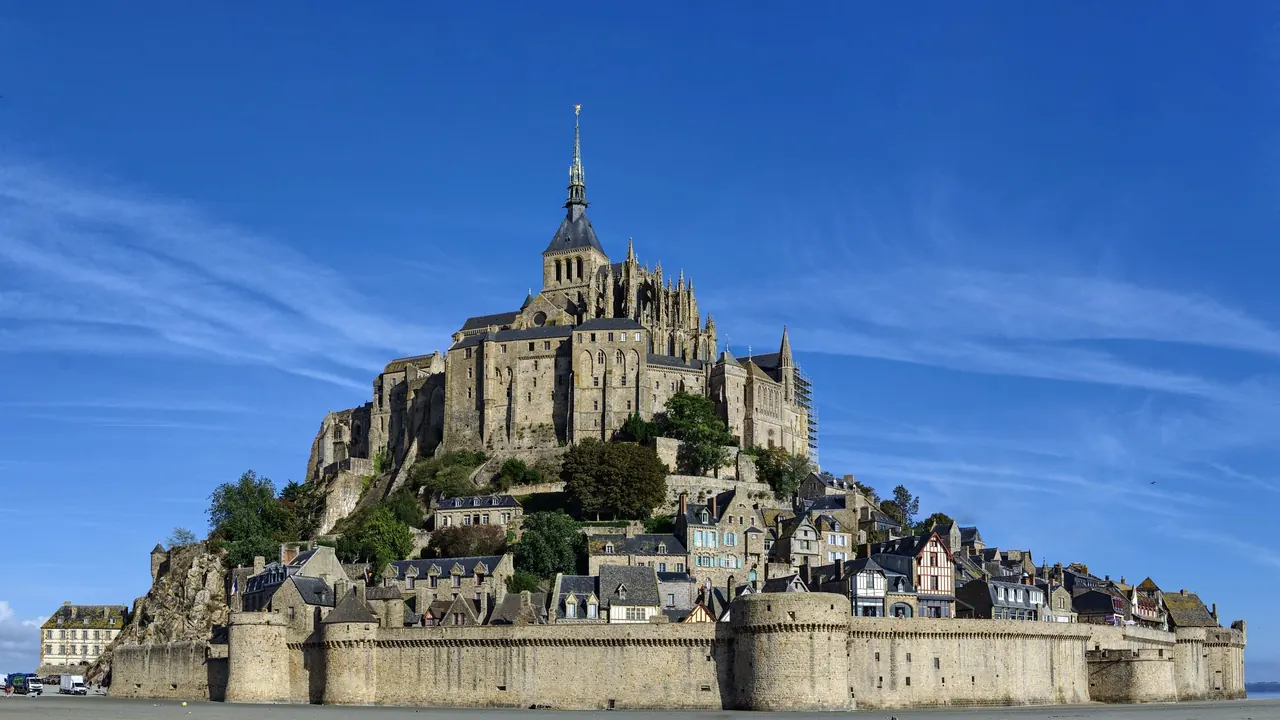
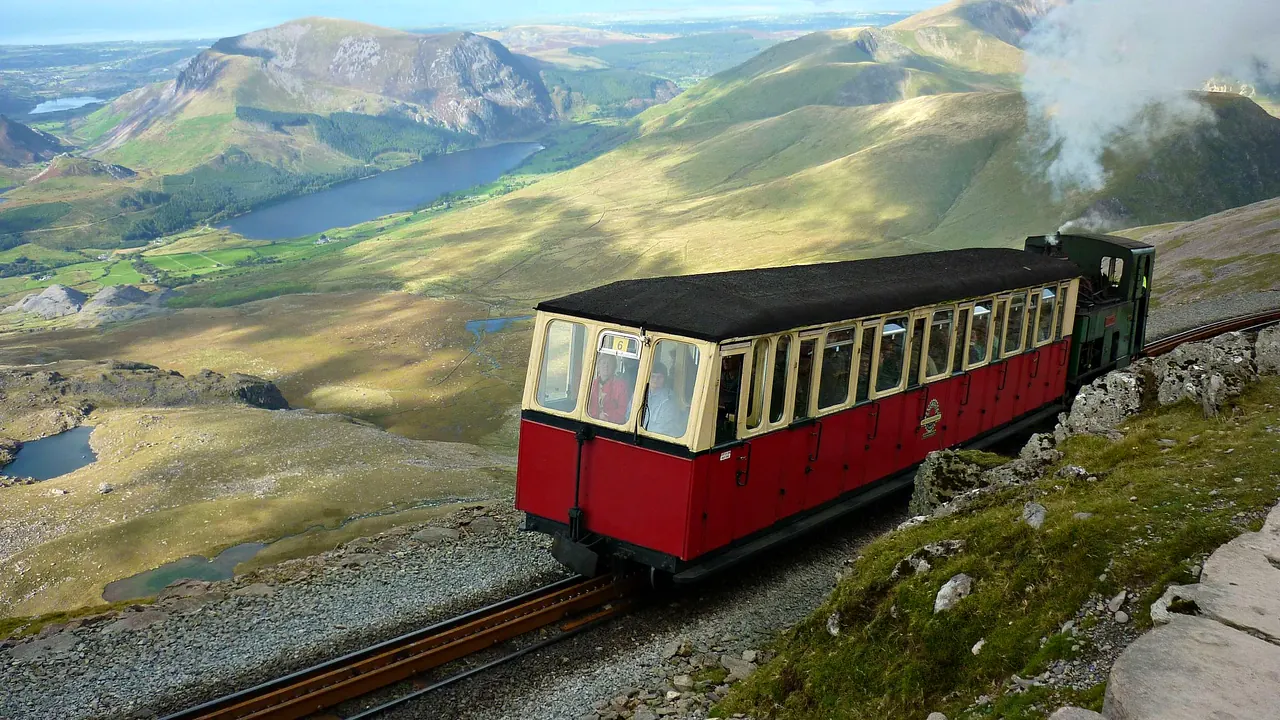
Photos: Normandy by Jan, Pexels License; Snowdonia by Porius1, CC BY-SA 3.0, cropped.
Normandy or Snowdonia?
Our verdict in twelve categories, each scored against the same fixed benchmark cities, and the climate month by month, so you can choose for your trip.
Choose Normandy for
- food and drink
- culture and sights
- wellness
Normandy suits a trip built around history and the table. Mont-Saint-Michel, the D-Day beaches, the Bayeux Tapestry and Rouen's old streets are sights of world rank, and between them come Camembert, cider, calvados and harbour-front oysters. It is the gentler and more varied of the two, with seawater spas on the coast and trains from Paris to the main towns. Choose it if you want to look, eat and unwind rather than climb.
Choose Snowdonia for
- nature and the outdoors
Go to Snowdonia when the days are meant to be spent on foot, on a bike or on rock. Yr Wyddfa, Tryfan and the Glyderau, the quieter Cadair Idris, the white water near Bala and the trails of Coed y Brenin make it much the stronger outdoor destination, and the castles, slate towns and steam railways fill the cloudy days. In return you give up most of the food, spas and evening life that Normandy offers, and you have to accept plenty of rain.
Scoreboard
Twelve categories on one fixed scale from 0 to 100. The shaded stretch is the gap between the two.
Your match
Pick a travel style or drag the sliders, and both match scores follow your weighting.
Wins on food and drink and culture and sights with your weighting.
Wins on nature and the outdoors with your weighting.
What matters to you?
Category by category
What the scores mean for a trip.
Beaches & swimming
Neither region is worth choosing for its beaches, and there is little between them here. What differs is the kind of seaside. Normandy has the more established resort life. On the Côte Fleurie, Deauville, Trouville and Cabourg line wide sands with boardwalks and striped cabins, and the Channel is slightly less chilly. The catch is the tide, which can pull the water so far out that a swim means waiting for it to come back.
Snowdonia's Cardigan Bay shore feels emptier and more exposed. There are dunes under Harlech Castle, the huge flat of Black Rock Sands where cars park on the sand, and long strands at the river mouths of Barmouth and Aberdyfi. The Irish Sea is a couple of degrees colder than the Channel, so going in means a quick, bracing plunge rather than an afternoon in the water, and the wind often cuts sunbathing short.
Food & drink
Normandy is by far the better place to eat. Its farms produce Camembert, Livarot and Pont-l'Évêque, the Pays d'Auge cider route sells calvados and pommeau at the farm gate, and the coast supplies Isigny oysters and Dieppe scallops. Rouen and Caen add a proper restaurant scene, including Rouen's pressed duck.
Snowdonia feeds walkers well: Welsh lamb in the pub, cawl, bara brith in a tea room and a big breakfast in Llanberis before a climb. Beyond that, choice is thin, and village kitchens can close early outside summer.
Culture & sights
Normandy is in a different class. Mont-Saint-Michel, the landing beaches and their cemeteries, the Bayeux Tapestry, Rouen's cathedral and half-timbered streets, William the Conqueror's castle at Caen and Monet's garden at Giverny could fill a week of sightseeing.
Snowdonia's heritage is fewer stops, spread across the landscape. They include Harlech Castle, the World Heritage slate quarries and the museum at Llanberis, the Ffestiniog Railway and the oddity of Portmeirion. Its strongest point is one Normandy cannot match, the sound of Welsh spoken as an everyday language in the villages.
Nightlife
Both are quiet after dinner, but Normandy at least has a choice. The university cities of Rouen and Caen have bars and a few clubs around the cathedral and the Vaugueux quarter, and Deauville has its casino. In Snowdonia, the evening is a fire in a climbers' inn at Llanberis or Capel Curig, and the villages fall silent soon after closing time.
Nature & outdoors
Snowdonia is the place for serious scenery and activity. It has the highest peak in Wales and England, the knife-edge of Crib Goch, scrambling in the Ogwen Valley, white water on the Tryweryn and the Mawddach cycle trail along its estuary.
Normandy's best landscapes are on the coast. They include the chalk arches at Étretat, the granite headlands of Cap de la Hague and the low-tide walks across the bay of Mont-Saint-Michel. Inland, the hedged bocage and the Suisse Normande are gentle country for cycling and easy climbing rather than mountain days.
Day trips
Normandy offers more, and more varied, outings from a base. From Bayeux or Caen you can reach Honfleur's harbour, the Pays d'Auge villages and the Cotentin fishing ports. Saint-Malo and Dinan in Brittany are within reach to the west, ferries cross to Jersey in summer, and Paris is under two hours from Rouen by train.
Snowdonia's edges are rich too, with the castles at Caernarfon and Conwy, Beaumaris on Anglesey, Victorian Llandudno and Bodnant Garden. Walled Chester is the farthest reach, at about an hour and a half by road or rail.
Good for families
Both work for families, in different ways. Normandy is the calmer option, with safe sandy beaches and rock pools, the walk-through submarine at Cité de la Mer, the Cerza safari zoo and farm visits. The drawbacks are long drives and sombre war sites.
Snowdonia suits children who like adventure: steam railways up the mountain, underground slate caverns, some of Europe's longest zip lines and lake paddling at Llanberis. Rain is the risk even in August, so it pays to keep an indoor option in reserve.
Getting around
Normandy is the easier region without a car, though only up to a point. Trains link Paris with Rouen, Caen, Bayeux and Deauville, and the roads are good and uncrowded. However, the landing beaches, Étretat and Mont-Saint-Michel still need a car or a tour.
In Snowdonia, the narrow, winding roads clog on summer weekends, and parking at Pen-y-Pass and Ogwen fills early. The Conwy Valley and Cambrian Coast lines and the Sherpa buses around Yr Wyddfa help, but moving between valleys without a car takes patience.
Shopping & style
Shopping is not the draw in either region, but Normandy has more to browse. Rouen has pedestrian shopping streets, Deauville has a few fashion boutiques and Honfleur has galleries. The best purchases are calvados, cheese and caramels, plus lace from Alençon or copper from Villedieu-les-Poêles. Snowdonia's shopping is practical and crafty, with outdoor gear in Betws-y-Coed, woollen-mill blankets, slate and Portmeirion pottery.
Affordability
Costs are much the same in both, and in both regions a car adds to the bill. In Normandy, chambres d'hôtes and market-town set lunches keep spending down, and many D-Day sites are free. Deauville, Honfleur and the area around Mont-Saint-Michel cost more in high summer.
In Snowdonia, the mountains themselves cost nothing, and campsites, bunkhouses and hostels let walkers travel cheaply. Cottages, zip lines and railway tickets add up quickly for a family in the school vacations.
Live music & performing arts
Normandy has the bigger stage. Rouen's Théâtre des Arts runs opera, ballet and an orchestral season, Caen and Le Havre have modern venues, and Coutances hosts the long-running Jazz sous les Pommiers festival in spring. Snowdonia's offer is community music in Welsh, such as a male voice choir rehearsal, an eisteddfod or a pub folk session. For theatre you have to leave the park for Bangor or Llandudno.
Wellness & relaxation
Normandy has a real spa culture that Snowdonia lacks. There are thalassotherapy centres at Deauville, Cabourg and Granville, and Bagnoles-de-l'Orne is a belle-époque thermal town built around its springs. Snowdonia's restfulness is simpler: a stone cottage in Beddgelert, a walk along the Mawddach, a cold dip in a lake and an early night, with only the odd hotel spa for treatments.
When should you go?
Pick your month. The climate figures are measured averages, not a forecast.
Normandy in July
Snowdonia in July
Daytime high, °C
Rainfall in the month, mm
Where the figures come from
Snowdonia's temperatures are measured 52 km from the centre, at Valley.
Snowdonia has no rain gauge within 25 km of the centre, so its rainfall comes from a gridded climate dataset read at the destination rather than from a gauge further away.
Temperature and rainfall are climate normals, averaged over the years shown. Normandy: 1991-2020 normals, Caen (21 km from centre). Snowdonia: 1991-2020 normals, Valley (51.8 km from centre).
On the Normandy coast, where most visitors stay, July and August are the warm months. Afternoons reach about 23°C and the Channel gets to about 18°C by late summer, which is cool but swimmable from July into early September. Rain is spread fairly evenly through the year until October, when it rises and the days turn grey and short of sun. Late spring and September are mild and good for walking the old towns and the cliff paths.
In winter the two regions are much alike, with the same chilly daytime highs. The gap opens in spring and is widest in summer, when Snowdonia's afternoons peak at about 19°C, some four degrees below Normandy's, and its sea stays a couple of degrees colder. Snowdonia is also wetter in every month. May is its driest and sunniest month, which is why late spring suits the hills so well. From October the rain climbs past 120mm a month and the summits face real winter conditions. Normandy has the longer comfortable season, while in Snowdonia it pays to aim for late spring or early autumn.
Which traveller are you?
On an outdoors trip, Snowdonia is the clear choice. There are half a dozen routes up Yr Wyddfa, classic scrambling on Tryfan, historic climbing cliffs, mountain biking and rafting. Normandy's cliff paths and greenways are pleasant but gentle by comparison, with no mountains at all.
For a culture and arts trip, Normandy has far more to offer. Mont-Saint-Michel, the D-Day beaches and Caen Memorial, Bayeux's tapestry and cathedral, and Rouen's Monet cathedral and art museum outweigh Snowdonia's scattered castles and slate heritage, and Rouen adds an opera house as well.
On a relaxing and wellness trip, Normandy wins easily. Thalassotherapy centres line the coast from Deauville to Granville, Bagnoles-de-l'Orne is a proper thermal spa town, and long farmhouse lunches set the pace. Snowdonia offers quiet valleys and log fires but very little in the way of spas.
Before you go
| Measure | Normandy | Snowdonia |
|---|---|---|
| Official language | French | English |
| Currency | Euro (EUR) | Pound Sterling (GBP) |
| Sockets | CE230 V, 50 Hz | G230 V, 50 Hz |
| Driving side | Right | Left |
| Time zone | UTC+1, UTC+2 in summer | UTC, UTC+1 in summer |
| Emergency number | 112 | 112 or 999 |
| Main airport | Caen Carpiquet airport (CFR)10 non-stop destinations | Liverpool John Lennon Airport (LPL)75 non-stop destinations |
| Public holidays this year | 11 days | 8 days |
By the numbers
| Measure | Normandy | Snowdonia |
|---|---|---|
| Swim season, months above 21 °C | None | None |
Where else could you go?
Every comparison below shares a destination with this one, so you can follow Normandy or Snowdonia somewhere new.
- Peak Districtvs Snowdonia
- Lake Districtvs Snowdonia
- Yorkshire Dalesvs Snowdonia
- Cotswoldsvs Snowdonia
- Brittanyvs Normandy
- Devonvs Normandy