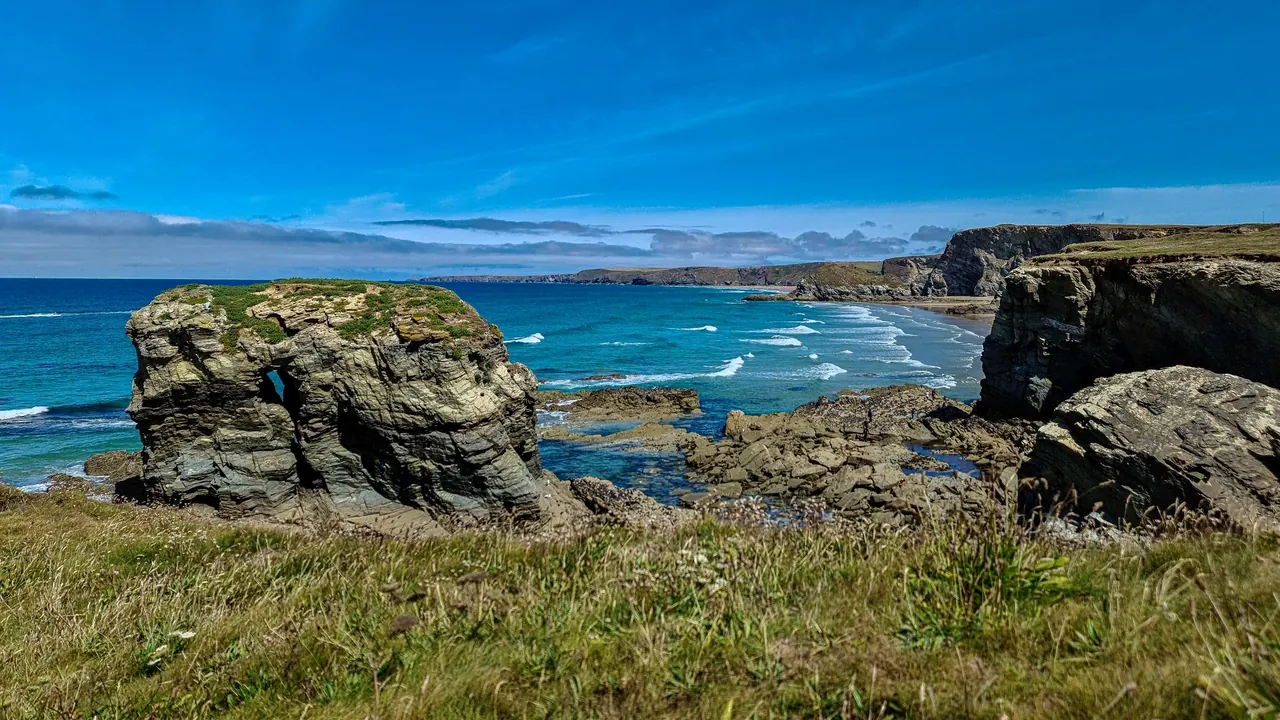
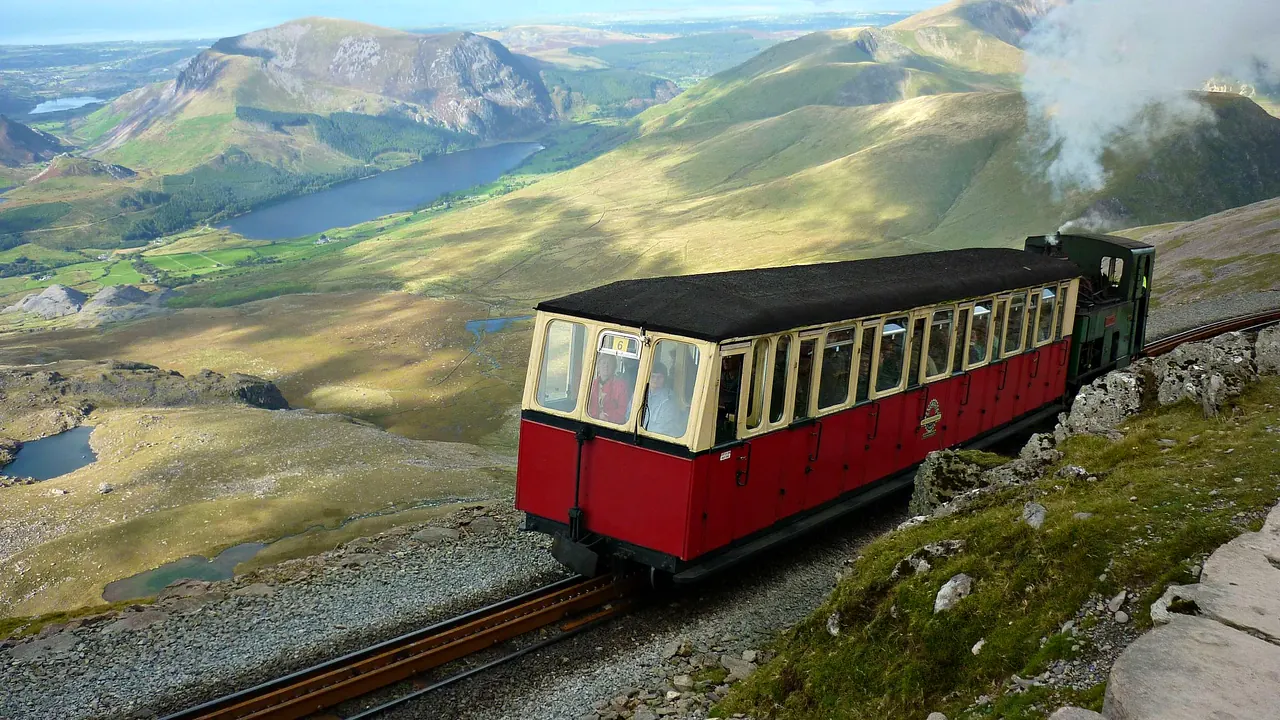
Photos: Cornwall by Howard Senton, Pexels License; Snowdonia by Porius1, CC BY-SA 3.0, cropped.
Cornwall or Snowdonia?
Our verdict in twelve categories, each scored against the same fixed benchmark cities, and the climate month by month, so you can choose for your trip.
Choose Cornwall for
- beaches
- food and drink
- nightlife
Cornwall is the choice for a coastal vacation built around beaches: surf at Newquay and Polzeath, white sand at Porthcurno, coves on the Lizard and around Falmouth. Add harbour seafood, good pubs and enough art at St Ives to fill the wet days. It suits families especially, and anyone who wants a varied week of sand, coast path and small towns, as long as they accept that it costs more and fills up in the school summer break.
Choose Snowdonia for
- prices
- nature and the outdoors
- day trips
Pick Snowdonia if the mountains are the point. Yr Wyddfa, Tryfan and the Glyderau, the climbing cliffs of the Llanberis Pass, mountain biking at Coed y Brenin and white water on the Tryweryn make it the stronger outdoor trip. For days off the hills, the castles of Conwy and Caernarfon are close by. Evenings mean a pub by the fire, the food is plain and the rain is heavier, but bunkhouses and campsites make it the easier of the two on a tight budget.
Scoreboard
Twelve categories on one fixed scale from 0 to 100. The shaded stretch is the gap between the two.
Your match
Pick a travel style or drag the sliders, and both match scores follow your weighting.
Wins on beaches and food and drink with your weighting.
Wins on prices and nature and the outdoors with your weighting.
What matters to you?
Category by category
What the scores mean for a trip.
Beaches & swimming
Beaches are the reason many people go to Cornwall, and the range is far wider. There is Atlantic surf at Fistral, Watergate Bay and Gwithian, turquoise water under the cliffs at Porthcurno and Kynance Cove, and calm coves for gentle swimming around Falmouth and Fowey.
Snowdonia's stretch of Cardigan Bay is better than its reputation, with dunes below Harlech Castle and the wide sands of Black Rock, but it is a fine-weather afternoon away from the hills. Both seas are cold, the Welsh one slightly more so, and wind and rain make settled beach days rarer on the Welsh side.
Food & drink
Cornwall eats better, mainly because of the sea. Fish landed at Newlyn supplies everything from harbour fish-and-chip counters to serious seafood dining rooms in Padstow, St Ives and Porthleven. The pasty, the cream tea, cider and Camel Valley sparkling wine give it a larder you can recognise.
Snowdonia's table is a walker's one. Expect Welsh lamb in village pubs, cawl, bara brith in tea rooms and big breakfasts in Llanberis cafés, with Conwy mussels and Menai oysters at the edges. Choice is thin and kitchens close early, so it is a place to eat well after a climb, not to plan a trip around food.
Culture & sights
Both spread their heritage across the landscape rather than gathering it in one town, so either rewards a few well-chosen stops. Cornwall's heritage is coastal and artistic: St Michael's Mount across its tidal causeway, Tintagel's clifftop ruins, mining engine houses at Botallack, and Tate St Ives with the Hepworth museum.
Snowdonia leans towards castles and industry. Harlech stands on its crag, the Welsh princes' towers survive at Dolwyddelan and Dolbadarn, and the slate quarries and museum are at Llanberis. Its steam railways, the oddity of Portmeirion and Welsh as an everyday language give it a stronger sense of a separate culture, while Cornwall has more art.
Nightlife
Neither is a nightlife destination, but Cornwall at least has Newquay, where surfers, students and stag and hen groups fill the bars and a few clubs in summer, plus Falmouth's student pubs. In Snowdonia, evenings end at an inn in Llanberis or Capel Curig, drying boots by the fire before an early start, and there are no clubs at all.
Nature & outdoors
Snowdonia has the bigger landscape. Yr Wyddfa rises to 1,085m, Tryfan and the Glyderau above the Ogwen Valley give some of Britain's best scrambling, and the cliffs of the Llanberis Pass are classic climbing ground. On top of that there is mountain biking at Coed y Brenin and rafting on the Tryweryn.
Cornwall has no mountains. Its outdoors is the edge of the sea: the coast path around Penwith and the Lizard, open walking on Bodmin Moor, Britain's most reliable surf, and seals and basking sharks offshore. It is gentler and offers more on the water, while Snowdonia is wetter and properly serious in winter.
Day trips
Snowdonia's surroundings give the more varied days out. There are the Edwardian castles and town walls of Caernarfon and Conwy, Beaumaris across the Menai on Anglesey, Victorian Llandudno under the Great Orme and Bodnant Garden, and walled Chester is within reach.
Cornwall's outings are pleasant but similar, one harbour town after another, from Mousehole and Port Isaac to Fowey and the ferry to St Mawes. The exception is the Isles of Scilly from Penzance, a long but memorable day.
Good for families
Cornwall is the more natural family choice. It is built on lifeguarded beaches, rock pools and bodyboarding, with sheltered sand at Porthminster and Gyllyngvase for small children and the Eden Project and the Gweek seal sanctuary for rainy days.
Snowdonia suits older, outdoorsy children better. It has steam railways, cavern adventures and huge zip lines in the old slate workings, and lake paddling at Llanberis and Bala. Rain is more frequent and attractions are further apart, so younger children have less to fill the gaps between wet spells.
Getting around
Both are car country, with narrow lanes and summer queues, so neither is easy. They differ in where the car hurts. In Cornwall it is parking in St Ives, Padstow and Port Isaac, though branch lines to St Ives, Falmouth, Newquay and Looe make a car-free stay in one town workable.
In Snowdonia it is the trailhead car parks at Pen-y-Pass and Ogwen, which fill early. The Sherpa'r Wyddfa buses and the Conwy Valley and Cambrian Coast lines help walkers who plan ahead, but moving between valleys without a car is slow.
Shopping & style
Cornwall has more to browse: the galleries, potteries and studios of St Ives, independent shops in Falmouth, Fowey and along Penzance's Chapel Street, and Truro's high street. Snowdonia's shopping is practical, meaning outdoor gear in Betws-y-Coed, woollen mills, slate crafts and Portmeirion pottery, and not much else.
Affordability
Snowdonia is the cheaper trip, mostly because its main attraction costs nothing and its bunkhouses, hostels and campsites let walkers sleep cheaply. Cottages and inns there still charge full British summer rates in the school vacations.
Cornwall costs more in season. Cottages and hotels on the coast are expensive and book out early, and parking and attraction tickets add up for families. In both places, spring and autumn are noticeably easier on the budget.
Live music & performing arts
Cornwall has one truly memorable stage, the Minack Theatre cut into the cliffs above Porthcurno. It also has touring shows at Truro's Hall for Cornwall, Padstow's May Day and a large August surf and music festival near Newquay. Snowdonia's offer is communal and Welsh, with male voice choir rehearsals, eisteddfodau and pub folk sessions, and for proper theatre you have to leave the park for Bangor, Caernarfon or Llandudno.
Wellness & relaxation
Cornwall is better set up for a restful stay, with spa hotels above the beaches at Watergate Bay, Carbis Bay and St Mawes and wood-fired saunas to pair with cold sea swims, though summer crowds wear away the calm. Snowdonia's rest is simpler: a stone cottage with a log burner in Beddgelert, a quiet walk by the Mawddach and lake swims for the hardy, with only a few hotel spas for anyone who wants treatments.
When should you go?
Pick your month. The climate figures are measured averages, not a forecast.
Cornwall in July
Snowdonia in July
Daytime high, °C
Rainfall in the month, mm
Where the figures come from
Cornwall has no rain gauge within 25 km of the centre, so its rainfall comes from a gridded climate dataset read at the destination rather than from a gauge further away.
Cornwall's sunshine is measured 28 km from the centre, at Camborne.
Snowdonia's temperatures are measured 52 km from the centre, at Valley.
Snowdonia has no rain gauge within 25 km of the centre, so its rainfall comes from a gridded climate dataset read at the destination rather than from a gauge further away.
Temperature and rainfall are climate normals, averaged over the years shown. Cornwall: 1991-2020 normals, Saint Mawgan (5.7 km from centre). Snowdonia: 1991-2020 normals, Valley (51.8 km from centre).
The two have almost the same temperatures. Highs peak at 19°C in July and August, and winters are mild and grey rather than cold, so you can walk all year, but beach days only come from June to September. The real difference is rain. Snowdonia is wetter in every month, and the gap is widest in June, July and September, just when most people plan a summer week. Cornwall's driest months are May and June, at about 59mm in June, which makes early summer its most reliable time. Both turn wettest from October to December, and in the Welsh mountains that is when low cloud and real winter conditions take over the summits.
The sea warms slowly on both coasts. Off Cornwall the Atlantic peaks at 17°C in August. Cardigan Bay reaches 16°C in August and September, a degree or so colder at the height of summer and noticeably colder in spring. Sunshine is similar, and May is the brightest month in both, which makes late spring a good time for the Welsh hills. Cornwall keeps its sunshine a little better into September.
Which traveller are you?
On a beach and sun trip, Cornwall is the clear pick. Its north-coast surf beaches, the white sand of Porthcurno and the sheltered coves near Falmouth beat anything on Cardigan Bay, and its summers are drier, though the Atlantic still calls for a wetsuit.
For an outdoors trip, Snowdonia wins. It has real mountains, with scrambles on Tryfan and Crib Goch, historic climbing in the Llanberis Pass, mountain biking and white water. Cornwall's outdoor strengths are its coast path and its surf breaks.
On a trip on a tight budget, Snowdonia goes further. Its paths, lakes and summits cost nothing, and bunkhouses, youth hostels and campsites are plentiful. Cornwall's coastal towns charge heavily in summer, and parking and attraction tickets keep adding to the bill.
Before you go
| Measure | Cornwall | Snowdonia |
|---|---|---|
| Official language | English | English |
| Currency | Pound Sterling (GBP) | Pound Sterling (GBP) |
| Sockets | G230 V, 50 Hz | G230 V, 50 Hz |
| Driving side | Left | Left |
| Time zone | UTC, UTC+1 in summer | UTC, UTC+1 in summer |
| Emergency number | 112 or 999 | 112 or 999 |
| Main airport | Cornwall Airport Newquay (NQY)14 non-stop destinations | Liverpool John Lennon Airport (LPL)75 non-stop destinations |
| Public holidays this year | 8 days | 8 days |
By the numbers
| Measure | Cornwall | Snowdonia |
|---|---|---|
| Population | 575,525 | - |
| People per km² | 162 | - |
| Swim season, months above 21 °C | None | None |
Where else could you go?
Every comparison below shares a destination with this one, so you can follow Cornwall or Snowdonia somewhere new.
- Devonvs Cornwall
- Peak Districtvs Snowdonia
- Lake Districtvs Snowdonia
- Yorkshire Dalesvs Snowdonia
- Cotswoldsvs Snowdonia
- Cotswoldsvs Cornwall