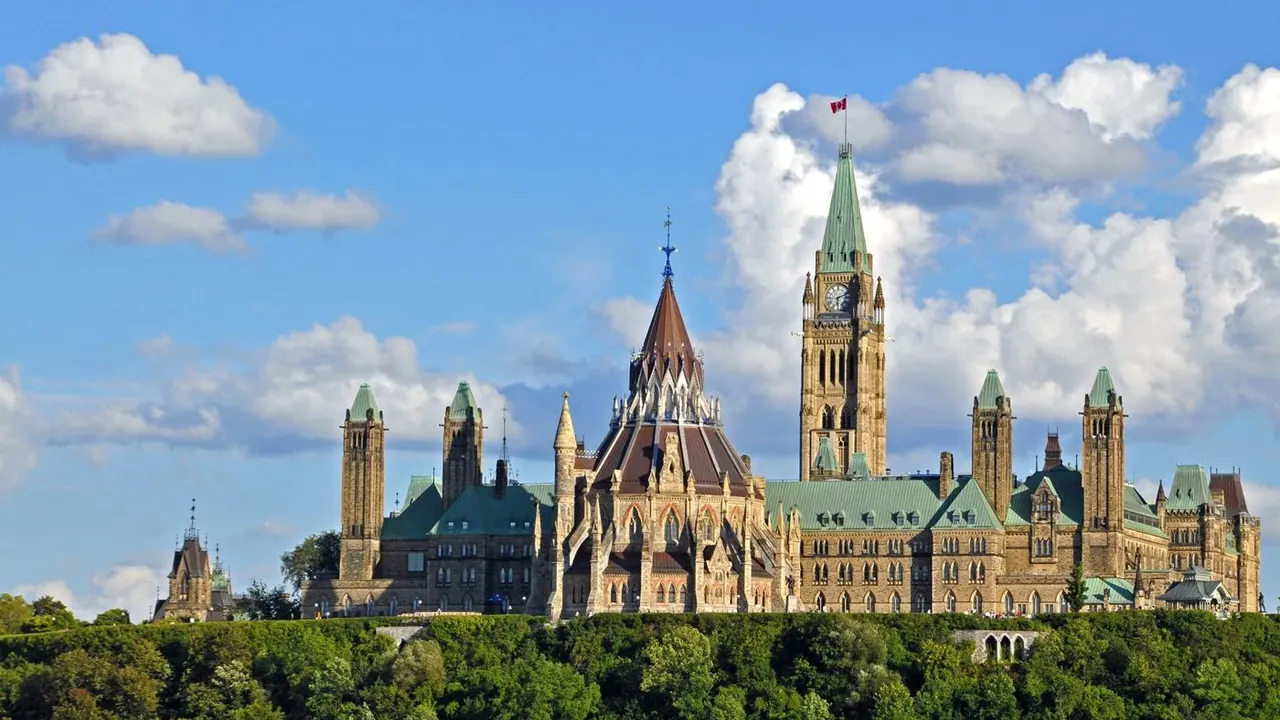
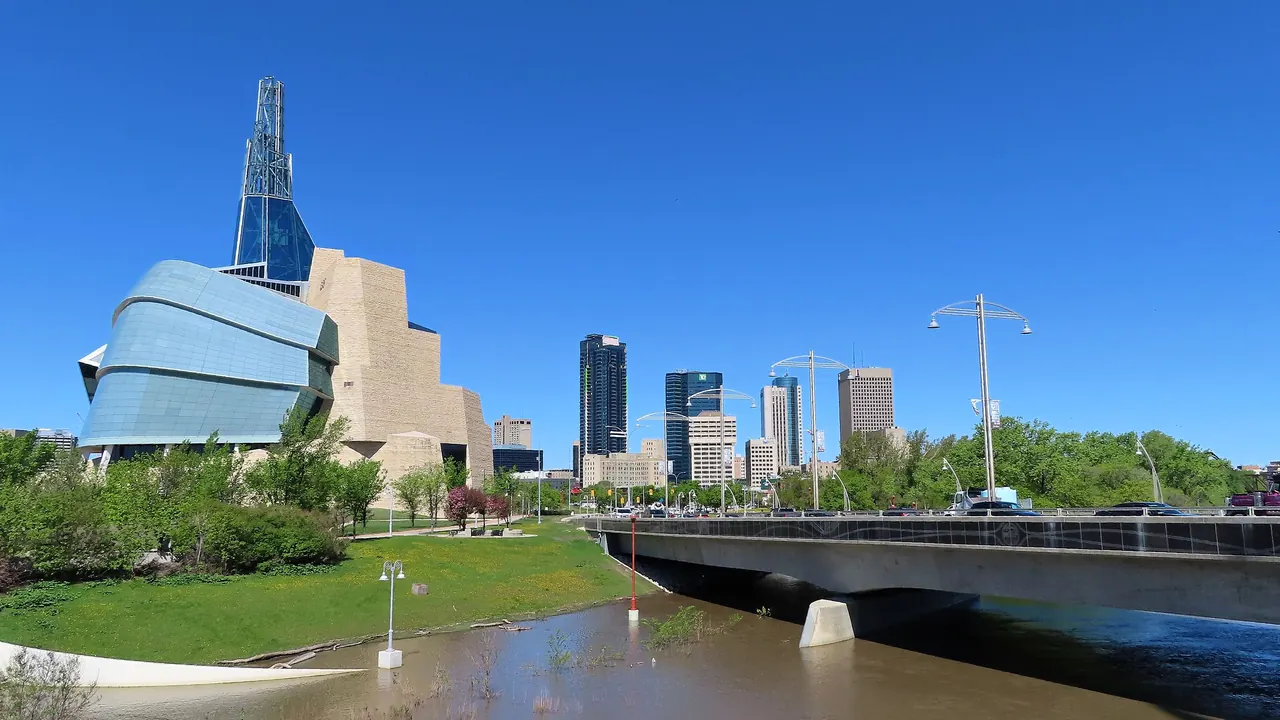
Photos: Ottawa by Dennis G. Jarvis, CC BY-SA 2.0, cropped; Winnipeg by Dennis Sylvester Hurd, CC BY 2.0, cropped.
Ottawa or Winnipeg?
Our verdict in twelve categories, each scored against the same fixed benchmark cities, and the climate month by month, so you can choose for your trip.
Choose Ottawa for
- day trips
- getting around
- nature and the outdoors
Ottawa is the better choice for most first visits. As the national capital it has the country's major museums, Parliament Hill and the Rideau Canal all in a centre you can walk, with Gatineau Park's forests and lakes just across the river and Montreal close enough for a day out by train. It suits travellers who want a full few days of sights, cycling and outdoor time without needing a car.
Choose Winnipeg for
- prices
- live music and the arts
Winnipeg is for travellers curious about the prairies, and for those watching their spending. Its strongest draws are particular ones: the Royal Winnipeg Ballet and a busy stage, the Human Rights museum, a world-class collection of Inuit art, and polar bears swimming overhead at the zoo. Choose it for a shorter, cheaper stay that centres on the Exchange District and The Forks. Hire a car if you want to see beyond them.
Scoreboard
Twelve categories on one fixed scale from 0 to 100. The shaded stretch is the gap between the two.
Your match
Pick a travel style or drag the sliders, and both match scores follow your weighting.
Wins on day trips and getting around with your weighting.
Wins on prices and live music and the arts with your weighting.
What matters to you?
Category by category
What the scores mean for a trip.
Beaches & swimming
Neither city is a beach destination, and the swimming differs in kind. In Ottawa it is close at hand. There are supervised river beaches inside the city, and Gatineau Park's clear lakes, Meech Lake and Lac Philippe, are ringed by forest and warm up to the low twenties in summer.
Winnipeg's swimming is a proper day at the lake. Grand Beach on Lake Winnipeg has fine white sand and dunes, and Gimli and Winnipeg Beach keep their old piers and boardwalks. But all of them are a drive of an hour or so, and late-summer algae can spoil the water.
Food & drink
Both cities eat well without being worth a trip for the food alone. What sets them apart is where the cooking comes from. In Ottawa it is shawarma from the Lebanese community, Preston Street's Italian places and the ByWard Market's stalls and pastries. Gatineau, across the river, adds poutine, tourtière and late-winter maple feasts at the sugar shacks.
Winnipeg's cooking is prairie comfort food: perogies, cabbage rolls and farmer sausage from Ukrainian and Mennonite kitchens, plus local oddities like honey dill sauce and dense rye bread. The Forks Market is its easy place to graze.
Culture & sights
Ottawa has the deeper list of sights, because it holds the national institutions. The National Gallery, the Museum of History with its totem-pole hall, and the War and Nature museums sit around Gothic Revival Parliament Hill and the UNESCO-listed Rideau Canal. That fills three or four days.
Winnipeg has fewer sights, but they are distinctive: the spiralling Human Rights museum, the Inuit art collection at the Art Gallery, the Nonsuch replica, and the grain-boom warehouses of the Exchange District. Two or three days is enough.
Nightlife
Both are quiet towns after dark, though their nights feel different. Ottawa's are a pub-and-patio affair along the ByWard Market and Elgin Street, busiest with students at weekends. Bars close earlier than in Quebec, so late-night crowds cross the bridge to Gatineau.
Winnipeg's better evenings are in craft-beer and cocktail bars inside the Exchange District's old warehouses, or in Osborne Village's pubs. In deep winter the night out often shrinks to one warm room.
Nature & outdoors
Ottawa has far better outdoors on its doorstep. Gatineau Park's maple and pine hills, lakes and ridges begin just across the river. The city's paved paths along the river and canal make it a superb cycling capital, and winter adds a skating route of nearly 8km on the canal, plus whitewater rafting upstream.
Winnipeg sits on flat prairie, so its everyday nature is riverbank paths, the oak woods of Assiniboine Forest and the bison at FortWhyte Alive. The granite and lake country of Whiteshell is about an hour and a half's drive east, and summer mosquitoes are fierce.
Day trips
Ottawa has much more within reach. Montreal is about two hours by train, and Kingston with the Thousand Islands is a similar distance away. Closer in, the stone-locked canal towns like Merrickville and the Gatineau Hills village of Wakefield make easy half days.
Winnipeg's list is short and needs a car every time. It amounts to Lower Fort Garry's fur-trade post, Icelandic Gimli on the lake, and the Mennonite village at Steinbach, all pleasant but small.
Good for families
Ottawa gives families more to do, mostly through its national museums. There are dinosaurs at the Nature museum, hands-on galleries at Science and Technology, a hangar of aircraft, and the Children's Museum inside the Museum of History. The free changing of the guard on Parliament Hill is popular in summer.
Winnipeg's standout is something Ottawa lacks entirely: a zoo where polar bears swim over an underwater tunnel. With the Children's Museum at The Forks and the bison at FortWhyte, it fills a few good days, though winter means driving from one indoor stop to the next.
Getting around
Ottawa is much easier without a car. Its main sights sit in a walkable core, a light rail line crosses the city, and bike share and riverside paths make summer cycling the natural way to get about. A car is only needed for the further lakes and towns.
Winnipeg's centre, the Exchange District and The Forks can be walked in summer, with enclosed skywalks for the cold months. Beyond that the city is spread out, buses are the only transit and they are slow, so most visitors end up renting a car.
Shopping & style
Neither city is a shopping destination, but Ottawa has a little more to browse. As well as the Rideau Centre, there are independent bookshops and boutiques along Bank Street in the Glebe and in Wellington West, Indigenous galleries in the ByWard Market, and maple syrup and outdoor gear to take home.
Winnipeg's interesting shops are in the Exchange District's warehouses and along Corydon and Osborne. Its best purchase is Inuit and First Nations art from the specialist galleries.
Affordability
Winnipeg is the easier city on a budget. Its downtown hotels cost noticeably less, and the sights are moderately priced. The catch is transport, because anything outside the centre means paying for a car or taxis.
Ottawa costs more for rooms and drinks. It claws some of that back with free Parliament tours, free hours at several national museums, cheaper meals in Gatineau, and weekend hotel rates that dip when government travel stops.
Live music & performing arts
The two are evenly matched on stage, with different strengths. Ottawa's centre of gravity is the National Arts Centre, with its orchestra and theatre companies working in English, French and Indigenous languages. Its summer festivals stand out: Bluesfest on LeBreton Flats, jazz, and Chamberfest.
Winnipeg is the stronger choice for ballet. The Royal Winnipeg Ballet, the country's oldest, shares a concert hall with the symphony and the opera. The Fringe and the Folk Festival at Birds Hill Park fill its summers, and small clubs keep live music going more steadily through the year.
Wellness & relaxation
Both cities have an outdoor Nordic spa as their one real draw, but Ottawa's has the better setting. It sits in the forest at Chelsea, on the edge of Gatineau Park, about fifteen minutes out, and the calm walks along the river and canal add to the restful feel.
Winnipeg's spa is in the city, among trees by a park, and steaming at -20°C is memorable. Beyond it and a quiet afternoon in Assiniboine Park's English garden, there is little else built around rest.
When should you go?
Pick your month. The climate figures are measured averages, not a forecast.
Ottawa in July
Winnipeg in July
Daytime high, °C
Rainfall in the month, mm
Temperature and rainfall are climate normals, averaged over the years shown. Ottawa: 1991-2020 normals, Ottawa CDA RCS (5.3 km from centre). Winnipeg: 1991-2020 normals, Winnipeg The Forks (0.9 km from centre).
Both cities have a short, warm summer, with July highs around 27°C in each. June to August is the time for lake swimming, cycling and long days on foot. Ottawa's swimming starts a little earlier, from late June. Its September stays mild enough for comfortable walking, and the Gatineau Hills turn red and gold into early October. Winnipeg cools faster after August and is best kept to high summer.
Rain follows a different pattern in each city. Ottawa is damp all year with no real dry season. Summer brings regular showers, but autumn is wetter still, and October is its wettest month at about 94mm. Winnipeg's rain is concentrated in early summer, so June and July are when to pack a waterproof. From October to April it is dry, and its cold days tend to be clear and hard rather than wet. Winter divides them most. In January, Ottawa's daytime highs sit around -5°C and Winnipeg's nearer -10°C, cold enough that walking gives way to skywalks and cars. Both work in winter for skating and the Nordic spas, but Ottawa is the easier city to walk around.
Which traveller are you?
On an outdoors trip, Ottawa is clearly better. Gatineau Park's trails, lakes and lookouts start across the river from downtown, the riverside cycle paths are excellent, and winter brings canal skating and groomed ski trails. Winnipeg's real wilderness is a long drive away.
For a short city break, choose Ottawa. Parliament Hill, the National Gallery, the ByWard Market and the canal all sit within a compact walkable core, and the Museum of History is a short walk across the bridge. Winnipeg's centre is smaller, and the city around it needs a car.
On a trip on a tight budget, Winnipeg goes easier on your money. Downtown hotels cost noticeably less, and the cheap, honest cooking of its Ukrainian, Mennonite and Filipino kitchens helps too. Stay central and skip the car, though, because rental and taxis quickly eat the saving.
Before you go
| Measure | Ottawa | Winnipeg |
|---|---|---|
| Official language | French, English | French, English |
| Currency | Canadian Dollar (CAD) | Canadian Dollar (CAD) |
| Sockets | AB120 V, 60 Hz | AB120 V, 60 Hz |
| Driving side | Right | Right |
| Time zone | UTC-5, UTC-4 in summer | UTC-6, UTC-5 in summer |
| Emergency number | 911 | 911 |
| Elevation | 70 m | 238 m |
| Main airport | Ottawa Macdonald-Cartier International Airport (YOW)12 km from centre46 non-stop destinations | Winnipeg / James Armstrong Richardson International Airport (YWG)7 km from centre41 non-stop destinations |
| Public holidays this year | 11 days | 10 days |
By the numbers
| Measure | Ottawa | Winnipeg |
|---|---|---|
| City population | 1,017,449 | 749,607 |
| People per km² | 366 | 1,670 |
| Museums within 10 km | 20 | 30 |
| UNESCO World Heritage sites within 50 km | 1 | 0 |
Where else could you go?
Every comparison below shares a destination with this one, so you can follow Ottawa or Winnipeg somewhere new.