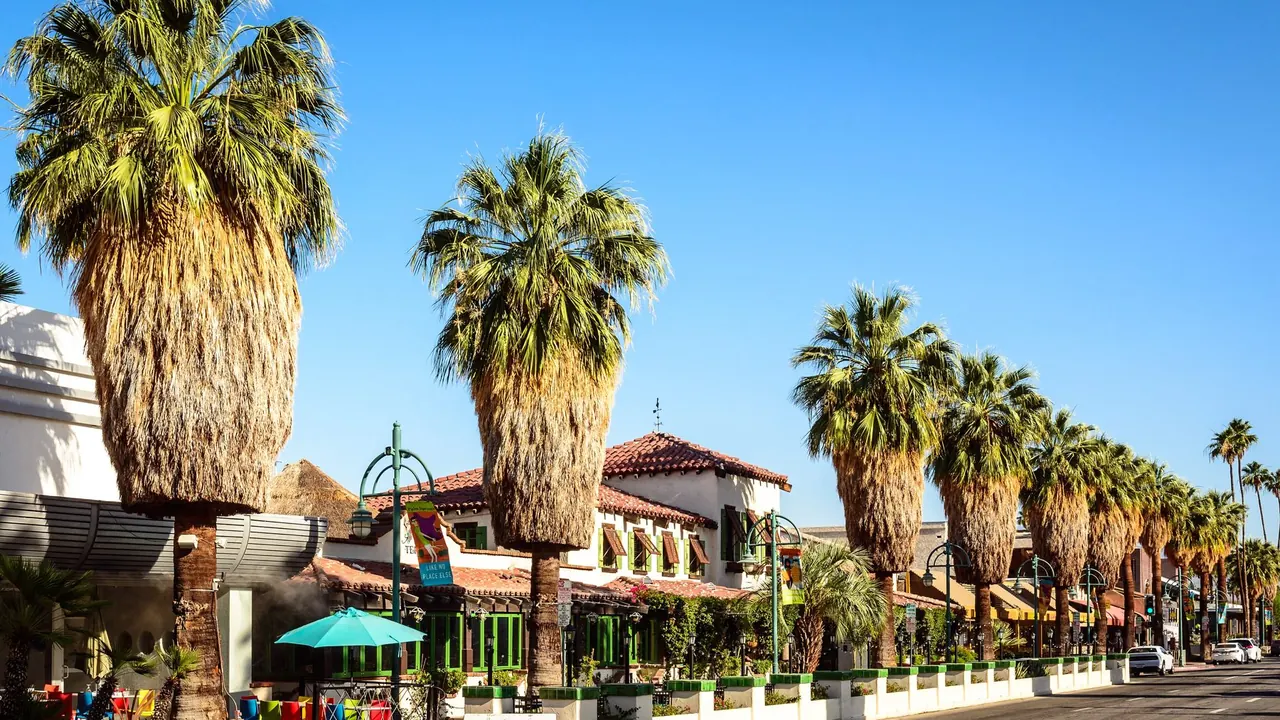
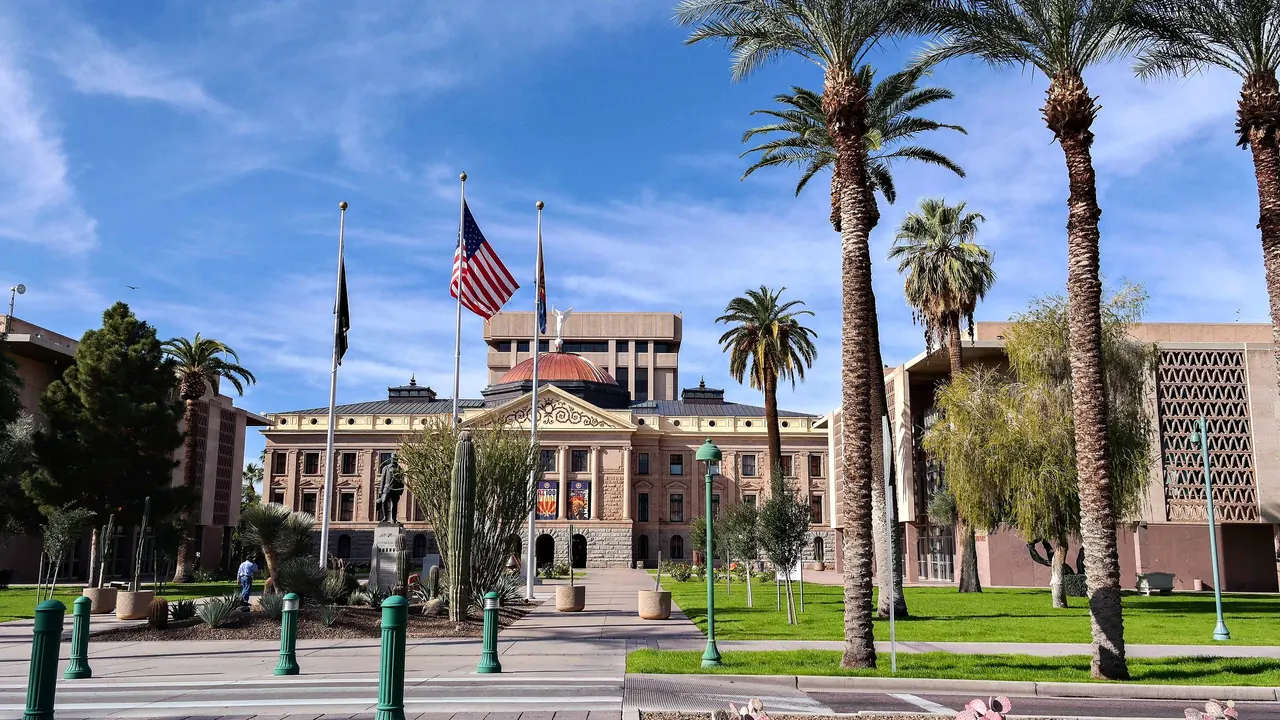
Photos: Palm Springs by Domenico Convertini, CC BY-SA 2.0, cropped; Phoenix by Visitor7, CC BY-SA 3.0, cropped.
Palm Springs or Phoenix?
Our verdict in twelve categories, each scored against the same fixed benchmark cities, and the climate month by month, so you can choose for your trip.
Choose Palm Springs for
- wellness
- nature and the outdoors
- getting around
Palm Springs suits a slower trip. It is a small desert resort town where the days go on pools, mineral soaks and mountain trails that start at the edge of town. Couples, friends travelling together and anyone wanting to switch off will find it easier to rest here, and it has the stronger landscape too, from the tramway up to the pine forest to the palm oases in the canyons. It also has the mid-century architecture, which is reason enough for a design lover to come.
Choose Phoenix for
- families
- food and drink
- day trips
Phoenix makes more sense if you want a bigger place with more going on. A large metro area gives you better Sonoran Mexican food, more choice of places to go out in Scottsdale and Tempe, more for children to do and a longer list of drives into red rock and mining country. It also costs a little less. In return you will spend more time in the car and lose the small-town calm.
Scoreboard
Twelve categories on one fixed scale from 0 to 100. The shaded stretch is the gap between the two.
Your match
Pick a travel style or drag the sliders, and both match scores follow your weighting.
Wins on wellness and nature and the outdoors with your weighting.
Wins on families and food and drink with your weighting.
What matters to you?
Category by category
What the scores mean for a trip.
Beaches & swimming
Neither city is a beach destination. Both are inland desert towns and the swimming happens in pools. In Palm Springs the pool is the centre of nearly every hotel and rental house, and the ocean is about two hours away over the mountains.
Phoenix adds some open water you can drive to. The Salt River reservoirs, such as Saguaro Lake and Canyon Lake, have small beaches among desert cliffs, and tubing down the river is a summer tradition. Its family resorts also have lazy rivers and water slides.
Food & drink
Phoenix eats better, and the reason is the Sonoran borderlands: carne asada, machaca, very thin flour tortillas and bacon-wrapped hot dogs, along with good wood-fired pizza and bread. Central Phoenix and Roosevelt Row have the more interesting independent places, and Scottsdale covers steakhouses and resort dining, though you will drive between them.
Palm Springs is more about long patio brunches and poolside cocktails than serious meals, and its mid-range American places along Palm Canyon Drive are reliable but limited. Its own treats are the date shake from the groves around Indio and the taquerias further down the valley.
Culture & sights
The two are level, but what you see differs. Palm Springs is a place to look at buildings. You can spend a day driving or cycling past Albert Frey's houses, Neutra's Kaufmann House and the Alexander homes with their folded roofs, and Modernism Week each February draws design enthusiasts.
Phoenix is a city of museums instead. The Heard Museum's Native American collection and the Musical Instrument Museum are the highlights, and Frank Lloyd Wright's Taliesin West gives it one major piece of architecture of its own.
Nightlife
Phoenix has more nightlife, spread across separate districts. Old Town Scottsdale has proper clubs and rooftop bars, Mill Avenue in Tempe runs on students, and downtown has craft beer and cocktail bars with a more local crowd.
Palm Springs has a smaller, more sociable scene centred on the long-established LGBTQ bars of Arenas Road, with drag nights and patio drinking, plus retro cocktail lounges on Palm Canyon Drive. It is good company for an evening, but there are hardly any clubs and most nights end early.
Nature & outdoors
Both have desert mountains close at hand, but Palm Springs has the more dramatic setting. The aerial tramway rises from the desert floor to pine forest and winter snow on Mount San Jacinto, the Indian Canyons and Tahquitz Canyon hide palm oases and a waterfall, and Joshua Tree is about an hour away.
Phoenix's mountains sit among the suburbs: South Mountain, the scramble up Camelback and the saguaro forest of the McDowell Sonoran Preserve. Sedona's red rock country is about two hours north. It is excellent hiking country, but it lacks the climb from desert to alpine forest that Palm Springs offers.
Day trips
From Phoenix you have more choice, with places that feel quite different from one another. Jerome is an old copper town on a hillside and Prescott has a Western square, Montezuma Castle is an ancient cliff dwelling on the way to Sedona, and Tucson's adobe barrios and Mission San Xavier del Bac are under two hours south.
The outings from Palm Springs are fewer and more quirky. Idyllwild is a village in the pines and Pioneertown is a lived-in film set, while Salvation Mountain and the abandoned resorts sit on the Salton Sea, with Temecula's wineries a little further. Both cities need a car for all of it.
Good for families
Phoenix is the better choice with children. A zoo, an aquarium, a science centre, a children's museum and several water parks are all in the metro area, spring training games make for an easy afternoon, and the hotels are spacious and welcome families. Expect long drives between them.
Palm Springs works for a family pool vacation with a few outings, such as the Living Desert, the tramway and the Air Museum. The town leans towards adults, though, with adults-only boutique hotels and cocktail-driven social life, so families tend to stay in the big resorts further down the valley.
Getting around
Both need a hire car, but the problems differ. In Palm Springs the downtown strip is small and flat enough to walk, bikes suit the mid-century neighbourhoods in cool weather, and the airport is at the edge of town. The canyons, the tramway and Joshua Tree still need a car.
Phoenix is spread out over a vast grid, with Scottsdale, Tempe and the trailheads far apart. Its light rail line covering the airport, downtown and Tempe is the one useful public option, which Palm Springs lacks.
Shopping & style
Phoenix has a little more range, mostly in Scottsdale malls with international brands plus galleries and Western wear in Old Town. Its distinctive buy is Native American work such as Navajo and Zuni silver, Hopi katsina carvings and rugs, best bought from museum shops and reputable galleries.
Palm Springs does one thing better: mid-century modern furniture, lighting and vintage clothing in the Uptown Design District. For bigger shopping trips there are El Paseo's luxury shops and the Cabazon outlets nearby.
Affordability
Phoenix is somewhat easier on the budget. Chain hotels along the freeways stay good value all year, Sonoran Mexican food is cheap and good, and much of the hiking is free.
Palm Springs costs more in its winter and spring high season, when pool houses and boutique hotels charge resort prices and festival weekends push them higher. In both places summer rooms fall sharply, and in both a hire car adds to the bill.
Live music & performing arts
The two are close, with different kinds of live entertainment. Palm Springs is about drag cabaret and piano-bar singing in town, with touring shows at the McCallum Theatre and casino concerts in the valley. Each April, Coachella and Stagecoach fill the polo grounds at Indio, half an hour away.
Phoenix has the regular institutions of a large city instead: the symphony, Arizona Opera, Ballet Arizona and Broadway tours at Wright's round ASU Gammage. In both cities the programme largely stops in summer.
Wellness & relaxation
Palm Springs is clearly the better place to unwind, because the town grew up around a hot spring. You can soak at the bathhouse over the sacred Agua Caliente spring, and the small spa motels of Desert Hot Springs fill their pools with hot mineral water straight from the ground. Quiet streets and evenings as the light turns pink on San Jacinto add to it.
Phoenix and Scottsdale offer the big-resort version: full spas, golf and treatments using sage, clay and agave at the foot of Camelback. There is no public bathing culture or spring to visit, though, and outside the resorts the pace is that of a sprawling city.
When should you go?
Pick your month. The climate figures are measured averages, not a forecast.
Palm Springs in July
Phoenix in July
Daytime high, °C
Rainfall in the month, mm
Where the figures come from
Palm Springs has no rain gauge within 25 km of the centre, so its rainfall comes from a gridded climate dataset read at the city rather than from a gauge further away.
Temperature and rainfall are climate normals, averaged over the years shown. Palm Springs: 2006-2020 (rainfall 1991-2020) normals, Palm Springs (2.3 km from centre). Phoenix: 1991-2020 normals, Phoenix Sky Harbor Airport (2.8 km from centre).
The two cities have almost the same temperatures through the year, and both are at their best from November to April. Winter days are around 20°C in both, which is ideal for walking the streets and hiking in comfort, and by March and April the afternoons are hot enough for the pool. From June to September the highs run from 38°C to 42°C, at their worst in July and August. Outdoor plans then shrink to the hour after dawn, and October and May are already hot by midday.
The difference is in the rain. Palm Springs is dry almost all year. What little rain it gets falls mostly from December to February, under 30mm even in the wettest month, and its summer is close to rainless. Phoenix gets similar light rain in winter, plus a second wet spell in midsummer, with July and August each bringing around 24mm. So its hottest weeks are less reliably dry than those in Palm Springs.
Which traveller are you?
On a relaxing and wellness trip, Palm Springs is the clear choice. You can soak in mineral water at the Agua Caliente spring or at the spa motels of Desert Hot Springs. The town is quiet and its days run at a pool-side pace, while Phoenix's resort spas sit in a sprawling city.
On a family trip with children, choose Phoenix. The zoo, the aquarium, the science centre, a children's museum, water parks and spring training baseball keep children busy for a week. In Palm Springs many boutique hotels take adults only, and there are fewer outings.
For a food and nightlife trip, Phoenix offers more. You can eat Sonoran carne asada, street-cart hot dogs and wood-fired pizza, then go out to Scottsdale's clubs, Tempe's student bars or the downtown cocktail lounges. Palm Springs has a small, friendly bar strip but not much serious dining.
Before you go
| Measure | Palm Springs | Phoenix |
|---|---|---|
| Currency | US Dollar (USD) | US Dollar (USD) |
| Sockets | AB120 V, 60 Hz | AB120 V, 60 Hz |
| Driving side | Right | Right |
| Time zone | UTC-8, UTC-7 in summer | UTC-7 |
| Emergency number | 911 | 911 |
| Elevation | 146 m | 331 m |
| Main airport | Palm Springs International Airport (PSP)2 km from centre29 non-stop destinations | Phoenix Sky Harbor International Airport (PHX)6 km from centre149 non-stop destinations |
| Public holidays this year | 13 days | 12 days |
By the numbers
| Measure | Palm Springs | Phoenix |
|---|---|---|
| City population | 44,575 | 1,608,139 |
| People per km² | 181 | 1,199 |
| Museums within 10 km | 3 | 10 |
| UNESCO World Heritage sites within 50 km | 0 | 1 |
Where else could you go?
Every comparison below shares a destination with this one, so you can follow Palm Springs or Phoenix somewhere new.