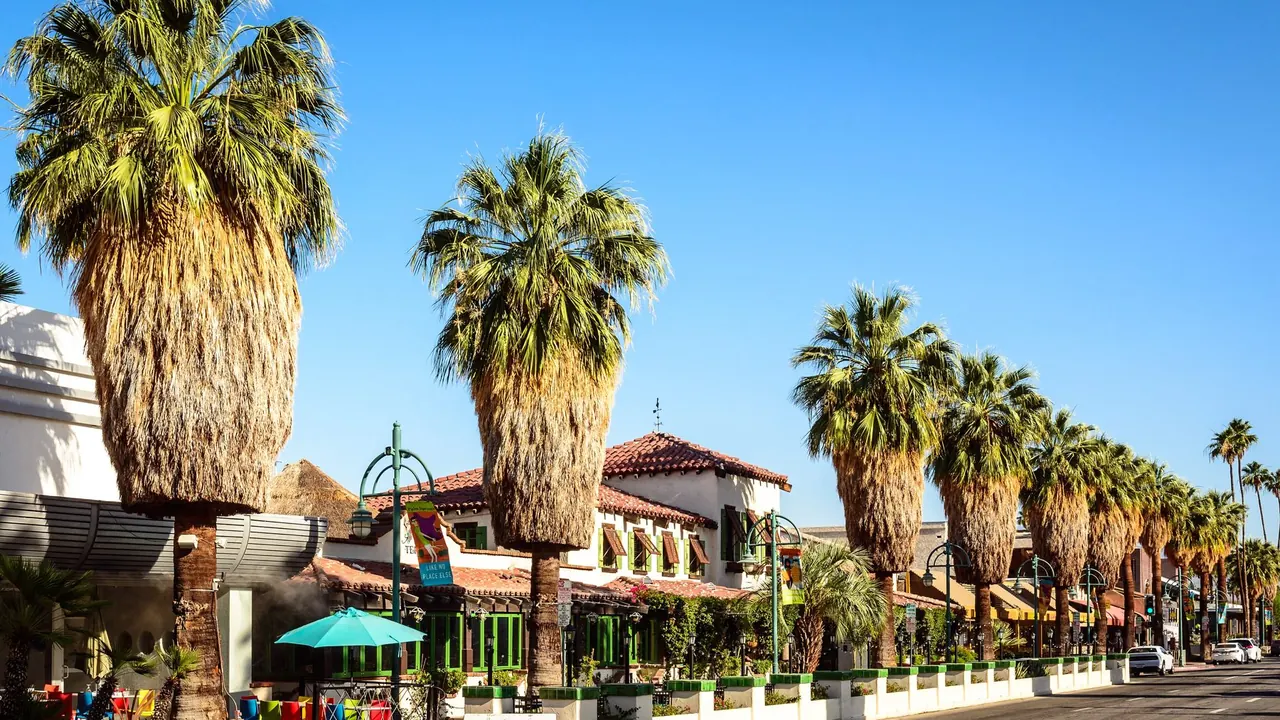
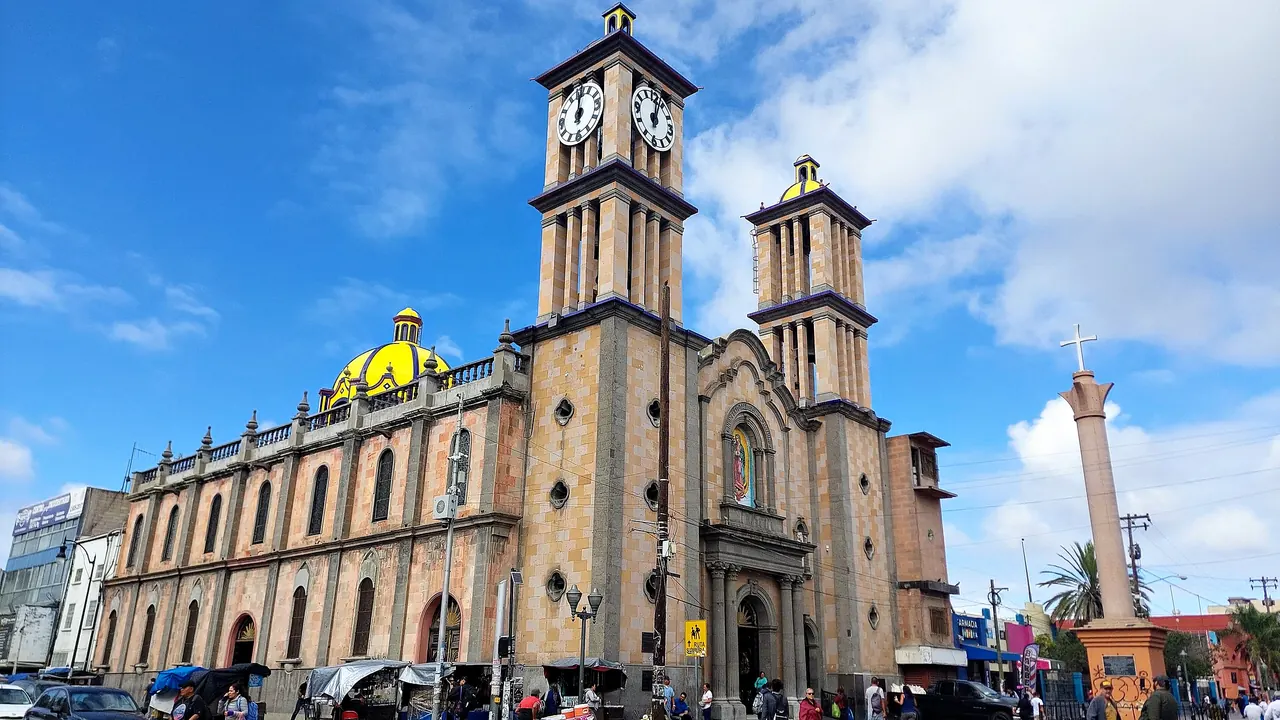
Photos: Palm Springs by Domenico Convertini, CC BY-SA 2.0, cropped; Tijuana by Exprimidor, CC BY-SA 4.0, cropped.
Palm Springs or Tijuana?
Our verdict in twelve categories, each scored against the same fixed benchmark cities, and the climate month by month, so you can choose for your trip.
Choose Palm Springs for
- wellness
- nature and the outdoors
- culture and sights
Palm Springs suits a trip built around slowing down in dry desert sun. Days go on a pool under the mountains, mineral soaks at the Agua Caliente spring or in the spa motels of Desert Hot Springs, and the tramway or the palm canyons whenever you feel like moving. It works best for couples, design lovers and walkers who will hire a car, eat simply and come between autumn and spring.
Choose Tijuana for
- prices
- food and drink
- beaches
Go to Tijuana to eat and to stay out late. Taco stands, seafood carts and Baja Med kitchens, nights on Calle Sexta and in the craft beer taprooms, and cheap rides across town make it a good base for a short, sociable trip, with Rosarito, Ensenada and the Valle de Guadalupe all within reach to the south. It suits curious, food-minded travellers who don't mind noise, sprawl and a border crossing.
Scoreboard
Twelve categories on one fixed scale from 0 to 100. The shaded stretch is the gap between the two.
Your match
Pick a travel style or drag the sliders, and both match scores follow your weighting.
Too close to call, 1 point apart
Wins on wellness and nature and the outdoors with your weighting.
Wins on prices and food and drink with your weighting.
What matters to you?
Category by category
What the scores mean for a trip.
Beaches & swimming
Neither city is a beach destination, but only Tijuana has the sea at all. Playas de Tijuana gives you a sandy promenade that runs down to the border fence, and Rosarito, half an hour south, has wide sand and beach bars. The Pacific is cool, though, and runoff makes swimming close to the city unwise.
In Palm Springs, swimming means the hotel pool. The nearest ocean is about two hours west over the mountains.
Food & drink
Tijuana is the place for serious eating. Its tacos are reason enough to come: spit-roasted adobada, birria with its broth, and Ensenada-style fish tacos. Add seafood carts piled with clams and octopus, Baja Med restaurants in Zona Río and Chapultepec, a strong craft beer culture and wines from the Valle de Guadalupe.
Palm Springs feeds you comfortably rather than memorably. It's a town of long patio brunches, poolside cocktails and mid-range American dining along Palm Canyon Drive. Its most distinctive tastes are the date shakes from the groves around Indio and the Mexican taquerias further east in the valley.
Culture & sights
Palm Springs has the stronger draw here, and it is architecture. Frey's angular houses, Neutra's Kaufmann House and the Alexander tract homes in Twin Palms make a day of driving or cycling worthwhile, and the Palm Springs Art Museum and the Agua Caliente Cultural Museum round it out.
Tijuana's sights are fewer and younger. They come down to the domed Centro Cultural with its Museo de las Californias, the Jai Alai palace on Avenida Revolución, and the murals on the border fence, which leave the strongest impression.
Nightlife
Tijuana goes out harder and later. Avenida Revolución does loud, cheap drinking aimed at visitors from the north, while a block away Calle Sexta's cantinas and small dance spots draw a young local crowd until late. It pays to stay within these areas and to use ride-hailing after dark.
Palm Springs offers a friendlier, smaller evening. You'll find the LGBTQ bars and drag nights of Arenas Road, retro cocktail lounges and spring pool parties, but it has hardly any clubs and most places close early.
Nature & outdoors
This is where Palm Springs leads by a long way. The tramway lifts you from the desert floor to pine forest and winter snow on Mount San Jacinto, palm oases fill the Indian and Tahquitz canyons at the edge of town, and Joshua Tree's boulders and night skies are about an hour away. The catch is the summer heat, which leaves hiking only for the early morning.
Tijuana sits among dry, scrubby hills with little green space of its own. Its outdoors lies south along the coast: cliffs on the Ensenada road, surf near Rosarito and whale-watching in winter.
Day trips
From Tijuana you can explore two countries. Rosarito and the lobster village of Puerto Nuevo are close, while Ensenada's fish market and the vineyards of the Valle de Guadalupe each make a full day out. San Diego's Balboa Park and La Jolla lie just north, though the return crossing can take hours.
The outings from Palm Springs are quirkier and fewer: the pine village of Idyllwild, the old film set of Pioneertown and the abandoned shores of the Salton Sea. Los Angeles is too far to visit comfortably in a day.
Good for families
Palm Springs makes the easier family trip, provided it's planned as a pool vacation with outings. The Living Desert zoo, the tramway ride up to the snow and the warplanes of the Air Museum give children real highlights, although many boutique hotels are adults-only and the larger resorts down the valley suit families better.
Tijuana has El Trompo science museum, the IMAX dome and Parque Morelos, but little else for children. Patchy pavements and long distances also make it hard going with a pushchair.
Getting around
Both cities are built for cars, but Tijuana is a little easier without one. You can walk downtown from the San Ysidro crossing, and plentiful taxis and ride-hailing cover the rest, even if the bus routes are hard for a visitor to read.
In Palm Springs, the flat downtown strip is easy on foot and the airport sits at the edge of town. However, the tramway, the canyons and Joshua Tree all need a hire car, as the valley buses are slow and infrequent.
Shopping & style
Palm Springs has a clearer specialism: mid-century furniture, lighting and vintage clothing in the consignment shops of the Uptown Design District. El Paseo's luxury street and the Cabazon outlets are close by.
Tijuana's shopping is more about bargaining than style. There are blankets, silver and piñatas in the curio markets, chillies and Mexican vanilla at Mercado Hidalgo, and small studios and record shops in the arcades off Revolución.
Affordability
Tijuana is much the cheaper of the two. Street tacos, good-value hotels in Zona Río and cheap rides around town all help, and prices only climb on the tourist strip of Revolución, in the better Baja Med restaurants and at wine tastings.
Palm Springs charges resort prices from winter into spring, and the hire car adds to the bill. Its bargains come in the summer heat, when room rates drop sharply.
Live music & performing arts
Palm Springs has the bigger occasions. Coachella and Stagecoach fill the Indio polo grounds each April, and the McCallum Theatre and the valley's casinos book touring shows and well-known acts. In town, the evenings belong to drag cabaret and piano bars, though the programme fades out in summer.
Tijuana's offer is more home-grown: the state orchestra and touring theatre at the Centro Cultural, a long-standing opera company, mariachis on Plaza Santa Cecilia and the Nortec sound in the bars around Calle Sexta.
Wellness & relaxation
This is the biggest gap between the two cities. Palm Springs grew up around a sacred hot spring, which you can still soak in downtown. Desert Hot Springs, fifteen minutes away, fills its spa pools with mineral water straight from the ground, and the slow pace of pool, sun and mountain views makes it easy to switch off.
Tijuana is loud and traffic-heavy, and the health trade it's known for is medical and dental. Calm is found in its hotel spas or out among the vineyards of the wine valleys.
When should you go?
Pick your month. The climate figures are measured averages, not a forecast.
Palm Springs in July
Tijuana in July
Daytime high, °C
Rainfall in the month, mm
Where the figures come from
Palm Springs has no rain gauge within 25 km of the centre, so its rainfall comes from a gridded climate dataset read at the city rather than from a gauge further away.
Tijuana has no rain gauge within 25 km of the centre, so its rainfall comes from a gridded climate dataset read at the city rather than from a gauge further away.
Temperature and rainfall are climate normals, averaged over the years shown. Palm Springs: 2006-2020 (rainfall 1991-2020) normals, Palm Springs (2.3 km from centre). Tijuana: 2006-2020 (rainfall 1991-2020) normals, San Diego / Bandini (6.7 km from centre).
The two climates could hardly differ more. Palm Springs is at its best from November to April, when the days are warm and dry and right for walking and hiking, and from March into October it is warm enough to spend the day by the pool. From June to September the afternoons reach 42°C, which keeps you indoors at midday and limits hiking to dawn or the upper mountain. Rain is scarce all year and falls mostly in winter.
Tijuana stays mild throughout, with highs around 20°C in winter rising only to the mid-twenties in late summer, so the streets are comfortable for walking in any month. Most of its rain falls between December and March, peaking at about 54mm in February, while summer is almost dry. The sea is coolest in winter and warmest in August and September, but even then it only reaches 21°C, so it's bracing rather than balmy. Summer, when Palm Springs is at its hottest, is the best time for Tijuana.
Which traveller are you?
On a relaxing and wellness trip, Palm Springs is the clear choice. A hot mineral spring in the middle of town, spa motels filled from the ground in Desert Hot Springs and quiet days by the pool are exactly what loud, traffic-heavy Tijuana lacks.
For a food and nightlife trip, Tijuana is far ahead. Adobada and birria tacos, sea urchin tostadas and Baja Med cooking come first, and then late nights in the cantinas and dive bars of Calle Sexta, which outlast Palm Springs's small Arenas Road scene.
On a trip with a tight budget, Tijuana goes much further. Street food, good-value hotels in Zona Río and inexpensive ride-hailing keep costs low, whereas Palm Springs in high season means resort room rates, American restaurant bills and a hire car.
Before you go
| Measure | Palm Springs | Tijuana |
|---|---|---|
| Official language | - | Spanish, Nahuatl, Yucatec Maya |
| Currency | US Dollar (USD) | Mexican Peso (MXN) |
| Sockets | AB120 V, 60 Hz | AB127 V, 60 Hz |
| Driving side | Right | Right |
| Time zone | UTC-8, UTC-7 in summer | UTC-8, UTC-7 in summer |
| Emergency number | 911 | 911 |
| Elevation | 146 m | 20 m |
| Main airport | Palm Springs International Airport (PSP)2 km from centre29 non-stop destinations | General Abelardo L. Rodriguez International Airport (TIJ)6 km from centre38 non-stop destinations |
| Public holidays this year | 13 days | 9 days |
By the numbers
| Measure | Palm Springs | Tijuana |
|---|---|---|
| City population | 44,575 | 1,810,645 |
| People per km² | 181 | 2,842 |
| Museums within 10 km | 3 | 3 |
| UNESCO World Heritage sites within 50 km | 0 | 0 |
| Swim season, months above 21 °C | - | 1 month |
Where else could you go?
Every comparison below shares a destination with this one, so you can follow Palm Springs or Tijuana somewhere new.