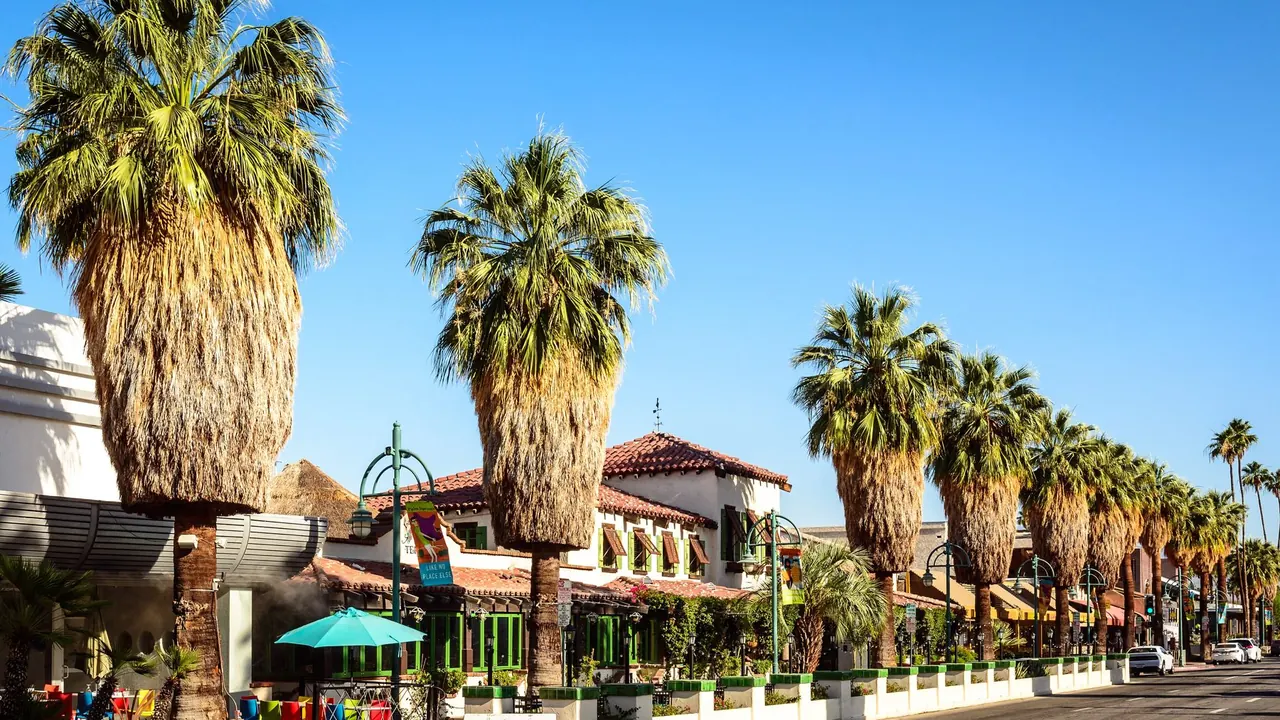
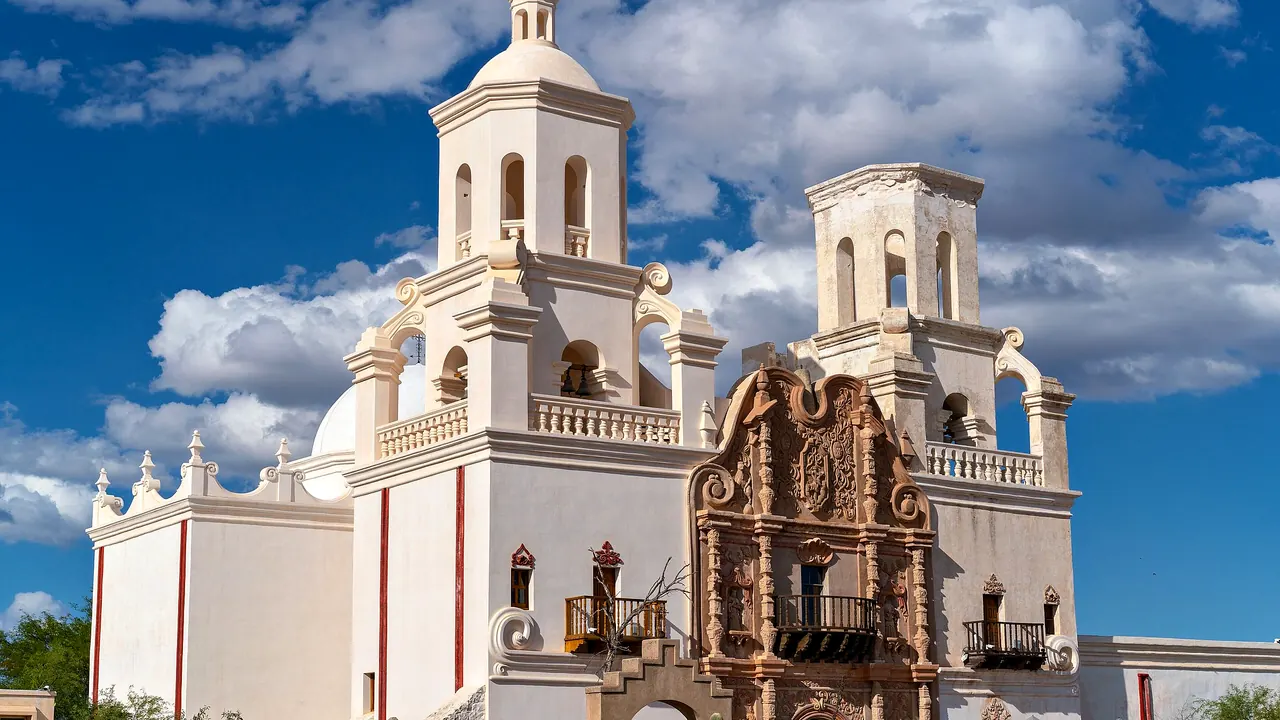
Photos: Palm Springs by Domenico Convertini, CC BY-SA 2.0, cropped; Tucson by Steve and Kimberly Rader, CC BY-SA 4.0, cropped.
Palm Springs or Tucson?
Our verdict in twelve categories, each scored against the same fixed benchmark cities, and the climate month by month, so you can choose for your trip.
Choose Palm Springs for
- wellness
- shopping
- beaches
Palm Springs is the better pick for a vacation built around doing very little, and doing it well. Mineral springs downtown and in Desert Hot Springs, a pool at almost every place to stay and a slow rhythm of brunch, sun and evening drinks make it one of the easiest places in the desert to unwind. Add the mid-century modern neighbourhoods and the Arenas Road bar scene and it suits couples, groups of friends and design lovers more than families.
Choose Tucson for
- day trips
- food and drink
- families
Tucson gives more to do and costs less. Its Sonoran Mexican cooking has real roots, the outings to Bisbee, Tombstone and Tubac carry you into frontier country, and the Desert Museum and the aircraft collections keep children busy. Pick it for an active, curious trip where good food and wide-open desert matter more than pampering.
Scoreboard
Twelve categories on one fixed scale from 0 to 100. The shaded stretch is the gap between the two.
Your match
Pick a travel style or drag the sliders, and both match scores follow your weighting.
Wins on wellness and shopping with your weighting.
Wins on day trips and food and drink with your weighting.
What matters to you?
Category by category
What the scores mean for a trip.
Beaches & swimming
Neither city is a beach destination, and in both of them swimming means a pool. Palm Springs is a little closer to the coast, two hours over the mountains, and the pool is more central to its whole way of life. Tucson's nearest sea is across the Mexican border, a weekend away, and Sabino Canyon's creek pools come and go with the rains.
Food & drink
Tucson is the better city for eating because it has a cuisine of its own. Sonoran Mexican cooking, mesquite-grilled meat, cheese crisps and bacon-wrapped hot dogs fill the family kitchens of South 12th Avenue and the old barrios, and desert ingredients such as tepary beans and cholla buds give it local depth.
Palm Springs offers pleasant patio brunches and poolside cocktails, but not much more. Its most memorable tastes are a drive away: date shakes from the Indio groves and taquerias in the farming towns further east.
Culture & sights
There is little to choose between them overall, but the sights are of different kinds. Palm Springs is about modern design: Frey and Neutra houses and the Alexander tract roofs, best toured by bike or car, with the art museum and the Cahuilla story as extras.
Tucson's heritage is older and Spanish. The gilded interior of Mission San Xavier del Bac, the adobe rows of Barrio Viejo and the Native American collections of the Arizona State Museum give it historical weight, while its aviation museum adds something unusual.
Nightlife
Both are small, early-closing scenes, but they draw different crowds. Palm Springs centres on Arenas Road, a long-established LGBTQ strip of patios, drag nights and spring pool parties. Tucson's evenings are split between student dive bars on Fourth Avenue and cocktail bars and rooftops on Congress Street, and they are liveliest during university term.
Nature & outdoors
For landscape the two are a match, and each has a mountain that rises from desert to pine forest. In Palm Springs the aerial tramway carries you up San Jacinto, palm oases fill the Indian and Tahquitz canyons, and Joshua Tree's boulders and night skies are an hour away.
Tucson has the saguaro forests of the national park on both sides of the city, a drive up Mount Lemmon with climbing and a small ski area, and sky island ranges that attract birdwatchers. Serious road cyclists tend to favour Tucson.
Day trips
Tucson has the better range of excursions. Bisbee's Victorian streets and mine tours, Tombstone's Wild West, the Tubac artists' village with the Tumacácori mission ruins, the Sonoita wineries and Biosphere 2 can fill several varied days.
From Palm Springs the trips are fewer and stranger: Idyllwild in the pines, the lived-in film set of Pioneertown, and the abandoned shores and Salvation Mountain at the Salton Sea. Both cities need a car for all of these.
Good for families
Tucson is the easier choice with children. The Desert Museum's mountain lions and hummingbirds, the zoo, the children's museum, the planetarium and an old western film set with stunt shows give enough for a week, though it all needs a car.
Palm Springs works for families as a pool vacation with a few outings, such as the Living Desert, the tramway and the Air Museum. Its many adults-only hotels and cocktail culture point families towards the bigger resorts down the valley.
Getting around
Both are car towns, and in both a hire car is effectively required for anything beyond the centre. Palm Springs has a flat, compact downtown and an airport on the edge of town. Tucson adds a single streetcar line linking downtown, Fourth Avenue and the university, which is handy for evenings out but no help in reaching the trailheads or the mission.
Shopping & style
These two are about even, but they sell different things. Palm Springs is the place for mid-century furniture, lighting and vintage clothes in the Uptown Design District, with El Paseo's luxury shops and the Cabazon outlets close by. Tucson's strengths are regional: Native American jewellery, Tohono O'odham baskets and Mexican folk art, plus the winter gem and mineral show, which brings in collectors from far and wide.
Affordability
Tucson is the gentler place on the wallet. Mid-range hotels cost less there, and taquerias and hot dog stands make cheap eating easy, though the car and the resort spas still add up.
Palm Springs is resort-priced from winter into spring, and festival weekends push it higher. Both cities get much cheaper in the summer heat, so the gap narrows for anyone willing to visit then.
Live music & performing arts
Neither is a reason to travel for the stage, and the difference is mainly in kind. Palm Springs offers drag cabaret and piano bars in town, the McCallum Theatre and casino concerts down the valley, and the Coachella and Stagecoach festivals each April. Tucson has a more conventional season, with a symphony, opera productions and touring shows at Centennial Hall, along with a deep mariachi tradition that the desert resort town lacks.
Wellness & relaxation
Palm Springs is the stronger retreat. The town grew up around the Agua Caliente spring, its bathhouse still lets visitors soak in the mineral water, and the spa motels of Desert Hot Springs draw on hot water straight from the ground. Add the slow poolside days and it is built for switching off.
Tucson's appeal is the structured destination spa: long-established foothills resorts with fitness classes, desert walks and meditation. It has no public baths, though, so the rest comes at resort prices rather than as part of daily life.
When should you go?
Pick your month. The climate figures are measured averages, not a forecast.
Palm Springs in July
Tucson in July
Daytime high, °C
Rainfall in the month, mm
Where the figures come from
Palm Springs has no rain gauge within 25 km of the centre, so its rainfall comes from a gridded climate dataset read at the city rather than from a gauge further away.
Temperature and rainfall are climate normals, averaged over the years shown. Palm Springs: 2006-2020 (rainfall 1991-2020) normals, Palm Springs (2.3 km from centre). Tucson: 1991-2020 normals, Tucson International Airport (10.1 km from centre).
The two cities share one season. From late October to April both are at their best, with daytime highs near 20°C in midwinter, and those are the months for hiking, cycling and walking the streets. Both get a little rain in December to February, and it is never enough to spoil a trip. By May both are past 33°C, and only the pool and the early morning are really comfortable.
Summer is where they part. Palm Springs is the hotter of the two and stays almost completely dry, reaching 42°C in July and August, so it is pool weather and little else. Tucson is a few degrees cooler but has its monsoon, with around 56mm in July and heavy storms through August and into September. Neither suits a summer sightseeing trip, but Tucson's storms and the cooler air up Mount Lemmon at least give the season some variety.
Which traveller are you?
On a relaxing and wellness trip, Palm Springs is the clear choice. It has the Agua Caliente bathhouse, Desert Hot Springs' spa motels filled straight from the hot aquifer and an unhurried poolside routine. Tucson's wellness means a resort stay, with no public bathing culture.
On a family trip with children, Tucson does more. The Arizona-Sonora Desert Museum, Reid Park Zoo, the planetarium and the huge aircraft give children plenty to do, while Palm Springs leans towards adults-only hotels and pool parties.
For a food and nightlife trip, Tucson has the edge, thanks to Sonoran carne asada, paper-thin tortillas and hot dog stands that Palm Springs cannot match. Going out is modest in both. Choose Palm Springs for LGBTQ patio bars, or Tucson for student dives and downtown rooftops.
Before you go
| Measure | Palm Springs | Tucson |
|---|---|---|
| Currency | US Dollar (USD) | US Dollar (USD) |
| Sockets | AB120 V, 60 Hz | AB120 V, 60 Hz |
| Driving side | Right | Right |
| Time zone | UTC-8, UTC-7 in summer | UTC-7 |
| Emergency number | 911 | 911 |
| Elevation | 146 m | 728 m |
| Main airport | Palm Springs International Airport (PSP)2 km from centre29 non-stop destinations | Tucson International Airport (TUS)12 km from centre18 non-stop destinations |
| Public holidays this year | 13 days | 12 days |
By the numbers
| Measure | Palm Springs | Tucson |
|---|---|---|
| City population | 44,575 | 542,629 |
| People per km² | 181 | 923 |
| Museums within 10 km | 3 | 10 |
| UNESCO World Heritage sites within 50 km | 0 | 0 |
Where else could you go?
Every comparison below shares a destination with this one, so you can follow Palm Springs or Tucson somewhere new.