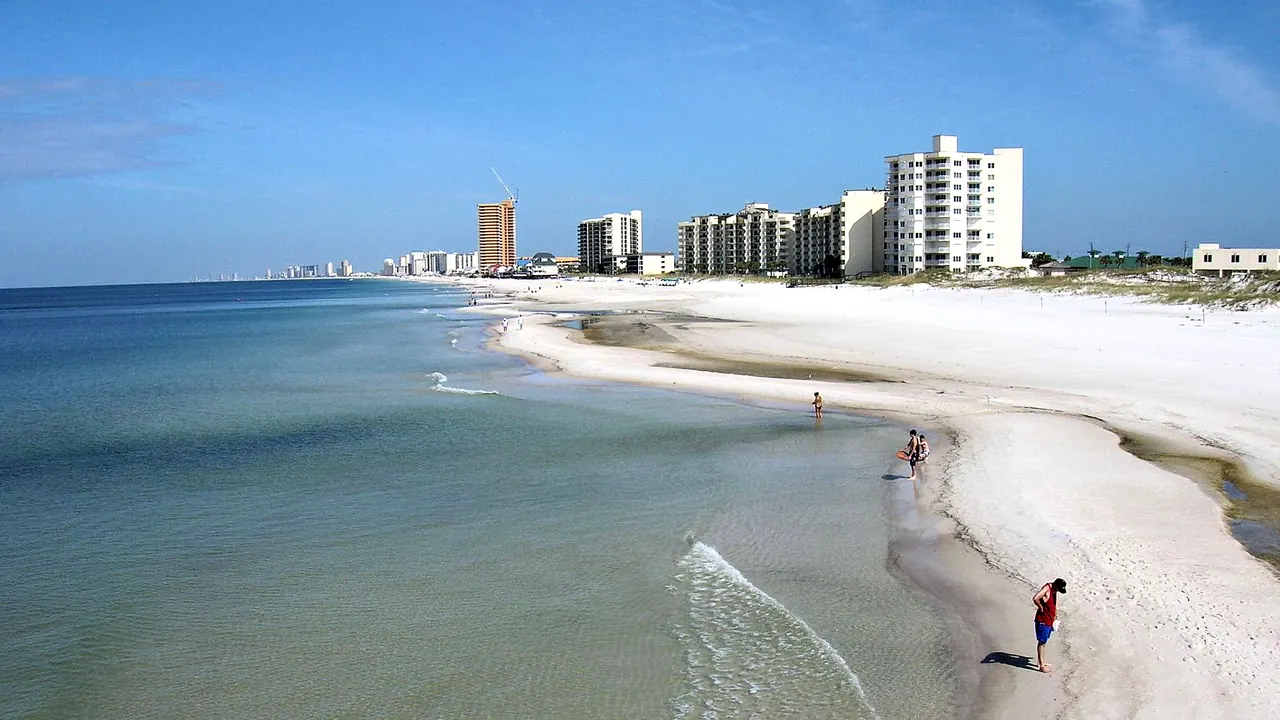
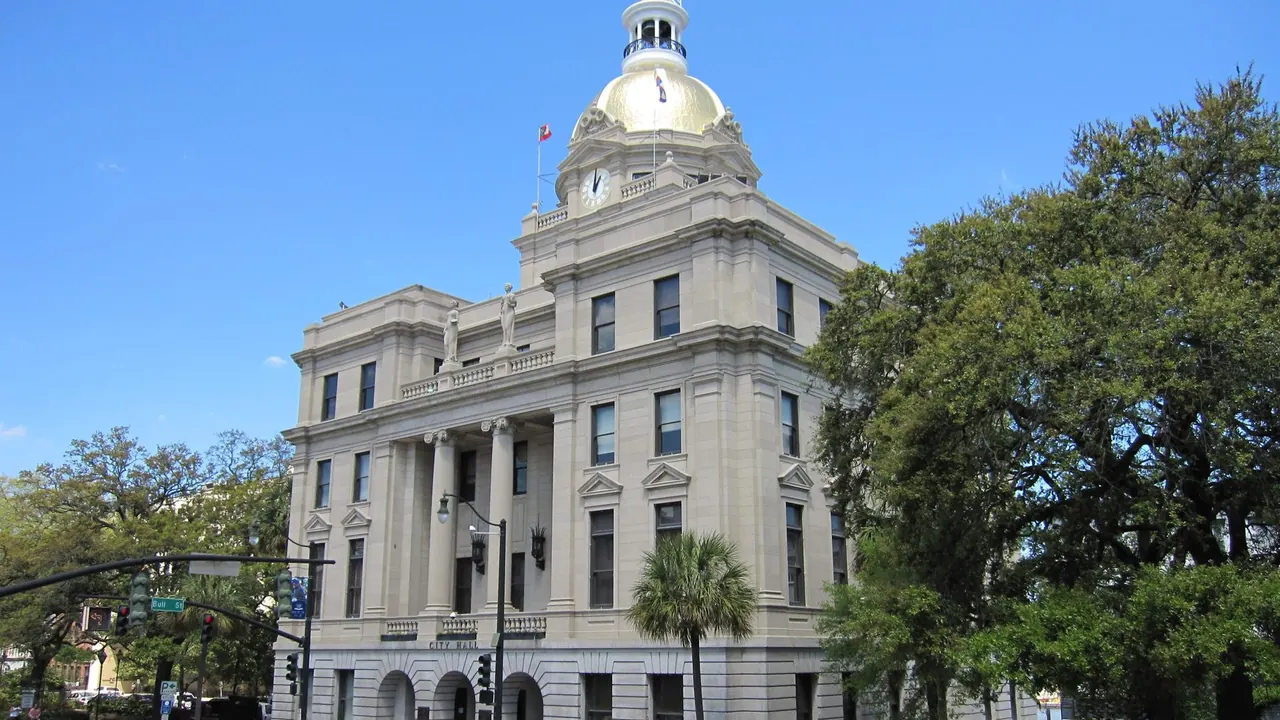
Photos: Panama City Beach by j.s. clark/ "Image by jsclark.net.", CC BY-SA 2.0, cropped; Savannah by Chris M Morris, CC BY 2.0, cropped.
Panama City Beach or Savannah?
Our verdict in twelve categories, each scored against the same fixed benchmark cities, and the climate month by month, so you can choose for your trip.
Choose Panama City Beach for
- beaches
- families
- prices
Panama City Beach is the pick when the sand and the sea are the whole point. Its long Gulf shore of white quartz sand and clear green water, together with condos built for families, water parks and the sheltered lagoon at St. Andrews State Park, make it an easy base for a week of swimming and doing very little else. It also tends to cost less, especially out of season. Just don't expect history, good walking streets or much of a dinner scene.
Choose Savannah for
- culture and sights
- getting around
- food and drink
Choose Savannah if you want a place to wander rather than a place to lie down. The 18th-century grid of oak-shaded squares, the house museums, the Lowcountry cooking and the relaxed evenings with a drink in hand suit a long weekend or a slower cultural trip, and Charleston and the Sea Islands are within reach for day trips. The beach is a side trip to Tybee Island, not the centre of the stay.
Scoreboard
Twelve categories on one fixed scale from 0 to 100. The shaded stretch is the gap between the two.
Your match
Pick a travel style or drag the sliders, and both match scores follow your weighting.
Wins on beaches and families with your weighting.
Wins on culture and sights and getting around with your weighting.
What matters to you?
Category by category
What the scores mean for a trip.
Beaches & swimming
This is Panama City Beach's strongest point. About 43km of powder-white sand runs along clear green Gulf water, with calmer swimming in the St. Andrews lagoon and empty sand on Shell Island a short boat ride away. The beach sits right outside the door, but watch the rip-current flags.
Savannah has no beach of its own. Tybee Island is about half an hour's drive away and has a wide, flat beach for walks and paddling, but the sea is tinted by the marshes and the town is plain. It makes a good day out, not the reason to go.
Food & drink
Savannah eats much better. Lowcountry cooking gives it a real identity: shrimp and grits, she-crab soup, oyster roasts in the cooler months and family-style dining rooms with platters passed down the table. A small group of chef-led kitchens in restored townhouses gives you a few dinners worth booking.
Panama City Beach has good fresh grouper, shrimp and oysters eaten at dockside shacks. Away from the water, though, most of the choice along Front Beach Road is chain and themed restaurants, with little to explore.
Culture & sights
The gap here is wide. In Savannah the whole historic district is the sight: Oglethorpe's grid of moss-hung squares, Factors Walk above the river, the Cathedral of St John the Baptist, the Telfair collections and the Owens-Thomas House, with its account of enslaved lives. Bonaventure Cemetery adds a haunting afternoon.
Panama City Beach is a strip of condo towers built after the mid-20th century. Apart from the Man in the Sea Museum and a few older streets in St. Andrews across the bay, you have to drive a long way for history.
Nightlife
Savannah makes for a better night out. Because you can carry a drink in a to-go cup in the historic district, evenings drift from the cobbled bars of River Street to the taverns of City Market and on to quieter cocktail rooms, while art students keep the dive bars busy. St Patrick's Day turns the city into one huge street party.
In Panama City Beach, going out means tiki huts and decks on the sand at sunset, and the mood depends on the season: rowdy during spring break in March, relaxed and family-friendly in summer, quiet in winter. Neither place has much of a club scene.
Nature & outdoors
The two are broadly level, and both are flat and best enjoyed from the water. The difference is the type of coast. Panama City Beach has tall white dunes, a rare coastal dune lake at Camp Helen, deep-sea fishing, and diving on offshore wrecks and artificial reefs.
Savannah's outdoors is the Lowcountry salt marsh. You can paddle tidal creeks at high tide, look for wood storks and herons, and walk under the oak avenue at Wormsloe. Midsummer heat and biting insects make it a spring and autumn landscape.
Day trips
Savannah has the better day trips. Charleston is about two hours north, and the antebellum streets of Beaufort, the resort island of Hilton Head and Fort Pulaski are all closer. Jekyll and St Simons islands lie down the Georgia coast.
From Panama City Beach the best outing is along Scenic Highway 30A to the pastel planned towns of Seaside and Rosemary Beach, or east to the old oyster port of Apalachicola. Pensacola is a long drive. From either base you will need a car.
Good for families
Panama City Beach is made for children. It has warm, shallow summer water, a big water park, dolphin shows, go-karts and mini-golf along the strip, and the St. Andrews lagoon, where small children can snorkel safely. A condo with a pool keeps things simple, though March is worth avoiding.
Savannah works for families but takes more planning. The squares and Forsyth Park give children room to run, and the river ferry, trolley tours and the Girl Scouts founder's birthplace are good outings. Tybee's sea-turtle centre helps, but there is no big attraction, and summer heat wears small walkers out.
Getting around
Savannah is much easier without a car. Its historic core is a flat, compact grid where hotels, restaurants and sights are a few shaded blocks apart, and a free shuttle and a small ferry cover the rest. You only need wheels for Tybee, Wormsloe and Bonaventure.
Panama City Beach stretches along one road for about 43km, with gaps in the pavement, little shade and a slow, infrequent trolley-bus. Plan on driving everywhere, sometimes in heavy summer traffic.
Shopping & style
Savannah has more to browse. Broughton Street's restored shopfronts hold boutiques and home-goods shops, art-school graduates sell their work, and antique dealers and bookshops are spread around the squares to the south.
In Panama City Beach, shopping means the chain stores of Pier Park and the shark-mouthed beachwear warehouses along the strip. For anything more individual, head west to the boutiques in the 30A towns.
Affordability
Panama City Beach is usually the cheaper stay. Condos with kitchens let families cook their own meals, and outside summer and spring break the rates fall a long way, making long winter stays good value. Peak beachfront weeks are expensive, and you will be paying for a car throughout.
Savannah's historic-district inns are priced for a popular weekend destination and cost more still on spring and festival dates. The best of the city costs nothing, though: the squares, Forsyth Park, the riverfront and the cemeteries are all free to wander.
Live music & performing arts
Savannah has more worth planning around, especially in spring, when the Savannah Music Festival brings chamber music, jazz, blues and Americana to old theatres and churches. The Lucas and Trustees theatres, a local philharmonic and an autumn jazz festival in Forsyth Park fill out the year, though you may find little on at random times.
In Panama City Beach, live performance mostly means cover bands on restaurant decks, plus a modest programme of touring shows at the restored historic theatre across the bay in Panama City.
Wellness & relaxation
Neither city has a bathing tradition, and both rely on a few resort and day spas. Savannah is the more restful place because its pace is slower. You can sit on a bench under the oaks in a quiet square, or stay at an inn with a garden courtyard, best midweek in spring or autumn.
Panama City Beach's calm depends on the season. Empty sand and long sunset walks in the cooler months give way to crowds and noise in spring break and summer.
When should you go?
Pick your month. The climate figures are measured averages, not a forecast.
Panama City Beach in July
Savannah in July
Daytime high, °C
Rainfall in the month, mm
Where the figures come from
Panama City Beach has no rain gauge within 25 km of the centre, so its rainfall comes from a gridded climate dataset read at the city rather than from a gauge further away.
Temperature and rainfall are climate normals, averaged over the years shown. Panama City Beach: 1971-2000 (rainfall 1991-2020) normals, Tyndall Air Force Base (24.6 km from centre). Savannah: 1991-2020 (sunshine 1981-2010) normals, Savannah Airport (9.9 km from centre).
Both places run hot and humid through the summer, but they peak at different times. Panama City Beach is a summer beach town. The Gulf reaches about 28°C in June and stays that warm until September, but this is also the wet season, with heavy afternoon storms peaking at around 220mm in August. May and October are the best balance of warm water and drier days, and from December to March the sea is too cool for most swimmers and the beach is for walking.
Savannah is best in spring and autumn, which suits a city you see on foot. March to May brings comfortable warmth and plenty of sun, with over 300 hours of sunshine in May. July reaches about 34°C, which makes walking from square to square at midday hard going, and June is the wettest month. October and November are mild again. Winter days are cool, at about 16°C in January, but fine for sightseeing.
Which traveller are you?
For a beach and sun trip, Panama City Beach wins clearly. You can step straight from a condo onto miles of white sand and clear, warm Gulf water. In Savannah the beach means a drive out to Tybee Island, where the sand is wide but the water is browner and the setting plainer.
For a culture and arts trip, Savannah is the obvious choice. It has an intact colonial town plan with its garden squares, the Telfair Museums, the Owens-Thomas House and a spring music festival held in historic theatres. Panama City Beach offers a small diving museum and little else to see.
On a family trip with young children, Panama City Beach is the easier place. It has a large water park, a marine park, mini-golf, shallow summer water and condos with pools and kitchens. Savannah manages with trolley tours, parks and ghost walks, but it has no zoo or theme park to fill the days.
Before you go
| Measure | Panama City Beach | Savannah |
|---|---|---|
| Currency | US Dollar (USD) | US Dollar (USD) |
| Sockets | AB120 V, 60 Hz | AB120 V, 60 Hz |
| Driving side | Right | Right |
| Time zone | UTC-6, UTC-5 in summer | UTC-5, UTC-4 in summer |
| Emergency number | 911 | 911 |
| Elevation | 3 m | 15 m |
| Main airport | Northwest Florida Beaches International Airport (ECP)20 km from centre19 non-stop destinations | Savannah Hilton Head International Airport (SAV)12 km from centre39 non-stop destinations |
| Public holidays this year | 11 days | 12 days |
By the numbers
| Measure | Panama City Beach | Savannah |
|---|---|---|
| City population | 18,094 | 147,780 |
| People per km² | 375 | 524 |
| Museums within 10 km | 0 | 19 |
| UNESCO World Heritage sites within 50 km | 0 | 0 |
| Swim season, months above 21 °C | 7 months | 6 months |
Where else could you go?
Every comparison below shares a destination with this one, so you can follow Panama City Beach or Savannah somewhere new.
- Destinvs Panama City Beach
- Charlestonvs Savannah
- Pensacolavs Panama City Beach
- Orange Beachvs Panama City Beach
- Gulf Shoresvs Panama City Beach
- St. Augustinevs Savannah