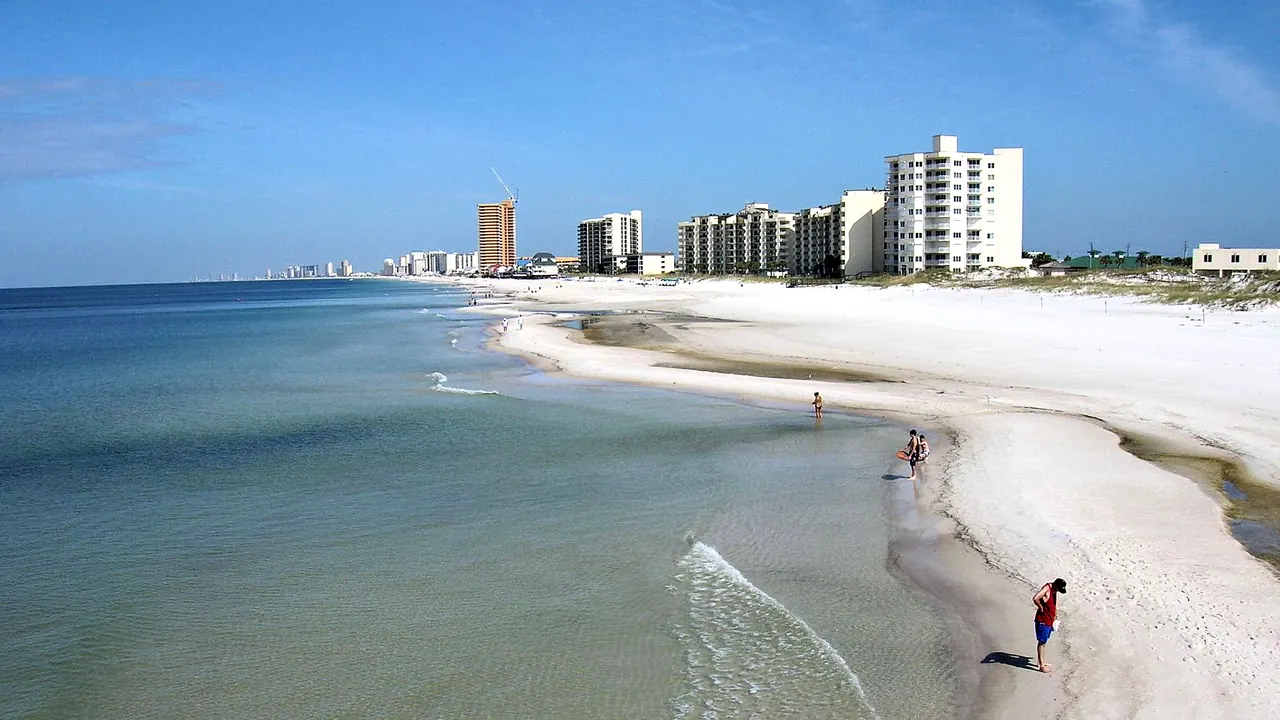
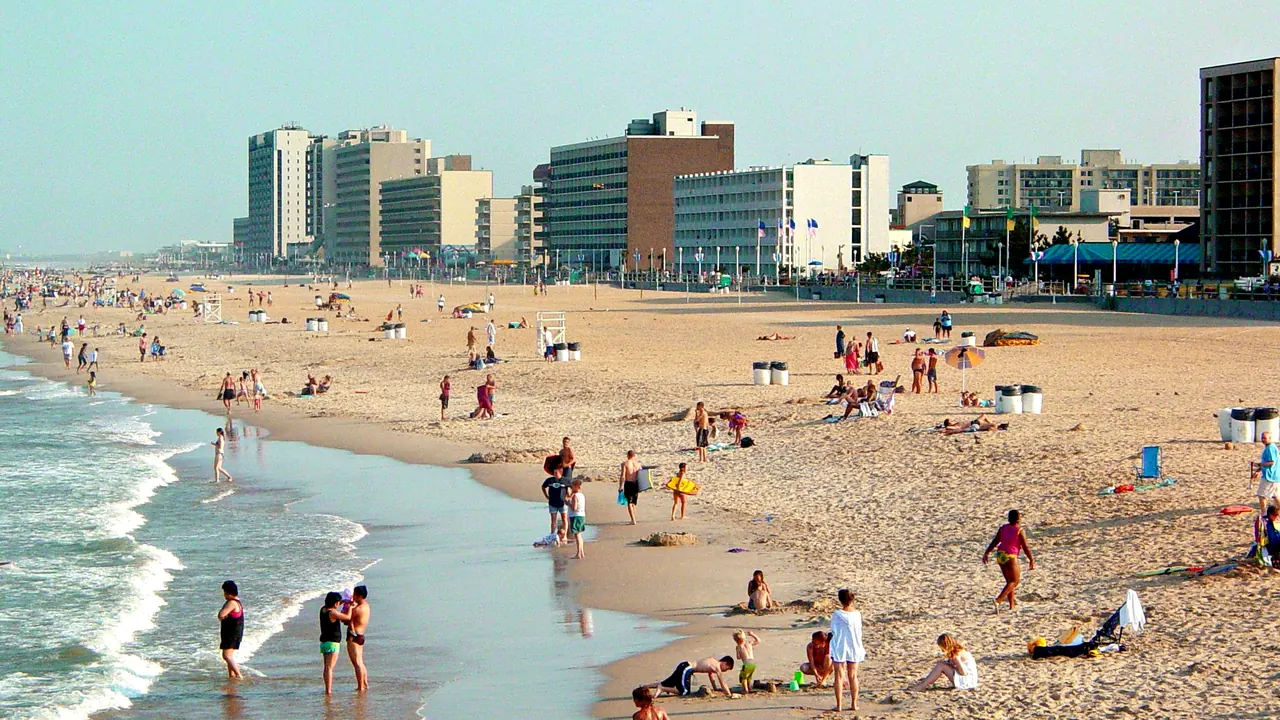
Photos: Panama City Beach by j.s. clark/ "Image by jsclark.net.", CC BY-SA 2.0, cropped; Virginia Beach by SchuminWeb, CC BY-SA 3.0, cropped.
Panama City Beach or Virginia Beach?
Our verdict in twelve categories, each scored against the same fixed benchmark cities, and the climate month by month, so you can choose for your trip.
Choose Panama City Beach for
- beaches
- prices
Panama City Beach is the pick when the sea is the whole point. Its sand is finer and whiter, the Gulf stays warm and calm for longer, and a condo with a pool and a kitchen makes a week with children simple. Don't expect much beyond the beach, though. There is almost no history, there are few sights and you need a car for everything.
Choose Virginia Beach for
- day trips
- live music and the arts
- culture and sights
Travellers who want a beach with more around it should lean towards Virginia Beach. The Atlantic is cooler and the season shorter. In return, Williamsburg, Jamestown and Yorktown are about an hour away, and Norfolk adds opera, a symphony and better restaurants. An Oceanfront stay also lets you leave the car parked and use the boardwalk.
Scoreboard
Twelve categories on one fixed scale from 0 to 100. The shaded stretch is the gap between the two.
Your match
Pick a travel style or drag the sliders, and both match scores follow your weighting.
Wins on beaches and prices with your weighting.
Wins on day trips and live music and the arts with your weighting.
What matters to you?
Category by category
What the scores mean for a trip.
Beaches & swimming
Panama City Beach has the better beach by a clear margin. Its 43km of powder-white quartz sand and clear green Gulf water are softer and warmer than anything on the Virginia coast. The St. Andrews lagoon and the boat trip to undeveloped Shell Island give it quieter corners. Rip currents are the catch, so pay attention to the flags.
Virginia Beach is an Atlantic beach: pale sand rather than white, with surf near the fishing pier, a boardwalk behind the hotels and lifeguards along the main stretch. The calm Chesapeake Bay beaches near First Landing and the dunes at Sandbridge add variety. The water stays cooler, though, and the swimming season is noticeably shorter.
Food & drink
Panama City Beach eats casually. Expect fried or blackened grouper, shrimp baskets and Gulf oysters at open-air shacks and dockside decks. Chains and big themed restaurants fill most of Front Beach Road, and there is little fine dining.
Virginia Beach eats better, though still mostly seafood. Lynnhaven oysters and Chesapeake blue crab, served as crab cakes, steamed with Old Bay or in she-crab soup, are dishes with real local pride. They are best eaten around Lynnhaven Inlet rather than on the resort strip, and Norfolk is half an hour away when you want more variety.
Culture & sights
Neither city is a place for museums, but Panama City Beach has almost nothing to see. The strip is condo towers and attractions built after the mid-twentieth century, plus the small Man in the Sea Museum on diving history. There are a few older streets across the bay in St. Andrews.
Virginia Beach at least has a place in American history. English colonists first landed at Cape Henry in 1607. A memorial cross marks the spot beside the Old Cape Henry Lighthouse of 1792, and the Adam Thoroughgood House is a rare early colonial brick home. It is still a short list, and for serious history you drive up the peninsula.
Nightlife
Going out in Panama City Beach means tiki huts, beach bars on the sand and sports bars around Pier Park, with a cover band or DJ on summer weekends. Spring break in March makes Front Beach Road loud and rowdy. Out of season the town is quiet by mid-evening.
Virginia Beach has a little more choice. Atlantic Avenue and the boardwalk are just as casual, with rooftop decks and a crowd that includes sailors from the navy bases. Town Center adds cocktail bars and lounges for a more grown-up evening, and the bars of downtown Norfolk and Ghent are half an hour away.
Nature & outdoors
Both are flat coastal plain where most outdoor life happens on the water, and they come out about even. Panama City Beach leans towards the sea. You can snorkel in the St. Andrews lagoon, dive on offshore wrecks and artificial reefs, go deep-sea fishing, or visit the rare coastal dune lake at Camp Helen.
Virginia Beach offers more on land. First Landing has trails through maritime forest and cypress swamp, and the long, empty barrier spit of Back Bay and False Cape is reached on foot or by bike, with migrating waterfowl in winter. It also has a long surfing tradition.
Day trips
From Panama City Beach the outings are pleasant rather than essential. The best are the planned pastel towns of Seaside, WaterColor and Rosemary Beach along Scenic Highway 30A and the old oyster port of Apalachicola, about an hour and a half east. Pensacola's naval aviation museum is near the two-hour limit.
Virginia Beach has far more within reach. Colonial Williamsburg, Jamestown and Yorktown are about an hour away and together make one of the country's great history days. Norfolk's battleship and art museum, Kitty Hawk on the Outer Banks and Richmond are also within a day's drive. From either city, you will need a car.
Good for families
Both work well with children, but in different ways. Panama City Beach is built around the condo stay. It has warm shallow water in summer, a water park, a marine park with dolphin shows, and go-karts and mini-golf along Front Beach Road. The sheltered St. Andrews lagoon is good for a first snorkel. Avoid March, when spring break takes over.
Virginia Beach mixes in more learning. The Virginia Aquarium has sea turtles and otters, and the bay beaches are calm enough for toddlers. Within an hour there is a large amusement park and Colonial Williamsburg, where children can join in with the costumed tradespeople.
Getting around
Neither is easy without a car, but Panama City Beach is the harder of the two. The town stretches 43km along one road and a parallel highway. The trolley-bus is slow and sparse and pavements come and go, so you drive even to dinner.
At Virginia Beach, if you stay on the Oceanfront you can walk or cycle the boardwalk and take the summer trolley along Atlantic Avenue. Anything beyond that, from Sandbridge to Town Center, still means driving.
Shopping & style
Shopping is a minor part of a trip to either city. Panama City Beach has Pier Park's open-air chain stores and a department store, plus giant souvenir warehouses with shark-mouth entrances. The boutiques in the 30A towns are the best bet for something more individual. Virginia Beach has a regional mall, Town Center and strip centres, and its Oceanfront has surf shops with deep local roots.
Affordability
Costs are much the same in both: American resort prices, with car hire on top. Panama City Beach is a touch kinder to the wallet, thanks to condos with kitchens and very cheap long winter stays, though summer weeks on the beachfront are not cheap. In Virginia Beach, summer oceanfront rooms and beach houses are expensive, especially at weekends. On the other hand, its beach, boardwalk and state parks cost little or nothing.
Live music & performing arts
Live performance in Panama City Beach means cover bands and acoustic sets on bar decks and summer concerts at the shopping centre. Across the bay, Panama City's restored historic theatre has a modest season.
Virginia Beach is much better served. Its outdoor amphitheatre draws touring rock and country acts in summer, Town Center has a performing arts centre and the boardwalk stages put on free concerts. Half an hour away, Norfolk has the Virginia Opera, the Virginia Symphony and the spring Virginia Arts Festival.
Wellness & relaxation
Neither city has a spa or bathing tradition, so how restful your stay is depends on when you go. In Panama City Beach the beach empties from autumn to spring, and long sunset walks on the white sand are the real draw, with a few resort spas and occasional yoga on the sand. Virginia Beach has spas in its larger oceanfront hotels and is calmest on early-morning boardwalk walks in spring and autumn. Both are loud and crowded in high summer.
When should you go?
Pick your month. The climate figures are measured averages, not a forecast.
Panama City Beach in July
Virginia Beach in July
Daytime high, °C
Rainfall in the month, mm
Where the figures come from
Panama City Beach has no rain gauge within 25 km of the centre, so its rainfall comes from a gridded climate dataset read at the city rather than from a gauge further away.
Temperature and rainfall are climate normals, averaged over the years shown. Panama City Beach: 1971-2000 (rainfall 1991-2020) normals, Tyndall Air Force Base (24.6 km from centre). Virginia Beach: 1991-2020 (sunshine 1981-2010) normals, Virginia Beach / Gatewood Park (5.7 km from centre).
Panama City Beach has the longer beach season. The Gulf is warm enough to swim from late May into October and reaches about 29°C in midsummer. June to September is also the wettest and most humid stretch, with rain peaking around 220mm in August. Winter is mild, with January highs near 16°C. That is too cool for swimming but comfortable for walking, and late spring and autumn are drier and pleasant all round.
Virginia Beach is cooler and its season shorter. The Atlantic only reaches about 25°C in July and August, so June to September is the real beach window. From late October to May the water is too cold for most swimmers. Winters are properly chilly, with January highs around 10°C. Late spring and early summer bring the most sunshine, and October stays mild and drier than the summer months.
Which traveller are you?
On a beach and sun trip, Panama City Beach is the clear choice. Its powder-white sand and calm green Gulf beat the Atlantic shore. The sea also stays warm enough for swimming from late May into October, a much longer season than Virginia's.
For a culture and arts trip, Virginia Beach wins easily. Cape Henry's 1607 landing site is on the doorstep, and Williamsburg, Jamestown and Yorktown are an hour away. Norfolk's opera and symphony are closer still. Panama City Beach has almost none of this.
On a food and nightlife trip, Virginia Beach has the edge. Lynnhaven oysters and blue crab give its seafood a local character, and Town Center adds cocktail bars. Norfolk's restaurants and Ghent's bars are half an hour away, while Panama City Beach offers mostly chains and tiki bars.
Before you go
| Measure | Panama City Beach | Virginia Beach |
|---|---|---|
| Currency | US Dollar (USD) | US Dollar (USD) |
| Sockets | AB120 V, 60 Hz | AB120 V, 60 Hz |
| Driving side | Right | Right |
| Time zone | UTC-6, UTC-5 in summer | UTC-5, UTC-4 in summer |
| Emergency number | 911 | 911 |
| Elevation | 3 m | 7 m |
| Main airport | Northwest Florida Beaches International Airport (ECP)20 km from centre19 non-stop destinations | Norfolk International Airport (ORF)20 km from centre44 non-stop destinations |
| Public holidays this year | 11 days | 13 days |
By the numbers
| Measure | Panama City Beach | Virginia Beach |
|---|---|---|
| City population | 18,094 | 459,470 |
| People per km² | 375 | - |
| Museums within 10 km | 0 | 2 |
| UNESCO World Heritage sites within 50 km | 0 | 0 |
| Swim season, months above 21 °C | 7 months | 4 months |
Where else could you go?
Every comparison below shares a destination with this one, so you can follow Panama City Beach or Virginia Beach somewhere new.
- Destinvs Panama City Beach
- Pensacolavs Panama City Beach
- Orange Beachvs Panama City Beach
- Gulf Shoresvs Panama City Beach
- Ocean City, Marylandvs Virginia Beach
- Bethany Beachvs Virginia Beach