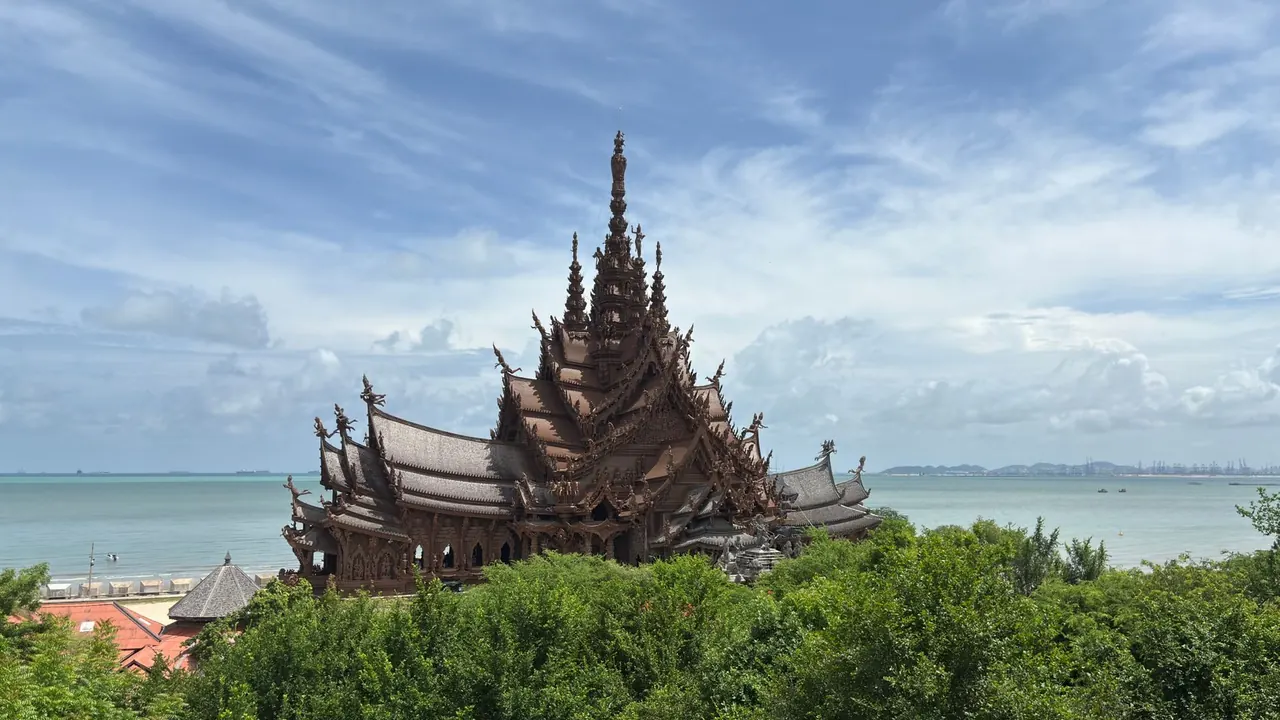
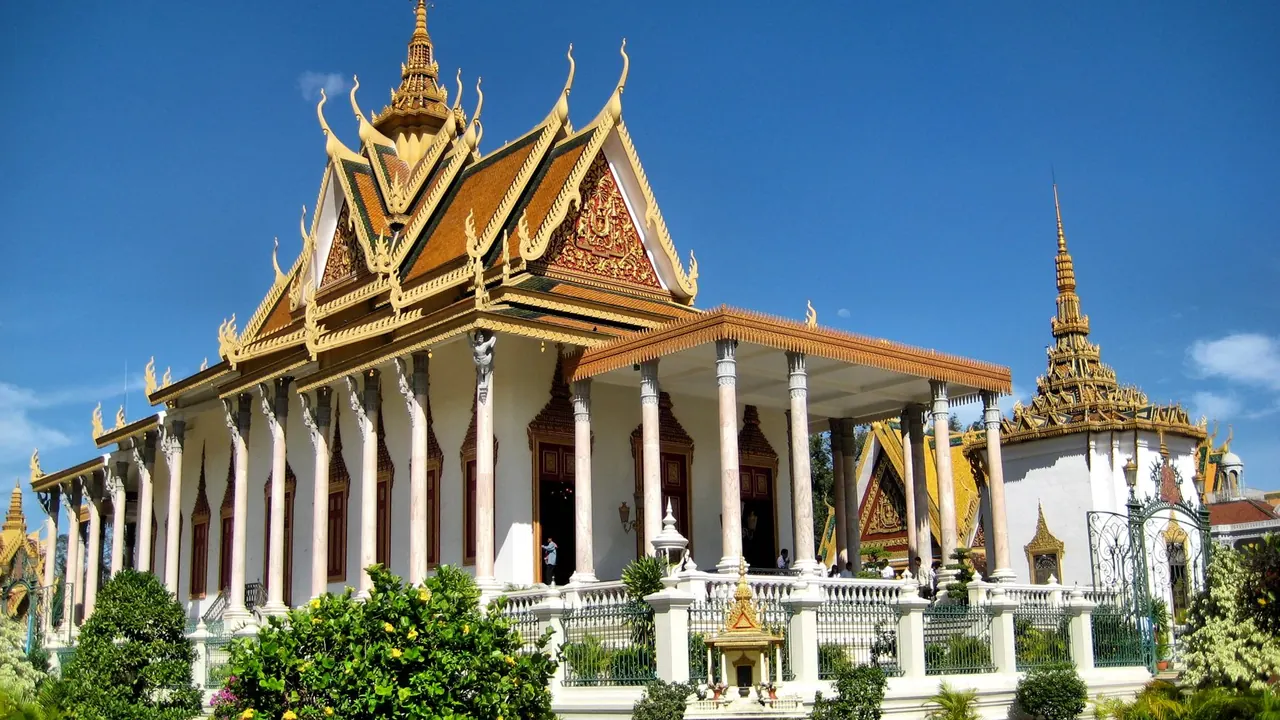
Photos: Pattaya by Matrix, Pexels License; Phnom Penh by Francisco Anzola, CC BY 2.0, cropped.
Pattaya or Phnom Penh?
Our verdict in twelve categories, each scored against the same fixed benchmark cities, and the climate month by month, so you can choose for your trip.
Choose Pattaya for
- beaches
- families
- nightlife
Pattaya is the pick for a beach vacation with plenty going on after dark. The sea is warm all year, Koh Larn's clear water is a short ferry ride away, and the nights run later and louder than anything in Phnom Penh. It also suits families better, with water parks, a zoo and resort pools in Jomtien. Bangkok and Koh Samet are both close enough for a day out.
Choose Phnom Penh for
- culture and sights
- food and drink
- shopping
Travellers who want to understand a country rather than lie by the sea will get far more from Phnom Penh. The Royal Palace, the Angkorian sculpture in the National Museum and the Khmer Rouge memorials at Tuol Sleng and Choeung Ek give it a depth that Pattaya, a resort with almost no history, cannot match. Come for Khmer cooking, classical dance and markets full of silk, and accept that there is no beach and not much for small children.
Scoreboard
Twelve categories on one fixed scale from 0 to 100. The shaded stretch is the gap between the two.
Your match
Pick a travel style or drag the sliders, and both match scores follow your weighting.
Wins on beaches and families with your weighting.
Wins on culture and sights and food and drink with your weighting.
What matters to you?
Category by category
What the scores mean for a trip.
Beaches & swimming
This is the widest gap between the two. Pattaya has a sea at its door that stays warm all year. The water off the central beach is cloudy and full of jet skis, but Jomtien is fine for a swim and the beaches on Koh Larn have clear water a short ferry ride out.
Phnom Penh has rivers rather than a coast, and nobody swims in the Mekong. Kep and Kampot are three hours away, so in the city a swim means a hotel pool, which you will want in the heat.
Food & drink
Both cities eat well at street level, but the cooking is different. Pattaya's strength is seafood, grilled along the Naklua waterfront and in the fishing villages south of town, alongside Thai night-market stalls. The central strip is given over to pizza and English breakfasts for long-stay visitors.
Phnom Penh offers Khmer cooking, milder and more herbal than Thai, from fish amok to morning bowls of kuy teav at the counters of Central Market and the Russian Market. The French left baguettes and a café habit in BKK1, and a few kitchens take Khmer dishes into fine dining, which Pattaya has little of outside its resorts.
Culture & sights
Phnom Penh is a capital with a history to explore. The Royal Palace, the Silver Pagoda and the National Museum sit together by the river, and Tuol Sleng and the Choeung Ek killing fields tell the story of the Khmer Rouge years in a way few visitors forget. Colonial villas and 1960s modernist buildings make a walk worthwhile.
Pattaya grew from a fishing village into a resort. Its one serious sight is the carved teak Sanctuary of Truth at Naklua, with Big Buddha Hill above the bay. The rest is illusion galleries and wax museums, a day's sightseeing at most.
Nightlife
Pattaya's nightlife is far bigger and is the reason many people come. Walking Street has clubs and live-band bars, the sois off Second Road hold hundreds of beer bars, and there are big dance clubs, rooftop bars and a gay quarter at Boyztown. The sex trade is visible in much of it, so couples often stay in Jomtien or Naklua.
Phnom Penh's nights are just as cheap and late but much smaller, spread over a few blocks. There are rooftop sundowners over the Tonle Sap, cocktail and craft bars on Bassac Lane and late clubs on Street 51. The scene has character for its size, but snatch theft from passing motorbikes means keeping a hand on your bag.
Nature & outdoors
Neither city is an outdoor base, but Pattaya's sea gives it the edge. It has snorkelling off Koh Larn and Koh Phai, dives on coral and sunken naval ships, and kitesurfing at Na Jomtien in the dry season.
Phnom Penh's flat river landscape is best seen from a sunset boat or by bicycle on Koh Dach. The Phnom Tamao rescue centre is an hour south, but the pine hills of Kirirom are too far for an easy outing.
Day trips
Pattaya has the bigger outings within reach. Bangkok's palace and temples are about two hours away and Koh Samet's white beaches about the same. Closer in are Si Racha, with its ferry to Koh Si Chang, and Bang Saen, the beach resort where Thai families go at weekends.
Phnom Penh's days out are quieter and more rural. Stupas cover the ridge at the old capital of Oudong, Tonle Bati has a temple beside a lake, Kampong Chhnang has pottery and floating villages, and silk weavers work on the Mekong islands. These make pleasant days, but Angkor and the coast need an overnight stay.
Good for families
Pattaya is easier with children. Water parks, an aquarium with a walk-through tunnel, the night safari at Khao Kheow and the shows at Nong Nooch fill several days. Resorts in Jomtien keep families away from the bar streets.
Phnom Penh welcomes children warmly but has less for them. Its key sights, Tuol Sleng and the killing fields, are not places for children, so days rely on Phnom Tamao, river cruises, malls with ice rinks and the hotel pool. It suits families who already travel in Southeast Asia.
Getting around
Neither city has a metro and both are hard on foot, but you get around them in different ways. Pattaya runs on songthaews, shared pick-ups that loop Beach Road and Second Road and run out to Jomtien and Naklua. They are easy once you know the routes, though the zoo, the gardens and the water parks need a taxi.
In Phnom Penh almost every journey is by tuk-tuk or motorbike taxi, booked through apps that take away the haggling. The main sights are grouped around the Royal Palace and the riverfront, which helps. Missing pavements and nerve-testing road crossings still keep walks short.
Shopping & style
Pattaya's shopping is malls and night markets: air-conditioned centres on Beach Road, branded copies and souvenirs at Thepprasit and Jomtien, and tailors who make a suit in a few days.
Phnom Penh is better for something worth taking home. The Russian Market sells silk, silver and overrun clothing from local factories, gold is sold under the dome of Central Market, and the shops around Street 240 have fair-trade crafts and Kampot pepper.
Affordability
Both are very cheap, and in both your bill depends on how much you eat and stay like a local. In Pattaya, too many hotel rooms keep beach stays low-priced, and costs climb for speedboats, water parks and shows. In Phnom Penh, boutique hotels with pools are the bargain, while wine, Western food and international hotels cost much what they do at home.
Live music & performing arts
Pattaya's evening shows are cabaret put on for visitors, while Phnom Penh's are a classical tradition brought back after it was nearly lost. In Pattaya that means ladyboy revues in big theatres, full of sequins and lip-synced numbers, Thai dance and martial arts at dinner shows, and cover bands playing rock and pop late along Walking Street and in Jomtien.
Phnom Penh's apsara and folk dance was rebuilt by the Royal University of Fine Arts after the Khmer Rouge years. It is performed with masked dance and shadow puppetry in the evenings near the National Museum, and the Chaktomuk Theatre on the riverfront hosts larger occasions. A few bars add jazz and acoustic nights, but in both cities you will look in vain for opera, an orchestra or a theatre district.
Wellness & relaxation
Pattaya has the edge for a restful stay, mainly because of its resorts. Naklua, Na Jomtien and the Pratamnak headland have full spas, pools and gardens away from the noise of the centre. Thai massage is everywhere, though some parlours belong to the nightlife trade.
Massage is just as easy to find in Phnom Penh, where blind-masseur centres and NGO spas are among the best, and a villa hotel in a leafy street can be very calm. Traffic, dust and noise are never far away, though, and there is no seaside to slow down beside.
When should you go?
Pick your month. The climate figures are measured averages, not a forecast.
Pattaya in July
Phnom Penh in July
Daytime high, °C
Rainfall in the month, mm
Where the figures come from
Pattaya's temperatures are measured 31 km from the centre, at Sattahip.
Pattaya has no rain gauge within 25 km of the centre, so its rainfall comes from a gridded climate dataset read at the city rather than from a gauge further away.
Pattaya's sunshine is measured 86 km from the centre, at Bangna Agromet / Ban Khlong Samrong.
Temperature and rainfall are climate normals, averaged over the years shown. Pattaya: 1971-2000 (sunshine 1961-1990, rainfall 1991-2020) normals, Sattahip (31.2 km from centre). Phnom Penh: 1991-2020 normals, Phnom-Penh / Pochentong (8 km from centre).
Both cities are hot in every month, so the real question is rain. Pattaya is at its best from December to February, when the rain almost stops, the days are long and sunny and the sea sits around 28°C. Showers build from April, and September and October are the wettest months, with rougher water at the beaches. Even then the sea stays warm enough to swim.
Phnom Penh has the same dry season, and December and January are the most comfortable months for walking between the palace, the museum and the markets. March to May is harder going, with afternoons reaching 36°C before the rains come. The wet season runs from May to October and is heaviest in October, at about 260mm, much like Pattaya's wettest month.
Which traveller are you?
On a beach and sun trip, Pattaya is the obvious choice. The sea is warm all year, Jomtien is calm enough to swim and Koh Larn has clear water a short ferry ride away. Phnom Penh is three hours from any coast.
For a culture and arts trip, Phnom Penh gives far more. The Royal Palace, the Silver Pagoda, the Angkorian sculpture in the National Museum and the Khmer Rouge memorials fill several days, and classical Khmer dance is performed in the evenings near the museum.
On a family trip with children, Pattaya works better. Water parks, an aquarium, the Khao Kheow zoo and big resort pools in Jomtien keep children busy. In Phnom Penh the main sights are unsuitable for children and the streets are hard going.
Before you go
| Measure | Pattaya | Phnom Penh |
|---|---|---|
| Official language | Thai | Khmer |
| Currency | Baht (THB) | Riel (KHR) |
| Sockets | ABCF220 V, 50 Hz | ACG230 V, 50 Hz |
| Driving side | Left | Right |
| Time zone | UTC+7 | UTC+7 |
| Emergency number | Police 191, ambulance 1669, fire 199 | Police 117, ambulance 119, fire 118 |
| Elevation | 35 m | 11 m |
| Main airport | Suvarnabhumi Airport (BKK)83 km from centre150 non-stop destinations | Techo International Airport (KTI)23 km from centre41 non-stop destinations |
| Public holidays this year | - | 21 days |
By the numbers
| Measure | Pattaya | Phnom Penh |
|---|---|---|
| City population | 119,532 | 2,129,371 |
| People per km² | - | 3,138 |
| Museums within 10 km | 0 | 3 |
| UNESCO World Heritage sites within 50 km | 0 | 1 |
| Swim season, months above 21 °C | 12 months | - |
Where else could you go?
Every comparison below shares a destination with this one, so you can follow Pattaya or Phnom Penh somewhere new.