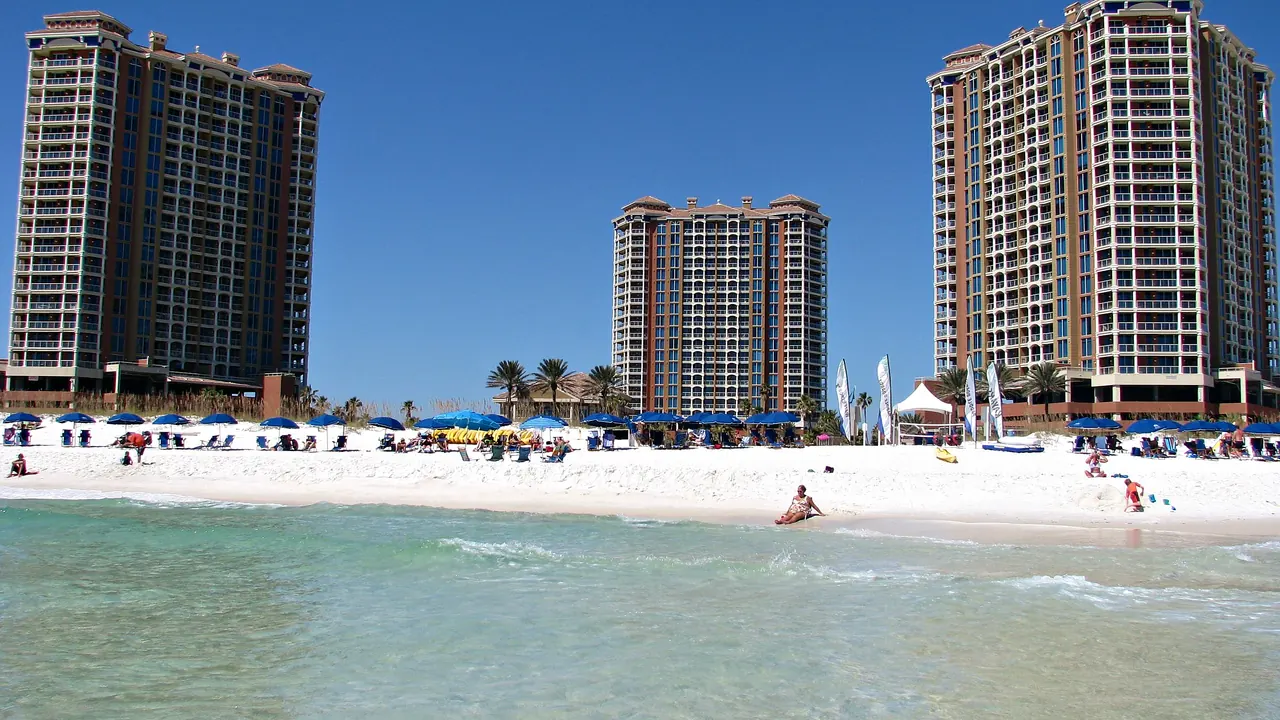
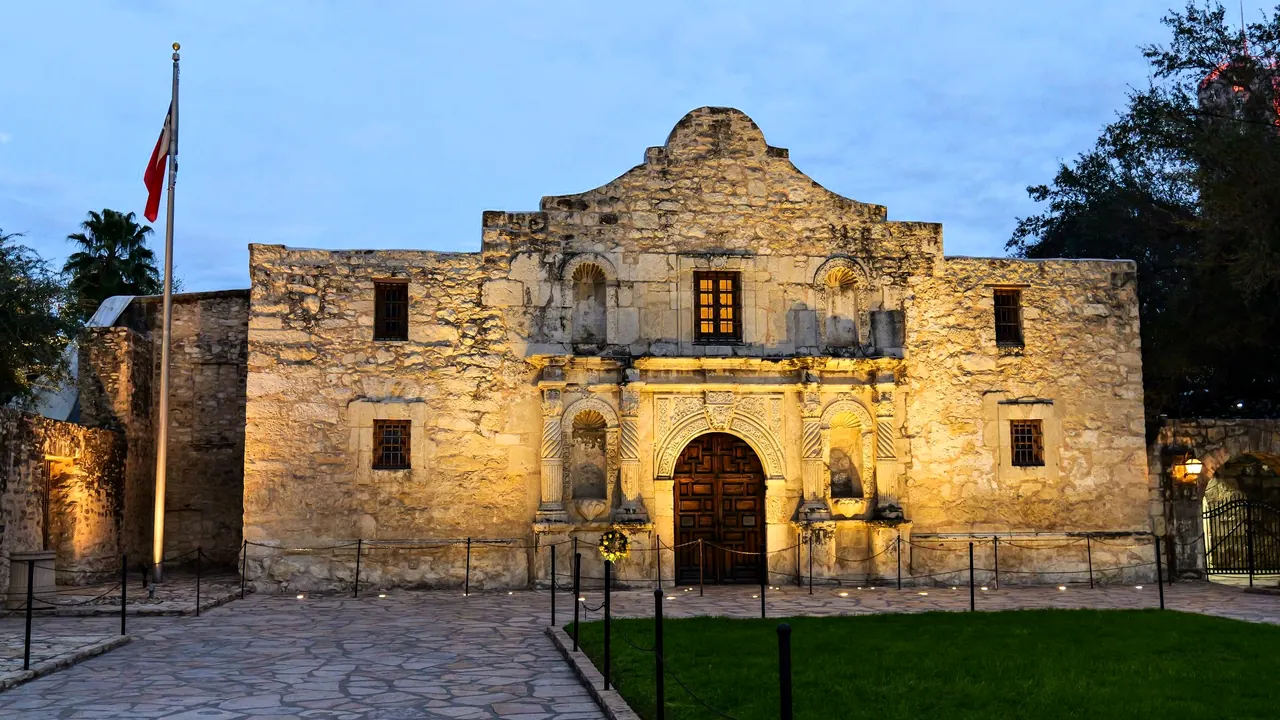
Photos: Pensacola by Jason Meredith, CC BY 2.0, cropped; San Antonio by Mark Direen, Pexels License.
Pensacola or San Antonio?
Our verdict in twelve categories, each scored against the same fixed benchmark cities, and the climate month by month, so you can choose for your trip.
Choose Pensacola for
- beaches
- nature and the outdoors
- wellness
Pensacola is the pick when the trip is mainly about sand and warm water. Santa Rosa Island's white quartz beaches and the protected national seashore are close to downtown. Kayaking, dolphin-spotting and the wreck dive offshore add to the beach days. The town itself is small and historic, pleasant for an evening rather than a full itinerary, and you will need a car for almost everything.
Choose San Antonio for
- food and drink
- shopping
- culture and sights
San Antonio suits travellers who want a city to explore and good food along the way, but no coast. The Spanish missions, the Alamo and the River Walk give it a much deeper sense of history. Tex-Mex and barbecue are reason enough to come hungry, and the Hill Country towns make easy drives. Families get theme parks and museums that Pensacola cannot match, as long as they plan around the summer heat.
Scoreboard
Twelve categories on one fixed scale from 0 to 100. The shaded stretch is the gap between the two.
Your match
Pick a travel style or drag the sliders, and both match scores follow your weighting.
Too close to call, 2 points apart
Wins on beaches and nature and the outdoors with your weighting.
Wins on food and drink and shopping with your weighting.
What matters to you?
Category by category
What the scores mean for a trip.
Beaches & swimming
This is the widest gap between the two. Pensacola has the very white quartz sand and clear green water of Santa Rosa Island, with long protected stretches in the Gulf Islands National Seashore. The quieter shore of Perdido Key and the calm, shallow water on the sound side are good for small children. In summer the sea is warm enough for hours in the water, although on rough days the rip-current flags need watching.
San Antonio has no beach at all, because the Gulf is a long drive away. What it offers instead is floating down the cool, spring-fed Comal and San Marcos rivers on an inner tube, along with lake and swimming-hole dips in the Hill Country. That makes a good summer afternoon, but not a beach vacation.
Food & drink
Pensacola eats from the Gulf: chargrilled oysters, grouper sandwiches, royal red shrimp and gumbo, best in casual places on the water. Beyond seafood and a few modern Southern kitchens around Palafox Street, the choice runs out quickly.
San Antonio gives you more to eat and more that is its own. Tex-Mex was born here, and the family places on the West and South Sides serve handmade flour tortillas, puffy tacos and Sunday barbacoa. Central Texas brisket and interior Mexican cooking add range, and the Pearl and Southtown add more ambitious cooking. It is a city you can plan meals around, which Pensacola rarely is.
Culture & sights
Both cities have Spanish colonial roots, but San Antonio's are far grander. Its five 18th-century missions, including the Alamo, make up a UNESCO World Heritage Site, with San José's carved rose window and Espada's aqueduct as the highlights. Add the Governor's Palace, the King William mansions and two serious art museums, the San Antonio Museum of Art and the McNay.
Pensacola's history of five flags shows in the restored houses around Plaza Ferdinand and in the brick Fort Pickens. Its biggest draw is the National Naval Aviation Museum, which is excellent for anyone who loves aircraft, though access goes through an active base. It is enough for a good couple of days rather than a whole trip.
Nightlife
Neither city is a place for late nights, and the two are about even. Pensacola splits its evenings between the pubs and rooftop bars of Palafox Street and Seville Quarter, full of locals and young Navy personnel, and the sand-floored beach bars on the island, which feel like a party in summer.
San Antonio's evenings are less seasonal and more Texan. Visitors drink on the River Walk patios, while locals go to the open-sided icehouses, beer gardens and Tejano dance halls around the St. Mary's Strip, Southtown and the Pearl.
Nature & outdoors
Pensacola has the richer outdoors, nearly all of it on or by the water. You can cycle and walk the boardwalks through dunes and salt marsh, watch for ospreys and dolphins, and paddle in the bay or on the clear Blackwater River. Experienced divers can explore the sunken aircraft carrier offshore.
San Antonio offers dry land instead: limestone hills, live oaks and caves. Government Canyon has hiking and mountain-bike trails, Natural Bridge Caverns lies to the north and the bluebonnets flower in spring. Its long, hot summers limit hiking, and it has no coastline to explore.
Day trips
San Antonio has the better choice of drives out. Fredericksburg and the Texas wine country, the German towns of Gruene and Boerne, the cowboy town of Bandera and Austin are all within about an hour and a half.
Pensacola's best outing is Mobile, with its antebellum streets and battleship museum, and Fairhope across the bay. Going east brings you to Destin and Seaside, more beach towns much like the one you just left. Both cities need a car for nearly every trip.
Good for families
San Antonio is better for children who want variety. It has SeaWorld, Six Flags Fiesta Texas, the zoo, the Witte Museum's dinosaurs, the hands-on DoSeum and easy boat rides on the River Walk, enough for a week of different days.
Pensacola is simpler, and for a beach-focused family that can suit very well. There is warm, calm water, shallow sound-side spots for toddlers and condos with kitchens. The aviation museum, the Blue Angels and the tunnels of Fort Pickens fill the days away from the sand, but there are no theme parks.
Getting around
Getting around San Antonio without a car is easier, though only in the centre. The shaded River Walk links the Alamo, the cathedral, the hotels and the Pearl on foot. The bike path along the river runs to the missions, and the buses cover the main routes.
In Pensacola, only Palafox Street and the historic district are walkable. The beach, the naval air station and Perdido Key are spread out across bridges and highways, so a car is all but essential from the first day.
Shopping & style
San Antonio has something worth shopping for. El Mercado in Market Square sells Mexican pottery, embroidered dresses and papel picado, and the city's specialist shops sell boots and Western hats. La Villita's galleries and the outlet centres to the north add more.
Pensacola has a few boutiques and antique shops on Palafox Street, the Saturday market, a regional mall and beachwear stalls on the island. That is fine for souvenirs, and not much more.
Affordability
The two cost much the same, with San Antonio slightly cheaper day to day. Its plentiful convention hotels and inexpensive tacos and barbecue help, and the missions are free, though theme-park tickets quickly add up for a family. In Pensacola, beachfront rooms are expensive in summer but much cheaper out of season, and the aviation museum costs nothing. Budget for car hire in either city.
Live music & performing arts
San Antonio has more on stage and more of its own sound. The Tobin Center hosts the symphony, opera and ballet, and the Majestic Theatre takes touring shows. Above all there is Tejano and conjunto, accordion dance music you can hear in dance halls and at Fiesta, with mariachi players around Market Square.
Pensacola puts much of its programme into the 1925 Saenger Theatre, which hosts its own symphony, opera and ballet. It makes a pleasant night out, but on a smaller, regional scale.
Wellness & relaxation
Neither city has a spa or bathing tradition, so relaxing comes down to the setting. In Pensacola that means an empty stretch of Perdido Key or the island outside summer, with hotel day spas as an extra. In San Antonio it means a Hill Country golf resort with a spa, or a slow morning in the Japanese Tea Garden.
When should you go?
Pick your month. The climate figures are measured averages, not a forecast.
Pensacola in July
San Antonio in July
Daytime high, °C
Rainfall in the month, mm
Temperature and rainfall are climate normals, averaged over the years shown. Pensacola: 1991-2020 normals, Pensacola / Pleasant Grove (12.3 km from centre). San Antonio: 1971-2000 (sunshine 1981-2010, rainfall 1991-2020) normals, San Antonio / Lackland Air Force Base (9.6 km from centre).
Pensacola's beach season runs from late May to early October, when the Gulf is warm enough for long swims and reaches about 28°C or more from June to September. Those same summer months are the wettest, with heavy afternoon storms bringing around 200mm in July, and the humid heat makes walking around town tiring by midday. In winter the sea cools to bathing temperatures only the hardy would try, so the beaches are for walking. Spring and October are the most comfortable months for being outdoors.
San Antonio gets hotter in summer, with July and August highs near 35°C under long hours of sunshine. That is too hot for walking the missions or hiking, except early in the morning. Its rain comes in bursts in May and again in September and October, and its mild winters are much drier than Pensacola's. March, April and November are the best months for exploring on foot. Both cities have similar winter daytime highs of around 17°C, pleasant for sightseeing but not for swimming.
Which traveller are you?
For a beach and sun trip, Pensacola wins easily. Santa Rosa Island has miles of white sand and warm, gentle Gulf water in summer, while San Antonio is a long drive from any coast and offers river tubing instead.
On a culture and arts trip, San Antonio is the stronger base. It has the UNESCO-listed Spanish missions, the Alamo, the King William mansions, two good art museums and a livelier stage. Pensacola's colonial district and forts take only a couple of days.
For a food and nightlife trip, San Antonio comes out ahead because of its food: breakfast tacos, barbacoa, brisket and the Pearl's restaurants. Evenings in both cities are relaxed bar nights rather than clubbing, but San Antonio's icehouses have more local character.
Before you go
| Measure | Pensacola | San Antonio |
|---|---|---|
| Currency | US Dollar (USD) | US Dollar (USD) |
| Sockets | AB120 V, 60 Hz | AB120 V, 60 Hz |
| Driving side | Right | Right |
| Time zone | UTC-6, UTC-5 in summer | UTC-6, UTC-5 in summer |
| Emergency number | 911 | 911 |
| Elevation | 31 m | 198 m |
| Main airport | Pensacola International Airport (PNS)6 km from centre27 non-stop destinations | San Antonio International Airport (SAT)12 km from centre48 non-stop destinations |
| Public holidays this year | 11 days | 13 days |
By the numbers
| Measure | Pensacola | San Antonio |
|---|---|---|
| City population | 54,312 | 1,434,625 |
| People per km² | 515 | 1,187 |
| Museums within 10 km | 5 | 11 |
| UNESCO World Heritage sites within 50 km | 0 | 1 |
| Swim season, months above 21 °C | 7 months | - |
Where else could you go?
Every comparison below shares a destination with this one, so you can follow Pensacola or San Antonio somewhere new.
- Orange Beachvs Pensacola
- Gulf Shoresvs Pensacola
- Destinvs Pensacola
- Austinvs San Antonio
- New Orleansvs Pensacola
- Houstonvs San Antonio