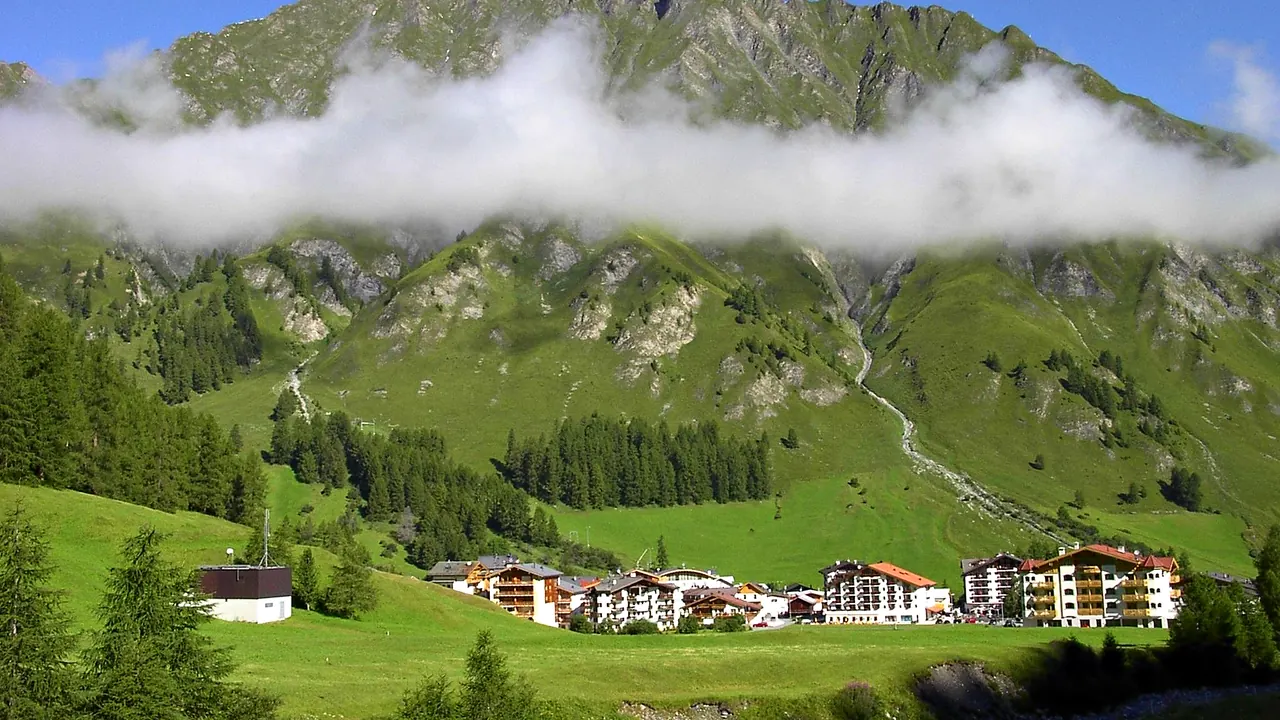
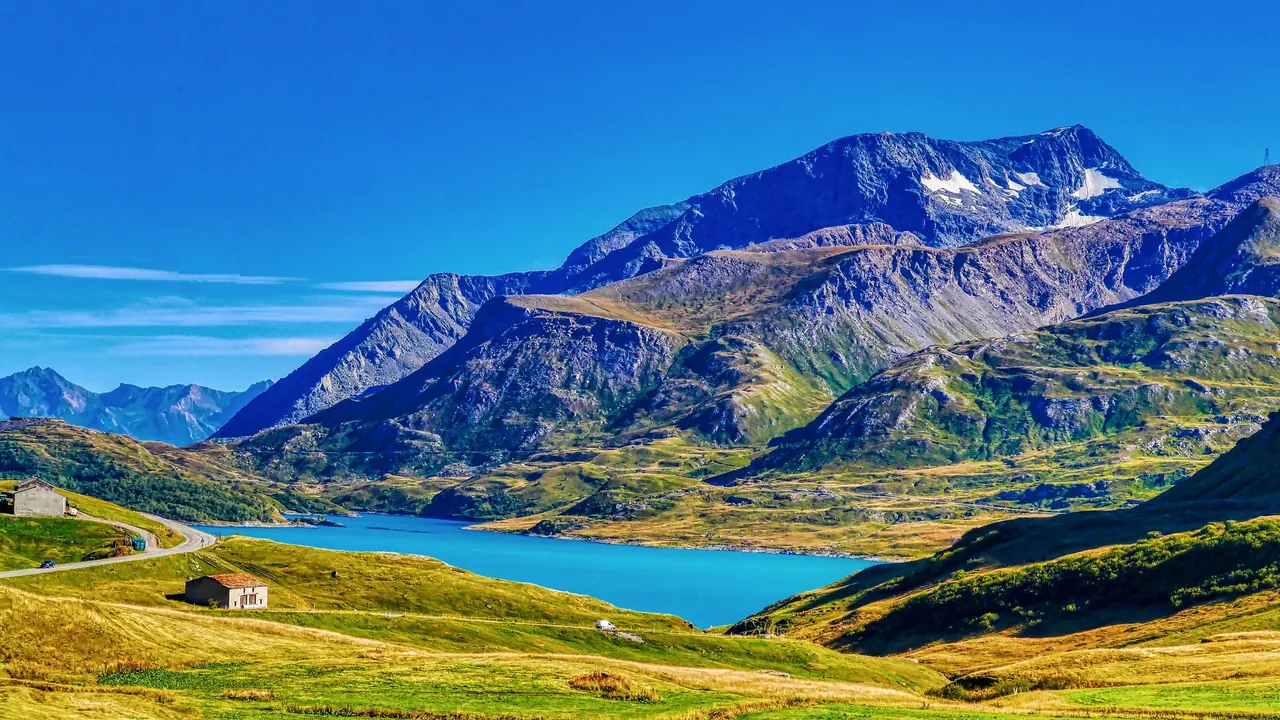
Photos: Samnaun by Rene Nueesch, CC BY 3.0, cropped; Val Cenis by Zairon, CC BY-SA 4.0, cropped.
Samnaun or Val Cenis?
Our verdict in twelve categories, each scored against the same fixed benchmark cities, and the climate month by month, so you can choose for your trip.
Choose Samnaun for
- shopping
- wellness
- getting around
Samnaun is the pick for skiers who want mileage. Its slopes join one of the largest ski areas in the Alps, shared with Austria's Paznaun valley. Evenings are a little livelier, the hotels have saunas and the valley's duty-free main street makes shopping part of the trip. It suits couples and groups of adults who can absorb Swiss resort prices and want rest and a sauna after a long day on the snow.
Choose Val Cenis for
- prices
- families
- culture and sights
Families and anyone watching costs will get more from Val Cenis. Self-catering apartments keep the bill down, a very long gentle run lets beginners ski down from high on the mountain, and the Vanoise National Park on the doorstep gives summer walkers ibex, marmots and hut-to-hut routes. It also has a little more history to look at, and Italy lies just over the pass.
Scoreboard
Twelve categories on one fixed scale from 0 to 100. The shaded stretch is the gap between the two.
Your match
Pick a travel style or drag the sliders, and both match scores follow your weighting.
Too close to call, 2 points apart
Wins on shopping and wellness with your weighting.
Wins on prices and families with your weighting.
What matters to you?
Category by category
What the scores mean for a trip.
Beaches & swimming
Neither has anywhere to swim outdoors in any real sense, so beach lovers should look elsewhere. In Samnaun swimming means the indoor leisure pool or a hotel pool, while in Val Cenis summer visitors can use village outdoor pools and walk around the cold Mont Cenis reservoir, which is for looking at rather than swimming in.
Food & drink
Neither valley is a place to travel for food, and both serve hearty mountain cooking. What differs is the style. In Samnaun you mostly eat in hotel dining rooms on half board, with Graubünden dishes such as capuns and pizokel alongside Tyrolean cooking from across the border. The real draw is the duty-free range of spirits and wine.
Val Cenis cooks in the Savoyard tradition of tartiflette, fondue and crozets, and many visitors self-cater in apartments. Its edge is cheese, above all the rare Bleu de Termignon from the summer alpine farms, which is worth hunting down at farm sales.
Culture & sights
Val Cenis has more to see, though neither is a sightseeing destination. Its highlight is the early sixteenth-century fresco cycle in the chapel of Saint-Sébastien at Lanslevillard. Add Termignon's carved baroque altarpiece and the stone villages roofed in lauze slabs, and you have a pleasant half day.
Samnaun offers modest chapels and a few old timber farmhouses among the hotels. Its most interesting feature is its history: it was left outside the Swiss customs area in 1892 because it was so isolated.
Nightlife
Samnaun has more going on after dark, though only modestly. Après-ski starts early at the bottom of the slopes, and on peak-season weekends a few hotel bars and a small club stay open late. Ischgl's famous party scene lies across the ski area, but by road it is too far for a night out.
In Val Cenis, a handful of bars in Lanslebourg and Lanslevillard fill up after skiing, and most evenings end after dinner. Between seasons there is almost nothing open.
Nature & outdoors
Both are excellent mountain bases, but for different things. Samnaun is about scale on skis. From about 1,800m you reach a huge cross-border network of high runs above the treeline, with reliable snow and the double-decker cable car from Ravaisch. In summer, trails run along the Austrian border, and the Swiss National Park is about an hour's drive away.
Val Cenis borders the Vanoise, France's oldest national park, so wildlife and wild country are on the doorstep: glaciers, larch forest, ibex and marmots. It is the stronger summer choice, with hut-to-hut hiking, via ferrata and famous road-cycling climbs such as the Iseran.
Day trips
Both offer a good choice of outings by car, but in different directions. From Samnaun you reach the sgraffito villages of the Lower Engadine and Tarasp Castle. Further on, beyond the Reschen Pass, are walled Glurns and the UNESCO convent at Müstair, mostly small places rather than cities.
Val Cenis looks south to Italy: Susa's Roman arch, the Sacra di San Michele and a full city in Turin, about an hour and a half away through the Fréjus tunnel. The catch is that the Mont Cenis pass closes in winter.
Good for families
Val Cenis is the more natural choice with children. Its very long gentle run lets young skiers come down from high on the mountain, the villages are small and quiet, and there are children's clubs in season. In summer there are marmots to spot, luge-style rides and outdoor pools.
Samnaun handles a ski week well, with nursery slopes close to the village and a leisure pool with slides for bad-weather afternoons. Beyond that it has little aimed at children, and the long winding road in is hard on children who get carsick.
Getting around
Getting into either valley is a long journey. Once there, Samnaun is easier to manage without a car. Its hamlets line a single road served by local buses, Samnaun Dorf and Compatsch are compact enough to walk, and in winter you can ski between much of it. The catch is the lack of a railway, so arriving involves the postbus from Scuol or a drive through Austria.
Val Cenis has a station at Modane, half an hour away, but its villages are spread out along the valley. Outside winter, buses are thin enough that most visitors rely on a car.
Shopping & style
This is where the two differ most. Samnaun's duty-free status gives it a whole main street of watches, jewellery, perfume, spirits, chocolate and ski clothing, enough to bring coachloads of day shoppers over from the Tyrol, though the shops sell international brands rather than local crafts.
In Val Cenis, shopping means ski hire, grocers and local produce. The cheese, honey and charcuterie are the souvenirs worth taking home.
Affordability
Val Cenis is clearly kinder to the wallet. Staying in a self-catering apartment keeps costs reasonable, lift passes and lodging are cheaper than in the big resorts of nearby valleys, and summer stays cost less again.
Samnaun follows Swiss resort prices for hotels, passes and meals. Half board helps, and duty-free fuel and alcohol trim the bill without changing the overall picture.
Live music & performing arts
Neither has theatres, concert halls or regular music venues, so evenings of culture are not a reason to choose either. Samnaun's highlights are the big open-air concerts on the slopes that open and close the winter season. Val Cenis offers village festivals and occasional summer concerts in its churches.
Wellness & relaxation
Samnaun gives you more ways to unwind. Most of its bigger hotels have saunas and small spas, the public pool has its own sauna area, and the mineral springs and spa baths of Scuol are less than an hour away for a proper bathing day.
Val Cenis offers the same mountain calm, with quiet villages and little traffic, but fewer facilities: a few hotel spas with a sauna and hot tub, and massage in season.
When should you go?
Pick your month. The climate figures are measured averages, not a forecast.
Samnaun in July
Val Cenis in July
Daytime high, °C
Rainfall in the month, mm
Where the figures come from
Samnaun has no rain gauge within 25 km of the centre, so its rainfall comes from a gridded climate dataset read at the destination rather than from a gauge further away.
Val Cenis has no weather station within reach, so its figures come from a gridded climate model rather than a measured record, and read a broad area rather than one spot.
Temperature and rainfall are climate normals, averaged over the years shown. Samnaun: 1991-2020 normals, Passo Resia / Resia Pass (16.3 km from centre). Val Cenis: 2001-2020 normals, NASA POWER reanalysis grid, no weather station within 90 km.
Neither valley has any beach weather, so the year divides into snow and summer walking. Val Cenis is the colder of the two through the whole year. Its daytime highs stay below freezing from December to February and only just reach 0°C in March, which keeps snow conditions wintry deep into spring. Samnaun sits a few degrees milder, with highs just above freezing in midwinter, and both valleys are at their best for skiing from December to March.
For hiking and cycling, both are at their best from late June to early September, when Samnaun reaches about 21°C and Val Cenis about 18°C. Samnaun's summer is the wetter one, with around 118mm in July against noticeably less in Val Cenis, where the drier midsummer months suit long days in the national park. May and November are grey, damp months in both.
Which traveller are you?
On a shopping trip, Samnaun lets you spend an afternoon choosing a watch, a fragrance or a case of wine free of duty, then drive home with the boot full. In Val Cenis the shopping list ends at local cheese and honey.
For a trip on a tight budget, Samnaun's Swiss prices for hotels, passes and meals are hard to avoid. Val Cenis suits you far better: cook in a rented apartment, ski on a cheaper pass and spend summer days hiking for free.
On a relaxing and wellness trip, Samnaun suits a rhythm of slow mornings, a sauna before dinner and perhaps a day out at the Engadine's mineral baths. Val Cenis is just as quiet, but you would mostly be relaxing without the pampering.
Before you go
| Measure | Samnaun | Val Cenis |
|---|---|---|
| Official language | French, German, Italian, Romansh | French |
| Currency | Swiss Franc (CHF) | Euro (EUR) |
| Sockets | CJ230 V, 50 Hz | CE230 V, 50 Hz |
| Driving side | Right | Right |
| Time zone | UTC+1, UTC+2 in summer | UTC+1, UTC+2 in summer |
| Emergency number | 112 | 112 |
| Elevation | 1,846 m | 1,752 m |
| Main airport | Innsbruck Airport (INN)82 km from centre40 non-stop destinations | Turin Airport (TRN)59 km from centre65 non-stop destinations |
| Public holidays this year | 9 days | 11 days |
By the numbers
| Measure | Samnaun | Val Cenis |
|---|---|---|
| Population | 773 | - |
| People per km² | 14 | - |
| Museums within 10 km | 1 | 0 |
| UNESCO World Heritage sites within 50 km | 1 | 1 |
Where else could you go?
Every comparison below shares a destination with this one, so you can follow Samnaun or Val Cenis somewhere new.
- Val d'Isèrevs Val Cenis
- Tignesvs Val Cenis
- Val Thorensvs Val Cenis
- Courchevelvs Val Cenis
- Les Menuiresvs Val Cenis
- Méribelvs Val Cenis