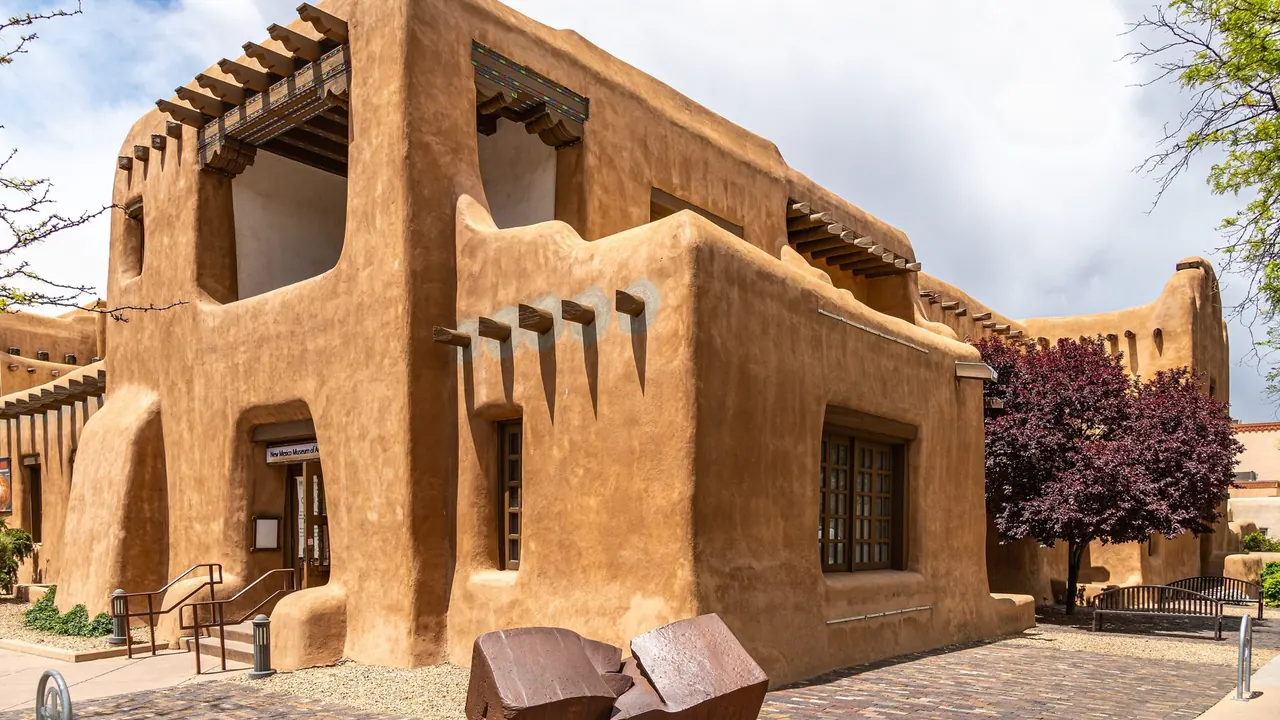
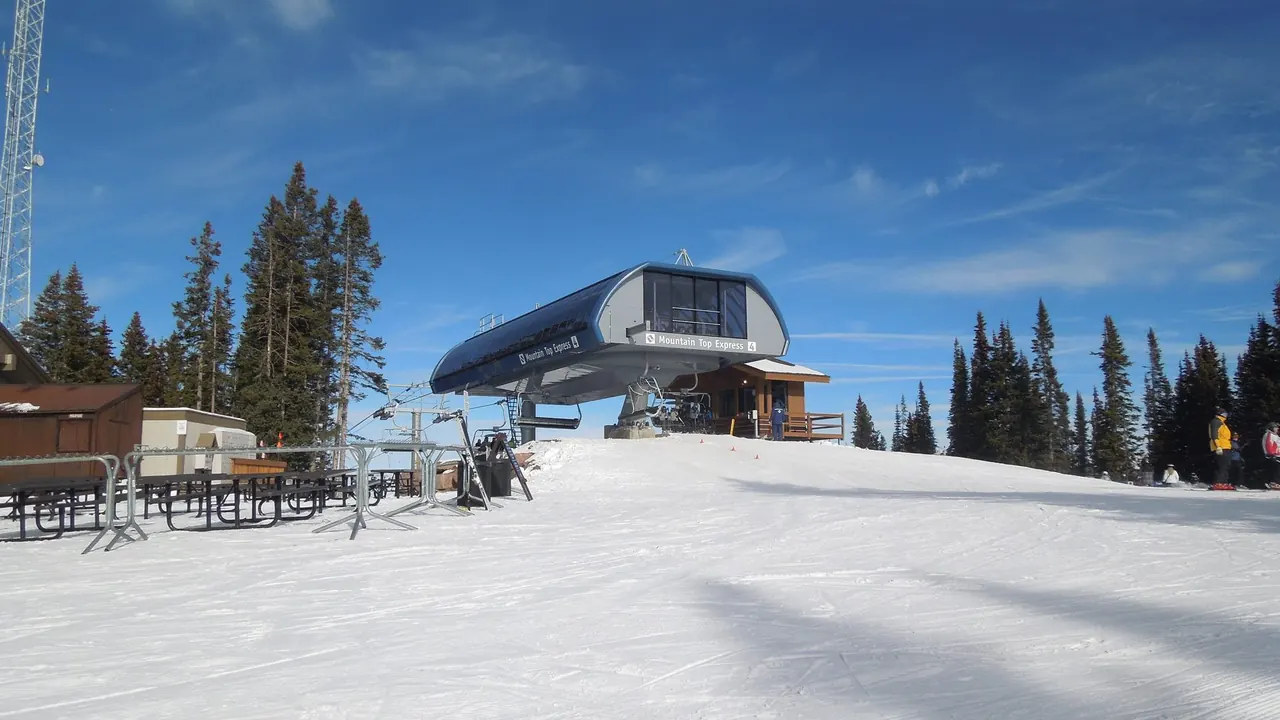
Photos: Santa Fe by dconvertini, CC BY-SA 2.0, cropped; Vail by DReifGalaxyM31, CC BY 3.0, cropped.
Santa Fe or Vail?
Our verdict in twelve categories, each scored against the same fixed benchmark cities, and the climate month by month, so you can choose for your trip.
Choose Santa Fe for
- culture and sights
- food and drink
- shopping
Santa Fe is the choice for a trip built around history, art and a place with a character of its own. The adobe streets around the Plaza, the museums on Museum Hill, the galleries of Canyon Road and the chile-based New Mexican cooking all belong to a four-century-old town rather than a resort, and the pueblos and canyons within a drive add days of further exploring. It is also the less punishing of the two on the wallet, though neither is cheap.
Choose Vail for
- getting around
- nature and the outdoors
- families
Vail suits travellers who come for the mountains and little else. Its ski terrain, from the groomed front side to the Back Bowls, is in a different league, and in summer the gondolas open up high trails, biking and fly fishing. Families who ski get large ski schools and a car-free village where nobody needs to drive all week. Anyone hoping for sights, varied food or anything beyond the slopes and the trails will find it thin.
Scoreboard
Twelve categories on one fixed scale from 0 to 100. The shaded stretch is the gap between the two.
Your match
Pick a travel style or drag the sliders, and both match scores follow your weighting.
Wins on culture and sights and food and drink with your weighting.
Wins on getting around and nature and the outdoors with your weighting.
What matters to you?
Category by category
What the scores mean for a trip.
Beaches & swimming
Neither town has anything resembling a beach, so on this count they are level. The difference lies in the summer water: Santa Fe has Abiquiu Lake about an hour north and floats on the Rio Grande, while Vail's small mountain lakes stay cold even in July. In both, a swim usually means the hotel pool.
Food & drink
Santa Fe has a cuisine of its own, and that sets it well apart. New Mexican cooking, from carne adovada and posole to the red-or-green chile question at every table, fills old adobe dining rooms around the Plaza, and a fine-dining tier and the long-running Railyard farmers' market round it out.
Vail offers polished resort dining instead: steakhouses, fondue rooms, sushi and lodge lunches on the mountain, with elk, lamb and trout on many menus. It is well executed but has no local tradition behind it, and many kitchens shut in the spring and autumn lulls. Both are weak on street food and cheap eating.
Culture & sights
This is where the two are furthest apart. Santa Fe's adobe centre, the Palace of the Governors, the Loretto and San Miguel chapels, the folk art and Native American collections on Museum Hill and the O'Keeffe Museum fill two or three days with genuine history and art.
Vail's chalet village is a 1960s homage to the Tyrol rather than an old town. The Colorado Snowsports Museum, with its story of the Tenth Mountain Division, and the Betty Ford Alpine Gardens make a pleasant hour or two, and that is about the extent of it.
Nightlife
Vail has the livelier evenings, though only in season. After the lifts close, the terraces and slopeside bars of Vail Village and Lionshead fill up, and on winter weekends a few bars and a small club stay open past midnight; out of season the town goes quiet after dinner.
Santa Fe's evenings revolve around a long meal and a margarita or mezcal on a rooftop as the sun drops behind the Jemez Mountains, with a few breweries near the Railyard. Clubbing barely exists, and anyone wanting more drives to Albuquerque.
Nature & outdoors
Both sit in superb country, but Vail is the more complete mountain base. Its ski area, with front-side runs, the open Back Bowls and Blue Sky Basin, is on another scale, and summer brings gondola-served trails, wilderness peaks above 4,000m, mountain biking and fly fishing on Gore Creek and the Eagle River.
Santa Fe wins on variety rather than scale. Trails climb from the town's edge into the Sangre de Cristo Mountains and the Pecos Wilderness, while to the west lie desert mesas, the elk meadows of Valles Caldera, the red cliffs around Abiquiu and rafting in the Rio Grande Gorge. Its ski area is small by comparison.
Day trips
Santa Fe has far more within reach. The High Road through Chimayo and Truchas leads to Taos Pueblo, lived in for about a thousand years, and Bandelier's cliff dwellings, Pecos, Ghost Ranch and the Turquoise Trail villages each make a distinct outing. Albuquerque is even reachable by the Rail Runner train.
From Vail the options are mostly other mountain towns: Beaver Creek, Breckenridge's Victorian main street and the silver-boom streets of Leadville. Glenwood Springs, about an hour down the canyon, is the best day out, and both towns need a car for almost everything.
Good for families
Vail suits families better, as long as the trip centres on the mountains. Large ski schools, gentle learning areas and a car-free village make winter easy, and in summer the gondola top has a coaster, ropes courses and tubing.
Santa Fe offers a children's museum, the toys and miniatures in the folk art collection and the ladders at Bandelier, but its days of galleries and long dinners suit older children more than small ones. Both sit high enough to tire young children at first, and neither has a zoo or aquarium worth the trip.
Getting around
Once there, Vail is the easier place to be without a car. The village and Lionshead are pedestrian, the lifts start in town and a free bus runs the length of the valley, so a week on foot and by bus is normal. The catch is arrival, with no passenger rail and a mountain pass that can close in snow.
Santa Fe's historic core is just as walkable, with the Plaza, Canyon Road and the Railyard close together, but the town sprawls beyond it and buses are infrequent. Museum Hill, trailheads, the pueblos and Taos all point towards a hire car.
Shopping & style
Santa Fe is the far more interesting place to shop. Native American artists sell silver, turquoise and pottery under the portal of the Palace of the Governors, Canyon Road and the Railyard are packed with galleries, and the summer Indian Market, Spanish Market and Folk Art Market draw collectors from afar.
Vail's lanes sell upmarket ski clothing, fur, jewellery and mountain landscapes to a wealthy resort crowd. It is fine for ski gear or a luxury souvenir, but narrow, and serious shoppers go to Denver. Neither has much fashion or department-store shopping.
Affordability
Both are expensive, but Vail is in a class of its own. Lift tickets, ski school, equipment hire, slopeside lodging and resort meals stack up quickly, and only off-season rates or staying down the valley soften the bill.
Santa Fe is pricey for its size, especially around the Plaza in summer and at Christmas, yet much of its appeal costs nothing: the Plaza, gallery browsing and foothill hiking. Cheaper rooms along Cerrillos Road help, though the hire car adds up.
Live music & performing arts
Both towns come alive for music in summer, and Santa Fe has the edge. The Santa Fe Opera, in its open-sided theatre with sunset over the desert, has a reputation for rare and new works, joined by a chamber music festival and a deep-rooted flamenco tradition, and the Lensic and the old churches keep a modest programme going through winter.
Vail answers with Bravo! Vail, bringing major orchestras to the open-air Gerald R. Ford Amphitheater, plus the Vail Dance Festival and a late-summer jazz festival. Outside July and August, though, it is down to après-ski bands.
Wellness & relaxation
Santa Fe has the edge for a restful trip. It has natural mineral springs at Ojo Caliente, about an hour north, and onsen-style soaking tubs among the pines on the road to the ski area. It also has more yoga studios, massage therapists and healers than a town its size would usually have, and its early, quiet evenings help.
Vail's version is the hotel spa: massage after a day on the slopes, saunas, steam rooms and outdoor hot tubs under the peaks. For natural hot water, visitors drive about an hour down the canyon to the pools and vapour caves at Glenwood Springs.
When should you go?
Pick your month. The climate figures are measured averages, not a forecast.
Santa Fe in July
Vail in July
Daytime high, °C
Rainfall in the month, mm
Where the figures come from
Santa Fe's station stands 199 m below the city centre, so the centre is likely a little cooler than the figures say.
Santa Fe has no rain gauge within 25 km of the centre, so its rainfall comes from a gridded climate dataset read at the city rather than from a gauge further away.
Vail's temperatures are measured 47 km from the centre, at Kremmling.
Vail's station stands 186 m below the city centre, so the centre is likely a little cooler than the figures say.
Vail has no rain gauge within 25 km of the centre, so its rainfall comes from a gridded climate dataset read at the city rather than from a gauge further away.
Temperature and rainfall are climate normals, averaged over the years shown. Santa Fe: 1991-2020 normals, Santa Fe / Cieneguilla (12.4 km from centre). Vail: 2006-2025 (rainfall 1991-2020) normals, Kremmling (46.5 km from centre).
The two towns run on quite different calendars. Santa Fe is at its most comfortable in May and October, when days are warm, mostly dry and good for walking the adobe lanes and the foothill trails. September is just as pleasant for walking, but the summer storm season is tailing off, so expect some afternoon showers. June to August are hot, with highs around 31°C. July and August are the wettest months and the peak of the storm season, with about 60mm each, mostly as short afternoon storms. Winter days are cool but often fine enough for sightseeing.
Vail is colder in every month. From December to February daytime highs sit around freezing and drop to -4°C in January, which is what skiers want. Summer peaks at about 29°C in July, comfortable for high hiking. Rain and snow are spread fairly evenly through the year rather than coming in one wet season. April, May and November are neither proper winter nor proper summer, so they suit neither skiing nor hiking well. Neither town has a beach season.
Which traveller are you?
For a culture and arts trip, Santa Fe wins easily. A 1610 colonial capital with Museum Hill, the O'Keeffe Museum, Canyon Road galleries and the summer opera offers days of looking and listening, while Vail is a 1960s resort with one small museum.
On an outdoors trip, Vail is the stronger base. Its vast ski area, the Gore Range and Holy Cross wilderness, gondola-served hiking and biking and fly fishing on Gore Creek put serious mountain country on the doorstep, though Santa Fe's desert-and-peak scenery is more varied.
On a family trip with children, Vail works better, provided the family wants snow or mountain fun. Big ski schools, children's terrain, the car-free village and summer coaster and ropes courses keep children busy, whereas Santa Fe's galleries and long dinners suit older, history-minded children best.
Before you go
| Measure | Santa Fe | Vail |
|---|---|---|
| Currency | US Dollar (USD) | US Dollar (USD) |
| Sockets | AB120 V, 60 Hz | AB120 V, 60 Hz |
| Driving side | Right | Right |
| Time zone | UTC-7, UTC-6 in summer | UTC-7, UTC-6 in summer |
| Emergency number | 911 | 911 |
| Elevation | 2,134 m | 2,445 m |
| Main airport | Santa Fe Municipal Airport (SAF)12 km from centre5 non-stop destinations | Eagle County Regional Airport (EGE)48 km from centre16 non-stop destinations |
| Public holidays this year | 13 days | 12 days |
By the numbers
| Measure | Santa Fe | Vail |
|---|---|---|
| City population | 87,505 | 4,835 |
| People per km² | 645 | 400 |
| Museums within 10 km | 10 | 1 |
| UNESCO World Heritage sites within 50 km | 0 | 0 |
Where else could you go?
Every comparison below shares a destination with this one, so you can follow Santa Fe or Vail somewhere new.