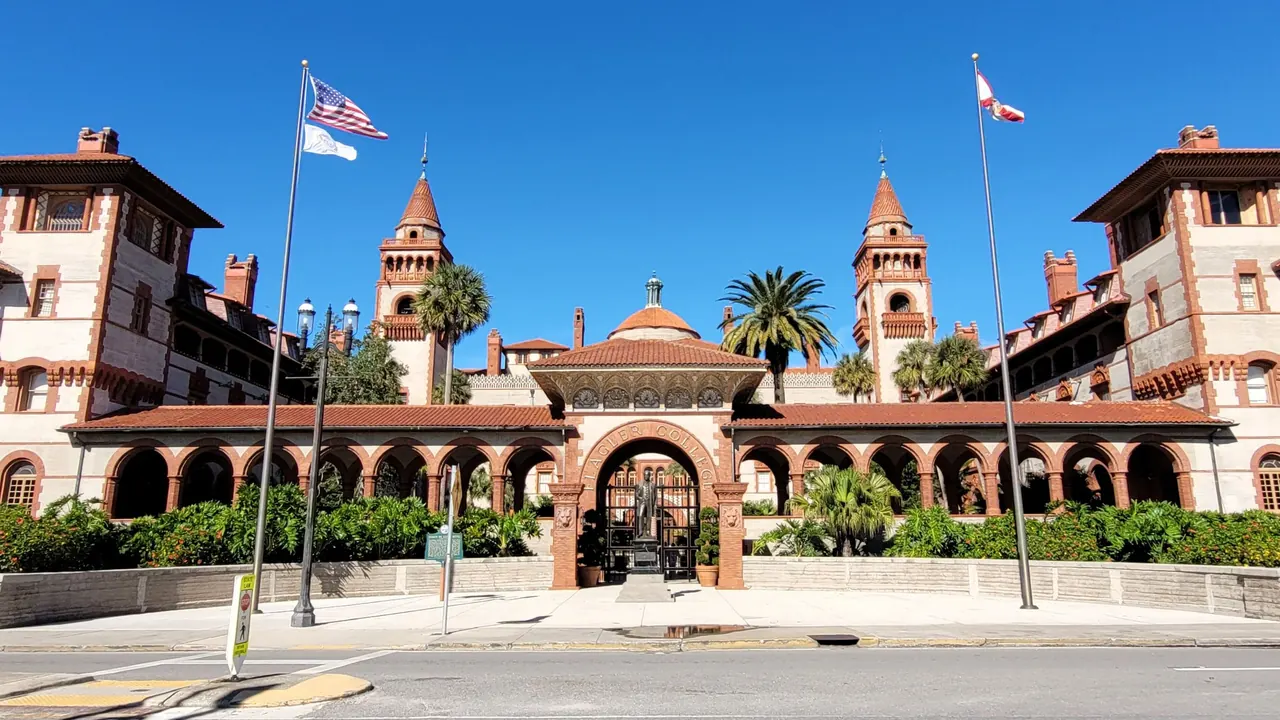
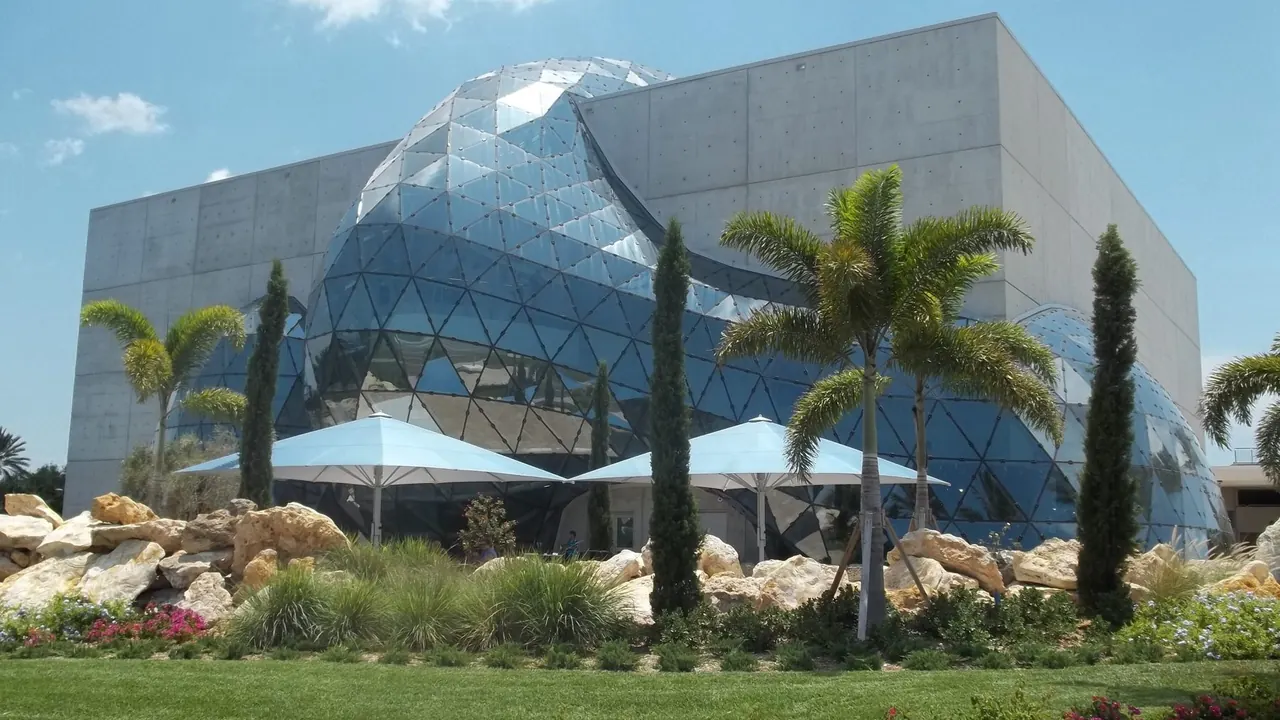
Photos: St. Augustine by Farragutful, CC BY-SA 4.0, cropped; St. Petersburg, Florida by Ebyabe, CC BY-SA 3.0, cropped.
St. Augustine or St. Petersburg, Florida?
Our verdict in twelve categories, each scored against the same fixed benchmark cities, and the climate month by month, so you can choose for your trip.
Choose St. Augustine for
- culture and sights
- getting around
St. Augustine is the choice for travellers who want the past to be the main event. The Spanish fort, the lanes of the old quarter and Flagler's Gilded Age hotels are all a short walk apart, and a good beach is only a quick drive away. It suits a slower, history-led trip of a few days, with quiet evenings over a drink on a courtyard patio.
Choose St. Petersburg, Florida for
- beaches
- nightlife
- food and drink
St. Petersburg fits a classic Gulf beach vacation better. Its white sand and calm, shallow water come first, and they come with more to eat and drink, a livelier Central Avenue, mangrove paddling and Tampa's attractions across the bay. Families, beach lovers and anyone who wants a few more choices in the evening will get more from it, as long as they are happy to drive to most of it.
Scoreboard
Twelve categories on one fixed scale from 0 to 100. The shaded stretch is the gap between the two.
Your match
Pick a travel style or drag the sliders, and both match scores follow your weighting.
Wins on culture and sights and getting around with your weighting.
Wins on beaches and nightlife with your weighting.
What matters to you?
Category by category
What the scores mean for a trip.
Beaches & swimming
Both towns have long barrier-island beaches within a short drive of the centre, but St. Petersburg's are the bigger draw. The Gulf gives fine white sand, shallow, still water and sunsets over the sea. Fort De Soto, Clearwater and ferry-only Caladesi Island add plenty of variety.
St. Augustine's Atlantic shore, from Anastasia State Park down to Crescent Beach, is wide and pleasant, with small waves. The water is greener and choppier, though, and in winter the beach is better for walking than swimming. Its advantage is how close the sand sits to the historic streets.
Food & drink
St. Petersburg has more range. There are grouper sandwiches and stone crab at the beach fish shacks, a cluster of modern kitchens along Central Avenue and a craft-brewery scene that is a real draw in its own right. Tampa's Cuban cooking in Ybor City is close by as well.
St. Augustine has the more distinctive local flavour in the Minorcan datil pepper, which turns up in its spicy clam chowder and pilau. Beyond that and its waterfront shrimp, though, the choice thins out quickly, and St. George Street's restaurants mostly cater to passing tourists.
Culture & sights
St. Augustine is the stronger choice for history. The town itself is the attraction: the Castillo de San Marcos on the bayfront, the balconied lanes of the Spanish quarter and the old city gate. On top of that come Flagler's Spanish Renaissance hotels, the Lightner Museum and the lighthouse, layered over four and a half centuries.
St. Petersburg is the reverse, a 1920s boom town whose interest lies inside its museums. The Dalí collection is a genuine highlight, with the Museum of Fine Arts, the Chihuly glass and downtown murals around it. Once you step outside them, though, there is far less history to walk through.
Nightlife
St. Augustine's evenings are smaller and gentler. A night out usually means one or two drinks on a courtyard or patio in the Spanish quarter after dinner. Weekend visitors and, in term time, the college crowd give it some life, but there is nowhere to dance and the old town goes quiet early.
St. Petersburg gives you a fuller night, though it still is not a party city. Along Central Avenue you can move from a rooftop terrace to a sports bar to a brewery taproom in one evening, and on the islands the night starts at a tiki bar as the sun sets over the Gulf. For clubs, people cross the bay to Ybor City in Tampa.
Nature & outdoors
The two landscapes are alike, flat and watery with no hills, but St. Petersburg gives you a little more to do in it. Weedon Island and Shell Key have mangrove paddling trails with rays and winter manatees. Fort De Soto adds birding, and the long Pinellas Trail makes cycling easy.
St. Augustine's setting is salt marsh and dune rather than mangrove. You can kayak the creeks with dolphins and ospreys, walk through the Guana Tolomato Matanzas reserve and paddleboard on the calm lagoon in Anastasia State Park.
Day trips
St. Petersburg has more distinctive outings within easy reach. Tampa's Ybor City is just across the bay, Sarasota's Ringling mansion and museums are an hour south, and the Greek sponge docks of Tarpon Springs are less than an hour north.
St. Augustine's list leans on longer drives. It has Jacksonville and Amelia Island's Victorian port to the north and Daytona to the south, with Kennedy Space Center and Orlando both around two hours away. Both towns reach Orlando in roughly the same time.
Good for families
St. Petersburg works a little better for children, mainly because of the water. The calm, shallow Gulf suits toddlers, and the beach resorts are built around families. Busch Gardens, the Florida Aquarium and ZooTampa are all across the bay.
St. Augustine makes history fun for children instead. There are cannon firings at the Castillo, the old Alligator Farm, the lighthouse climb and trolley rides, all in a compact and safe centre. The surf is gentle in summer, but the thrill rides mean the drive to Orlando.
Getting around
There is little between them, and outside the centre both towns need a car. St. Augustine comes out slightly ahead for anyone staying in town, because its main sights are all in one small, flat colonial quarter that you can see entirely on foot, with sightseeing trolleys when your legs give out. The sand and the lighthouse need wheels, but both are a short hop over the bridge.
St. Petersburg's downtown is also easy to walk, but its main draw is out on the barrier islands. The rapid bus to St. Pete Beach and the Pinellas Trail help, yet they serve only one stretch of the coast. Fort De Soto, the other beaches and Tampa still mean hiring a car.
Shopping & style
Shopping is a minor part of a trip to either town, with St. Petersburg slightly more interesting. Central Avenue's vintage and record shops, local glass and prints, and the winter Saturday Morning Market give it more independent character.
St. Augustine's St. George Street is mostly fudge and pirate souvenirs, though the galleries and antique dealers on Aviles Street are worth a look. Datil-pepper sauce makes a better souvenir than anything you would find on the main drag.
Affordability
Neither is cheap, and the costs are much the same: American tourist-town prices for meals and attractions, tipping on top and a car for most outings. What differs is when the savings come. St. Augustine's old-town inns are cheapest midweek and outside spring and summer, while St. Petersburg's beach hotels drop their rates in the hot, stormy summer once the winter visitors have gone home.
Live music & performing arts
St. Petersburg has the more rounded programme. The Florida Orchestra plays at the Mahaffey Theater, and a professional regional theatre company and an intimate church concert hall fill out the calendar. Tampa's large performing arts centre is half an hour away.
St. Augustine's real stage is the open-air amphitheatre in the Anastasia Island woods, which hosts touring rock, country and folk acts. Past that, it comes down to patio cover bands and community theatre.
Wellness & relaxation
For proper pampering, St. Petersburg has more to offer. The spas at its grand historic beach hotels, yoga studios downtown and the nightly ritual of Gulf sunsets in sleepy Pass-a-Grille make unwinding easier, especially in the dry, mild winter.
St. Augustine's calm comes from its B&B verandas, courtyard gardens and evening strolls along the bayfront seawall rather than from spas. That suits a gentle, unhurried stay more than a restorative one.
When should you go?
Pick your month. The climate figures are measured averages, not a forecast.
St. Augustine in July
St. Petersburg, Florida in July
Daytime high, °C
Rainfall in the month, mm
Where the figures come from
St. Augustine has no rain gauge within 25 km of the centre, so its rainfall comes from a gridded climate dataset read at the city rather than from a gauge further away.
St. Augustine's sunshine is measured 73 km from the centre, at Jacksonville International.
Temperature and rainfall are climate normals, averaged over the years shown. St. Augustine: 2006-2020 (sunshine 1991-2020, rainfall 1991-2020) normals, St Augustine / Kingsley Mobile Home Park (7.6 km from centre). St. Petersburg, Florida: 1998-2020 (sunshine 1991-2020, rainfall 1991-2020) normals, Saint Petersburg (1.6 km from centre).
Both towns have the same beach season, from May to October, when the sea is warm enough for long swims. The Gulf at St. Petersburg gets a little warmer, reaching about 30°C in midsummer. Summer is hot in both, and the rain sets in from June to September as afternoon storms. St. Petersburg gets the heavier downpours, around 228mm in August. Walking the streets at midday is hard going in either town during those months.
Winter is where they part. St. Augustine sits further north on the Atlantic, so January days stay around 18°C and the skies are noticeably greyer. That makes it a fine time for the fort and the old lanes, but not for the beach. St. Petersburg stays milder and sunnier through the winter, which makes it the better escape from November to March, even though the sea is too cool for most swimmers then. In both towns, spring and late autumn give the best balance of dry weather and comfortable heat.
Which traveller are you?
On a beach and sun trip, St. Petersburg wins. The barrier-island sands at St. Pete Beach, Pass-a-Grille and Fort De Soto are whiter and the water calmer and clearer than on Anastasia Island, and the winters are milder too.
For a culture and arts trip, St. Augustine is the more rewarding choice. A walkable Spanish colonial town, the coquina Castillo and Flagler College's Tiffany glass make the whole place the sight, while St. Petersburg's strength is a handful of museums led by the Dalí.
On a food and nightlife trip, St. Petersburg gives you more to work with. Central Avenue has breweries, rooftop bars and chef-led kitchens close together, with Ybor City across the bay, while St. Augustine's evenings end early over pub patios and fried shrimp.
Before you go
| Measure | St. Augustine | St. Petersburg, Florida |
|---|---|---|
| Currency | US Dollar (USD) | US Dollar (USD) |
| Sockets | AB120 V, 60 Hz | AB120 V, 60 Hz |
| Driving side | Right | Right |
| Time zone | UTC-5, UTC-4 in summer | UTC-5, UTC-4 in summer |
| Emergency number | 911 | 911 |
| Elevation | 152 m | 134 m |
| Main airport | Jacksonville International Airport (JAX)76 km from centre48 non-stop destinations | St. Petersburg Clearwater International Airport (PIE)16 km from centre60 non-stop destinations |
| Public holidays this year | 11 days | 11 days |
By the numbers
| Measure | St. Augustine | St. Petersburg, Florida |
|---|---|---|
| City population | 14,329 | 258,308 |
| People per km² | 433 | 725 |
| Museums within 10 km | 12 | 13 |
| UNESCO World Heritage sites within 50 km | 0 | 0 |
| Swim season, months above 21 °C | 8 months | 8 months |
Where else could you go?
Every comparison below shares a destination with this one, so you can follow St. Augustine or St. Petersburg, Florida somewhere new.
- St. Pete Beachvs St. Petersburg, Florida
- Tampavs St. Petersburg, Florida
- Clearwatervs St. Petersburg, Florida
- Sarasotavs St. Petersburg, Florida
- Daytona Beachvs St. Augustine
- Orlandovs St. Petersburg, Florida