Sweden
Gotland
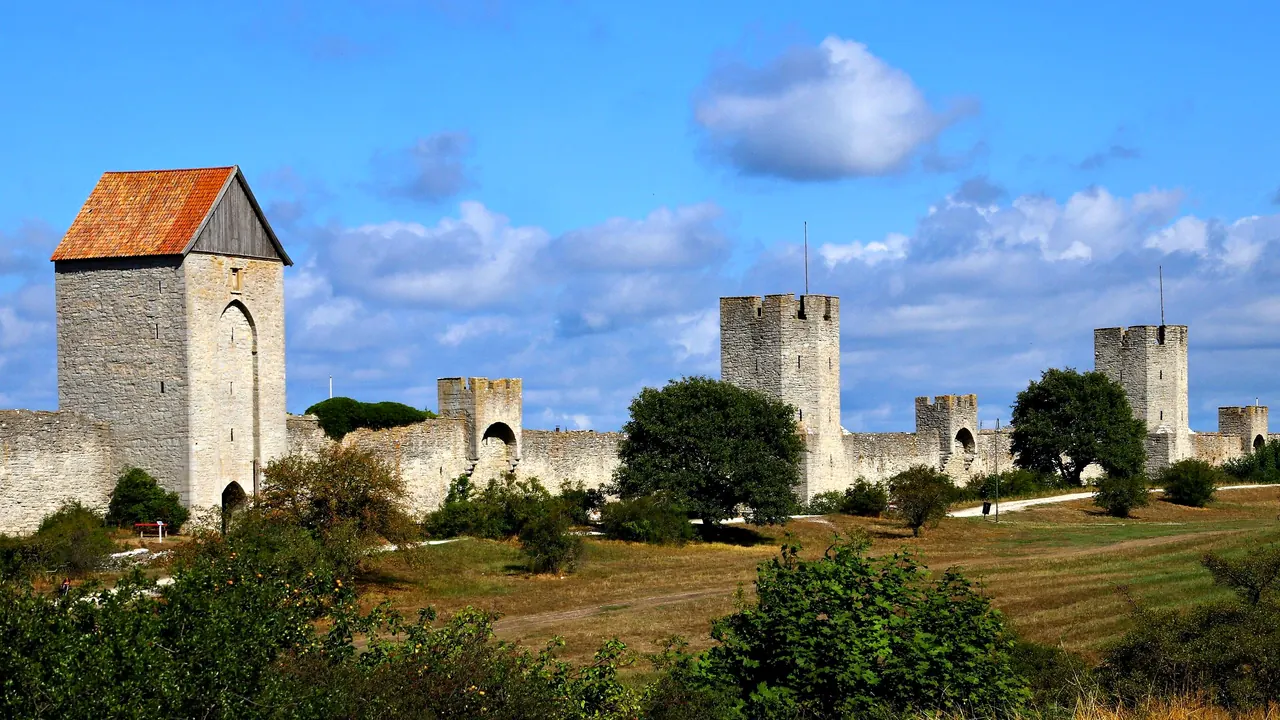
The towers of Visby's town wall from the fields outside
- Families70
- Culture & sights68
- Nature & outdoors55
Photo: Guillaume Baviere from Copenhagen, Denmark, CC BY-SA 2.0, cropped
Match
46
Every category weighted equally
- Beach & sun45
- Culture & arts46
- Food & nightlife43
- Family trip49
- Outdoors47
- Relax & unwind45
- Shopping & style45
- On a budget44
Gotland in twelve categories
Our verdict on each, scored 0 to 100 against the same fixed benchmark cities, so a score means the same thing on every page.
Beaches & swimming. Scores 45 out of 100.
Food & drink. Scores 46 out of 100.
Culture & sights. Scores 68 out of 100.
Nightlife. Scores 42 out of 100.
Nature & outdoors. Scores 55 out of 100.
Day trips. Scores 38 out of 100.
Good for families. Scores 70 out of 100.
Getting around. Scores 55 out of 100.
Shopping & style. Scores 33 out of 100.
Affordability. Scores 30 out of 100.
Live music & performing arts. Scores 27 out of 100.
Wellness & relaxation. Scores 40 out of 100.
Gotland category by category
Beaches & swimming
45Beach life is a real part of a Gotland summer. The best sand is on the west coast at Tofta, south of Visby, a long pine-backed beach with shallow water, and on Fårö at Sudersand, a wide arc of fine sand in the north. On the east coast, Ljugarn and the Sandviken bay have quieter beaches. In between, much of the shore is flat limestone shingle, which is good for sunbathing on the rocks but harder on bare feet.
The Baltic here is brackish and calm, with almost no tide. It warms to about 17-20°C in July and August, which is pleasant on a sunny day but never warm, and the swimming season is short, from late June to the end of August. Families and Swedes on summer leave spend whole days on the sand. Visitors expecting warm water will find it brisk.
Food & drink
46Gotland has an identity of its own at the table. Its signature dish is the saffron pancake, a dense baked rice pudding coloured with saffron, served with dewberry jam, known locally as salmbär, and whipped cream. Lamb from the island's hardy sheep, smoked fish from the east-coast villages, and asparagus, truffles and cheeses from local farms turn up on summer menus. Smokehouses by the shore serve smoked flounder and herring, and farm shops and seasonal markets sell lamb sausage and baked goods. Gotlandsdricke, a smoky farmhouse juniper ale, is a curiosity for beer drinkers.
The best eating gathers in Visby's walled town in July and August, along with farm restaurants dotted around the countryside. Outside high summer much of this closes, and the island has neither the range nor the cheap street food of a city.
Culture & sights
68Visby is one of the best-preserved medieval towns in northern Europe. A ring wall more than 3km long, with dozens of towers, surrounds steep lanes of Hanseatic merchant houses, stepped gables and the roofless stone shells of a dozen churches. Above them stands Saint Mary's Cathedral, still in use. The Gotland Museum fills in the island's long history, with Viking silver hoards and the carved picture stones that are unique to Gotland.
All over the countryside stand more than ninety medieval parish churches. Many are close to unchanged since the 1300s, with wall paintings, carved fonts and stone portals. Bronze Age stone ship settings and Iron Age hillforts add older layers. It is heritage enjoyed slowly, church by church, rather than a city of great collections.
Nightlife
42Going out on Gotland means Visby, and for most of the year it means very little. Then in high summer, roughly from midsummer to early August, the walled town fills with young Swedes. Bars on the harbour and the squares and terraces inside the walls stay busy late, and seasonal clubs by the water and just outside the gates run past midnight. The busiest weeks of July are loud, crowded and quite expensive.
Outside Visby, evenings in the countryside and on Fårö end over a long dinner. In June and late August the town is already much quieter, and from autumn to spring a few pubs carry the whole scene.
Nature & outdoors
55Gotland is low and flat, a limestone plateau of pine forest, juniper heath, meadows and stone walls, ringed by a long coast. Its signature sights are the raukar, weathered limestone sea stacks that stand on the shore at Langhammars and Digerhuvud on Fårö and at Hoburgen in the far south. In early summer the meadows are full of wild orchids, and the bird cliffs of Stora Karlsö, reached by boat, hold guillemots and razorbills. The Lummelunda caves north of Visby can be visited.
The gentle land and quiet lanes make it a fine island for cycling, and coastal walks follow the cliffs and shingle. Gotska Sandön, a remote dune and pine national park far to the north, is a summer-only trip. There is no high ground and little that is wild in the grand sense.
Day trips
38Most days out stay on the island. The best is Fårö, across a short free car ferry in the north, a sparse, windswept island with its own sheep, stone cottages and the film heritage of Ingmar Bergman, who lived and is buried there. Stora Karlsö off the west coast makes a boat trip with a guided walk. Small towns such as Slite, Hemse and Ljugarn, along with the old fishing hamlets of the east coast, are pleasant stops rather than destinations.
The mainland is about three hours away by ferry, too far for a day trip. The best way to fill the days is a slow circuit of the countryside, its churches and the coast.
Good for families
70Gotland is a traditional Swedish family summer, and it works well for that. Tofta and Sudersand have shallow, calm water and soft sand for small children. Just south of Visby, a seasonal amusement and water park includes the house used for the Pippi Longstocking films. The Lummelunda caves, the sea stacks of Fårö and the island's sheep and farm animals all appeal to children, and Visby's walls and ruins make a natural playground for older ones, above all in August during Medieval Week, with its jousting and markets.
The island is safe and unhurried, and quiet roads make cycling as a family realistic. Visby's cobbles and steep lanes are hard work with a pushchair, and the cool water and short season limit what a beach week can be.
Getting around
55Inside the walls, Visby is small and best explored on foot, though the cobbled lanes climb steeply from the harbour. Beyond the town you need a car or a bicycle. Island buses link Visby with the larger villages, but they run too rarely to reach the beaches, churches and Fårö with any ease. Roads are quiet, flat and well kept, and the island is about 170km from tip to tip, so driving is easy. Many visitors bring a car on the ferry or hire one in Visby.
Cycling is popular, with marked routes along the coast and back roads. Getting to the island takes about three hours by ferry from Nynäshamn or Oskarshamn, or a short flight from Stockholm.
Shopping & style
33Shopping here means crafts rather than fashion. In Visby's lanes, Adelsgatan and the streets around the main square hold small shops selling sheepskins and wool from Gotland sheep, ceramics, glass, linen and objects carved from local limestone. In summer, artisans also sell from studios and old barns in the countryside, and Fårö has a few shops selling woollen goods. Medieval Week brings a large market of replica crafts.
There is no luxury retail or department store worth a visit, and outside summer many shops close or cut back.
Affordability
30Gotland is an expensive place to visit in the season that matters. Rooms in and around Visby in July are in short supply and priced to match, restaurant meals and drinks cost what they do elsewhere in Sweden, and the ferry with a car adds a real expense. Booking a rental cottage or a countryside guesthouse well ahead, or coming in June or late August, eases the cost. Self-catering and the island's campsites are the usual ways Swedish families keep a long stay affordable.
Live music & performing arts
27Live performance on Gotland belongs to summer and to its settings. Open-air theatre is staged in the ruins of the Cistercian monastery at Roma, while concerts and opera performances fill Visby's roofless church ruins and the cathedral. A chamber music festival and Bergman Week, a festival of film and talks on Fårö, are fixed in the island's calendar. In August, Medieval Week brings jousting, street theatre and early music to Visby.
For the rest of the year there is little beyond the local cultural centre and occasional concerts.
Wellness & relaxation
40Gotland's strength here is pace rather than treatments. Outside Visby in high summer, the island is quiet: empty roads, juniper heath, stone farmhouses and long light evenings, with a slowness that Swedes come here to find. A few countryside hotels and resorts near Visby have spas and saunas, and a sauna by the sea fits the island well. There is no thermal bathing or deeper spa culture, so this is a place to rest, not to take a cure.
Where to stay in Gotland
Visby is the natural base for a first visit. Staying inside or just outside the walls puts the medieval lanes, the church ruins, the harbour and the island's best restaurants within walking distance, and it suits travellers who come for history and food, and in July for nightlife. It's also the loudest and most sought-after place on the island in high summer, and the steep cobbles are tiring with a pushchair. Even from Visby, you'll want a car or a bicycle to see the rest of the island.
Families on a beach week often prefer the west coast around Tofta, south of Visby. There the beach is long and shallow, the amusement park is close and town is an easy drive away. The east coast around Ljugarn is quieter, with smokehouses and old fishing hamlets nearby. It suits a slow stay and cycling along flat back roads.
Fårö, across the short car ferry in the north, makes a good second visit or a stay for people who want solitude: sea stacks, the sand at Sudersand and evenings that end over dinner. The island is about 170km from end to end, so one base with a car covers most of it. On a longer trip, a few nights in Visby followed by a countryside cottage works well. Book that cottage well ahead.
When should you go?
Pick a month to see what it is like. The climate figures are measured averages, not a forecast.
Gotland in July
Daytime high, °C
Rainfall in the month, mm
The whole year
Shaded against this destination’s own year: the deepest cell is its best month for that figure and the palest its weakest.
Temperature and rainfall are climate normals, averaged over the years shown. Gotland: 1991-2020 normals, Visby Airport (4.5 km from centre).
Before you go
| Measure | Gotland |
|---|---|
| Official language | Swedish |
| Currency | Swedish Krona (SEK) |
| Sockets | CF230 V, 50 Hz |
| Driving side | Right |
| Time zone | UTC+1, UTC+2 in summer |
| Emergency number | 112 |
| Main airport | Visby Airport (VBY)6 non-stop destinations |
| Public holidays this year | 16 days |
By the numbers
| Measure | Gotland |
|---|---|
| Population | 60,124 |
| People per km² | 20 |
| Swim season, months above 21 °C | None |
Compare Gotland with
Every comparison with a written verdict behind it.