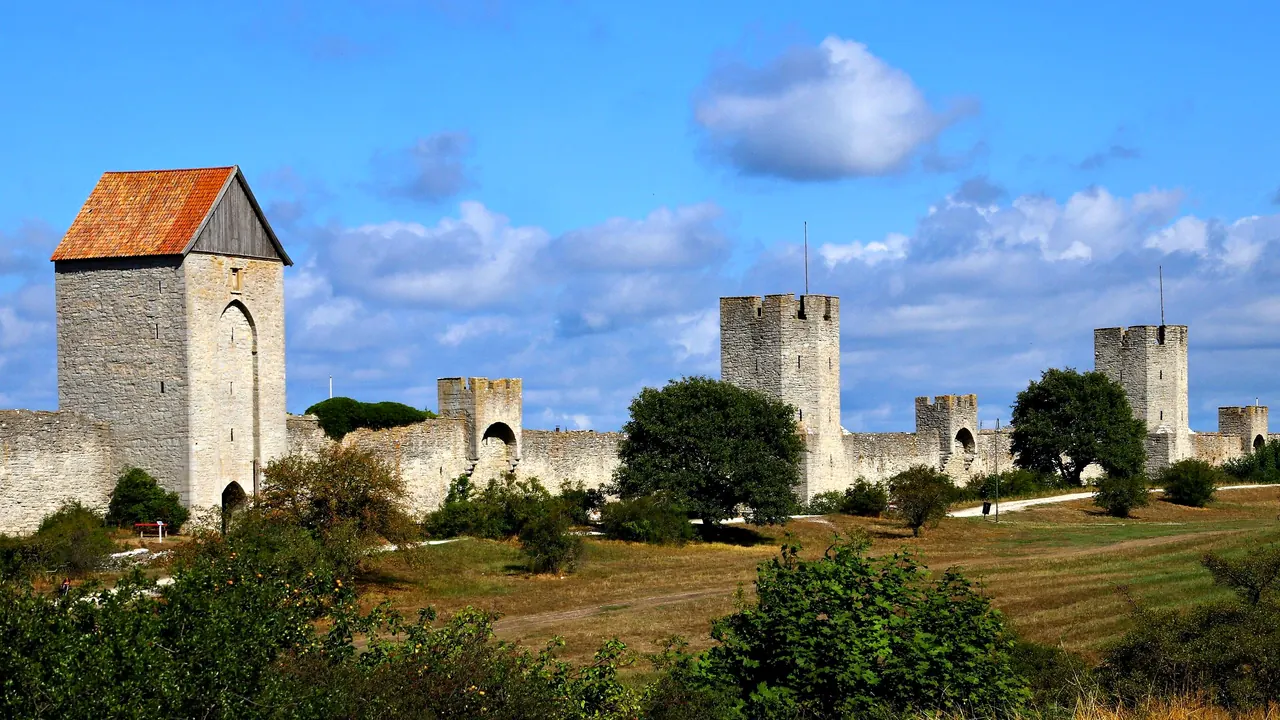
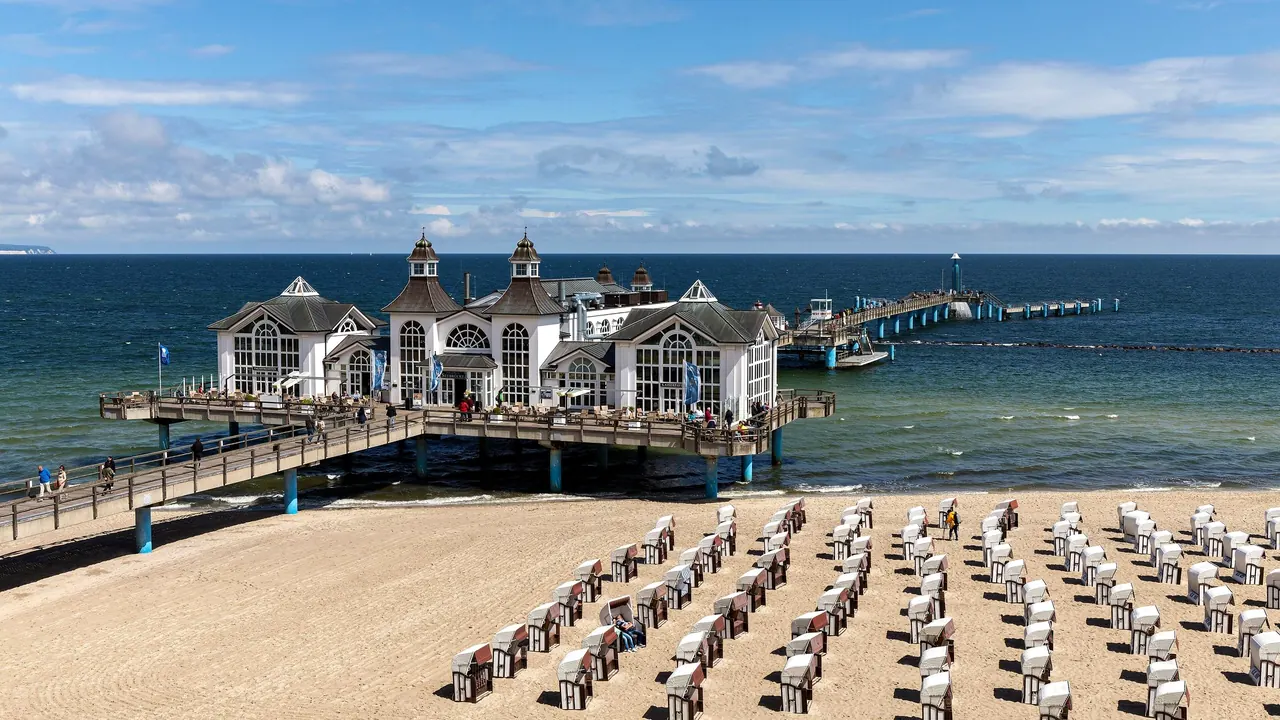
Photos: Gotland by Guillaume Baviere from Copenhagen, Denmark, CC BY-SA 2.0, cropped; Rügen by Ansgar Koreng, CC BY-SA 3.0 DE, cropped.
Gotland or Rügen?
Our verdict in twelve categories, each scored against the same fixed benchmark cities, and the climate month by month, so you can choose for your trip.
Choose Gotland for
- culture and sights
- nightlife
- shopping
Gotland suits travellers who want history in their summer days. Visby's walled medieval town and the parish churches scattered across the countryside give it a depth of heritage Rügen cannot match. In July the island also has the better table and the livelier evenings, and its woollens and limestone crafts make better things to take home. Come for slow days of churches, coast and long light evenings, and accept that the season is short and expensive.
Choose Rügen for
- day trips
- wellness
- nature and the outdoors
Rügen is the one for walkers, spa-goers and anyone who likes to range further afield. The chalk cliffs and beech forest of Jasmund are a finer landscape than anything on Gotland. Its resort towns were built for rest, with saunas and spa hotels, and Stralsund and Hiddensee are within easy reach for days out. It costs a little less too, and suits a quiet family or couples' seaside week better than a trip built around sights or nights out.
Scoreboard
Twelve categories on one fixed scale from 0 to 100. The shaded stretch is the gap between the two.
Your match
Pick a travel style or drag the sliders, and both match scores follow your weighting.
Wins on culture and sights and nightlife with your weighting.
Wins on day trips and wellness with your weighting.
What matters to you?
Category by category
What the scores mean for a trip.
Beaches & swimming
These are two equally good Baltic beach islands, and the difference is in the shoreline. Gotland's best sand comes in pockets, at Tofta on the west coast and Sudersand on Fårö, with flat limestone shingle along much of the shore in between. Rügen's east coast is one long, unbroken run of white sand from Binz through Sellin to Thiessow, with piers, promenades and wicker beach chairs.
The water is equally cool on both, so expect brisk swims rather than warm ones. Pick Rügen for a classic resort beach with everything close at hand. Pick Gotland for sand mixed with sunbathing on the rocks and fewer facilities.
Food & drink
Gotland eats better. It has a cooking tradition of its own: saffron pancake with salmbär jam, lamb from the island's hardy sheep, local truffles and asparagus, and a smoky juniper ale. In July and August, Visby's walled town and the farm restaurants have a real range of places to eat.
On Rügen, meals mostly mean smoked herring and fish rolls on the quay at Sassnitz or Lauterbach, followed by much the same resort menu in Binz. It is good for a casual lunch, but a trip around food is not the reason to go.
Culture & sights
On this front Gotland is far ahead. Visby is a whole medieval town inside its walls, with Saint Mary's Cathedral, stepped gables and roofless church ruins. Out in the countryside, village churches with wall paintings from the 1300s, picture stones and Bronze Age ship settings give you heritage to explore for days.
Rügen's sights are a looser set of outings: the white villas of Binz and Sellin, the classicist town of Putbus, the hunting lodge of Granitz and the documentation centre at Prora, which is sobering. Cape Arkona and the village of Vitt make a good afternoon, but none of them matches the density of history on Gotland.
Nightlife
Neither island is built for going out, but Gotland has a real scene for a few weeks of the year. From midsummer into early August, Visby fills with young Swedes, and harbour bars and seasonal clubs by the gates stay loud well past midnight.
Rügen never really has that season. Binz has a handful of late bars and the odd dance venue, and the other resorts go quiet after dinner, so evenings mean a drink on the promenade or a beach bar at sunset.
Nature & outdoors
Rügen has the more striking landscape. In Jasmund National Park, white chalk cliffs fall more than 100m beneath UNESCO-listed beech forest, and the path to the Königsstuhl is a coastal walk of real stature. Lagoons, reed beds, kitesurfing around Wiek and autumn cranes add variety.
Gotland's nature is gentler and more about details: the raukar sea stacks at Langhammars and Hoburgen, orchid meadows, and guillemots on Stora Karlsö. Both islands are flat and good for cycling, but Gotland has nothing to match Jasmund's cliffs.
Day trips
Rügen's position just off the mainland gives it the better choice of outings. Stralsund, a brick Gothic Hanseatic town with a maritime museum, is just across the bridge. Hiddensee, a car-free island, is a short ferry ride away, and Greifswald is about an hour off.
On Gotland, three hours of sea separate you from the mainland, so days out stay on the island. Fårö, with its stone cottages and links to Bergman, and the boat to Stora Karlsö are both rewarding, but after those the island itself is the excursion.
Good for families
Both are old-fashioned family summer islands that work well with children, so the choice comes down to the kind of fun on offer. Gotland has the Pippi Longstocking house in the amusement park south of Visby, the Lummelunda caves, and walls and ruins to explore, best of all during the jousting of Medieval Week in August.
Rügen offers the Rasender Roland steam train, the treetop walk near Prora, the pirate show at Ralswiek and a longer stretch of shallow, sandy beach. Visby's steep cobbles are hard work with a pushchair, while on Rügen a grey day leaves few indoor options beyond the aquarium in Stralsund.
Getting around
Once you have arrived, Gotland is the easier island to get about. Visby's walled centre is compact enough to walk, and beyond it the island's quiet, flat roads take you anywhere by car or bike without hold-ups. The buses are too infrequent to rely on, though, and reaching the island takes a ferry of about three hours or a flight from Stockholm.
Rügen is easier to reach by public transport, with regional trains running over the bridge to Binz and Sassnitz. On the island itself, Cape Arkona and the west coast still need a car, and the single road to the resorts jams on summer weekends.
Shopping & style
Gotland is clearly the better island for shopping, because so much of what it sells is made on the island. A fleece from the island's own sheep, a pot or a stone piece from a craftsman's studio comes with a sense of place. The lanes of Visby's walled town hold most of the shops, and in summer the countryside barns and Fårö add more. The large replica-craft market during Medieval Week in August is the biggest single event for shoppers. Come in the summer season, since much of it closes afterwards.
Rügen's shops are mostly for small souvenirs of a beach week. Jars of sea buckthorn, smoked fish and cosmetics made with the healing chalk are the genuinely local things to buy. Most of the rest of Binz's promenade is beachwear and gift shops of the kind found in any German seaside resort. Neither island has fashion or luxury shopping, and a run over to Stralsund adds little.
Affordability
Both islands are pricey in summer, but Rügen is the lighter on the wallet. You can stay in an inland village with a kitchen, eat harbour fish rolls and meals at normal German prices, and arrive without paying for a car ferry.
Gotland stacks up higher costs in July: scarce rooms around Visby, Swedish restaurant prices and the ferry crossing. On either island, June or late August and self-catering make the biggest difference.
Live music & performing arts
The two are on a par here, and both build their season around the open air. Gotland's settings are its medieval stones: opera and concerts in Visby's church ruins, theatre in the monastery ruins at Roma, and Bergman Week on Fårö for film lovers.
Rügen's highlight is spectacle: the Störtebeker pirate show with ships and fireworks on the lagoon at Ralswiek. It also has the little classicist theatre in Putbus, and its spring classical festival gives it a reason to visit outside high summer.
Wellness & relaxation
Rügen is the better island for resting with some pampering. Binz and Sellin began as Baltic spa towns, and they still have large spa hotels, German sauna culture and treatments using the local healing chalk. Quiet villages such as Groß Zicker are there for doing nothing at all.
Gotland offers stillness more than spas: empty roads, juniper heath and long evenings, with only a few countryside hotels near Visby offering saunas. It suits a quiet escape, but not a vacation planned around treatments.
When should you go?
Pick your month. The climate figures are measured averages, not a forecast.
Gotland in July
Rügen in July
Daytime high, °C
Rainfall in the month, mm
Temperature and rainfall are climate normals, averaged over the years shown. Gotland: 1991-2020 normals, Visby Airport (4.5 km from centre). Rügen: 1991-2020 normals, Putbus (9 km from centre).
Both islands have a short Baltic summer, and the beach weeks run from late June to the end of August on each. Daytime highs reach about 22°C in July on both, and the sea peaks in August, with Rügen's east-coast water a degree or so warmer than Gotland's. Gotland is the sunnier island by a clear margin from May to July, with around 300 hours of sunshine a month. Its summers are also drier, while Rügen's wettest months fall in July and August, at about 70mm each.
The two also differ at either end of the season. Gotland's long, bright, mild days in May and June are excellent for cycling the countryside and visiting churches, even if the sea is still cold. Rügen stays a touch warmer in spring and autumn, which suits cliff walks in September and October. From November to March both islands are cold, grey and dark, with little reason to visit.
Which traveller are you?
On a culture and arts trip, choose Gotland. Visby's ring wall, Hanseatic lanes and church ruins, plus more than ninety medieval country churches and the Viking silver in the Gotland Museum, add up to far more than Rügen's resort villas and lighthouses.
For a food and nightlife trip in high summer, Gotland is the stronger pick. Saffron pancakes, island lamb and farm restaurants beat Rügen's resort menus, and Visby's late harbour bars and seasonal clubs outlast anything Binz can offer after dinner.
On a relaxing and wellness trip, Rügen is the better fit. Its old spa towns of Binz and Sellin have large spa hotels, saunas facing the sea and treatments using the island's healing chalk, while Gotland offers quiet countryside but only a few spas.
Before you go
| Measure | Gotland | Rügen |
|---|---|---|
| Official language | Swedish | German |
| Currency | Swedish Krona (SEK) | Euro (EUR) |
| Sockets | CF230 V, 50 Hz | CF230 V, 50 Hz |
| Driving side | Right | Right |
| Time zone | UTC+1, UTC+2 in summer | UTC+1, UTC+2 in summer |
| Emergency number | 112 | 112 |
| Main airport | Visby Airport (VBY)6 non-stop destinations | Rostock-Laage Airport (RLG)1 non-stop destination |
| Public holidays this year | 16 days | 11 days |
By the numbers
| Measure | Gotland | Rügen |
|---|---|---|
| Population | 60,124 | 67,526 |
| People per km² | 20 | 73 |
| Swim season, months above 21 °C | None | None |
Where else could you go?
Every comparison below shares a destination with this one, so you can follow Gotland or Rügen somewhere new.