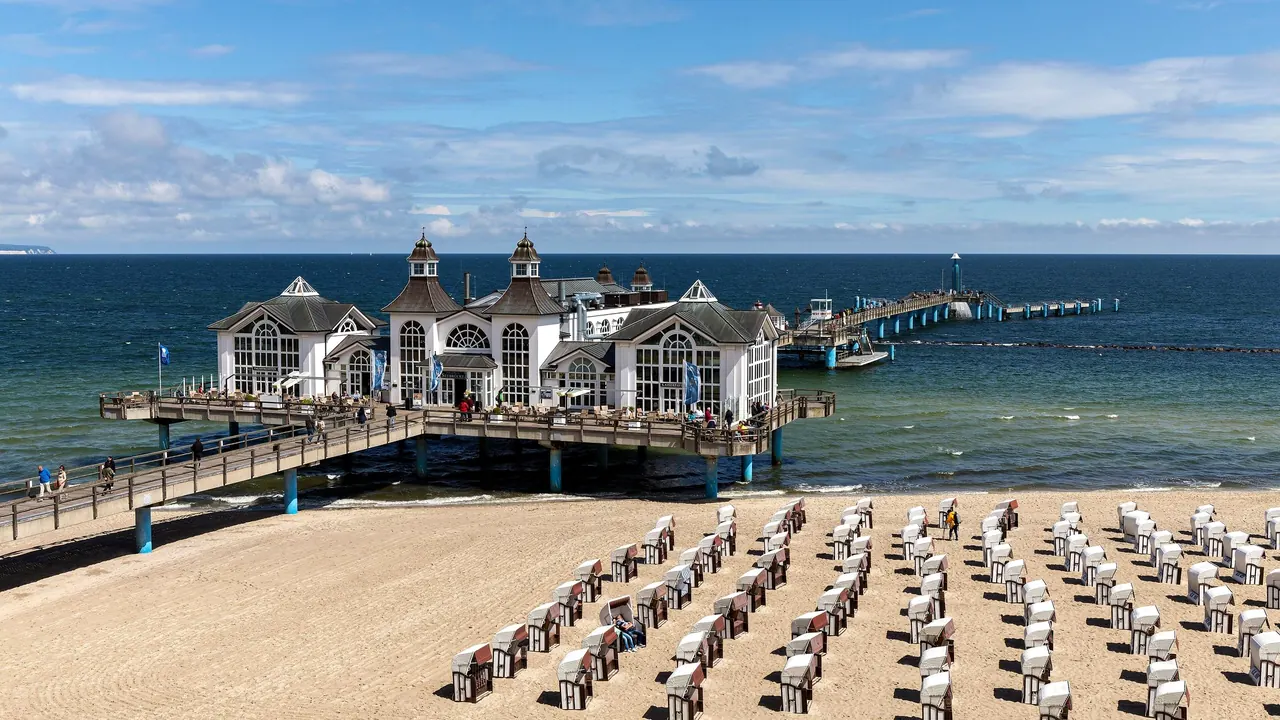
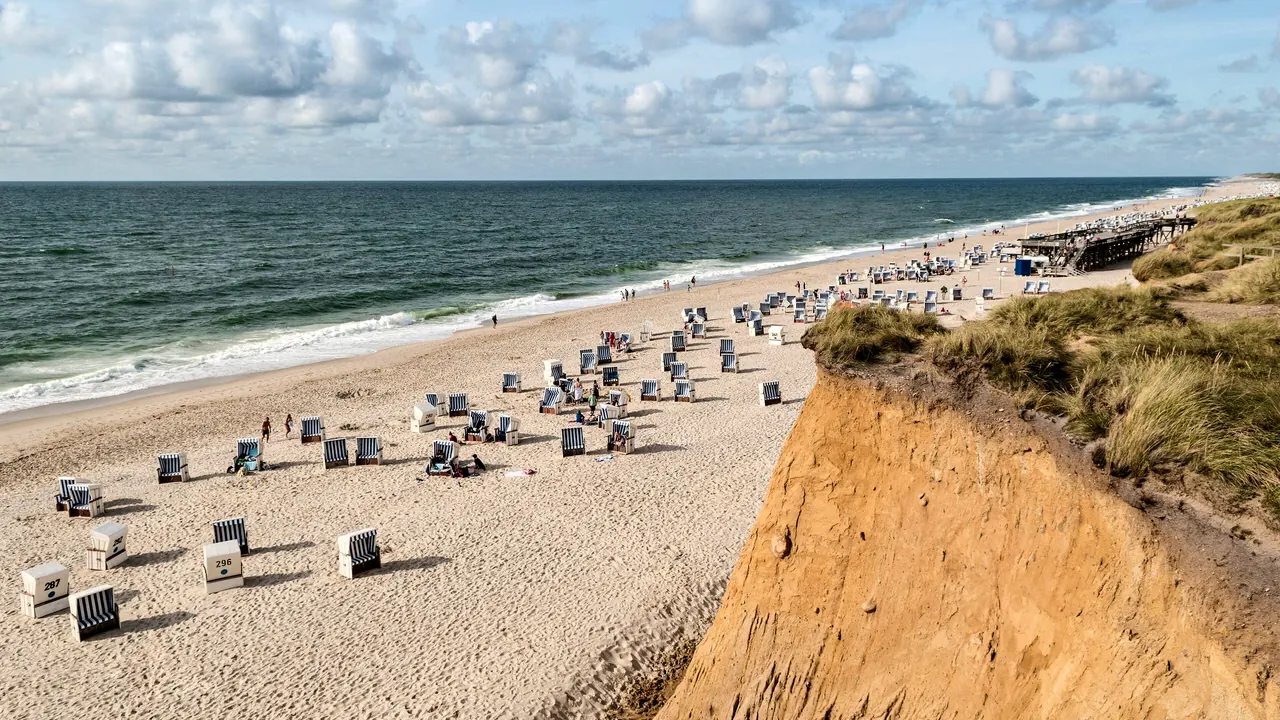
Photos: Rügen by Ansgar Koreng, CC BY-SA 3.0 DE, cropped; Sylt by dronepicr, CC BY 2.0, cropped.
Rügen or Sylt?
Our verdict in twelve categories, each scored against the same fixed benchmark cities, and the climate month by month, so you can choose for your trip.
Choose Rügen for
- prices
- day trips
- culture and sights
Rügen suits families and couples who want variety within a week. It has calm, gently shelving sand on the east coast, the chalk cliffs and beech forest of Jasmund, a steam train for the children, and easy outings to Stralsund and car-free Hiddensee. It is also the cheaper island by a wide margin and has more to see on a grey day, though evenings end early and the food is plain.
Choose Sylt for
- shopping
- food and drink
- nightlife
Sylt is the choice for travellers who put the table and the evening first and can absorb the bill. Its gourmet restaurants in Keitum and Kampen, the champagne terraces of the Whisky Mile and the boutiques in thatched houses give it a polish Rügen lacks. The long surf beach and the dune-side spas make it a bracing place to unwind. Sights and day trips are thinner, and a summer week here is among the costliest in Germany.
Scoreboard
Twelve categories on one fixed scale from 0 to 100. The shaded stretch is the gap between the two.
Your match
Pick a travel style or drag the sliders, and both match scores follow your weighting.
Too close to call, 1 point apart
Wins on prices and day trips with your weighting.
Wins on shopping and food and drink with your weighting.
What matters to you?
Category by category
What the scores mean for a trip.
Beaches & swimming
Both islands offer long stretches of pale sand with wicker beach chairs and a short, cool swimming season. The difference is in the water. Rügen's east coast, from Binz down to Thiessow, faces the Baltic, where the sea shelves gently and usually stays calm enough for weak swimmers.
Sylt's 40km west coast takes the full force of the North Sea, with surf and rip currents, and people swim between the lifeguard flags. It is grander and wilder for walking and watching. For calm, shallow water you cross to the tidal Wadden Sea side.
Food & drink
Sylt eats noticeably better. Beyond the fish kiosks it has a dense tier of fine-dining restaurants in Keitum, Kampen and Rantum, and Wadden Sea oysters and salt-meadow lamb give it a local signature.
Rügen also has smoked fish and quayside rolls, from smokehouses in Sassnitz and Lauterbach, and adds sea buckthorn in cakes and liqueurs. Beyond that, even in Binz, its restaurants lean on the same resort menu.
Culture & sights
Rügen has more to visit. The white villa architecture of Binz and Sellin, the classicist town of Putbus, the Granitz hunting lodge, the sobering Prora complex, and the lighthouses and Slavic earthworks at Cape Arkona add up to several good outings.
Sylt's heritage fits into a single day: the captains' houses and museums of Keitum, the church of St Severin, the Denghoog passage grave and the lighthouses, of which Kampen's banded tower is the best known.
Nightlife
Neither island is for clubbing, but Sylt has a real night out in summer. Kampen's Strönwai draws a well-dressed crowd to its champagne bars late into the night, and Westerland adds pubs, a casino and beach-bar sundowners.
On Rügen an evening means a drink on the promenade or at a beach bar at sunset. Only Binz keeps a handful of bars open late.
Nature & outdoors
Rügen has the more dramatic landscape. In Jasmund the chalk cliffs drop more than 100m beneath UNESCO-listed beech forest, giving it a coastal walk Sylt cannot match. The Granitz hills, the heath and the lagoons add variety, and cranes gather on the lagoons in autumn.
Sylt is flatter and more elemental, with the shifting dunes near List, the Red Cliff and the Wadden Sea mudflats, best seen on a guided low-tide walk or a seal trip. Both islands are fine for cycling and kitesurfing. Sylt has open-sea wind on its west coast, while Rügen has sheltered lagoons around Wiek.
Day trips
Rügen is better placed for outings. Brick Gothic Stralsund, with its maritime museum, lies just over the bridge. The car-free island of Hiddensee is a short ferry ride from the west coast, and Greifswald is about an hour away.
From Sylt nearly every outing means a boat or the causeway. Boats from Hörnum go to Amrum, Föhr and the Halligen, the ferry from List goes to Rømø and on to Ribe, and the train takes you to Husum. These trips are pleasant but smaller in scale.
Good for families
Both are classic German family islands, with Rügen slightly the easier. Its calm, shallow Baltic water suits small children all along the east coast, and the Rasender Roland steam train, the treetop walk near Prora and the pirate show at Ralswiek give the days a shape.
On Sylt, families head for the Wadden Sea side or the quieter Hörnum and Rantum to avoid the surf. They rely on the nature centre in List, mudflat walks and the indoor seawater pool in Westerland. On either island, a cold, grey day is the real challenge.
Getting around
Sylt is simpler without a car. Trains cross the causeway to Westerland, buses run the length of the island, and flat cycle paths link every village, though you often ride into a headwind.
Rügen is larger and more spread out. Trains reach Binz and Sassnitz and the steam railway serves the south-east, but Cape Arkona, the west coast and the quiet corners really need a car. The single route over the bridge clogs on summer weekends.
Shopping & style
Sylt has the better shopping, largely thanks to Kampen, where luxury labels and fashion boutiques fill thatched houses. Westerland's Friedrichstraße has the everyday shops, and Keitum has galleries and interiors shops.
On Rügen it comes down to the Binz promenade, amber, healing-chalk cosmetics and a few pottery studios. For anything more you go to Stralsund.
Affordability
Rügen costs a good deal less. High season in Binz and Sellin is expensive, but a flat with a kitchen in an inland village or a quieter resort, plus fish rolls from the harbour, puts a week within reach.
Sylt is in a different bracket. Kampen and Keitum charge luxury rates, Westerland and Hörnum save only a little, and the visitors' tax and the car train come on top. Bakeries and buses help, but a summer week there is still a major expense.
Live music & performing arts
On a summer evening Rügen can give you a proper show. The Störtebeker Festival, an open-air pirate drama with horses, ships and fireworks, plays on the lagoon stage at Ralswiek. Putbus adds its small classicist theatre, and a spring festival takes classical concerts into churches and manor houses across the island.
Sylt has no theatre company or orchestra of its own. Live performance there comes down to summer concerts in churches such as St Severin, cabaret and readings in Westerland, and bands at the beach bars.
Wellness & relaxation
Both islands grew up as seaside health resorts, and both have hotel spas and German saunas with sea views, so the difference is one of style. Sylt makes the most of the North Sea itself, with thalassotherapy, seawater pools and the ritual of a hot sauna followed by a run into the cold sea.
Rügen's spas in Binz and Sellin use the island's own healing chalk for wraps and mud treatments. Its real asset is the deep quiet of villages like Groß Zicker and Vitt in late spring and early autumn.
When should you go?
Pick your month. The climate figures are measured averages, not a forecast.
Rügen in July
Sylt in July
Daytime high, °C
Rainfall in the month, mm
Temperature and rainfall are climate normals, averaged over the years shown. Rügen: 1991-2020 normals, Putbus (9 km from centre). Sylt: 2009-2025 (sunshine 1991-2020, rainfall 1991-2020) normals, Westerland / Sylt (2.8 km from centre).
Both islands have a short swimming season. July and August are the warm months. Rügen reaches about 22°C by day and Sylt, at around 20°C, is a degree or two cooler. The sea peaks near 19°C in August on both, so a swim is a brisk dip either way. From April to August Rügen gets more sunshine, which makes late spring a fine time for walking the Jasmund cliffs and cycling, even before the sea has warmed.
The real difference comes after midsummer. Sylt turns wet from August, with about 90mm that month and similar totals through the autumn. Rügen's rain eases after summer, and a mild September there is good for walking. Winter on both is cold, grey and short of daylight, and only worth it for sauna, wind and empty beaches.
Which traveller are you?
For a food and nightlife trip, Sylt is the clear pick. Oysters from List, salt-meadow lamb and long lunches in dune restaurants beat Rügen's resort menus, and Kampen's late champagne bars and Westerland's pubs offer a real evening out. Rügen mostly winds down after dinner.
On a culture and arts trip, Rügen gives you more to fill the days. The villa resorts of Binz and Sellin, princely Putbus with its little theatre, the Prora documentation centre, Cape Arkona and the summer Störtebeker spectacle outweigh Sylt's single day of Keitum and lighthouses.
On a tight budget, Rügen is far easier. Flats with kitchens in inland villages, harbour fish rolls and the kinder months either side of summer keep costs down. On Sylt, the visitors' tax, the car train and luxury-priced rooms make even a modest week a serious outlay.
Before you go
| Measure | Rügen | Sylt |
|---|---|---|
| Official language | German | German |
| Currency | Euro (EUR) | Euro (EUR) |
| Sockets | CF230 V, 50 Hz | CF230 V, 50 Hz |
| Driving side | Right | Right |
| Time zone | UTC+1, UTC+2 in summer | UTC+1, UTC+2 in summer |
| Emergency number | 112 | 112 |
| Main airport | Rostock-Laage Airport (RLG)1 non-stop destination | Westerland Sylt Airport (GWT)7 non-stop destinations |
| Public holidays this year | 11 days | 10 days |
By the numbers
| Measure | Rügen | Sylt |
|---|---|---|
| Population | 67,526 | 18,118 |
| People per km² | 73 | 316 |
| Swim season, months above 21 °C | None | None |
Where else could you go?
Every comparison below shares a destination with this one, so you can follow Rügen or Sylt somewhere new.