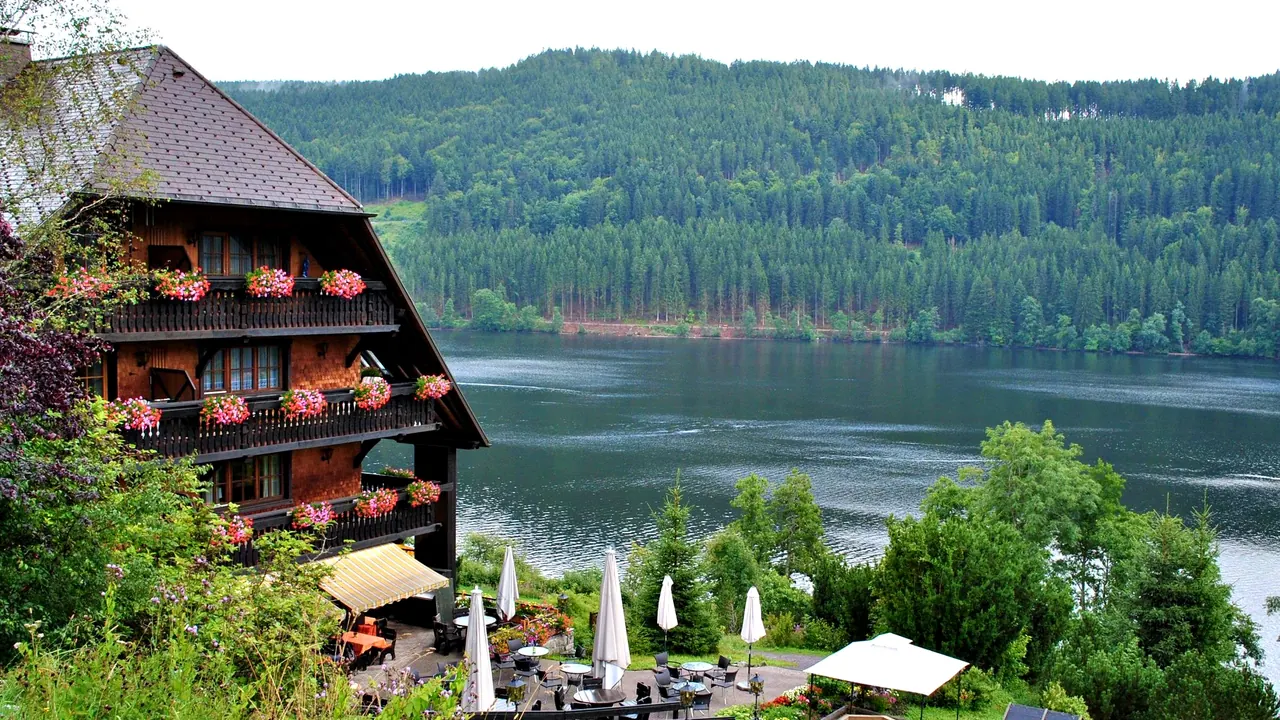
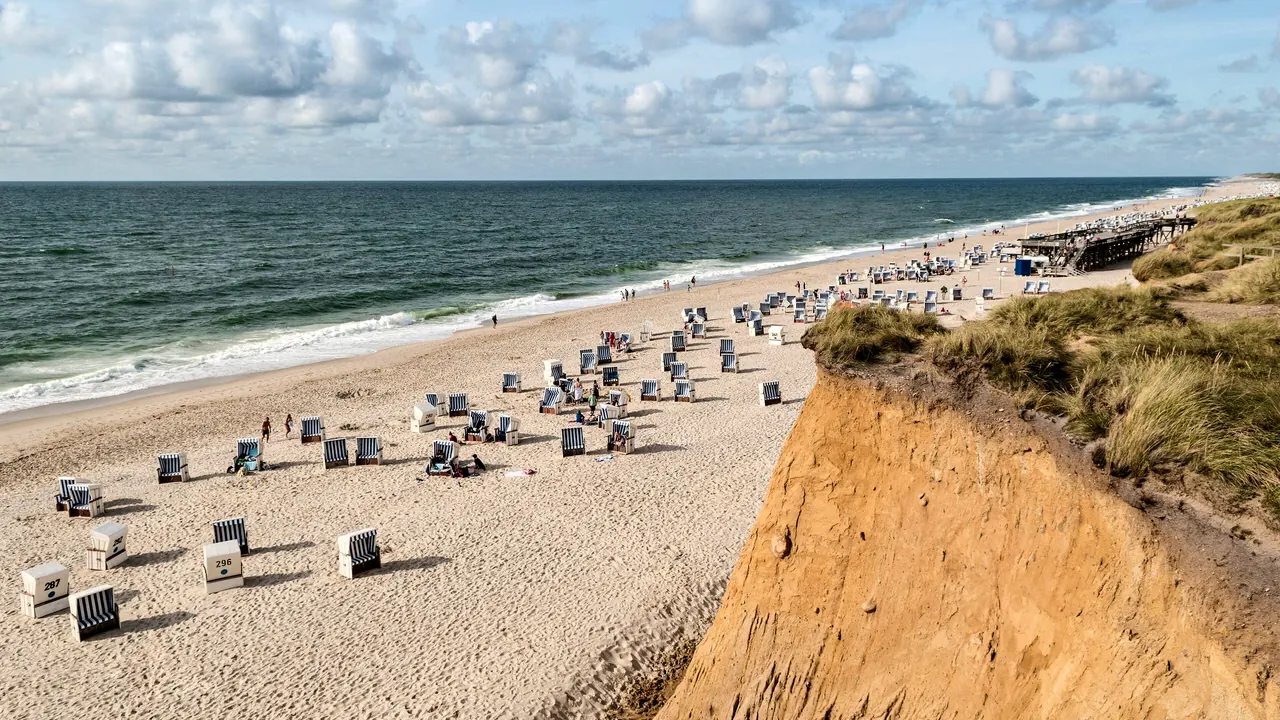
Photos: Black Forest by Ignaz Wiradi, CC BY-SA 3.0, cropped; Sylt by dronepicr, CC BY 2.0, cropped.
Black Forest or Sylt?
Our verdict in twelve categories, each scored against the same fixed benchmark cities, and the climate month by month, so you can choose for your trip.
Choose Black Forest for
- day trips
- live music and the arts
- culture and sights
The Black Forest is for travellers who want a lot to do from one base. You can walk through fir forest and gorges, spend slow afternoons in Baden-Baden's thermal baths and eat and drink very well in a corner of Germany that cooks like its French neighbour. Alsace, Basel and Strasbourg are all close enough for a day out. Families get Europa-Park as well, and a week here costs noticeably less than one on Sylt.
Choose Sylt for
- beaches
- nightlife
- getting around
Sylt makes sense when the trip is about the sea. It offers a long beach of pale sand, wicker beach chairs, wind, mudflats and bike rides between thatched villages. There are few sights, almost no shows, and the bill is high. For a slow, bracing seaside week, though, the forest has nothing to match it.
Scoreboard
Twelve categories on one fixed scale from 0 to 100. The shaded stretch is the gap between the two.
Your match
Pick a travel style or drag the sliders, and both match scores follow your weighting.
Wins on day trips and live music and the arts with your weighting.
Wins on beaches and nightlife with your weighting.
What matters to you?
Category by category
What the scores mean for a trip.
Beaches & swimming
The Black Forest has no coast. Swimming there means lakes such as Titisee and Schluchsee, reservoirs and heated outdoor pools, and it is pleasant enough after a summer walk.
Sylt is a real beach destination, with one long stretch of sand down the west coast and a beach-chair routine that shapes the whole summer day. The North Sea is cold and the surf can be rough, so it suits walking and short dips between the flags more than long swims. Families with small children often use the calm, shallow Wadden side instead.
Food & drink
Food is the stronger reason to go to the Black Forest. Baiersbronn has a remarkable cluster of top restaurants, and the country inns serve smoked ham, trout, venison and the famous cherry cake. Wine from the Kaiserstuhl and Markgräflerland, drunk in seasonal farm taverns, gives meals a sense of place that Sylt cannot match.
Sylt eats well in a narrower range. Its pleasures are oysters from List, shrimp rolls eaten in the wind, and long lunches in beach restaurants built into the dunes. Its gourmet tables in Kampen and Keitum are aimed at regular, well-off summer guests, and beyond fish and North German cooking there is little variety.
Culture & sights
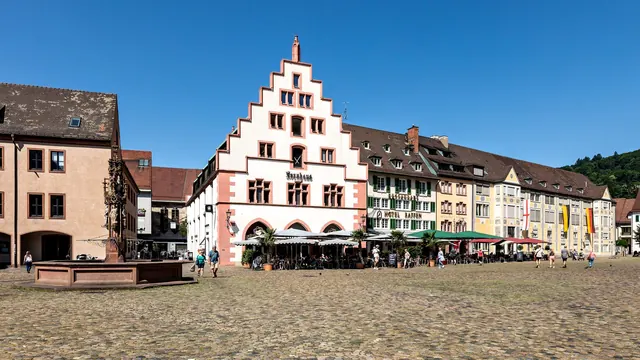
The Black Forest has much more to see, even if it is spread out. Freiburg's red sandstone Minster and car-free old town, Baden-Baden's Kurhaus and promenade, the monastery at Maulbronn and the farmhouse museum at Gutach could fill several days.
Sylt's heritage is a matter of mood more than monuments. There are captains' houses and the church of St Severin in Keitum, the Stone Age grave at Denghoog and the striped lighthouse at Kampen. One unhurried day covers it.
Nightlife
Neither place is a reason to stay out late, but the evenings feel different. In the Black Forest, going out means Freiburg, with its student pubs, wine bars and summer beer gardens, which are at their liveliest on weekends during term.
On Sylt, the scene is Kampen in high summer, where the champagne terraces of the Strönwai suit a dressed-up crowd. Westerland and the beach-bar sundowners are more casual. Away from those two places, both regions are quiet by mid-evening.
Nature & outdoors
For walkers, the Black Forest offers far more. It has real mountains covered in dark forest, views from the Feldberg that reach the Alps, the Westweg trail running the length of the range, and the Wutach Gorge and Triberg waterfalls. Mountain biking is good, and there is cross-country skiing in winter.
Sylt's landscape is flat and open, shaped by tide and wind. Its highlights are the shifting dunes near List, the Red Cliff, and mudflat walks and seal trips on the Wadden Sea. Its standout is the wind: windsurfers and kitesurfers will find conditions here that the forest cannot offer.
Day trips
The Black Forest's border position gives it a huge choice of outings. From Freiburg you can reach Basel by train or Alsace's wine villages by car, and Strasbourg is under an hour from Baden-Baden. Heidelberg, Speyer and Lake Constance are within reach from the edges of the region.
From Sylt, outings mostly mean boats: to Amrum and Föhr, past the tiny Hallig islets, or across to the Danish island of Rømø and on to Ribe. Husum is on the mainland across the causeway. They are pleasant trips but small ones, without the range of cities and countries the forest can reach.
Good for families
Europa-Park at Rust puts the Black Forest ahead for most families, with several days of rides and an indoor water park. Toboggan runs, treetop walks, wildlife parks and pedal boats on Titisee add to it, though they involve a fair amount of driving.
Sylt is the simpler kind of family vacation: sand to dig in, dunes to run in and safe cycle paths. The nature centre in List and the mudflat walks appeal to older children. Cold water, strong surf and changeable weather limit it, and there are few attractions built for children.
Getting around
Both are workable without a car in the right places, but the kind of travel differs. In the Black Forest, the Rhine valley line and two scenic mountain railways make car-free stays possible, helped by guest transport cards. Linking villages, lakes and waterfalls in one day is far easier by car on slow, winding roads.
Sylt is reached by train across the causeway or on the car train. Once there, it is a flat strip where buses and cycle paths link the villages. Wind matters more than hills, and in summer bikes are calmer than the single main road.
Shopping & style
The Black Forest sells what it makes, and Sylt sells what its summer visitors wear. In the forest, cuckoo clocks come straight from the workshops around Triberg, along with wood carvings, hand-blown glass and fruit brandy from small distilleries. Freiburg's old town covers everyday shopping, and Baden-Baden has a small upmarket quarter.
On Sylt, the thatched houses of Kampen hold international luxury labels and fashion boutiques for the island's wealthy summer crowd. Keitum's lanes add galleries, ceramics and interiors shops. What the island makes itself mostly comes down to sea salt and island-branded clothing.
Affordability
Your money goes much further in the Black Forest. Valley guesthouses, farm stays and inn meals are fairly priced, the hosts' free transport cards cut daily costs, and hiking and waterfalls cost nothing. The expensive parts are Baden-Baden and the famous restaurants, and those are easy to skip.
Sylt is expensive whatever you do. Summer rates in Kampen and Keitum are luxury level, Westerland and Hörnum are only somewhat cheaper, and the visitors' tax and car train add to the bill. Bakeries, fish kiosks and stays outside high summer soften it, but only partly.
Live music & performing arts
Here the gap is wide. Baden-Baden's Festspielhaus brings international orchestras, opera and ballet, with its Easter festival the high point of the year. Freiburg adds a municipal theatre, a baroque ensemble and a summer tent festival, and the villages celebrate Fastnacht with masked processions.
On Sylt, live performance is occasional: summer concerts in churches such as St Severin, cabaret in Westerland and bands in the beach bars. Evenings there are for dinner, not a show.
Wellness & relaxation
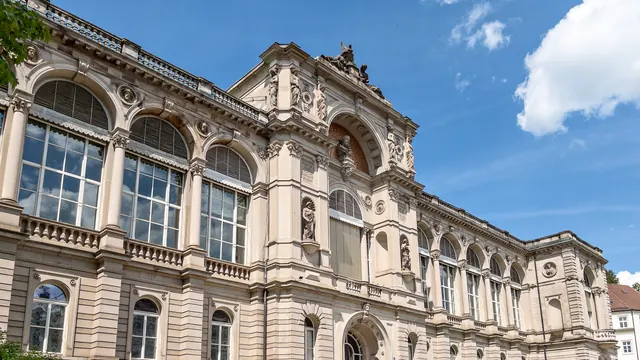
The Black Forest is one of Europe's classic places to take the waters. It has the domed Friedrichsbad and the Caracalla baths in Baden-Baden, and smaller spa towns such as Badenweiler and Bad Wildbad. All of them draw on real thermal springs and sit among parks, promenades and forest trails.
Sylt's restfulness comes from the sea instead. It offers thalassotherapy, seawater pools, hotel saunas overlooking the dunes and the local habit of a hot sauna followed by a run into the cold sea. It has no thermal springs, and in its busiest summer weeks it is less quiet than the forest.
When should you go?
Pick your month. The climate figures are measured averages, not a forecast.
Black Forest in July
Sylt in July
Daytime high, °C
Rainfall in the month, mm
Temperature and rainfall are climate normals, averaged over the years shown. Black Forest: 1991-2020 normals, Freiburg (0.6 km from centre). Sylt: 2009-2025 (sunshine 1991-2020, rainfall 1991-2020) normals, Westerland / Sylt (2.8 km from centre).
The two places run on different calendars. In the lower valleys of the Black Forest, summer is properly warm, with highs around 27°C in July. That suits long walks and a swim in the lakes. It is also the wetter half of the year. May is the rainiest month at about 103mm, and the rain does not ease in autumn. September and October stay mild enough for walking but are damp, and by October the days get less than half the sunshine of high summer. The main hiking season runs from late spring to October. In winter the higher hills are cold enough for sledging and cross-country skiing.
Sylt never gets hot, and summer highs on the island reach only about 21°C. The sea is warmest in August, at around 19°C, but August is also the island's wettest month, at about 90mm. Late spring is Sylt's quiet strength. April to June are dry and bright, and May is the sunniest month of the year. These weeks are better for beach walks and cycling than for swimming. From November to March both places are dark and chilly, but Sylt is the colder and greyer of the two.
Which traveller are you?
For a beach and sun trip, Sylt is the obvious choice. It has some 40km of sand backed by dunes, beach chairs, lifeguarded swimming and calm, shallow water on the Wadden side. In the Black Forest, swimming means cool lakes such as Titisee, a nice extra after a hike rather than the point of the trip.
On a culture and arts trip, the Black Forest is far richer. It has Freiburg's Gothic Minster, Baden-Baden's spa quarter and Festspielhaus, the abbey at Maulbronn and half-timbered towns, with Strasbourg and Colmar close by. Sylt's heritage takes a single afternoon in Keitum.
On a tight budget, the Black Forest wins clearly. Family guesthouses, filling inn meals and the free local transport cards many hosts provide keep costs ordinary. Sylt is among Germany's most expensive places to stay, with a visitors' tax and the car train on top.
Before you go
| Measure | Black Forest | Sylt |
|---|---|---|
| Official language | German | German |
| Currency | Euro (EUR) | Euro (EUR) |
| Sockets | CF230 V, 50 Hz | CF230 V, 50 Hz |
| Driving side | Right | Right |
| Time zone | UTC+1, UTC+2 in summer | UTC+1, UTC+2 in summer |
| Emergency number | 112 | 112 |
| Main airport | EuroAirport Basel–Mulhouse–Freiburg (BSL)112 non-stop destinations | Westerland Sylt Airport (GWT)7 non-stop destinations |
| Public holidays this year | 12 days | 10 days |
By the numbers
| Measure | Black Forest | Sylt |
|---|---|---|
| Population | - | 18,118 |
| People per km² | - | 316 |
| Swim season, months above 21 °C | - | None |
Where else could you go?
Every comparison below shares a destination with this one, so you can follow Black Forest or Sylt somewhere new.
- Alsacevs Black Forest
- Swiss Alpsvs Black Forest
- Lake Maggiorevs Black Forest
- French Alpsvs Black Forest
- Lake Comovs Black Forest
- Burgundyvs Black Forest