Germany
Rügen
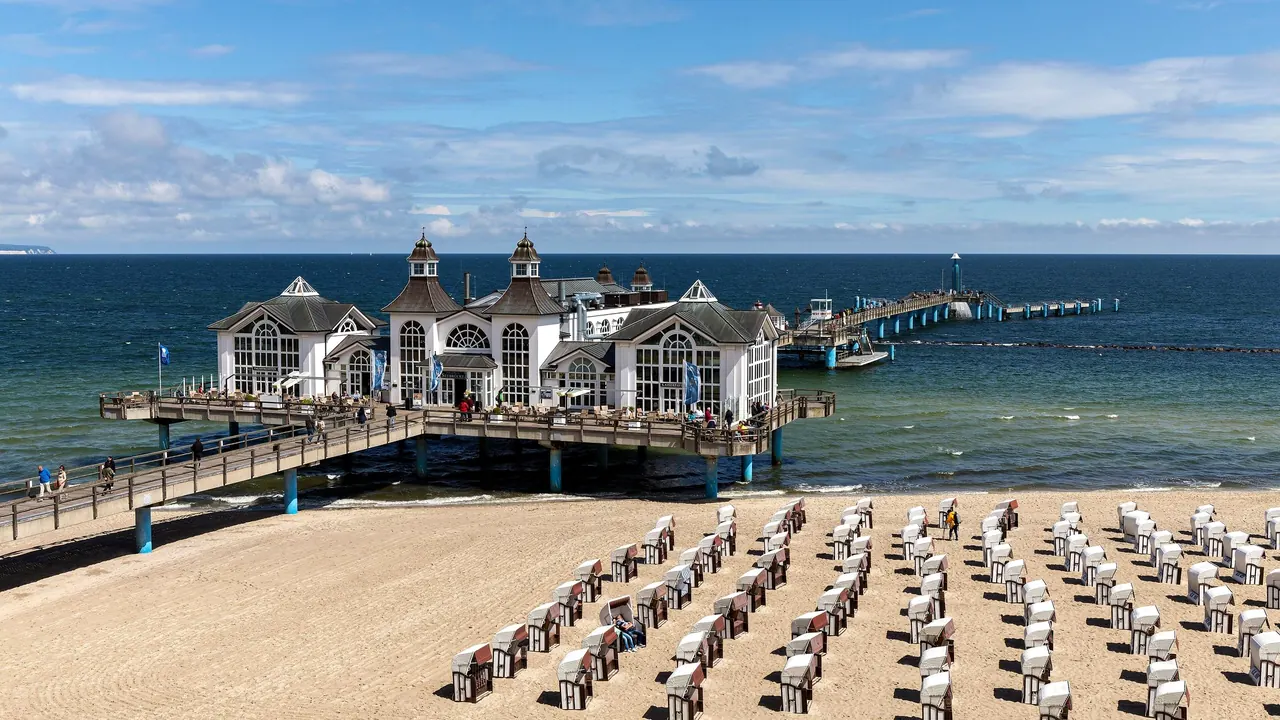
The pier at Sellin and beach chairs on the sand
- Nature & outdoors66
- Families66
- Day trips55
Photo: Ansgar Koreng, CC BY-SA 3.0 DE, cropped
Match
42
Every category weighted equally
- Beach & sun44
- Culture & arts38
- Food & nightlife34
- Family trip49
- Outdoors49
- Relax & unwind46
- Shopping & style36
- On a budget42
Rügen in twelve categories
Our verdict on each, scored 0 to 100 against the same fixed benchmark cities, so a score means the same thing on every page.
Beaches & swimming. Scores 50 out of 100.
Food & drink. Scores 32 out of 100.
Culture & sights. Scores 38 out of 100.
Nightlife. Scores 15 out of 100.
Nature & outdoors. Scores 66 out of 100.
Day trips. Scores 55 out of 100.
Good for families. Scores 66 out of 100.
Getting around. Scores 45 out of 100.
Shopping & style. Scores 15 out of 100.
Affordability. Scores 40 out of 100.
Live music & performing arts. Scores 27 out of 100.
Wellness & relaxation. Scores 52 out of 100.
Rügen category by category
Beaches & swimming
50The island's east coast is one long run of fine white sand: the broad bay at Binz, the beaches below the cliffs at Sellin, and the quieter stretches at Baabe, Göhren and Thiessow, with the empty Schaabe sand spit further north. Wicker beach chairs, piers and promenades set the tone, and the gently shelving water suits weak swimmers and children. The west side faces calm, shallow lagoons rather than open sea.
The catch is the Baltic itself. The sea is warm enough for most people only from late June to early September, and even then it rarely passes 20°C, with cool, windy days common. Expect bracing dips between long hours on the sand rather than warm-water swimming.
Food & drink
32Eating here centres on the Baltic catch: herring and mackerel from harbour smokehouses in Sassnitz, Lauterbach and the small fishing villages, fish rolls eaten on the quay, and plates of fried flounder in the resorts. Sea buckthorn shows up in juices, cakes and liqueurs, and North German beer is easy to find. Binz has the widest choice of restaurants, though many serve the same resort menu. Away from the fish counters the offer is modest, and nobody chooses the island for its food.
Culture & sights
38The island's heritage is mostly seaside. Binz and Sellin are lined with the white, balconied villas of nineteenth-century resort architecture, and Sellin's long pier is the island's best-known image. Putbus is a small classicist princely town with a circular plaza and a palace park, and the hilltop hunting lodge of Granitz has a sweeping view from its tower. Prora, the colossal Nazi-era seaside resort block stretching along the coast, holds a documentation centre that explains it soberly.
In the far north, Cape Arkona has two lighthouses and the earthworks of a Slavic temple fortress, with the tiny thatched fishing village of Vitt below. It all adds up to pleasant outings rather than a dense set of sights.
Nightlife
15Evenings on Rügen mean a drink on the promenade, a beach bar at sunset or a hotel lounge. Binz has the only real cluster of late bars and the odd dance venue, livelier in July and August, while the other resorts quieten after dinner. It is a family and couples' island, and anyone wanting a proper night out will not find it here.
Nature & outdoors
66The highlight is Jasmund National Park, where white chalk cliffs drop more than 100m to the sea beneath old beech forest listed by UNESCO. The cliff path from Sassnitz past the Victoria view to the Königsstuhl is one of the finest coastal walks in Germany. Elsewhere the island is a patchwork of lagoons, reed beds, heath and sandy spits, with the forested Granitz hills and the Mönchgut peninsula in the south-east.
Flat roads and long cycle routes make it good cycling country, and the sheltered western lagoons around Wiek and Dranske draw kitesurfers and windsurfers. In autumn, tens of thousands of cranes rest in the lagoons on the west side. There are no mountains, and the weather can be grey and windy outside summer.
Day trips
55Two outings stand out. Hiddensee, a narrow car-free island reached by ferry from the west coast, has thatched villages, a lighthouse on the Dornbusch heights and a quiet, artistic history. Stralsund, just across the bridge, is a UNESCO-listed Hanseatic town of brick Gothic churches and gabled merchants' houses, with a large maritime museum and aquarium on the harbour.
Beyond those, the university town of Greifswald and the old fishing village of Wieck lie about an hour away, and the seaside resorts of Usedom are a long day by car. After that the choices run out.
Good for families
66Rügen is a classic family seaside island, and it shows. The beaches are wide and sandy with gently shelving water, the resorts are safe and quiet, and self-catering flats with kitchens are easy to find. Children enjoy the narrow-gauge steam train, the Rasender Roland, puffing between Putbus and Göhren, the treetop walk in the forest near Prora, the interactive visitor centre at the Königsstuhl and the summer pirate spectacle at Ralswiek. The aquarium in Stralsund is an easy rainy-day trip.
The limits are the weather and the sea: on grey, cool days there are few large indoor attractions on the island, and the water is chilly for small children.
Getting around
45Regional trains run onto the island to Bergen, Binz and Sassnitz, buses link the main resorts, and the steam railway connects Putbus with the south-east resorts. Binz and Sellin are walkable and the island is flat enough for cycling between villages. To reach Cape Arkona, the west coast or the quieter corners, most visitors drive. Roads are good, but the single route across the bridge and on to the resorts backs up badly on summer weekends and changeover days.
Shopping & style
15Shopping is a stroll along the Binz promenade, past beachwear, amber jewellery and gift shops, with sea buckthorn products, smoked fish and cosmetics made from the local healing chalk as the typical things to take home. A few craft workshops and pottery studios sit in the villages. Serious shopping means a trip to Stralsund, and even that is modest.
Affordability
40In summer Rügen is not cheap. Seafront hotels and villa flats in Binz and Sellin charge high-season rates, and good rooms are booked well ahead. Staying in an inland village or a quieter resort and renting a flat with a kitchen cuts costs considerably, and harbour fish rolls and supermarket picnics are inexpensive. Restaurant meals sit at normal German price levels. The months either side of summer are noticeably kinder.
Live music & performing arts
27The island's big show is the Störtebeker Festival, a long-running open-air pirate spectacle with horses, ships and fireworks on the lagoon stage at Ralswiek, played on summer evenings to large crowds. Putbus has a small, elegant classicist theatre, and resort pavilions host summer concerts and spa-orchestra evenings. A spring classical music festival brings concerts to churches and manor houses across the island. Otherwise the cultural calendar is thin.
Wellness & relaxation
52Rügen's resorts were built as Baltic spa towns, and the idea of coming to the sea to recover still shapes them. Binz and Sellin have large spa hotels with saunas and pools, and the island's own healing chalk is used in wraps and mud treatments. German sauna culture is easy to find, including saunas with a view of the sea.
The pace does the rest: away from Binz, villages like Groß Zicker, Vitt and the hamlets on the lagoons are deeply quiet, especially in late spring and early autumn. There are no thermal springs or historic bathhouses, so the wellness here is resort spas and calm rather than a bathing culture.
Where to stay in Rügen
Binz is the obvious first base. It has the broadest beach, the longest promenade, the widest choice of restaurants and the island's only real cluster of late bars, all within walking distance of the train station. It suits families and couples who want everything on foot, but seafront rooms book up well ahead in summer. Sellin, a little further south, has the same white villas and a famous pier on a smaller, quieter scale, with its beaches below the cliffs.
Further into the south-east, Baabe, Göhren and the villages of the Mönchgut peninsula are calmer and kinder to a budget. They have gently shelving beaches, plenty of self-catering flats and the steam train to Putbus, which makes them a good choice for families with small children. Sassnitz, on the edge of Jasmund National Park, suits walkers who want to start the chalk cliff path from the door and buy smoked fish at the harbour.
The west and north work best for a second visit or a quiet stay by car. The lagoon villages around Wiek and Dranske suit kitesurfers and autumn crane watchers, and the ferry to Hiddensee leaves from this side. Rügen is compact enough for one base and a car for Cape Arkona and the far corners. Plan to arrive and leave away from summer weekends and changeover days, when the road across the bridge backs up.
When should you go?
Pick a month to see what it is like. The climate figures are measured averages, not a forecast.
Rügen in July
Daytime high, °C
Rainfall in the month, mm
The whole year
Shaded against this destination’s own year: the deepest cell is its best month for that figure and the palest its weakest.
Temperature and rainfall are climate normals, averaged over the years shown. Rügen: 1991-2020 normals, Putbus (9 km from centre).
Before you go
| Measure | Rügen |
|---|---|
| Official language | German |
| Currency | Euro (EUR) |
| Sockets | CF230 V, 50 Hz |
| Driving side | Right |
| Time zone | UTC+1, UTC+2 in summer |
| Emergency number | 112 |
| Main airport | Rostock-Laage Airport (RLG)1 non-stop destination |
| Public holidays this year | 11 days |
By the numbers
| Measure | Rügen |
|---|---|
| Population | 67,526 |
| People per km² | 73 |
| Swim season, months above 21 °C | None |
Compare Rügen with
Every comparison with a written verdict behind it.