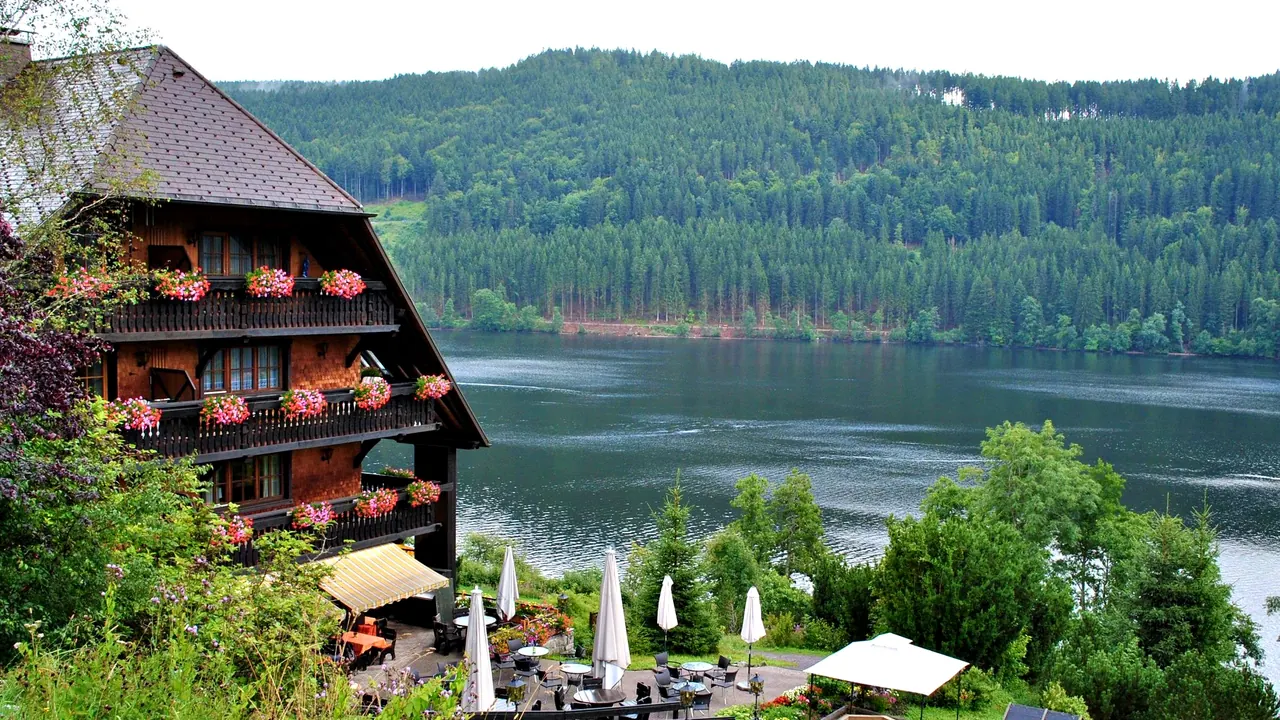
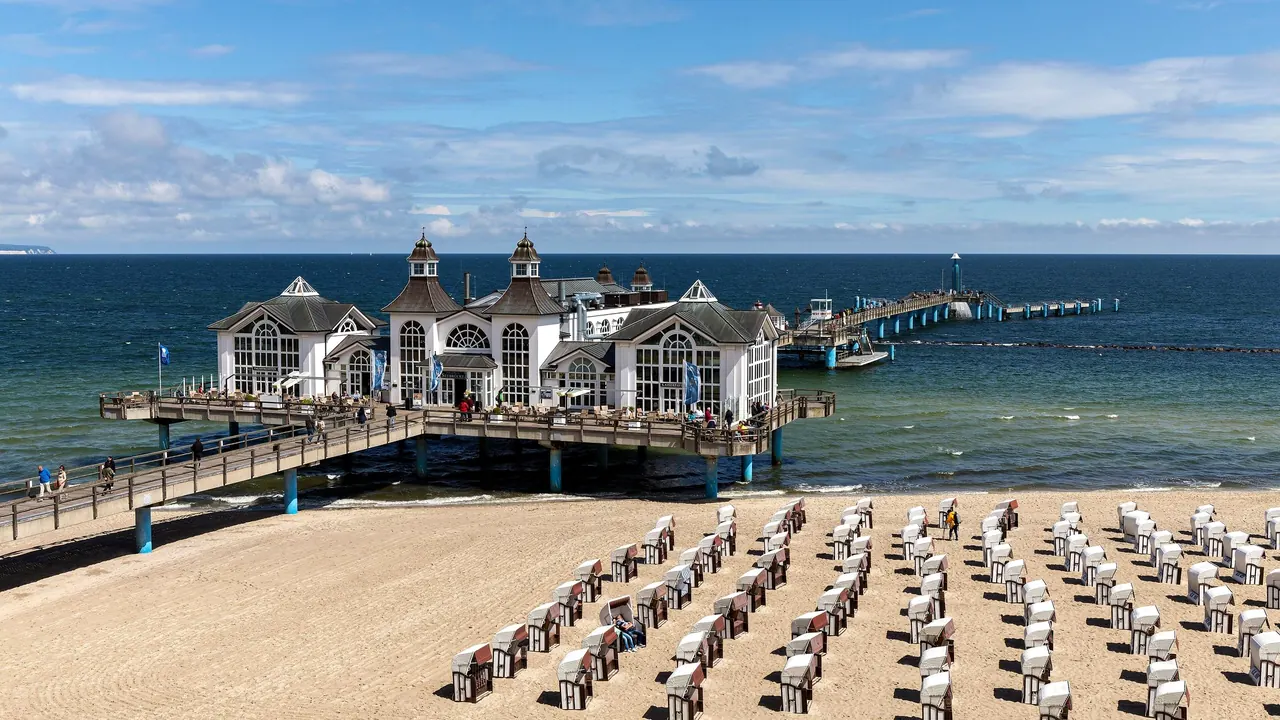
Photos: Black Forest by Ignaz Wiradi, CC BY-SA 3.0, cropped; Rügen by Ansgar Koreng, CC BY-SA 3.0 DE, cropped.
Black Forest or Rügen?
Our verdict in twelve categories, each scored against the same fixed benchmark cities, and the climate month by month, so you can choose for your trip.
Choose Black Forest for
- wellness
- food and drink
- day trips
The Black Forest is the better choice for a varied, unhurried trip built around walking, eating well and taking the waters. You get Baden-Baden's historic baths, wine country and serious cooking, Freiburg's Gothic old town, and France and Switzerland within easy reach. It also suits families who want a theme park and forest outings in one stay. What it lacks is the sea.
Choose Rügen for
- beaches
Rügen is for travellers who want a summer seaside vacation on long white beaches, with chalk cliffs and lagoons behind them. Its strength is simple days of sand, cycling and coastal walks in quiet resorts. For food, culture, evenings out and outings beyond the island, it offers clearly less than the forest in the south-west.
Scoreboard
Twelve categories on one fixed scale from 0 to 100. The shaded stretch is the gap between the two.
Your match
Pick a travel style or drag the sliders, and both match scores follow your weighting.
Wins on wellness and food and drink with your weighting.
Wins on beaches with your weighting.
What matters to you?
Category by category
What the scores mean for a trip.
Beaches & swimming
This is the one area where Rügen leads, and clearly. Its east coast is a continuous run of fine white sand from Binz through Sellin and Baabe to Thiessow, with the empty Schaabe spit further north. There are wicker beach chairs, piers, and shallow water that suits children. Even so, the Baltic stays bracing, so expect brisk dips rather than long swims.
The Black Forest has no coast at all. Swimming means the bathing areas at Titisee and Schluchsee, quieter spots such as the Nonnenmattweiher, and heated outdoor pools in the spa towns. They make a nice end to a hot walking day, but you would not plan a trip around them.
Food & drink
The Black Forest is far stronger here. It sits on the French side of German cooking, and Baiersbronn alone has a remarkable cluster of top-level restaurants. Country inns serve smoked ham, trout, venison and the famous cherry cake, and the Kaiserstuhl and Markgräflerland supply Pinot Noir and Pinot Gris to go with them.
Rügen eats simply and well within a narrow range. Expect smoked herring and mackerel from the Sassnitz and Lauterbach smokehouses, fish rolls on the quay, and sea buckthorn in everything from juice to liqueur. Beyond the fish counters, resort menus soon repeat themselves.
Culture & sights
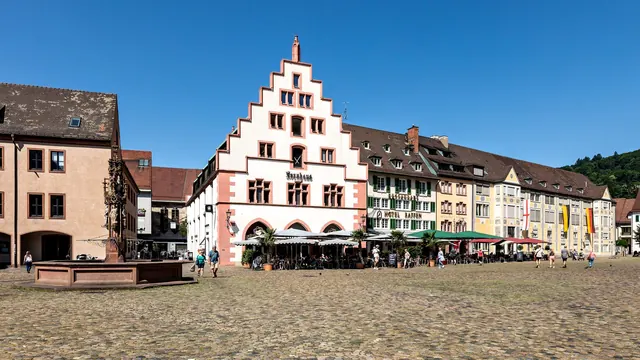
The forest has more to see, though its sights are spread out. Freiburg's red sandstone Minster and its car-free old town with little water channels are the high point. Add Baden-Baden's spa quarter, the half-timbered streets of Gengenbach and Schiltach, and the UNESCO-listed monastery at Maulbronn.
Rügen's heritage is mostly the seaside itself: the white resort villas of Binz and Sellin, the princely town of Putbus, and the vast Prora block with its sober documentation centre. Cape Arkona's lighthouses and Slavic earthworks make a fine outing, but the island has nothing as substantial as Freiburg's old town.
Nightlife
Neither place is for a big night out, but the Black Forest has an edge thanks to Freiburg. In term time, its student pubs, wine bars, beer gardens and few clubs keep the old town busy on weekends, and Baden-Baden adds its casino. On Rügen, a late evening means a sunset beach bar or one of the handful of bars in Binz, and the other resorts are quiet after dinner.
Nature & outdoors
Both places are made for the outdoors, but they offer different landscapes, and the forest has more of it. Its draw is mountains: dark fir ridges, the views from the Feldberg reaching to the Alps, the Wutach Gorge, and the long-distance Westweg trail. Serious mountain biking and winter cross-country skiing extend the season.
Rügen is flat and coastal. Its finest sight is Jasmund's white chalk cliffs under UNESCO-listed beech forest, walked from Sassnitz to the Königsstuhl. Around them lie lagoons, heath and reed beds, which suit easy cycling, kitesurfing near Wiek and the autumn gatherings of cranes.
Day trips
With three countries close by, the Black Forest has a clear lead. Basel is an easy train ride from Freiburg, Colmar and the Alsace wine villages are about an hour away by car, and Strasbourg is closer still from Baden-Baden. Heidelberg and Lake Constance cover the northern and south-eastern ends.
Rügen has two excellent outings: the car-free island of Hiddensee, reached by ferry, and Stralsund's brick Gothic Hanseatic centre just across the bridge. After Greifswald and a long drive to Usedom, the list ends.
Good for families
Both places work well for children, but the Black Forest has more to fill a week. Europa-Park at Rust alone is worth several days, and the forest adds summer toboggan runs, the suspension bridge at Steinwasen, cable cars up the Feldberg and farm stays. The catch is the time spent driving between them.
Rügen is a classic bucket-and-spade island, with safe, gently shelving beaches, easy self-catering flats and the Rasender Roland steam train. On cool, grey days, though, there are few large indoor attractions, which leaves the island more dependent on the weather.
Getting around
The forest is easier to manage without a car. The Rhine valley line links Baden-Baden, Offenburg and Freiburg quickly, the Schwarzwaldbahn and Höllentalbahn climb into the hills, and many hosts give guests free bus and train passes. Remote trailheads and villages still call for a car, on slow, winding roads.
On Rügen, trains reach Binz and Sassnitz, and the island is flat enough to cycle between villages. Most visitors drive to Arkona and the west coast, however, and the single road across the bridge jams on summer changeover days.
Shopping & style
Neither is a place to plan a vacation around shopping, but the Black Forest gives you far more to buy and better places to buy it. Its souvenirs come with a maker behind them: a cuckoo clock bought near where it was built around Triberg, carved wood, blown glass or a bottle of Kirschwasser from a small distillery. For a proper day of browsing, Freiburg's old town is the obvious choice, and Baden-Baden suits anyone looking for fashion and jewellery at the expensive end.
Rügen's choice is narrower and mostly seaside, with amber, beachwear, sea buckthorn jars and cosmetics made with the island's chalk, nearly all of it in Binz. A few village potters and craft studios add some variety. For a real shopping day you have to leave the island for Stralsund, which still falls well short of Freiburg.
Affordability
Both charge normal German prices, but the Black Forest is a little kinder overall. Its valley guesthouses and inns are fairly priced, and the free transport cards save real money. Baden-Baden, the top restaurants and Europa-Park are where the bills climb.
Rügen's costs depend on the season. Seafront rooms in Binz and Sellin are expensive in summer and need booking early. A flat with a kitchen in an inland village, or a stay just before or after the peak months, brings costs down considerably.
Live music & performing arts
Baden-Baden's Festspielhaus, among the biggest opera and concert halls in Germany, gives the forest a serious classical calendar of international orchestras, singers and ballet companies, with its Easter festival as the high point. Freiburg adds opera, drama and dance at its municipal theatre, a well-known baroque ensemble and a summer tent festival of rock, world music and cabaret.
Rügen's main draw is the Störtebeker Festival, an open-air pirate show of horses, ships and fireworks on the lagoon stage at Ralswiek on summer evenings. Beyond it, there are the small classicist theatre in Putbus, spa-orchestra concerts in the resort pavilions and a spring festival in churches and manor houses, which makes for a much thinner programme.
Wellness & relaxation
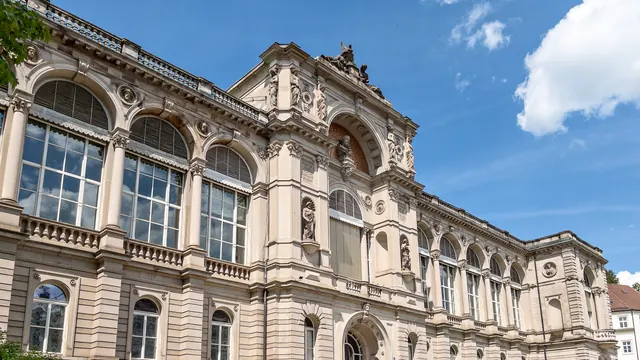
This is the Black Forest's greatest strength, and the gap is wide. Baden-Baden's domed Friedrichsbad and the Caracalla thermal baths sit at the centre of a real bathing tradition, which continues in Badenweiler, Bad Wildbad and Bad Krozingen. Forest-bathing trails and hotel saunas add to it.
Rügen offers rest of a different kind: resort spa hotels in Binz and Sellin, wraps made with the island's healing chalk, and saunas looking out to sea. The deepest calm is found in villages such as Groß Zicker and Vitt, but the island has no thermal springs or historic baths.
When should you go?
Pick your month. The climate figures are measured averages, not a forecast.
Black Forest in July
Rügen in July
Daytime high, °C
Rainfall in the month, mm
Temperature and rainfall are climate normals, averaged over the years shown. Black Forest: 1991-2020 normals, Freiburg (0.6 km from centre). Rügen: 1991-2020 normals, Putbus (9 km from centre).
Around the towns where most Black Forest visitors stay, summer is properly warm, with highs near 27°C in July. That is ideal for the lakes and fine for the valleys, and the heights stay cooler for hiking. Rain is spread through the year but peaks from May to August, with about 103mm in May, so expect showers in high summer. Late spring and September to early October are the best months for walking. Winter is cold and dull, with little sunshine, and suits the spas and the snow on the Feldberg more than sightseeing.
Rügen's east-coast resorts are noticeably cooler, peaking at about 22°C in July and August. The Baltic only reaches about 19°C in August, so the beach season is really late June to early September. The island's best-kept secret is May and June: they are the sunniest months, and spring is drier than on the forest side, which makes them good for cliff walks and cycling. From November to March the island is cold, grey and dark, with little reason to visit.
Which traveller are you?
On a beach and sun trip, Rügen is the obvious pick. Its east coast offers broad white sand at Binz, Sellin and Göhren, with gently shelving water. The Black Forest only has lake bathing areas at Titisee and Schluchsee, which are pleasant after a hike but no substitute.
For a relaxing and wellness trip, choose the Black Forest. Baden-Baden's Friedrichsbad and Caracalla baths, the ring of smaller spa towns and the quiet forest guesthouses make a real bathing culture. Rügen's healing chalk wraps and resort saunas are calm but far less varied.
For a food and nightlife trip, the Black Forest wins clearly. Baiersbronn's top-level restaurants, the Kaiserstuhl wines and the farm wine taverns are its draw, and Freiburg has student pubs and wine bars at night. On Rügen, evenings mean smoked fish and a drink on the Binz promenade.
Before you go
| Measure | Black Forest | Rügen |
|---|---|---|
| Official language | German | German |
| Currency | Euro (EUR) | Euro (EUR) |
| Sockets | CF230 V, 50 Hz | CF230 V, 50 Hz |
| Driving side | Right | Right |
| Time zone | UTC+1, UTC+2 in summer | UTC+1, UTC+2 in summer |
| Emergency number | 112 | 112 |
| Main airport | EuroAirport Basel–Mulhouse–Freiburg (BSL)112 non-stop destinations | Rostock-Laage Airport (RLG)1 non-stop destination |
| Public holidays this year | 12 days | 11 days |
By the numbers
| Measure | Black Forest | Rügen |
|---|---|---|
| Population | - | 67,526 |
| People per km² | - | 73 |
| Swim season, months above 21 °C | - | None |
Where else could you go?
Every comparison below shares a destination with this one, so you can follow Black Forest or Rügen somewhere new.
- Alsacevs Black Forest
- Swiss Alpsvs Black Forest
- Lake Maggiorevs Black Forest
- French Alpsvs Black Forest
- Lake Comovs Black Forest
- Burgundyvs Black Forest