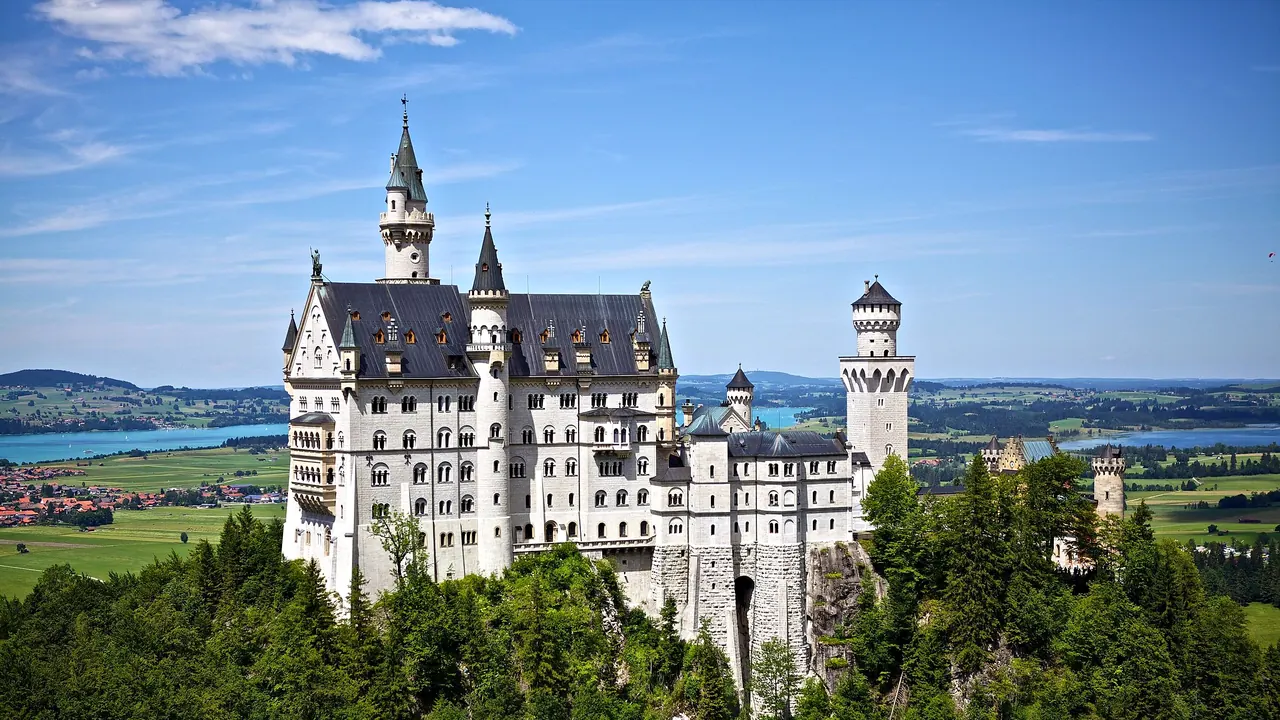
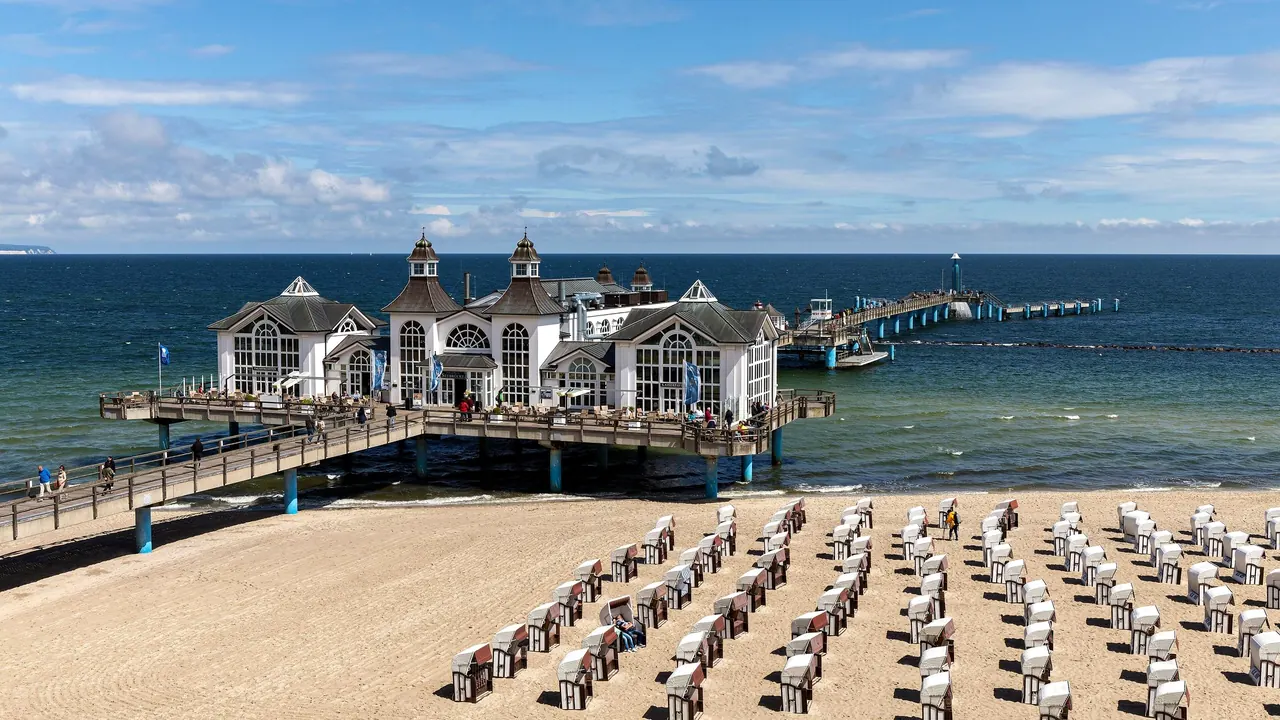
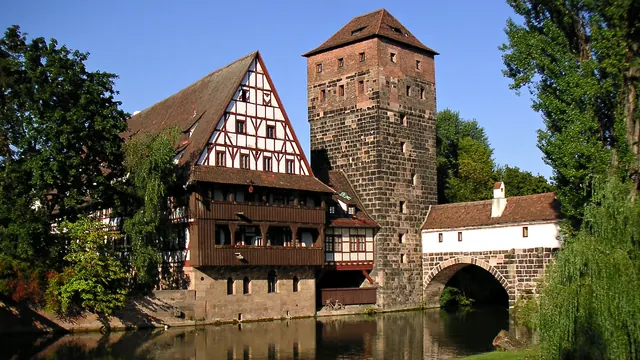
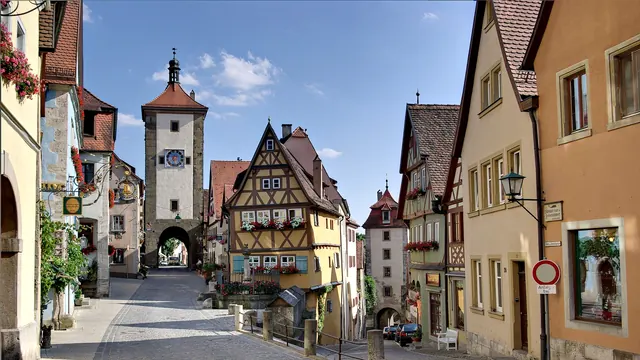
Photos: Bavaria by cameralends, CC0; Rügen by Ansgar Koreng, CC BY-SA 3.0 DE, cropped.
Bavaria or Rügen?
Our verdict in twelve categories, each scored against the same fixed benchmark cities, and the climate month by month, so you can choose for your trip.
Choose Bavaria for
- live music and the arts
- shopping
- culture and sights
Bavaria suits the traveller who wants a lot of variety from one trip. Munich's galleries, opera and beer halls, the UNESCO old towns of Bamberg and Regensburg, Ludwig II's castles and the Alpine edge around Garmisch and Berchtesgaden give you a city break, a heritage tour and a mountain vacation in one. Trains link most of it without a car. The price is that you will move between several bases, and Munich itself is expensive.
Choose Rügen for
- beaches
Rügen is the better pick for a slow seaside summer. You get long white sand at Binz and Sellin, chalk cliffs in Jasmund, a bike and a flat with a kitchen. It is quiet, made for couples and families, and has little to do at night, few big sights and not much variety in the food. Choose it if a week of sea air and coastal walks is the whole plan, not one part of it.
Scoreboard
Twelve categories on one fixed scale from 0 to 100. The shaded stretch is the gap between the two.
Your match
Pick a travel style or drag the sliders, and both match scores follow your weighting.
Wins on live music and the arts and shopping with your weighting.
Wins on beaches with your weighting.
What matters to you?
Category by category
What the scores mean for a trip.
Beaches & swimming
Rügen has the real beach. The fine white sand runs from Binz past Sellin to Göhren and Thiessow, with the empty Schaabe spit further north, and you can spend whole days in a beach chair by the promenade. The catch is the open Baltic, which rarely tops 20°C, so you swim in short, brisk dips.
Bavaria swaps sand for lakes. There are jetties and meadows on the Starnberger See, Chiemsee and Tegernsee, and the shallow Staffelsee can actually be warmer than Rügen's sea. Still, these are bathing spots for a summer afternoon, not a coast to plan a vacation around.
Food & drink
Bavaria eats and drinks far better. Munich's beer gardens and Bamberg's smoked beer are good reasons to travel, and Franconian Silvaner is poured in Würzburg's wine taverns. Munich also has fine dining and the Viktualienmarkt, even if the inn cooking out in the country is hearty and similar from place to place.
Rügen's best food comes off the boat: smoked herring and mackerel from the Sassnitz and Lauterbach smokehouses, fish rolls on the quay, and sea buckthorn in everything from cake to liqueur. Beyond that, most restaurants in the resorts serve the same menu.
Culture & sights
The gap here is wide. Bavaria has great art collections in Munich, the Deutsches Museum, Nuremberg's walled town and rally grounds, two UNESCO medieval towns, Tiepolo's ceiling in Würzburg and Neuschwanstein. You could spend two weeks on its sights alone.
Rügen's heritage is mostly nineteenth-century seaside: the white villas of Binz and Sellin, the princely circus at Putbus and the Granitz hunting lodge. Prora and Cape Arkona's Slavic earthworks add some depth, but this is enough for a few rainy afternoons, not a theme for the trip.
Nightlife
Bavaria offers proper nights out, almost all in Munich: cocktail bars in Glockenbachviertel and Maxvorstadt, student bars in Schwabing, clubs, and beer halls that get loud as the evening goes on. Oktoberfest is a world of its own, and Bamberg and Regensburg have lively student pub streets.
On Rügen the evening is a drink on the promenade or at a beach bar. Binz has the only late bars, busier in high summer, and the other resorts go quiet after dinner.
Nature & outdoors
Bavaria has the bigger landscapes. The Zugspitze and the Partnach gorge, the Watzmann and the Königssee, and hut-to-hut routes across the Allgäu give you real mountain hiking and skiing. Further north there are the wild Bavarian Forest and the climbing crags of Franconian Switzerland.
Rügen is flat and coastal, but Jasmund's chalk cliffs and UNESCO beech forest make one of Germany's finest coastal walks. The western lagoons draw kitesurfers and, in autumn, huge flocks of resting cranes. It is gentler country, best seen by bike.
Day trips
From almost any Bavarian base there is a long list of easy trips. From Munich you can reach Augsburg, Nuremberg, Regensburg, Salzburg and the lakes. From Würzburg or Nuremberg there are the Romantic Road towns, Bamberg and the Main wine villages, and you will run out of days before you run out of ideas.
Rügen has two excellent outings: car-free Hiddensee by ferry and brick-Gothic Stralsund just over the bridge. Greifswald and Usedom stretch the list a little further, but a week uses it up.
Good for families
Both work for children, but Bavaria offers more and copes better with bad weather. There are beer gardens with playgrounds, the Hellabrunn zoo, the children's section of the Deutsches Museum, Legoland at Günzburg, Alpine toboggan runs and grassy lake shores, which keep a mixed week busy in any season.
Rügen is the easy bucket-and-spade choice, with shallow sandy water, the Rasender Roland steam train, the treetop walk near Prora and the pirate show at Ralswiek. On cool, grey days there are few indoor attractions, and the sea is cold for small swimmers.
Getting around
Bavaria is much easier without a car. Munich's U-Bahn, S-Bahn and trams cover a walkable centre, regional trains reach Garmisch, Füssen, Berchtesgaden and Nuremberg, and one day ticket covers much of the state. Only remote valleys and villages really need a car.
On Rügen, trains reach Binz and Sassnitz and the steam railway serves the south-east, but Cape Arkona, the west coast and the quiet corners mostly mean driving. In summer, the single route over the bridge clogs up on changeover days. A bike helps more than on most islands.
Shopping & style
Munich makes Bavaria a real shopping destination. There are luxury houses on Maximilianstrasse, department stores between Marienplatz and Karlsplatz and independent shops in Glockenbach. Crafts add more: Dirndl tailors, Oberammergau woodcarving, Bavarian Forest glass and the Christmas markets.
Rügen's shopping is a stroll along the Binz promenade for amber, beachwear and healing-chalk cosmetics, with smoked fish and sea buckthorn as souvenirs. For anything more you go to Stralsund.
Affordability
Neither is a bargain, and they are expensive in different ways. In Bavaria the cost depends on where you stay. Munich is pricey all year and very expensive during Oktoberfest and the trade fairs, while Bamberg, Würzburg and Alpine guesthouses are moderate. Bringing your own food to a beer garden is a classic way to save.
On Rügen the cost depends on when you go. Seafront Binz and Sellin are costly in high summer, while the months either side are cheaper, as is a self-catering flat in an inland village.
Live music & performing arts
Bavaria is a serious destination for music. The Bavarian State Opera, two orchestras of international rank and the rococo Cuvilliés Theatre are all in Munich, and Bayreuth's Wagner festival and Würzburg's Mozart festival attract devoted fans every summer.
Rügen's big show is the Störtebeker pirate spectacle on the lagoon stage at Ralswiek, a fun evening of horses and fireworks. Add the small Putbus theatre, spa-orchestra concerts and a spring festival in churches, and the programme is pleasant but thin.
Wellness & relaxation
Bavaria has a long tradition of taking the cure. There are the colonnades of Bad Kissingen, the brine baths of Bad Reichenhall, the thermal pools of Bad Füssing and Kneipp's water cure from Bad Wörishofen. Munich adds the Art Nouveau Müller'sches Volksbad and the huge sauna complex at Erding.
Rügen's wellness is about sea air and quiet: spa hotels in Binz and Sellin, wraps made with the island's healing chalk and saunas looking out to sea. It is restful, especially in a still village like Groß Zicker, but it has no thermal springs or historic baths.
When should you go?
Pick your month. The climate figures are measured averages, not a forecast.
Bavaria in July
Rügen in July
Daytime high, °C
Rainfall in the month, mm
Temperature and rainfall are climate normals, averaged over the years shown. Bavaria: 1991-2020 normals, München (1.9 km from centre). Rügen: 1991-2020 normals, Putbus (9 km from centre).
Both are summer destinations, but the summer feels different in each. Bavaria warms up more, to about 25°C in July and August, which is good for lake swimming and for walking the old towns. It is also the wetter of the two. May to August each bring around 120mm, often as afternoon thunderstorms in the Alps. Late summer and September are the most reliable months for hiking, and December and January are cold, grey months for Christmas markets and snow.
Rügen stays cooler, peaking at about 22°C, and the Baltic only reaches around 19°C in August, so swimming is for July and August and is always fresh. The island is drier and noticeably sunnier in late spring, with about 263 hours of sun in May, which makes May and June lovely for cycling and cliff walks if not for the sea. From November to February it is dark, cold and windy.
Which traveller are you?
For a beach and sun trip, Rügen wins easily. Its east coast has wide white sand, wicker beach chairs, piers and gently shelving water. Bavaria only has lake bathing on grassy banks and jetties. Just accept that the Baltic is bracing even in August.
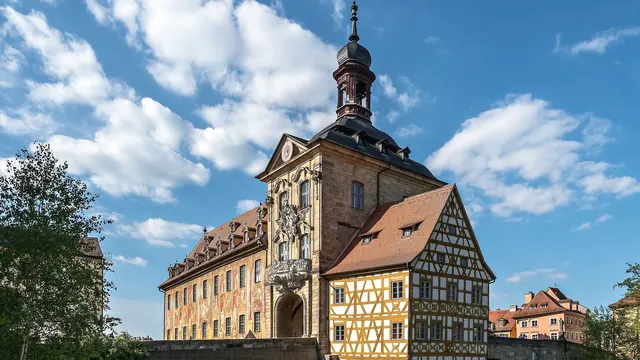
On a culture and arts trip, Bavaria is in another league. It has the Pinakotheks, the Residenz palaces, Nuremberg's castle, UNESCO-listed Bamberg and Regensburg, the Bavarian State Opera and Bayreuth's Wagner festival. Rügen's resort villas, Putbus and the Prora documentation centre make pleasant outings, not a programme.
For a food and nightlife trip, Bavaria is the clear choice. Munich's beer gardens and halls, Franconia's village breweries and wine taverns and the bars of Glockenbachviertel offer real evenings out. On Rügen you get smoked fish, a sunset drink and an early night.
Before you go
| Measure | Bavaria | Rügen |
|---|---|---|
| Official language | German | German |
| Currency | Euro (EUR) | Euro (EUR) |
| Sockets | CF230 V, 50 Hz | CF230 V, 50 Hz |
| Driving side | Right | Right |
| Time zone | UTC+1, UTC+2 in summer | UTC+1, UTC+2 in summer |
| Emergency number | 112 | 112 |
| Main airport | Munich Airport (MUC)211 non-stop destinations | Rostock-Laage Airport (RLG)1 non-stop destination |
| Public holidays this year | 12 days | 11 days |
By the numbers
| Measure | Bavaria | Rügen |
|---|---|---|
| Population | 13,038,724 | 67,526 |
| People per km² | - | 73 |
| Swim season, months above 21 °C | - | None |
Where else could you go?
Every comparison below shares a destination with this one, so you can follow Bavaria or Rügen somewhere new.
- Austrian Alpsvs Bavaria
- Dolomitesvs Bavaria
- Black Forestvs Bavaria
- Lake Comovs Bavaria
- Lake Gardavs Bavaria
- Alsacevs Bavaria