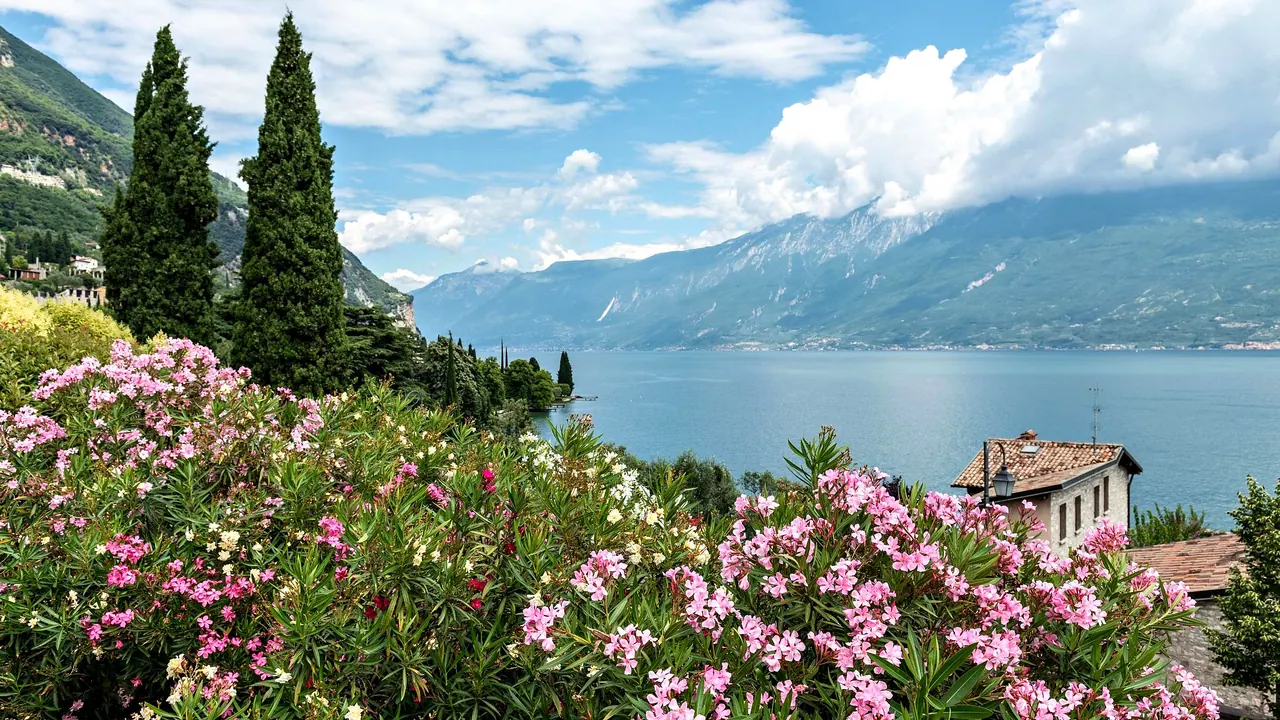
Photos: Lake Garda by Wolfgang Weiser, Pexels License.
Bavaria or Lake Garda?
Our verdict in twelve categories, each scored against the same fixed benchmark cities, and the climate month by month, so you can choose for your trip.
Choose Bavaria for
- live music and the arts
- culture and sights
- shopping
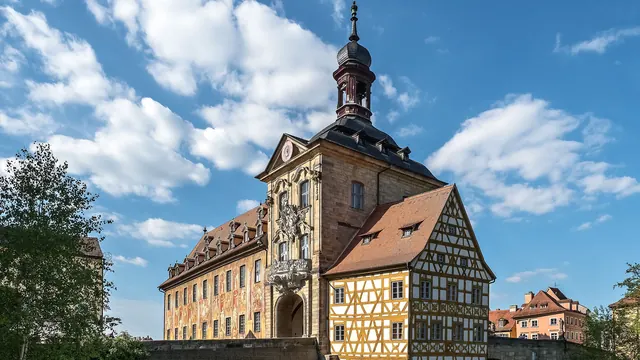
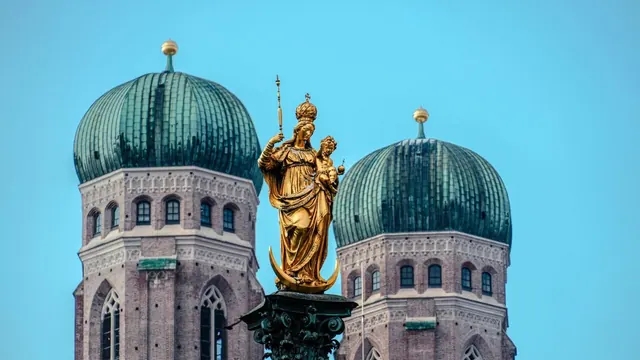
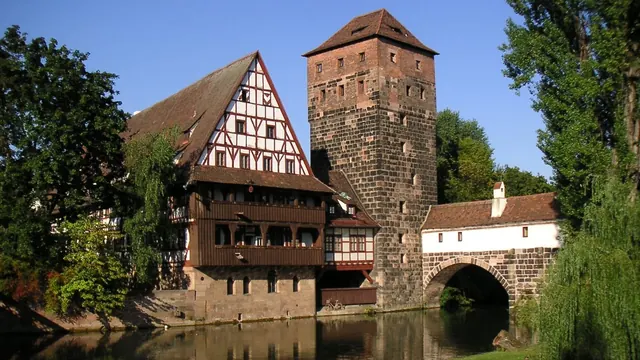
Bavaria is the better choice for a trip built around art, history and music. Munich alone has world-class galleries, a great opera house and two major orchestras. Beyond the city are Bamberg, Regensburg, Würzburg and Ludwig II's castles, and trains link most of them. It also suits travellers who want spa towns and Alpine walking in the same trip, or who like to move between several bases rather than stay in one place.
Choose Lake Garda for
- beaches
- families
Lake Garda wins for a warm summer by the water. Its lidos and pebble shores make swimming the centre of the day, and the north end around Riva and Arco is a serious base for climbing, biking and windsurfing. Families come for Gardaland and the campsites on the south-east shore. The towns are quiet in the evening and there are few great museums, but Verona and Venice are within easy reach by rail.
Scoreboard
Twelve categories on one fixed scale from 0 to 100. The shaded stretch is the gap between the two.
Your match
Pick a travel style or drag the sliders, and both match scores follow your weighting.
Wins on live music and the arts and culture and sights with your weighting.
Wins on beaches and families with your weighting.
What matters to you?
Category by category
What the scores mean for a trip.
Beaches & swimming
Both offer lake swimming rather than sea, but Lake Garda does it far better. Its water warms properly in July and August, and the south and east shores are lined with grassy lidos, jetties and rock shelves, such as those below Sirmione and at Punta San Vigilio.
Bavaria's lakes south of Munich, the Starnberger See, Chiemsee and Tegernsee, are pleasant for a dip. Still, the season is shorter, a rainy spell can end swimming for a week, and the mountain lakes stay cold. In Bavaria a swim is something you add to a summer day. At Garda, the lido can be the main point of the stay.
Food & drink
Bavaria has a slight edge, mainly because of Munich: its fine-dining scene, the Viktualienmarkt and the beer gardens. Franconia's village breweries and Silvaner taverns add depth, though the food in country inns is hearty and much the same from place to place.
Garda's strength is its wine and lake fish. Bardolino, Lugana and the nearby Amarone go well with grilled perch, local olive oil and bigoli pasta. The catch is that the busiest harbour fronts serve tourist menus, so the good meals are usually in agriturismi up in the hills.
Culture & sights
There is no real contest here. Bavaria has major collections in Munich, including the Alte Pinakothek and the Deutsches Museum, plus Nuremberg's castle and national museum and the intact medieval centres of Bamberg and Regensburg. It also has Tiepolo's ceiling in Würzburg and Ludwig II's fairy-tale castles in the south.
Garda's heritage is pleasant but small: the moated castle and Roman villa ruins at Sirmione, d'Annunzio's odd Vittoriale estate at Gardone, and a ring of lakeside castles. Each makes a good half-day, but none is reason enough to choose the lake.
Nightlife
Bavaria has more to offer at night, almost all of it in Munich. There are cocktail bars in Glockenbachviertel and Maxvorstadt, a decent club scene and beer halls that get loud by evening, and Oktoberfest takes over the city every autumn.
At Garda, an evening usually means an aperitivo, dinner and a walk along the promenade. Desenzano, with its summer clubs and students, is the only real exception. Most towns go quiet early, and outside the summer months there is little going on.
Nature & outdoors
These two are evenly matched outdoors, but the landscapes work differently. Bavaria's Alps run along its whole southern border, from the Zugspitze above Garmisch to the Königssee at Berchtesgaden. They are good for hut-to-hut hiking, and in winter for proper skiing. Further north are the wild Bavarian Forest and long cycle paths along the rivers.
Garda packs its best scenery into the narrow northern end. There, Monte Baldo's ridges, Arco's limestone climbing walls and the reliable wind at Torbole for windsurfing and sailing are all close to one another, and you can do everything from a single base.
Day trips
Both are excellent bases for day trips, but the trips go in different directions. From Bavaria, most outings stay inside the region: Augsburg, Nuremberg and Regensburg from Munich, and the Romantic Road towns and Main wine villages from Franconia. Salzburg and Innsbruck are just across the border.
From Garda, the best trips leave the lake altogether. The railway along the south shore runs to Verona in well under an hour, and Venice, Vicenza and Padua are on the same line. Mantua and Bergamo are close by too, which adds a lot of art and history to a lake stay.
Good for families
Both are very easy with children, but in different ways. Garda's south-east shore is set up for a family summer, with Gardaland, a safari park, water parks and large campsites with pools. The shallow lidos and ferry rides fill the remaining days.
Bavaria spreads its attractions over cities and mountains and works in any season. It has Legoland at Günzburg, the hands-on children's section of the Deutsches Museum, zoos in Munich and Nuremberg, and playgrounds in the beer gardens. In the Alps there are summer toboggan runs, and in winter there are gentle ski slopes.
Getting around
Bavaria is much easier without a car. Munich has the U-Bahn, S-Bahn and trams, regional trains reach Nuremberg, Garmisch, Füssen and the lakes, and one day ticket covers much of the state. Only remote valleys and Franconian villages depend on infrequent buses.
At Garda, the railway touches only the south shore. Elsewhere you rely on slow ferries, shore buses or a car on narrow roads that jam in summer and through tunnels in the north. It works best if you stay in one town and travel by boat.
Shopping & style
What you bring home says a lot about each trip. Munich's best browsing is off the main streets, in the independent shops of Glockenbach and Schwabing, the delicatessen stalls of the Viktualienmarkt and the tailors selling Dirndl and Lederhosen. Nuremberg adds toys and gingerbread. In December the Christmas markets in dozens of Bavarian towns are worth planning a whole trip around.
Garda has far less choice, and much of it is practical. Riva and Arco have outdoor gear shops for the climbers, bikers and windsurfers at the north end. On market days in Desenzano, Lazise and Bardolino, stalls selling clothes and leather fill the lakefront. These are weekly errands rather than a reason to come, and beyond a bottle of Lugana or Bardolino there is little to hunt for.
Affordability
Both cost about the same overall, but what drives the price differs. In Bavaria it depends on where you stay: Munich is expensive, especially during Oktoberfest and trade fairs, while Bamberg, Würzburg and the Bavarian Forest are moderate. Bringing a picnic to a beer garden is an easy way to save.
At Garda it depends on when you go and how close you stay to the water. Lakefront hotels in Sirmione or Limone charge high prices in summer, while campsites and agriturismi back from the shore cost noticeably less. Spring and autumn are cheaper across the lake.
Live music & performing arts
Bavaria is far ahead for music and theatre. The Bavarian State Opera performs most nights in season, Munich has two orchestras of international rank and the rococo Cuvilliés Theatre, and each summer Bayreuth stages Wagner in the composer's own theatre.
Garda has little of its own: summer concerts in the Vittoriale's open-air amphitheatre and band music in the town squares. Its best night out at the opera is in Verona's Roman arena, outside the region, and there is little to see outside summer.
Wellness & relaxation
Bavaria has the deeper spa tradition. It has a whole network of Bad towns: grand colonnades at Bad Kissingen, brine baths at Bad Reichenhall, thermal pools at Bad Füssing and Kneipp's water cure at Bad Wörishofen. There is also the large sauna complex at Erding, and saunas are taken the German way, mostly nude and mixed.
Garda's spa life centres on Sirmione's sulphurous springs and the open-air thermal park near Lazise, with hotel spas along the western shore at Gardone and Salò. It is a good place for a few slow days, but the choice is much smaller.
When should you go?
Pick your month. The climate figures are measured averages, not a forecast.
Bavaria in July
Lake Garda in July
Daytime high, °C
Rainfall in the month, mm
Where the figures come from
Lake Garda's sunshine is measured 28 km from the centre, at Verona / Villafranca.
Temperature and rainfall are climate normals, averaged over the years shown. Bavaria: 1991-2020 normals, München (1.9 km from centre). Lake Garda: 2005-2025 (sunshine 1991-2020, rainfall 1991-2020) normals, Verona / Rivoltella (1.6 km from centre).
Bavaria's summer is mild rather than hot, with highs around 25°C in July and August. Those are also its wettest months, at around 120mm each, so a summer stay will have some grey or showery days and the lakes are warm enough for swimming only from June to early September. May and September suit city walking and hiking well. From November to February the days are short and cold, with highs near 4°C in January, which is the season for snow in the Alps rather than for sightseeing on foot.
Lake Garda is a few degrees warmer in every month. It reaches 29°C in July, which is also its sunniest month, so midsummer is ideal for the lidos but hot for long walks around town at midday. April, May, September and October are mild and good for hiking, climbing and touring the towns. Unlike Bavaria, Garda gets its heaviest rain in late autumn, peaking at 121mm in November, and its winters are cool and quiet rather than snowy.
Which traveller are you?
On a beach and sun trip, choose Lake Garda. Its water gets properly warm in high summer, the season is sunnier, and the lidos at Lazise, Bardolino and Sirmione are made for long days by the lake. Bavaria's lakes are cooler and wetter.
For a culture and arts trip, Bavaria is far stronger. Munich has the Pinakotheken, the Residenz and the State Opera, and Bayreuth has its Wagner festival. Add the medieval towns of Bamberg and Regensburg, and Garda's castles and Roman villa look slight by comparison.
On a shopping trip, Bavaria is the place to go. Munich has luxury streets and department stores, the regions have craft traditions from violins to glass, and in December there are Christmas markets. At Garda, shopping means weekly markets and olive oil, and anything more serious means going to Verona.
Before you go
| Measure | Bavaria | Lake Garda |
|---|---|---|
| Official language | German | Italian |
| Currency | Euro (EUR) | Euro (EUR) |
| Sockets | CF230 V, 50 Hz | CFL230 V, 50 Hz |
| Driving side | Right | Right |
| Time zone | UTC+1, UTC+2 in summer | UTC+1, UTC+2 in summer |
| Emergency number | 112 | 112 |
| Main airport | Munich Airport (MUC)211 non-stop destinations | Verona Villafranca Valerio Catullo Airport (VRN)96 non-stop destinations |
| Public holidays this year | 12 days | 13 days |
By the numbers
| Measure | Bavaria | Lake Garda |
|---|---|---|
| Population | 13,038,724 | - |
Where else could you go?
Every comparison below shares a destination with this one, so you can follow Bavaria or Lake Garda somewhere new.
- Austrian Alpsvs Bavaria
- Lake Comovs Lake Garda
- Cinque Terrevs Lake Garda
- Dolomitesvs Lake Garda
- Dolomitesvs Bavaria
- Tuscanyvs Lake Garda