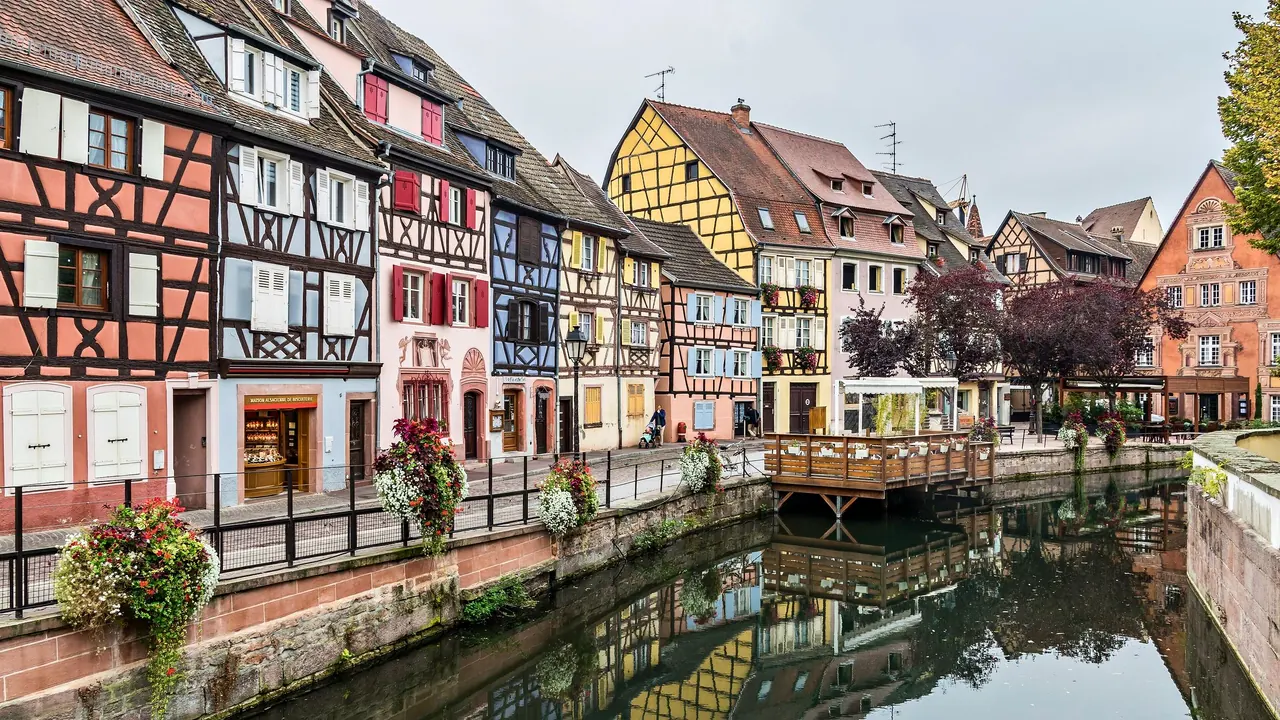
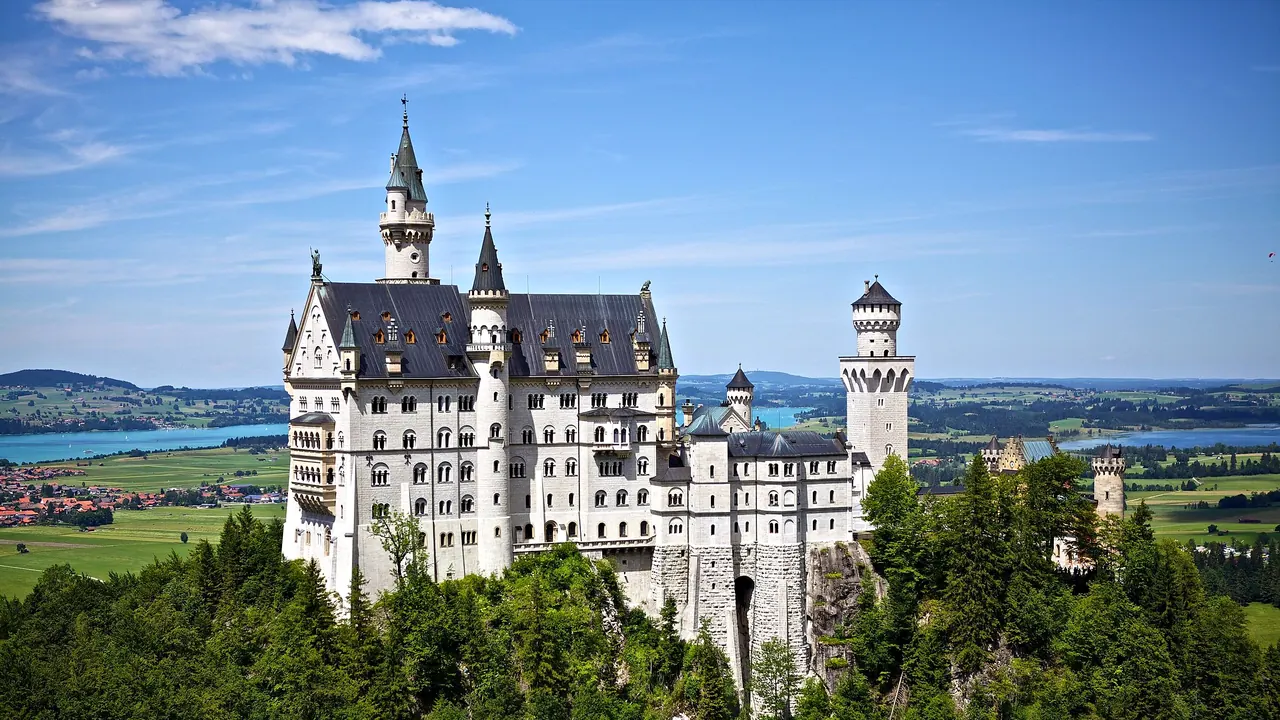
Photos: Alsace by Krzysztof Golik, CC BY-SA 4.0, cropped; Bavaria by cameralends, CC0.
Alsace or Bavaria?
Our verdict in twelve categories, each scored against the same fixed benchmark cities, and the climate month by month, so you can choose for your trip.
Choose Alsace for
- food and drink
- prices
Alsace suits travellers who want to eat and drink well in a small, compact region. The wine villages sit a few kilometres apart at the foot of the Vosges, Strasbourg and Colmar are close by train, and a winstub dinner after a day of cellar tastings is the whole idea. It is the better choice for a slow, wine-led stay from one or two bases, and in December for Christmas markets with centuries of history behind them.
Choose Bavaria for
- live music and the arts
- beaches
- wellness
Bavaria is a bigger and more varied trip. The Alps along its southern edge offer serious hiking and skiing, Munich is a music city of European rank, and the spa towns with the Bad prefix give a depth of bathing culture that Alsace can't match. Choose it if you want mountains, opera and palaces in one vacation, and you don't mind moving between several bases to see the best of it.
Scoreboard
Twelve categories on one fixed scale from 0 to 100. The shaded stretch is the gap between the two.
Your match
Pick a travel style or drag the sliders, and both match scores follow your weighting.
Wins on food and drink and prices with your weighting.
Wins on live music and the arts and beaches with your weighting.
What matters to you?
Category by category
What the scores mean for a trip.
Beaches & swimming
Neither region has a sea, so this comes down to lakes. Bavaria does it far better. The Starnberger See, Chiemsee and Tegernsee have jetties and grassy meadows, shallow lakes such as the Staffelsee warm up well in summer, and in Munich people swim in the Isar.
Alsace offers flooded gravel pits on the Rhine plain and a few cold lakes in the Vosges, fine for a cooling afternoon and nothing more. In Bavaria, a lake day can be one of the best parts of a summer trip.
Food & drink
This is the one area where Alsace clearly comes out ahead. Its kitchen blends German dishes with French technique: baeckeoffe, choucroute, flammekueche from a wood oven, munster cheese. It also has an unusual number of serious restaurants spread through villages such as Kaysersberg, and along the 170km wine road you taste Riesling and crémant at the grower's cellar.
In Bavaria, the drink matters more than the plate. The beer gardens, Bamberg's smoked beer and Franconian Silvaner are the highlights, while the cooking stays hearty and narrow outside Munich's fine dining and the Viktualienmarkt.
Culture & sights
Both regions have a lot of heritage, but Bavaria's is broader. Alsace has Strasbourg's cathedral and its UNESCO-listed island centre, the Isenheim Altarpiece in Colmar and walled villages such as Riquewihr, which fill a well-paced few days.
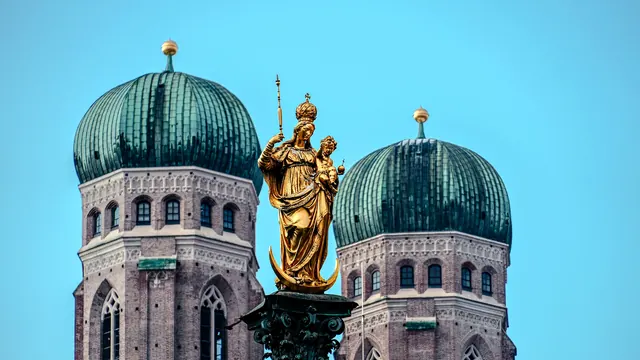
Bavaria adds great art collections in the Pinakotheks, the Deutsches Museum, two intact UNESCO old towns in Bamberg and Regensburg, Tiepolo's ceiling at Würzburg and Ludwig II's castles. It takes longer to see and needs more moving around, but there is more of it.
Nightlife
Munich gives Bavaria the livelier evenings: cocktail bars in Glockenbachviertel, a proper club scene, beer halls that get loud, and Oktoberfest each autumn. Strasbourg's student bars in Krutenau are sociable but small, and many young Alsatians go to Basel or across the Rhine for a bigger night. Outside the main cities, an evening in either region usually ends over dinner, at a winstub in Alsace or a tavern in Bavaria.
Nature & outdoors
The Vosges are rounded, wooded hills, with the Route des Crêtes along the top and well-marked trails winding down through the vineyards. They make lovely, gentle walking country with long views towards the Black Forest.
Bavaria has real mountains. Germany's highest peak rises above Garmisch, and the Berchtesgaden national park surrounds the Königssee. Hut-to-hut routes, via ferratas and proper skiing make it a far stronger choice for active travellers, and in the north it adds the wild Bavarian Forest and climbing crags in Franconian Switzerland.
Day trips
Both are excellent bases for day trips, but in different ways. In Alsace everything is close: you can link three or four wine villages in a day, and Basel, Freiburg and Baden-Baden lie just over the borders.
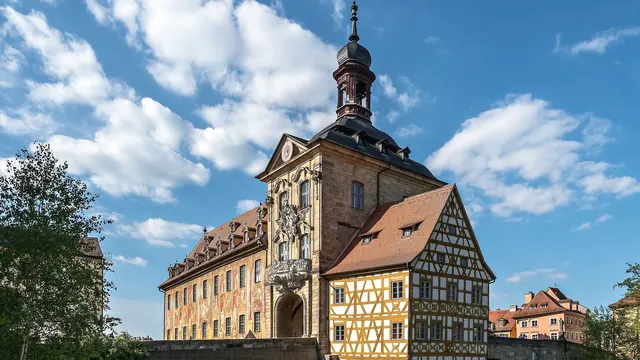
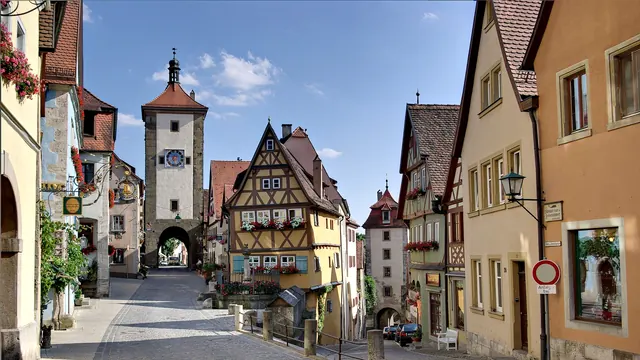
Bavaria covers more distance and has more variety. From Munich you can reach Salzburg, Augsburg, Regensburg and the lake islands, while Franconia works almost as a second region, with Bamberg and the Romantic Road towns of Rothenburg and Dinkelsbühl.
Good for families
Both are safe, easy and well equipped for children, and the difference is in the kind of day out. Alsace mixes animal parks near Kintzheim, with free-roaming macaques and falconry at a castle, with the Mulhouse railway museum and nearby Europa-Park, though much of it needs a car. Bavaria leans on Munich's zoo and the children's section of the Deutsches Museum, Legoland, beer gardens with playgrounds, summer toboggan runs and shallow lakes for paddling.
Getting around
Getting around is fairly easy in both, and Bavaria goes a little further without a car. Munich has a full U-Bahn and S-Bahn system, and regional trains reach Garmisch, Füssen and Berchtesgaden, so the mountains are partly accessible by rail.
In Alsace the train line down the plain and Strasbourg's trams and cycle lanes work well, but the wine route and the Vosges crests are really car country. Distances there are short, though. In Bavaria, if you drive, expect jams towards the Alps on summer weekends.
Shopping & style
Munich gives Bavaria the edge, with luxury houses on Maximilianstrasse and independent shops in Glockenbach, while Strasbourg offers solid but unremarkable high streets. Both regions do best with traditional crafts and Christmas markets. In Alsace that means Betschdorf stoneware, Soufflenheim baking moulds and wine bought from the growers. In Bavaria it means Dirndl tailoring, Oberammergau woodcarving, Bavarian Forest glass and Nuremberg gingerbread.
Affordability
Costs are similar, moderately high in both, and in each the main city pushes them up. In Alsace, rooms in Strasbourg and Colmar get scarce in December and during European Parliament sessions, while village guesthouses are better value. Munich is the most expensive part of Bavaria, especially during Oktoberfest and the trade fairs, but Franconia and the Bavarian Forest are moderate. Bavaria's regional day tickets also save the cost of the car hire that the Alsace wine route usually needs.
Live music & performing arts
In Alsace, live performance is something you fit around a trip rather than plan it by. In Strasbourg you can usually find a good opera, play or concert in any given week, and the autumn jazz and contemporary music festivals add some weight. Outside the city, most evenings bring no more than a church concert or the village brass band.
Bavaria offers far more. In Munich the State Opera performs most nights in season, and two orchestras of international rank share the calendar, so a music lover could book something serious for every evening of a stay. Bavaria also has the kind of festival trip Alsace lacks. People travel to Bayreuth for the Wagner festival alone, if they can get tickets.
Wellness & relaxation
For spas, Bavaria is the stronger choice by a wide margin. It has dozens of Bad towns, the colonnades of Bad Kissingen, brine baths at Bad Reichenhall, Kneipp's water cure at Bad Wörishofen and the vast Erding sauna complex near Munich. In Alsace, rest comes more from the pace of life: a cellar tasting and a long lunch in a wine village, with only a few thermal baths around Niederbronn and the option of Baden-Baden across the river.
When should you go?
Pick your month. The climate figures are measured averages, not a forecast.
Alsace in July
Bavaria in July
Daytime high, °C
Rainfall in the month, mm
Temperature and rainfall are climate normals, averaged over the years shown. Alsace: 1991-2020 normals, Ihringen (20.8 km from centre). Bavaria: 1991-2020 normals, München (1.9 km from centre).
The two share a central European pattern of cold winters and warm summers, and both are at their best from May to September. Alsace runs a little warmer and noticeably drier. On the plain its August highs reach about 27°C against Bavaria's 25°C, and its wettest month, May, brings 87mm, while Bavaria's summers are its rainy season, with June to August each close to 121mm as storms build against the Alps. Summer sunshine is much the same in both, long and generous from June to August.
Lake swimming works in both from late June to August, but a wet Bavarian week can stop it. Spring and September are good for walking in both, and Alsace's dry, mild autumn suits vineyard walks particularly well. From November to February both turn grey and cold, with Bavaria a degree or two colder and a little sunnier. That is fine for Christmas markets and, in Bavaria, for snow, but it is poor weather for long days on foot.
Which traveller are you?
On an outdoors trip, choose Bavaria. Stay in an Alpine village on a rail line south of Munich and go in September, when the summer storms ease, or in winter for snow. In Alsace, the hills fit best as walking days between wine tastings.
For a relaxing and wellness trip, Bavaria is again the better choice. Pick one spa town and stay there for a week rather than touring. In Alsace, rest means a quiet guesthouse in a wine village in late spring or autumn, well away from December.
On a food and nightlife trip, Alsace is better for the eating. Stay in a wine village south of Colmar around the autumn harvest and plan each day around lunch. If late nights matter as much as dinners, base yourself in Munich instead.
Before you go
| Measure | Alsace | Bavaria |
|---|---|---|
| Official language | French | German |
| Currency | Euro (EUR) | Euro (EUR) |
| Sockets | CE230 V, 50 Hz | CF230 V, 50 Hz |
| Driving side | Right | Right |
| Time zone | UTC+1, UTC+2 in summer | UTC+1, UTC+2 in summer |
| Emergency number | 112 | 112 |
| Main airport | Strasbourg Airport (SXB)43 non-stop destinations | Munich Airport (MUC)211 non-stop destinations |
| Public holidays this year | 11 days | 12 days |
By the numbers
| Measure | Alsace | Bavaria |
|---|---|---|
| Population | - | 13,038,724 |
Where else could you go?
Every comparison below shares a destination with this one, so you can follow Alsace or Bavaria somewhere new.
- Black Forestvs Alsace
- Austrian Alpsvs Bavaria
- Swiss Alpsvs Alsace
- Dolomitesvs Bavaria
- Burgundyvs Alsace
- French Alpsvs Alsace