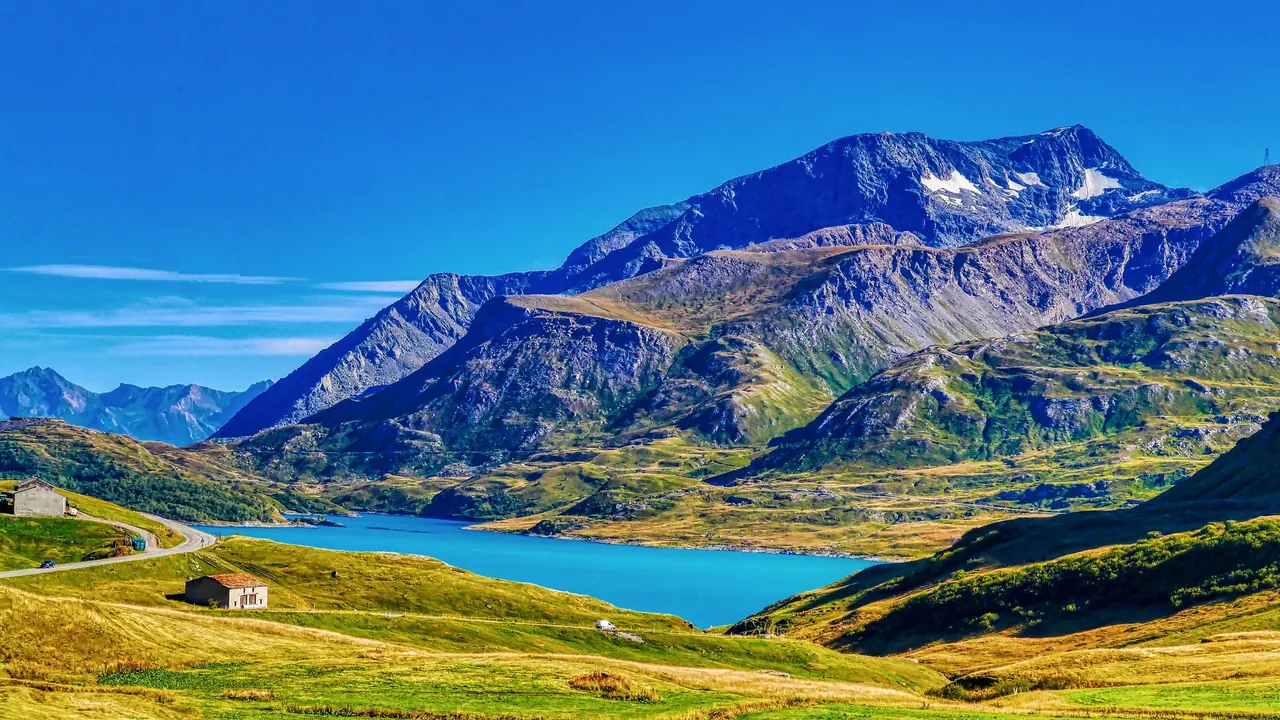
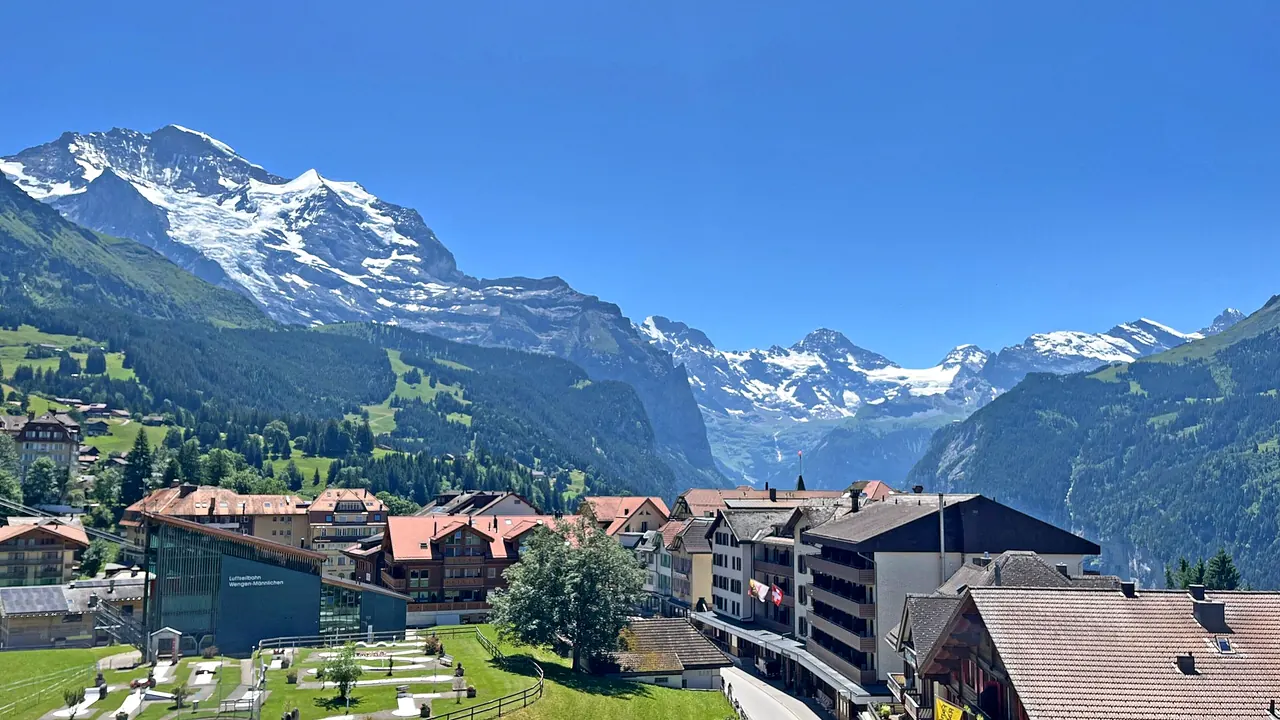
Photos: Val Cenis by Zairon, CC BY-SA 4.0, cropped; Wengen by Charles J. Sharp, CC BY-SA 4.0, cropped.
Val Cenis or Wengen?
Our verdict in twelve categories, each scored against the same fixed benchmark cities, and the climate month by month, so you can choose for your trip.
Choose Val Cenis for
- prices
- culture and sights
- food and drink
Val Cenis is the better pick for travellers who want the high Alps without Swiss prices. Self-catering apartments, cheaper lift passes and free hiking in the Vanoise keep a week affordable. The villages add a little more to see, from baroque churches to the frescoed chapel in Lanslevillard. Summers are a touch warmer and drier, and in summer the road over the Mont Cenis pass leads down into Italy. Expect to drive, though, because outside winter the valley depends on the car.
Choose Wengen for
- getting around
- wellness
- day trips
Wengen is the place for those who want the most dramatic scenery and are willing to pay for it. You wake to the Jungfrau across the Lauterbrunnen valley. Trains and cable cars carry you to Kleine Scheidegg, the Männlichen ridge and the glacier with no car at all, and the car-free calm makes doing nothing feel worthwhile. It is one of the costliest stays in Europe, so it suits a trip where the view matters more than the bill.
Scoreboard
Twelve categories on one fixed scale from 0 to 100. The shaded stretch is the gap between the two.
Your match
Pick a travel style or drag the sliders, and both match scores follow your weighting.
Wins on prices and culture and sights with your weighting.
Wins on getting around and wellness with your weighting.
What matters to you?
Category by category
What the scores mean for a trip.
Beaches & swimming
Neither is a place to swim, but Wengen has the better fallback. Its train reaches the lidos on Lake Thun in about an hour, and on a hot July day that makes a pleasant afternoon. Val Cenis has nothing comparable within reach: the Mont Cenis lake is a cold high reservoir for walking around, and a hotel or village pool is the only real way to swim.
Food & drink
Both serve hearty mountain food rather than a varied food scene, and the difference lies in the kind. Val Cenis eats the Savoyard way, with tartiflette, crozets and diots sausages, and it has a real local product in Bleu de Termignon, a rare blue cheese sold at farms and cheese shops. Many visitors cook for themselves in an apartment.
Wengen's meals are Swiss: rösti, veal in cream sauce and fondue. Most of them are eaten on half-board in hotel dining rooms or at huts along the runs. The best of it is lunch on a terrace facing the Jungfrau, and for more choice you have to go down to Interlaken.
Culture & sights
Val Cenis has more to look at on foot. Its villages keep stone houses with lauze roofs and baroque churches, Termignon has a carved altarpiece, and the early sixteenth-century frescoes in the Saint-Sébastien chapel are worth a special visit.
Wengen has almost nothing in the way of sights. You can stroll past its wooden chalets and Belle Époque hotels, which recall the village's history as an English resort, but you go there for the mountain wall opposite, not for heritage.
Nightlife
Evenings are short in both, with a few après-ski bars in winter and early nights in summer. Wengen has the one real party, the January weekend of the Lauberhorn downhill race. Otherwise a lively evening in either means a crowded bar in Lanslebourg or a hotel bar in Wengen.
Nature & outdoors
Both are serious mountain destinations, but Wengen's setting is the more spectacular. It sits on a shelf above the sheer, waterfall-lined Lauterbrunnen valley, faces the Eiger, Mönch and Jungfrau, and has trails and rail lines climbing to Kleine Scheidegg and the Jungfraujoch glacier. Its ski area links with Grindelwald and includes the long Lauberhorn run.
Val Cenis offers something different: wilder country on the edge of the Vanoise, with ibex, chamois and marmots, and hut-to-hut routes. Its gentle long ski run suits beginners, and road cyclists come for the climbs over the Mont Cenis and the Iseran.
Day trips
Wengen offers more and easier outings. In about an hour by train you reach Interlaken, Thun's castle and old town, lake steamers to Oberhofen and Spiez, and the Ballenberg open-air museum near Brienz. The arcaded old town of Bern is a full but manageable day out.
Val Cenis has strong destinations, including Susa's Roman arch, the Sacra di San Michele and Turin's palaces across the border. However, the pass into Italy closes in winter, most trips need a car, and on the French side the options are small places such as Bessans and Bonneval-sur-Arc.
Good for families
Both are good choices for families who want snow and fresh air, and neither has theme parks or much to fill a rainy day. Val Cenis offers a very long easy run that lets beginners ski down from high on the mountain, along with marmot spotting and luge-style rides in summer, at lower cost.
Wengen's strength is that it has no cars, so children can roam the village safely and the nursery slopes are close to the hotels. The trade-offs are steep paths, difficulty with buggies and expensive family meals.
Getting around
Wengen is much easier to get around without a car. The rack railway and the Männlichen cable car take you straight to the high country, the village is a few minutes across on foot, and electric carts carry luggage from the station. The catch is that every trip lower down starts with the slow descent to Lauterbrunnen.
Val Cenis is spread out along the valley from Bramans to Lanslevillard. Ski shuttles link the villages in winter, but at other times buses are few, the nearest station is at Modane, and most visitors drive.
Shopping & style
Neither place is for shopping, since both have little more than ski hire, outdoor gear and a small grocery. What differs is what you take home: cheese, honey and charcuterie from Val Cenis, and chocolate from Wengen's souvenir counters. Anyone who wants real shops has to go down to Interlaken or Bern.
Affordability
This is where the two differ most. Val Cenis is moderately priced for the French Alps: apartments keep lodging reasonable, lift passes cost less than in the large neighbouring resorts, and summer is cheaper again.
Wengen is priced at Swiss resort levels for every room, meal and drink, and each railway or cable-car ride adds to the cost, with the Jungfraujoch the most expensive of all. Chalets and rail passes soften this, but the gap remains wide.
Live music & performing arts
Neither has a stage life of its own, and what little there is differs in flavour. Val Cenis has summer concerts in its baroque churches, village festivals and resort entertainment in the ski season. Wengen's version is more folkloric: the odd evening of yodelling or alphorn music in a hotel, and a brass band at village celebrations.
For real concerts, opera or theatre, both mean a journey. From Val Cenis, Turin and its Teatro Regio are about an hour and a half away through the Fréjus tunnel, which leaves a late drive back up the valley. From Wengen, Interlaken is the nearest option and Bern is about two hours away, and either way you have to come back up the mountain by train afterwards.
Wellness & relaxation
Val Cenis offers quiet more than pampering. The villages are small, the evenings end after dinner, and a sauna, hot tub or massage depends on staying in one of the few hotels that have them. Most visitors stay in self-catering apartments, which have none of this.
Wengen gives more back on an idle day. Everything in the village is a short stroll away, the view across the Lauterbrunnen valley fills any window or terrace, and in early summer and autumn the pace slows even further. Its spas are also inside hotels, and neither place has public thermal baths, so Wengen suits a trip spent resting in mountain air rather than one built around treatments.
When should you go?
Pick your month. The climate figures are measured averages, not a forecast.
Val Cenis in July
Wengen in July
Daytime high, °C
Rainfall in the month, mm
Where the figures come from
Val Cenis has no weather station within reach, so its figures come from a gridded climate model rather than a measured record, and read a broad area rather than one spot.
Wengen has no weather station within reach, so its figures come from a gridded climate model rather than a measured record, and read a broad area rather than one spot.
Temperature and rainfall are climate normals, averaged over the years shown. Val Cenis: 2001-2020 normals, NASA POWER reanalysis grid, no weather station within 90 km. Wengen: 1991-2020 normals, TerraClimate 4 km grid at the town, no weather station within 90 km.
Neither place has a beach season, so the choice is between snow and walking. Val Cenis has the harsher winter, with January highs around -4°C against roughly freezing in Wengen, but it warms up more in summer, reaching about 18°C in July against Wengen's 16°C. Both are snowbound from December to March, and April and November are in-between months with poor conditions for either skiing or hiking.
The bigger difference is rain. Wengen is wet all year and wettest in summer, at around 110mm a month from May to August, so cloud can hide the peaks for days at a time. Val Cenis has its wettest month in May but stays nearer 80mm through July and August, which gives a more reliable hiking window. In both places July to mid-September is the best time for the high trails, and September is often clear and settled.
Which traveller are you?
On a trip on a tight budget, Val Cenis is the realistic choice. Apartments in the villages, cheaper lift passes than in the bigger resorts, cheese bought straight from the farms and free walking in the national park keep costs moderate, while in Wengen even the trains are expensive.
For an outdoors trip, Wengen comes out ahead. Trails start at the door, the Lauterbrunnen waterfalls and the Eiger north face are close by, and railways lift you to high ridges and glacier views with no driving. Val Cenis rewards those who drive to its passes and huts.
On a relaxing and wellness trip, Wengen is the calmer place. Because there are no cars, you hear cowbells and waterfalls instead of traffic, and the larger hotels have saunas and treatment rooms. Val Cenis is quiet too, but there is less to it than a car-free balcony facing the Jungfrau.
Before you go
| Measure | Val Cenis | Wengen |
|---|---|---|
| Official language | French | French, German, Italian, Romansh |
| Currency | Euro (EUR) | Swiss Franc (CHF) |
| Sockets | CE230 V, 50 Hz | CJ230 V, 50 Hz |
| Driving side | Right | Right |
| Time zone | UTC+1, UTC+2 in summer | UTC+1, UTC+2 in summer |
| Emergency number | 112 | 112 |
| Elevation | 1,752 m | 1,274 m |
| Main airport | Turin Airport (TRN)59 km from centre65 non-stop destinations | Zürich Airport (ZRH)106 km from centre226 non-stop destinations |
| Public holidays this year | 11 days | 10 days |
By the numbers
| Measure | Val Cenis | Wengen |
|---|---|---|
| Population | - | 1,116 |
| People per km² | - | 31 |
| Museums within 10 km | 0 | 2 |
| UNESCO World Heritage sites within 50 km | 1 | 1 |
Where else could you go?
Every comparison below shares a destination with this one, so you can follow Val Cenis or Wengen somewhere new.
- Mürrenvs Wengen
- Grindelwaldvs Wengen
- Val d'Isèrevs Val Cenis
- Tignesvs Val Cenis
- Val Thorensvs Val Cenis
- Courchevelvs Val Cenis