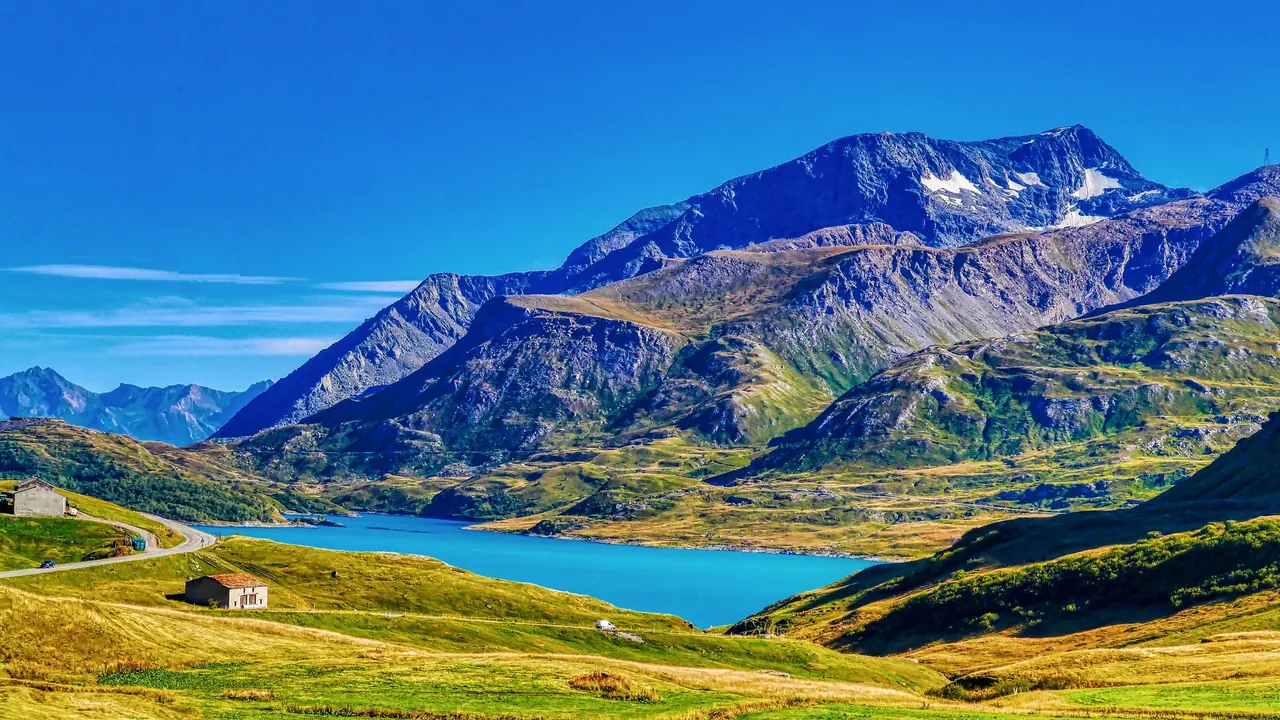
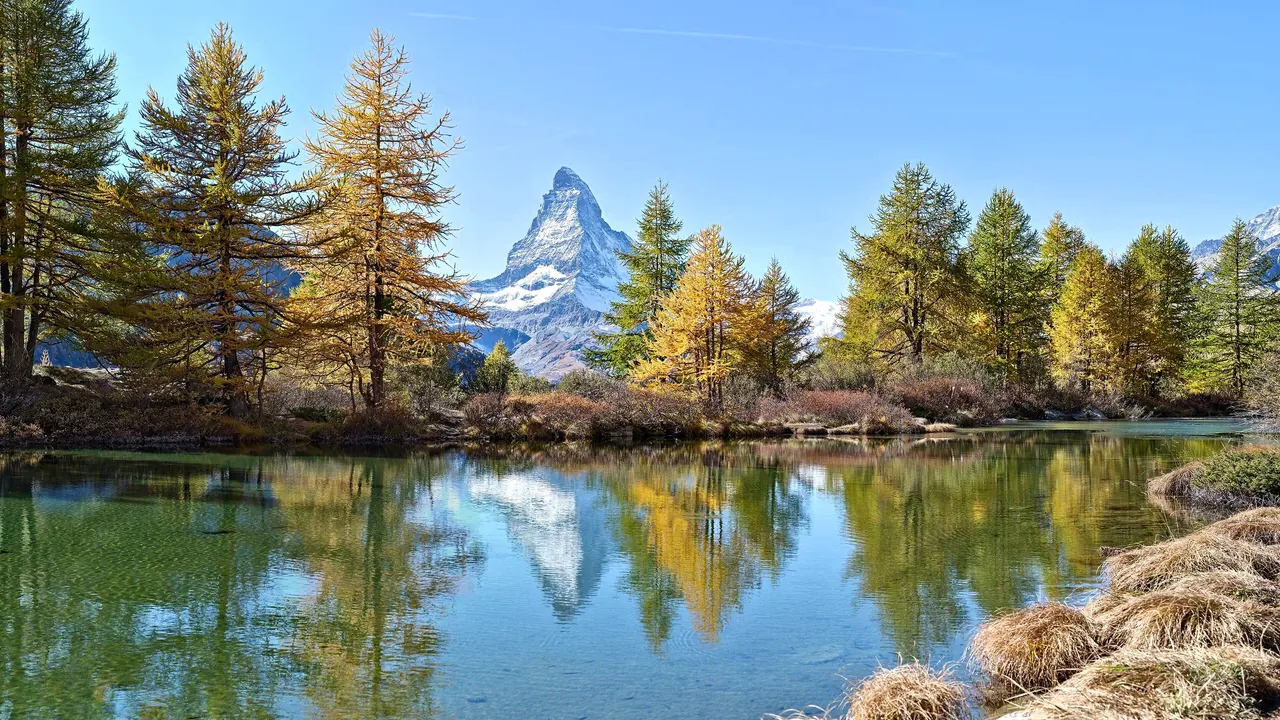
Photos: Val Cenis by Zairon, CC BY-SA 4.0, cropped; Zermatt by Roy Egloff, CC BY-SA 4.0, cropped.
Val Cenis or Zermatt?
Our verdict in twelve categories, each scored against the same fixed benchmark cities, and the climate month by month, so you can choose for your trip.
Choose Val Cenis for
- prices
- day trips
- families
Val Cenis is the better choice for families and for skiers who want the Alps without Swiss prices. Its long, gentle run lets beginners ski down from high on the mountain, the villages are small and uncrowded, and self-catering keeps costs under control. In summer the Vanoise National Park and the passes into Italy make a car-based mountain trip with a lot of variety.
Choose Zermatt for
- getting around
- nightlife
- shopping
Zermatt suits travellers who want the most dramatic high mountain scenery in the Alps and can pay for it. The Matterhorn rises right above the village, the lifts climb onto glaciers, and the car-free streets make it easy to get about on foot. The village also has better restaurants, real après-ski and good hotel spas.
Scoreboard
Twelve categories on one fixed scale from 0 to 100. The shaded stretch is the gap between the two.
Your match
Pick a travel style or drag the sliders, and both match scores follow your weighting.
Wins on prices and day trips with your weighting.
Wins on getting around and nightlife with your weighting.
What matters to you?
Category by category
What the scores mean for a trip.
Beaches & swimming
Neither place has a beach, so you should plan your swimming somewhere else on your trip. Val Cenis has the Mont Cenis lake, a reservoir near 2,000m that is good for a walk around the shore. Zermatt's tarns are mainly there to reflect the Matterhorn. In both places, the only real swimming is in a hotel or village pool.
Food & drink
Zermatt is the better place to eat because it caters to a wealthy international crowd. The best meals are long lunches at wooden chalets in the hamlets above the village, and the village itself has a few ambitious fine-dining kitchens. The wine is local too: Fendant, Petite Arvine and Cornalin from the Valais.
Val Cenis keeps to simple Savoyard food such as tartiflette, crozets and diots, mostly with similar menus everywhere. Its real treat is Bleu de Termignon, a rare blue cheese from the summer alpine farms. Many visitors there cook for themselves in their apartment.
Culture & sights
Both have a morning's worth of sights, but the subjects are very different. In Val Cenis it is religious art in village churches: the early sixteenth-century frescoes in the chapel of Saint-Sébastien at Lanslevillard and the carved baroque altarpiece at Termignon, in villages of stone houses with lauze roofs.
Zermatt's heritage is about climbing. The Matterhorn Museum tells the story of the first ascent of 1865, the mountaineers' cemetery holds the graves of climbers, and old larch-wood granaries still stand in the Hinterdorf. The Gornergrat cog railway, running since 1898, is a sight of its own.
Nightlife
Zermatt has a real winter scene. Slope-side bars fill with skiers in their boots from late afternoon, and on busy weekends a few bars and small clubs on the main street stay open past midnight. Val Cenis has a few après-ski bars in Lanslebourg and Lanslevillard, and most evenings end after dinner. In summer both are early-to-bed places.
Nature & outdoors
Both are excellent mountain destinations, but Zermatt is in a different league for high-altitude scenery. The Matterhorn and dozens of four-thousand-metre peaks surround the village, lifts climb above 3,800m onto the glacier, some pistes stay open in summer, and the skiing links across into Italy. In summer you can walk the Five Lakes trail or the Europaweg, or climb a four-thousander with a guide.
Val Cenis is gentler and wilder in its own way. It borders the Vanoise, France's oldest national park, where ibex and chamois are common and you can hike from hut to hut. Its skiing tops out lower, at about 2,800m, but suits beginners well, and road cyclists come for the classic climbs of the Mont Cenis and the Iseran.
Day trips
Val Cenis offers more variety, at least in summer. You can drive over the Mont Cenis pass to Susa and its Roman arch in under an hour, carry on to the hilltop abbey of the Sacra di San Michele, or reach Turin through the Fréjus tunnel. Closer by are Bonneval-sur-Arc, the painted chapels of Bessans and the Esseillon forts. In winter the pass closes and there are fewer options.
Every outing from Zermatt starts with a long train ride down the valley. Sion, with its two castle hills and its vineyards, is the best trip, and Brig and Saas-Fee are easy to reach. Most visitors spend their spare days in the mountains instead.
Good for families
Val Cenis is slightly better for children. Its very long, gentle run lets beginners ski down from high on the mountain, and the villages are small and quiet. In summer there are marmots, luge-style rides and outdoor pools.
Zermatt's big advantage is that it has no cars, so children can walk safely between the hotel, ski school and lifts. Children also enjoy the cog railways. Its highest viewpoints, though, are above 3,000m, which can be hard on small children. Neither place has much to do on a rainy day.
Getting around
Zermatt is far easier. You arrive by train, everything in the compact village is within walking distance, and the cog railway, the funicular to Sunnegga and the gondolas all start near the centre. Small electric taxis cover the edges, and the trains connect smoothly with the rest of the Swiss rail network.
Val Cenis stretches along the valley from Bramans to Lanslevillard. In winter the lifts and shuttle buses link the villages, but the nearest station is at Modane, about half an hour away. Outside the ski season you will need a car for the trailheads and passes.
Shopping & style
Zermatt has a proper shopping street, with Swiss watch and jewellery boutiques, very good mountaineering outfitters and plenty of souvenirs. Val Cenis has little beyond ski hire shops and grocers. What is worth buying there is food: the local cheese, honey and charcuterie.
Affordability
The gap is widest on the things every visitor has to pay for. A Val Cenis apartment and lift pass already cost less than in the big resorts of the neighbouring French valleys, and far less than in Zermatt, where even a plain room in season is a serious expense and every ride up the Gornergrat or the glacier gondolas adds to the bill. Eating out splits the same way: a tartiflette in a Val Cenis chalet restaurant is ordinary resort spending, while a terrace lunch with the Matterhorn in view is priced well above most of Europe.
Self-catering narrows the gap in both places, but not by the same amount. In Val Cenis an apartment and the village grocers bring a week down to something modest, especially in summer, when walking in the Vanoise costs nothing, though ski school and hire still mount up for a family in winter. In Zermatt, picnics from the supermarket and a bed down the valley in Täsch take the edge off, but the mountain transport still has to be paid for, so it stays by far the dearer of the two however carefully you plan.
Live music & performing arts
Zermatt has two festivals worth timing a trip around. Zermatt Unplugged brings acoustic sets to mountain stages in spring, and a late-summer chamber music festival brings serious classical musicians to the village church. Val Cenis offers village festivals, the odd summer concert in its churches and resort entertainment in the ski season.
Wellness & relaxation
Neither has thermal baths, but Zermatt has many excellent hotel spas with pools, saunas and mountain views, and some sell day passes to non-residents. In peak weeks, though, the village feels busy and active. Val Cenis has only a few hotel saunas and hot tubs, but its quiet villages and empty evenings are restful in a simpler way.
When should you go?
Pick your month. The climate figures are measured averages, not a forecast.
Val Cenis in July
Zermatt in July
Daytime high, °C
Rainfall in the month, mm
Where the figures come from
Val Cenis has no weather station within reach, so its figures come from a gridded climate model rather than a measured record, and read a broad area rather than one spot.
Zermatt has no weather station within reach, so its figures come from a gridded climate model rather than a measured record, and read a broad area rather than one spot.
Temperature and rainfall are climate normals, averaged over the years shown. Val Cenis: 2001-2020 normals, NASA POWER reanalysis grid, no weather station within 90 km. Zermatt: 1991-2020 normals, TerraClimate 4 km grid at the town, no weather station within 90 km.
Both places are snow resorts from December to March, when days stay below freezing, and both are summer hiking bases from June to September. Neither ever gets warm enough for a beach trip. Val Cenis is a little milder in summer, at about 18°C in July against 14°C in Zermatt, so walks in the valley and the Vanoise feel more comfortable. Zermatt's lower temperatures reflect how high and cold its setting is.
The wet months fall at different times. In Val Cenis the most rain comes in late spring, about 103mm in May, just as the high trails are opening. In Zermatt November is clearly the wettest month, at around 130mm. That makes late autumn a poor time to visit Zermatt and May an unsettled one in Val Cenis. The spring months between the seasons are cool and grey in both places.
Which traveller are you?
On a trip on a tight budget, Val Cenis is the one to pick. It is not cheap, but a self-catering stay in the French villages and days on free mountain trails keep a week within reach. In Zermatt, nearly every part of the stay costs a lot, from the bed to the ride up the mountain.
For a food and nightlife trip, Zermatt is the better choice, though only in the ski season. It has far more places to eat and a real evening crowd. Val Cenis is for a cheese supper and an early night. Outside the ski and hiking seasons, both largely close.
On a relaxing and wellness trip, Zermatt is better if you want to be pampered, because its hotel spas are where it is strongest. Val Cenis suits travellers who simply want peace, with fewer treatments but emptier villages and lower costs for a long, slow stay.
Before you go
| Measure | Val Cenis | Zermatt |
|---|---|---|
| Official language | French | French, German, Italian, Romansh |
| Currency | Euro (EUR) | Swiss Franc (CHF) |
| Sockets | CE230 V, 50 Hz | CJ230 V, 50 Hz |
| Driving side | Right | Right |
| Time zone | UTC+1, UTC+2 in summer | UTC+1, UTC+2 in summer |
| Emergency number | 112 | 112 |
| Elevation | 1,752 m | 1,624 m |
| Main airport | Turin Airport (TRN)59 km from centre65 non-stop destinations | Geneva International Airport (GVA)128 km from centre150 non-stop destinations |
| Public holidays this year | 11 days | 9 days |
By the numbers
| Measure | Val Cenis | Zermatt |
|---|---|---|
| Population | - | 6,023 |
| People per km² | - | 25 |
| Museums within 10 km | 0 | 2 |
| UNESCO World Heritage sites within 50 km | 1 | 2 |
Where else could you go?
Every comparison below shares a destination with this one, so you can follow Val Cenis or Zermatt somewhere new.
- Saas-Feevs Zermatt
- Val d'Isèrevs Val Cenis
- Tignesvs Val Cenis
- Val Thorensvs Val Cenis
- Courchevelvs Val Cenis
- Les Menuiresvs Val Cenis