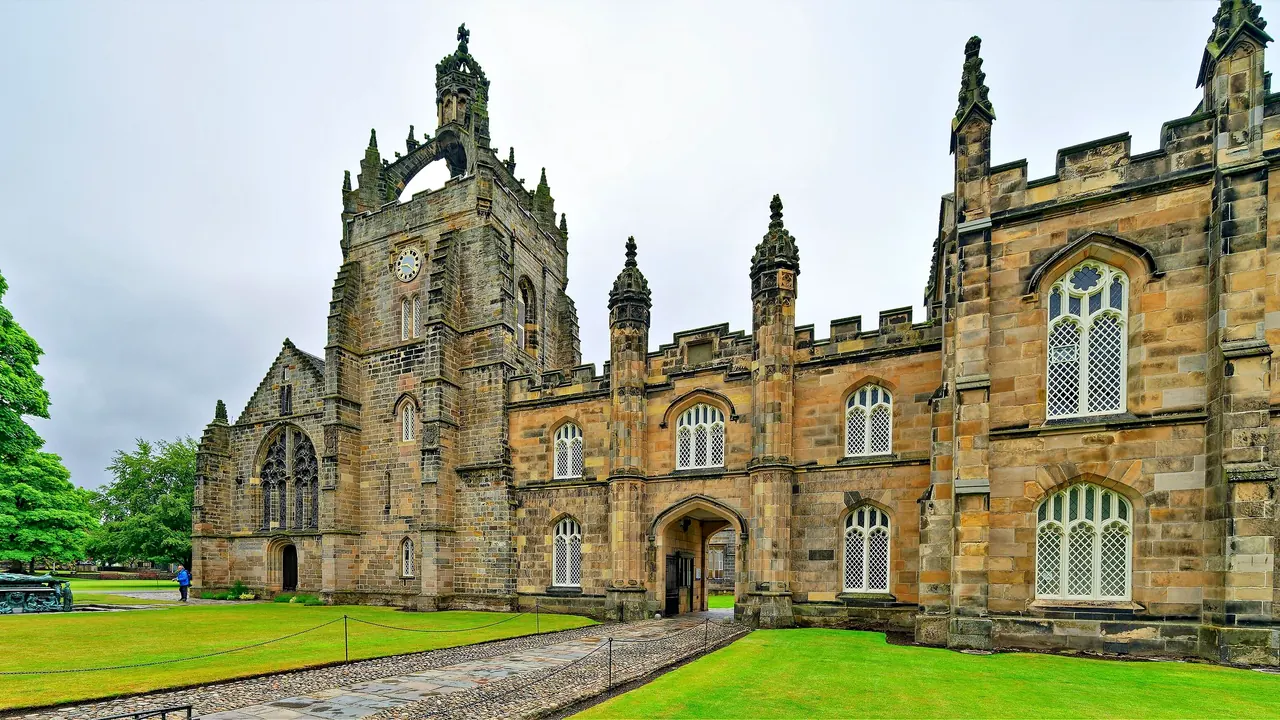
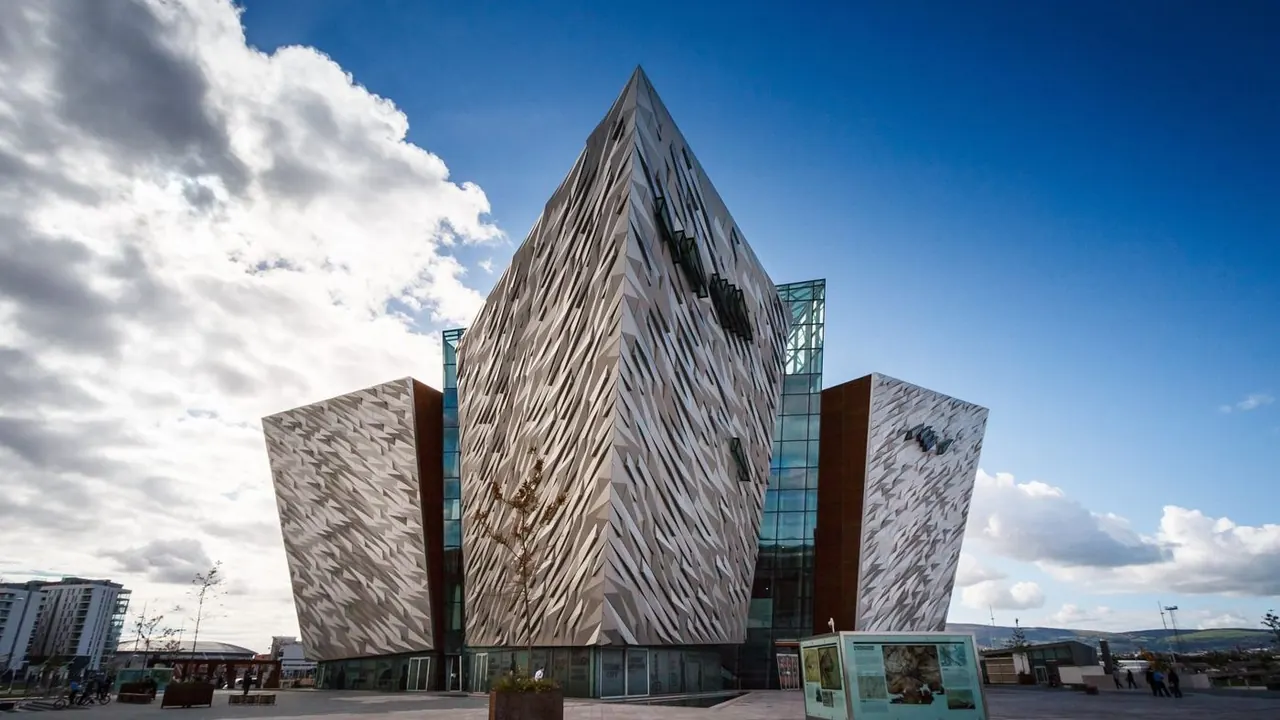
Photos: Aberdeen by Holger Uwe Schmitt, CC BY-SA 4.0, cropped; Belfast by Nico Kaiser, CC BY 2.0, cropped.
Aberdeen or Belfast?
Our verdict in twelve categories, each scored against the same fixed benchmark cities, and the climate month by month, so you can choose for your trip.
Choose Aberdeen for
- nature and the outdoors
- day trips
Aberdeen is the choice if the countryside matters more than the city. From its granite centre you can get into the Cairngorms, up Royal Deeside past Balmoral, along a trail of tower-house castles or out to the Speyside distilleries, all within a day. It suits walkers, castle hunters and whisky lovers who are happy to hire a car and spend their evenings quietly in a pub.
Choose Belfast for
- live music and the arts
- families
- nightlife
Belfast gives more to do in town. Its food is better and its pubs livelier, traditional music plays most nights, and there's a harder-hitting story to follow, from the Titanic slipways to the murals of the Falls and Shankill roads. It suits couples, friends and families who want the city to be the main reason for the trip, with the Causeway Coast or Dublin as days out.
Scoreboard
Twelve categories on one fixed scale from 0 to 100. The shaded stretch is the gap between the two.
Your match
Pick a travel style or drag the sliders, and both match scores follow your weighting.
Wins on nature and the outdoors and day trips with your weighting.
Wins on live music and the arts and families with your weighting.
What matters to you?
Category by category
What the scores mean for a trip.
Beaches & swimming
Neither city is a place for swimming, because the sea is cold at both and the beaches are for walking. The difference is in how easy the sand is to reach. Aberdeen has a long sandy beach with dunes right next to the centre, and the wide, empty strands at Balmedie are close by.
Belfast is at the head of a sea lough, so you need a short train ride to reach the coves at Helen's Bay and Crawfordsburn. The bigger beaches, Whiterocks and Portstewart, are a drive away on the north coast.
Food & drink
Belfast is the better place to eat. Its kitchens make more of the local produce, such as Strangford oysters, Mourne lamb and dry-aged beef, whether as tasting menus in the Cathedral Quarter or simpler plates on the Lisburn Road. St George's Market adds a weekend grazing session that Aberdeen has nothing to match.
Aberdeen's best eating is straightforward: North Sea fish, Aberdeen Angus beef and a buttery for breakfast. The best fish and chips on this coast are down the road in Stonehaven. The pubs have Speyside malts where Belfast offers Irish whiskey and carefully poured stout, but in town Aberdeen has fewer ambitious restaurants.
Culture & sights
Belfast has the stronger sights. Titanic Belfast on the old shipyard slipways, the Ulster Museum's galleries on the Troubles and a guided walk along the peace walls tell a recent and gripping history that Aberdeen can't match. Crumlin Road Gaol and the domed City Hall add to the list.
Aberdeen's appeal is mostly its buildings. The silver granite streets and the huge front of Marischal College give it a uniform look, and the medieval lanes of Old Aberdeen around King's College and St Machar's Cathedral are older than anything in central Belfast. You can see most of it in two or three days.
Nightlife
Both are pub cities, but Belfast's evenings are fuller. The cobbled entries of the Cathedral Quarter fill up on weekend nights, the Crown Liquor Saloon is worth a drink just for its carved snugs, and the crowd is famously chatty.
Aberdeen depends more on its students. Belmont Street and the lanes off Union Street can be lively in term time, with whisky bars and real-ale pubs, but midweek and in the vacations the centre goes quiet early. Neither city has much of a club scene.
Nature & outdoors
Both have excellent countryside nearby, but it's a different kind. Aberdeen leads to big mountain country: the high plateau of the Cairngorms, Lochnagar and the pine woods around Braemar, plus winter skiing. Its coast has seabird cliffs, the seals at the Ythan estuary and dolphins at the harbour mouth.
Belfast's best landscape is by the sea. The basalt columns of the Giant's Causeway, the Carrick-a-Rede rope bridge and the Mourne Mountains running down to the shore are its highlights. Cave Hill and Divis give big views just a bus ride from the centre, which Aberdeen's mountains, an hour away, can't offer.
Day trips
Both have a good choice of days out, but the themes differ. Around Aberdeen it's castles and whisky: Dunnottar on its sea stack, Crathes, Craigievar and Fyvie inland, Balmoral up Deeside and the Speyside distilleries. Most of these are easiest by car.
From Belfast the choice is more mixed. Dublin is a train ride away, Derry has its complete city walls, and Armagh and Downpatrick have links to Saint Patrick. A drive up the Antrim coast takes in Dunluce Castle and Bushmills in one long day.
Good for families
Belfast is easier with children. W5 in the Titanic Quarter is a properly hands-on science centre, the zoo on Cave Hill has views over the lough, and the Ulster Folk and Transport Museum lets children climb around trams and old farmhouses.
Aberdeen is safe and relaxed but has less aimed at young visitors. The science centre, the funfair on the beach esplanade and the glasshouses at Duthie Park are the main options. Spotting dolphins from Torry Battery is the moment children tend to remember.
Getting around
Getting around is similar in both. Each has a compact centre you can walk and no metro or tram, and in each you'll want a car for the countryside. Aberdeen's station is right in the middle, with trains along the coast to Stonehaven and Dundee.
Belfast has the Glider rapid buses across the city and suburban trains along the lough to Holywood and Carrickfergus. Coach tours to the Causeway Coast make it easier to manage without driving.
Shopping & style
Belfast has the better shopping, though neither is worth a trip just for it. Victoria Square under its glass dome, the independents on the Lisburn Road and the craft and vintage stalls at St George's Market give it more variety. Irish linen is a souvenir with real local history.
Aberdeen's two central shopping centres and Union Street are mostly high-street chains, with independent shops in Rosemount and around Belmont Street. Knitwear, tartan and whisky are usually better bought in the Deeside villages or at the distilleries.
Affordability
Costs are broadly similar, with normal UK prices for meals and drinks in both. In Aberdeen the savings come from hotels built for business travellers, which are often cheaper at weekends and in summer.
Belfast's rooms are usually fairly priced except on big event weekends. Free sights like the Ulster Museum and the Aberdeen Art Gallery help in both cities, while car hire or paid coast tours are where a budget gets stretched.
Live music & performing arts
Belfast has much more live music. Traditional sessions play in city-centre pubs most nights, local bands fill the small Cathedral Quarter venues, and the Lyric Theatre stages Irish drama with its own strong tradition. The Ulster Orchestra has its home in the Ulster Hall, and arts festivals in spring and autumn add more.
Aberdeen's stage life centres on the Edwardian His Majesty's Theatre and the Music Hall. Both are good venues, but most of what they put on is touring productions rather than the city's own work.
Wellness & relaxation
Neither city has a bathing or spa tradition, so relaxing means a hotel spa or a country-house hotel outside town in both. Aberdeen's country retreats are in Deeside, with the mountains close by.
In Belfast, the quiet moments are more likely to come from a walk through the Botanic Gardens or along the Lagan, a cold dip off the lough shore, or an afternoon in a pub snug.
When should you go?
Pick your month. The climate figures are measured averages, not a forecast.
Aberdeen in July
Belfast in July
Daytime high, °C
Rainfall in the month, mm
Temperature and rainfall are climate normals, averaged over the years shown. Aberdeen: 1991-2020 normals, Aberdeen / Dyce (9 km from centre). Belfast: 1991-2020 normals, Belfast / Aldergrove Airport (19.4 km from centre).
Neither city is ever warm enough for a beach trip, and the two climates run closely together. Aberdeen peaks at about 18°C in July and August and Belfast is a degree warmer. That is comfortable for walking the streets and the hills, but not for lying on the sand. The sea stays cold off both all year. Off Aberdeen it barely passes 13°C in late summer, while Belfast's water keeps its little warmth a few weeks longer, into October. Spring is the driest part of the year in both, and May is the sunniest month, so it is the best single month for hill and coast walking.
Aberdeen's rain picks up from June, so summer is damper than spring, and it peaks in October at about 101mm before staying heavy into winter. Belfast's wet spell starts sooner, with August already among its wettest months. After a drier September, the rain returns in October and lasts through December. From December to February both stay in single figures, with short grey days that suit museums, pubs and indoor plans.
Which traveller are you?
For a food and nightlife trip, Belfast is the stronger choice. Aberdeen eats well but simply, and its centre quietens once the students leave. Belfast pairs produce-led cooking with long pub evenings, where live music is part of the night rather than an extra.
On a culture and arts trip, Belfast offers more. Aberdeen rewards a slow look at its granite architecture, but a long weekend covers it and its stages rely on touring shows. Belfast adds recent history told with force and theatre of its own.
On an outdoors trip both are excellent, so choose by terrain. Aberdeen suits walkers who want long, remote mountain days, and skiers in winter, provided they will drive an hour first. Belfast suits coastal and clifftop walking, with hills a bus ride from the centre.
Before you go
| Measure | Aberdeen | Belfast |
|---|---|---|
| Official language | English | English |
| Currency | Pound Sterling (GBP) | Pound Sterling (GBP) |
| Sockets | G230 V, 50 Hz | G230 V, 50 Hz |
| Driving side | Left | Left |
| Time zone | UTC, UTC+1 in summer | UTC, UTC+1 in summer |
| Emergency number | 112 or 999 | 112 or 999 |
| Elevation | 29 m | 3 m |
| Main airport | Aberdeen International Airport (ABZ)8 km from centre29 non-stop destinations | George Best Belfast City Airport (BHD)4 km from centre25 non-stop destinations |
| Public holidays this year | 10 days | 10 days |
By the numbers
| Measure | Aberdeen | Belfast |
|---|---|---|
| City population | 200,680 | 345,006 |
| People per km² | 3,083 | 3,000 |
| Museums within 10 km | 10 | 8 |
| UNESCO World Heritage sites within 50 km | 0 | 1 |
| Swim season, months above 21 °C | None | None |
Where else could you go?
Every comparison below shares a destination with this one, so you can follow Aberdeen or Belfast somewhere new.