Photos: Belfast by Nico Kaiser, CC BY 2.0, cropped; Glasgow by Stinglehammer, CC BY-SA 4.0, cropped.
Belfast or Glasgow?
Our verdict in twelve categories, each scored against the same fixed benchmark cities, and the climate month by month, so you can choose for your trip.
Choose Belfast for
- beaches
- prices
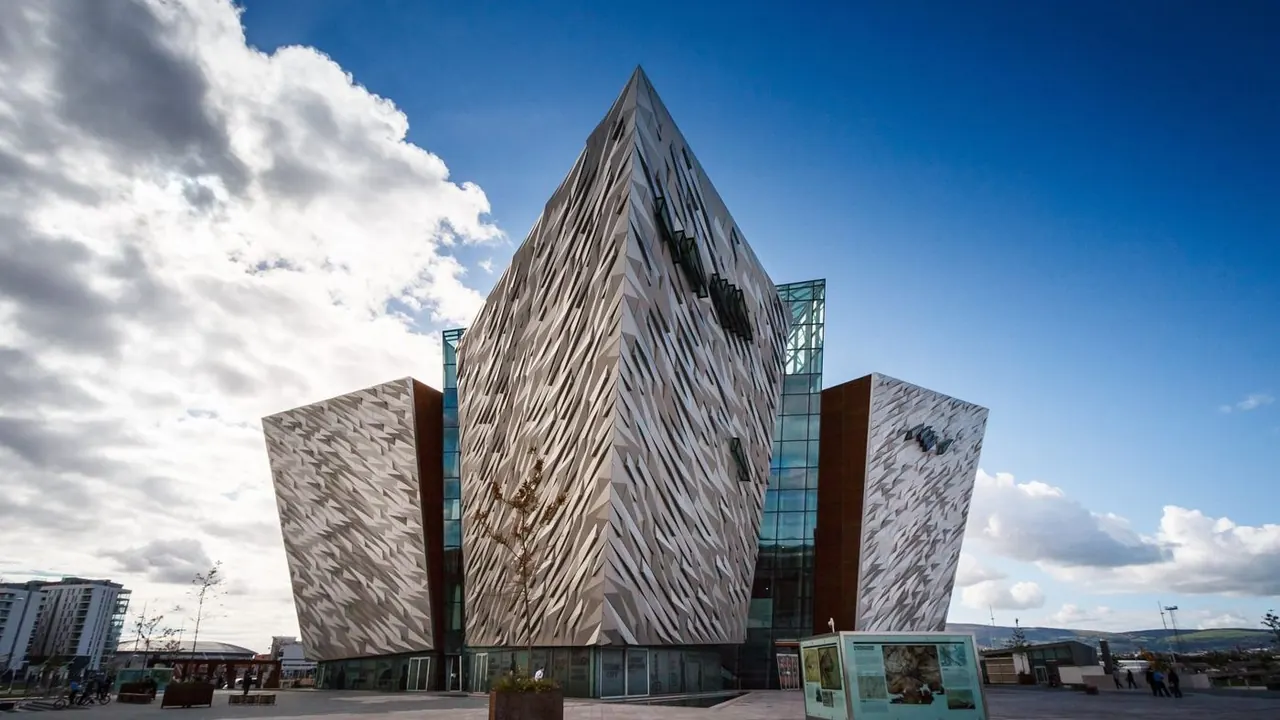
Belfast suits travellers who come for a story and a coastline. The shipyard slipways at Titanic Belfast, the murals of the Falls and Shankill roads and the Causeway Coast give it a focus that few cities its size can match. Evenings are pub sessions rather than late nights, and the weather is noticeably drier than across the water.
Choose Glasgow for
- shopping
- live music and the arts
- nightlife
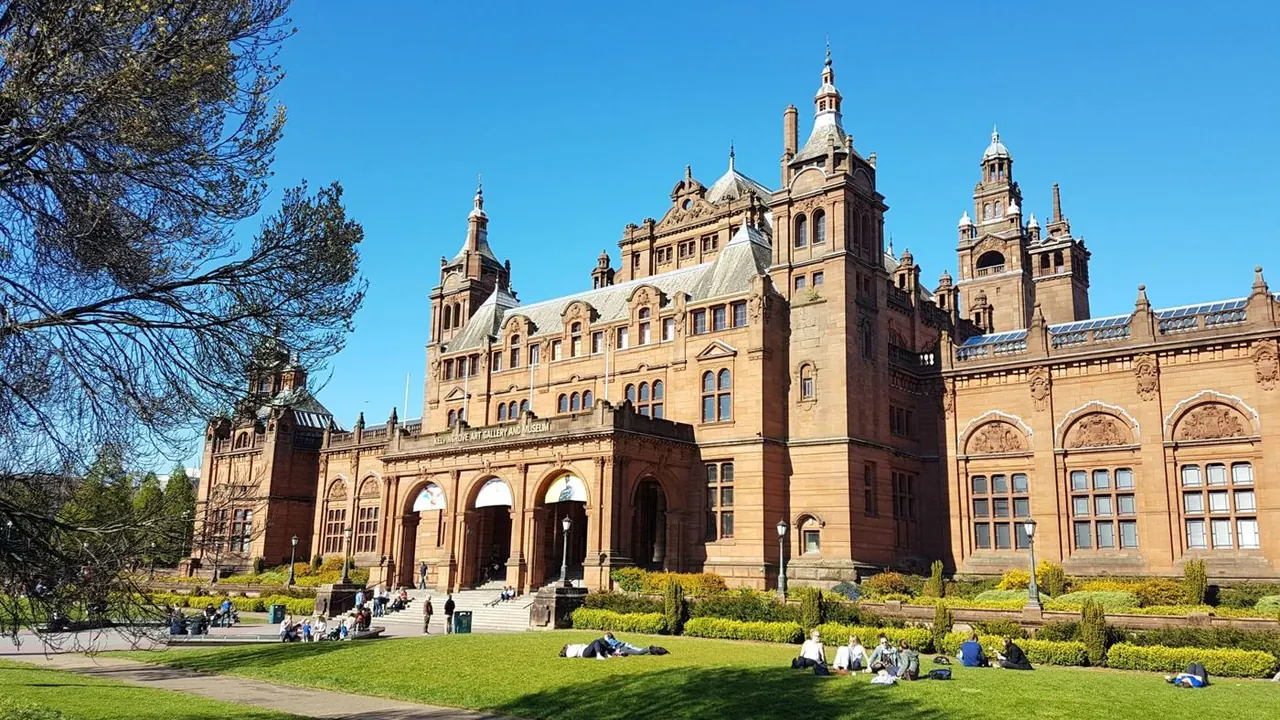
If you want a bigger, louder city with more to fill several days, choose Glasgow. It has the deeper gig circuit, the club nights, free museums of real weight such as Kelvingrove and the Burrell, and Scotland's best shopping streets. Edinburgh, Stirling and Loch Lomond are all close enough to use it as a base.
Scoreboard
Twelve categories on one fixed scale from 0 to 100. The shaded stretch is the gap between the two.
Your match
Pick a travel style or drag the sliders, and both match scores follow your weighting.
Wins on beaches and prices with your weighting.
Wins on shopping and live music and the arts with your weighting.
What matters to you?
Category by category
What the scores mean for a trip.
Beaches & swimming
Neither city is a beach destination, but Belfast has the slight edge. Sandy coves at Helen's Bay and Crawfordsburn are only a short train ride along the County Down shore, and the long strands of Whiterocks and Portstewart are within reach by car.
From Glasgow, the nearest sand is at Largs, Troon and Ayr, each about an hour away by train. These are promenade towns for a walk and an ice cream with Arran on the horizon, and the cold water keeps swimming to hardy locals in both places.
Food & drink
The two eat about equally well, but in different ways. Belfast's cooking is built on local produce: an Ulster fry with soda farls, Strangford oysters, Mourne lamb, and weekend grazing at St George's Market.
Glasgow's strength is variety rather than produce. It has a long curry-house tradition, Italian cafés and chip shops, and Finnieston for modern Scottish seafood and game. The best eating is in neighbourhoods such as the South Side, so it pays to choose your area. Belfast's whiskey shelves and Glasgow's malts make both good cities for a dram.
Culture & sights
Glasgow gives a sightseer more to do. Its sandstone Victorian streets are a pleasure in themselves, Kelvingrove and the Burrell Collection are major free museums, and the Mackintosh buildings give the city a signature of its own. Seeing it properly takes two or three days.
Belfast's history is more recent and more focused. The Titanic slipways, City Hall, the Troubles galleries of the Ulster Museum, Crumlin Road Gaol and a guided walk past the peace walls tell a strong story. That story is the reason to go, rather than the number of sights.
Nightlife
Glasgow is the better city for a night out. It has polished bars in the Merchant City, late student venues around Sauchiehall Street, and a respected underground techno and house scene that runs until about 3am.
Belfast is mostly about pubs. The best of it is the cobbled entries of the Cathedral Quarter and the carved snugs of the Crown Liquor Saloon. The talk is good and weekends are lively, but there are few clubs and most places close early.
Nature & outdoors
Both are excellent bases for the outdoors, and the difference is the landscape. From Belfast you can climb Cave Hill above the lough, walk in the Mournes about an hour south, or follow the cliff paths of the Causeway Coast past the Giant's Causeway and Carrick-a-Rede.
Glasgow looks north to the lochs and hills. Loch Lomond and Ben Lomond are about 40 minutes away, the Trossachs lie just beyond, the West Highland Way starts at Milngavie, and a ferry takes you to Arran's peaks. Expect rain in both, though much more of it in Glasgow.
Day trips
Glasgow has the stronger list of day trips. Edinburgh is less than an hour away by train, Stirling Castle is just as close, and Linlithgow Palace, New Lanark, Culzean Castle and the island of Bute add plenty of variety.
Belfast's trips take a little longer. Dublin is about two hours away by train and Derry's walls take most of a day, but the Antrim coast run past Dunluce Castle and Bushmills is a classic. Carrickfergus Castle and Mount Stewart's gardens are close at hand.
Good for families
With children, the two cities are about equal, and they suit different ages. Belfast has W5 for hands-on science, a zoo on Cave Hill and the steam engines of the Ulster Folk and Transport Museum. Its flat centre is easy with a buggy.
Glasgow has no zoo. In return, its big free museums are made for children: the Riverside Museum with its trams and tall ship, the Spitfire at Kelvingrove, and the Science Centre on the Clyde. Its steep central streets make pushing a buggy hard work.
Getting around
Both cities are easy to get around, but in different ways. Belfast's centre is small and flat, so the walk from City Hall over the Lagan to the Titanic Quarter is gentle, while Glasgow's grid climbs steeply in places as it runs north. Beyond walking distance, Belfast relies on the Glider buses, which cross the city from east to west. Glasgow has its little circular Subway, which runs out to the West End and Govan.
The bigger difference is the trains. Glasgow's suburban lines fan out from Central and Queen Street to the South Side, the Clyde coast and the towns you would visit for the day, so you can leave the car behind for most outings. Belfast's local trains mostly run along the lough shore, and its buses get sparse late in the evening. The main towns further out can be reached by public transport, but the Causeway Coast and the Mournes are much easier with your own car or on an organised tour. Glasgow's one weak spot is its buses: they are run by several companies, and a ticket from one is not valid on another.
Shopping & style
This is one of the clearest gaps between them. Glasgow is Scotland's main shopping city. It has a pedestrian loop of department stores along Buchanan Street, the galleried Princes Square, the Argyll Arcade's jewellers, vintage and bookshops off Byres Road, and the old Barras market.
Belfast offers high-street chains around Donegall Place and the glass dome of Victoria Square. The things worth taking home are Irish linen and whiskey, best picked up between other plans.
Affordability
Costs are similar, with British prices for meals and drinks in both. Belfast's hotels are generally easy to find at a fair price outside big event weekends, and the Ulster Museum and City Hall tours are free. Coast tours are the part of the budget that adds up.
Glasgow's biggest saving is its free museums, including Kelvingrove, the Burrell and the Riverside, along with good-value curry houses. Hotel rooms climb sharply on concert and football weekends, and rail fares for day trips also mount up.
Live music & performing arts
Glasgow is the bigger music city. You can go from the neon-lit Barrowland Ballroom to small rooms where well-known bands once started, or catch Celtic Connections in winter. Scottish Opera, Scottish Ballet and two orchestras are based here as well.
In Belfast, the music is closer and more local. There are trad sessions in pubs most nights, the Ulster Orchestra at the Victorian Ulster Hall, and Irish drama at the Lyric on the Lagan. The spring and autumn festivals bring the most energy.
Wellness & relaxation
Neither city is a place to unwind, and both send you out of town to slow down. Glasgow has a little more of a bathing tradition, with its Victorian West End swimming clubs, Turkish baths and plunge pools, though they mainly serve members.
Belfast has hotel and country-house spas, cold dips along the lough shore, and quiet hours in the Botanic Gardens or a pub snug. Glasgow's equivalent is a slow day by the lochs.
When should you go?
Pick your month. The climate figures are measured averages, not a forecast.
Belfast in July
Glasgow in July
Daytime high, °C
Rainfall in the month, mm
Where the figures come from
Glasgow has no rain gauge within 25 km of the centre, so its rainfall comes from a gridded climate dataset read at the city rather than from a gauge further away.
Glasgow's sunshine is measured 90 km from the centre, at Eskdalemuir.
Temperature and rainfall are climate normals, averaged over the years shown. Belfast: 1991-2020 normals, Belfast / Aldergrove Airport (19.4 km from centre). Glasgow: 1991-2020 normals, Glasgow Airport (11.5 km from centre).
Both cities follow the same mild, cool curve. Daytime highs peak at about 19°C in July and August and drop to single figures from November to March, so street walking is comfortable for most of the year, and neither city ever gets too hot. The sea off both stays cold all year, never much above 15°C, so it is never really swimming weather. The real difference is rain. Glasgow is far wetter, with winter months bringing more than 140mm, while Belfast rarely goes above 90mm in any month.
Belfast also gets more sunshine, especially in May, which is its brightest and one of its driest months. That makes late spring the best time for the Causeway Coast and the Mournes. In Glasgow, April to June is the least wet stretch and the best time for Loch Lomond and the Highlands. On a winter visit you will spend much more time indoors in Glasgow than in Belfast.
Which traveller are you?
On a food and nightlife trip, Glasgow is the better bet. Belfast offers a good evening of local produce and pub talk, but it winds down early. Glasgow has more kinds of night to choose from, and its club culture carries on long after the pubs close.
For a shopping trip, Glasgow is the only real contender. In Belfast, shopping is something to fit around other plans, with local souvenirs as the best finds. Glasgow can fill whole days, from department stores to vintage shops, though luxury hunters will find little.
For a short city break, Belfast is the easier fit. Its compact centre and one clear story of shipyards and the Troubles fit neatly into two days. Glasgow rewards a longer stay, and a weekend there only scratches the surface.
Before you go
| Measure | Belfast | Glasgow |
|---|---|---|
| Official language | English | English |
| Currency | Pound Sterling (GBP) | Pound Sterling (GBP) |
| Sockets | G230 V, 50 Hz | G230 V, 50 Hz |
| Driving side | Left | Left |
| Time zone | UTC, UTC+1 in summer | UTC, UTC+1 in summer |
| Emergency number | 112 or 999 | 112 or 999 |
| Elevation | 3 m | 21 m |
| Main airport | George Best Belfast City Airport (BHD)4 km from centre25 non-stop destinations | Glasgow Airport (GLA)11 km from centre95 non-stop destinations |
| Public holidays this year | 10 days | 10 days |
By the numbers
| Measure | Belfast | Glasgow |
|---|---|---|
| City population | 345,006 | 626,410 |
| People per km² | 3,000 | 190 |
| Museums within 10 km | 8 | 29 |
| UNESCO World Heritage sites within 50 km | 1 | 2 |
| Swim season, months above 21 °C | None | None |
Where else could you go?
Every comparison below shares a destination with this one, so you can follow Belfast or Glasgow somewhere new.