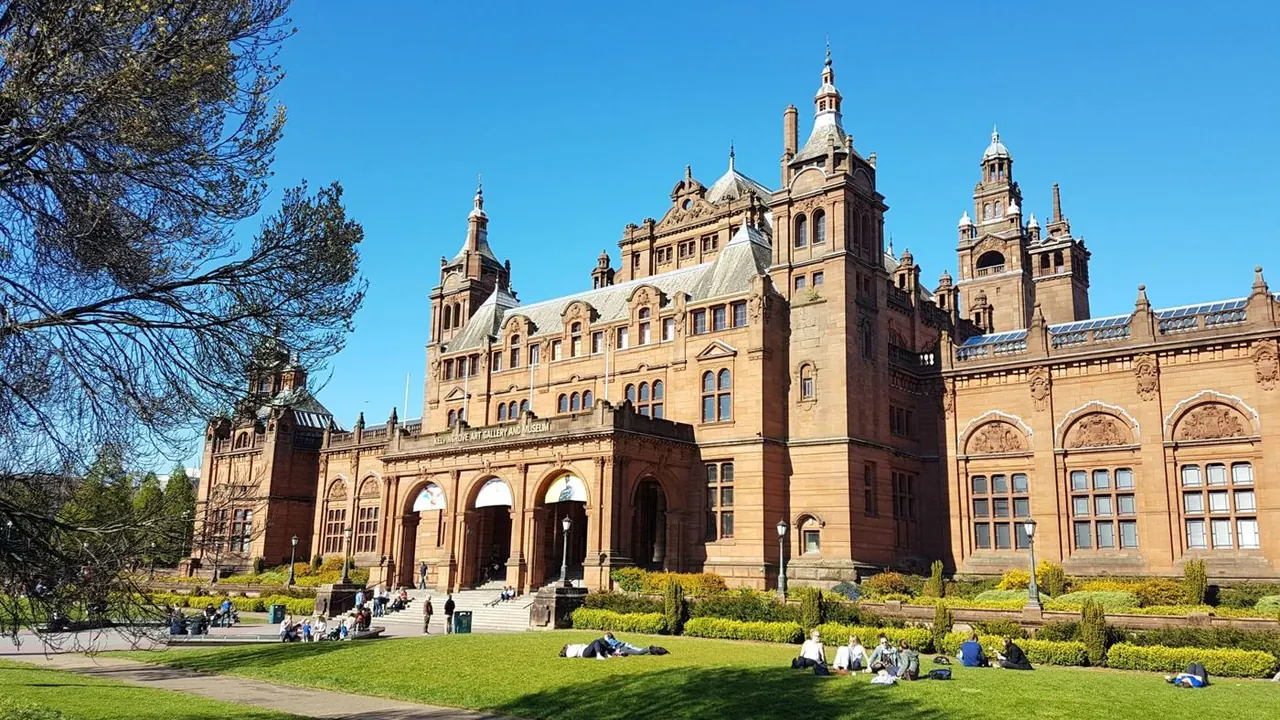
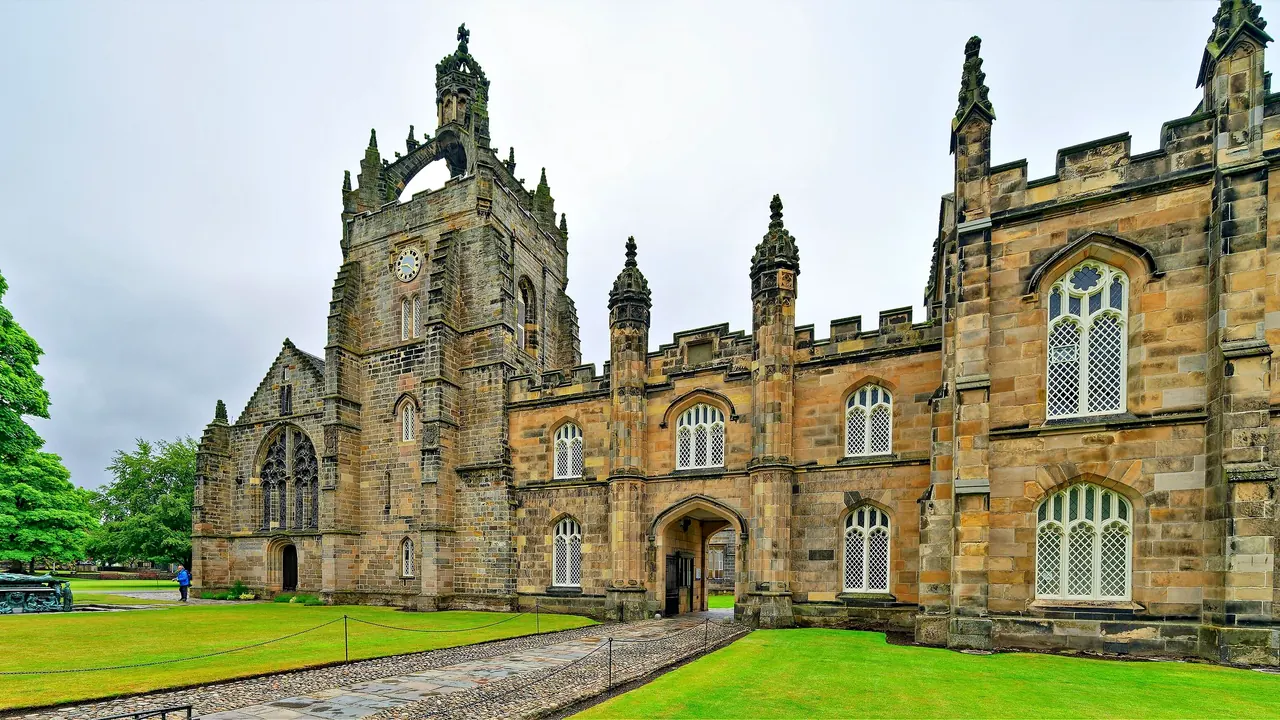
Photos: Glasgow by Stinglehammer, CC BY-SA 4.0, cropped; Aberdeen by Holger Uwe Schmitt, CC BY-SA 4.0, cropped.
Glasgow or Aberdeen?
Our verdict in twelve categories, each scored against the same fixed benchmark cities, and the climate month by month, so you can choose for your trip.
Choose Glasgow for
- live music and the arts
- shopping
- nightlife
Glasgow is the stronger choice if you want the city itself to fill your days and evenings. It has free museums of real weight, Mackintosh's buildings, one of Britain's best live music scenes, serious nights out and Scotland's best shopping streets. Edinburgh and Stirling are both under an hour away by train, so you can see a lot without a car, provided you don't mind a lot of rain.
Choose Aberdeen for
- beaches
- nature and the outdoors
Aberdeen suits the traveller who sees the city as a base rather than the main event. The granite centre and Old Aberdeen fill a day or two. After that the draw is the country around it: the Cairngorms and Royal Deeside, a coast of cliffs, seabirds and dolphins, and a long trail of castles. It is quieter, drier and better with a hire car, and it rewards walkers and castle hunters more than people who want a night out.
Scoreboard
Twelve categories on one fixed scale from 0 to 100. The shaded stretch is the gap between the two.
Your match
Pick a travel style or drag the sliders, and both match scores follow your weighting.
Wins on live music and the arts and shopping with your weighting.
Wins on beaches and nature and the outdoors with your weighting.
What matters to you?
Category by category
What the scores mean for a trip.
Beaches & swimming
Neither city is a place to swim. The difference is how easily you reach the sand. Aberdeen has a long beach with dunes a short walk from the centre, and Balmedie's empty strands are half an hour up the coast, so a bracing seaside walk fits into any afternoon.
From Glasgow, the nearest beaches are at Largs, Troon and Ayr, each about an hour away by train. These are old resort towns with promenades and views to Arran, which makes the trip a pleasant outing rather than a quick walk.
Food & drink
Glasgow gives you more choice and more reasons to explore. It has a long curry-house tradition, Italian-run cafés and chip shops, Finnieston's modern Scottish cooking with west coast seafood, and relaxed neighbourhood places in the West End and the South Side.
Aberdeen's cooking is simpler and tied closely to the region: North Sea fish, Aberdeen Angus beef, the buttery at breakfast and fish and chips down the coast in Stonehaven. It eats well, but you will run through its best tables sooner.
Culture & sights
Glasgow has much more to see. Kelvingrove and the Burrell Collection are major collections, the Hunterian and the Riverside Museum add more, and Charles Rennie Mackintosh's buildings give the city a signature that Aberdeen has no match for. Its Victorian sandstone streets and the hillside Necropolis are sights in themselves.
Aberdeen's appeal is more architectural and more self-contained. There is the silver-grey granite of Marischal College and Union Street, and the medieval lanes of Old Aberdeen around King's College and St Machar's Cathedral. The Maritime Museum's story of fishing and North Sea oil is the most local thing in either city's museums.
Nightlife
Glasgow is one of Britain's great cities for a night out, and Aberdeen doesn't compete. Glasgow has cocktail bars in the Merchant City, late bars and student clubs around Sauchiehall Street, busy pubs in the West End and an underground techno and house scene that brings in DJs from across Europe.
Aberdeen's evenings revolve around Belmont Street and the pubs near Union Street, where you will find good whisky lists and real ale. The clubs depend on students, and the town goes quiet midweek and outside term.
Nature & outdoors
Both cities sit next to superb country, so the choice comes down to the kind of landscape you want. Aberdeen looks west to Royal Deeside and the high Cairngorm plateau, with skiing at Glenshee and the Lecht in winter. Its coast offers cliff walks, a seal colony at the Ythan estuary and dolphins at the harbour mouth.
Glasgow's outdoors is lochs and islands. Loch Lomond is about 40 minutes away, with the Trossachs beyond it, and the West Highland Way starts on the city's edge. Ferries cross to Arran and Goatfell. Glasgow's weather is wetter, which matters on a walking trip.
Day trips
Glasgow has the stronger choice of day trips, mainly because so many are an easy train ride away. Edinburgh, Stirling and Linlithgow Palace are each under an hour, and New Lanark, Burns country in Ayrshire and the islands of Bute and Arran add plenty of variety.
Aberdeen's day trips centre on castles and whisky. Dunnottar stands on its sea stack near Stonehaven, Crathes, Craigievar and Fyvie line the Castle Trail, and Balmoral and the Speyside distilleries are further inland. They are memorable, but you will need a car to reach most of them.
Good for families
Glasgow is easier with children, mostly thanks to its free hands-on museums. The Riverside Museum has trams and a tall ship, Kelvingrove has a Spitfire hanging from the ceiling, and the Science Centre on the Clyde is built for young visitors. Pollok Country Park's Highland cattle are a bonus, though the steep streets are hard work with a buggy.
Aberdeen has less built for children: a science centre, a traditional funfair on the beach esplanade and the glasshouses in Duthie Park. Watching dolphins from the harbour entrance is the treat Glasgow can't offer.
Getting around
Glasgow is easier to get around without a car. The small circular Subway reaches the West End and Govan, and a large suburban rail network serves the South Side, the coast and most day trips. The bus system is split between several companies, which can confuse visitors.
Aberdeen's centre is compact enough to walk end to end, with the station in the middle and the beach a twenty-minute stroll away. Buses are the only public transport within the city, and the castles, Deeside and the distilleries really call for a hire car.
Shopping & style
Glasgow is Scotland's shopping city, and Aberdeen is not built for a shopping trip. Glasgow's pedestrian loop of Buchanan, Sauchiehall and Argyle Streets holds the department stores, Princes Square and the Argyll Arcade add Victorian arcades, and the West End is good for vintage clothes and bookshops. The Barras market adds some rough character.
Aberdeen has two indoor shopping centres, Union Street and a few independent shops around Belmont Street and Rosemount. Its knitwear, tartan and whisky are better bought out in Deeside or at the distilleries.
Affordability
The two cost much the same to visit, with ordinary British prices for meals and drinks, and the savings come in different places. Aberdeen's many business hotels often have reasonable rates at weekends and in summer. Glasgow's rooms are generally cheaper than Edinburgh's but rise sharply when a big concert or match is on.
Both have free museums, though Glasgow's free collections are bigger. The cost that adds up is car hire in Aberdeen and rail fares for day trips from Glasgow.
Live music & performing arts
Here the gap is wide. Live music is central to Glasgow, from the Barrowland Ballroom and small rooms where famous bands played early shows to traditional sessions in pubs and the Celtic Connections festival in winter. Scottish Opera, Scottish Ballet and two national orchestras are all based in the city.
Aberdeen sees those same companies only when they tour to His Majesty's Theatre and the Music Hall. Around them are comedy, folk gigs and an arena for big touring acts, which makes for a decent programme but not a reason to visit.
Wellness & relaxation
Neither city is a spa destination. Glasgow has the one curiosity: two Victorian swimming clubs in the West End with Turkish baths, though they are mostly for members. Otherwise there are hotel spas and day spas in the centre, and the lochs nearby are where people really unwind.
Aberdeen has no bathing tradition at all, but it is a calmer place than Glasgow. A country-house hotel in Deeside, with treatments and long walks, is its version of a restful break.
When should you go?
Pick your month. The climate figures are measured averages, not a forecast.
Glasgow in July
Aberdeen in July
Daytime high, °C
Rainfall in the month, mm
Where the figures come from
Glasgow has no rain gauge within 25 km of the centre, so its rainfall comes from a gridded climate dataset read at the city rather than from a gauge further away.
Glasgow's sunshine is measured 57 km from the centre, at Edinburgh Airport.
Temperature and rainfall are climate normals, averaged over the years shown. Glasgow: 1991-2020 (sunshine 1981-2010) normals, Glasgow Airport (11.5 km from centre). Aberdeen: 1991-2020 normals, Aberdeen / Dyce (9 km from centre).
Neither city ever gets warm enough for a beach trip. Summer highs reach about 18°C in Aberdeen and 19°C in Glasgow, and the North Sea off Aberdeen peaks at around 13°C. Both are best from May to September, when the days are long and mild enough for walking the streets and the hills. In winter both stay cool rather than freezing, but the days are short and dark.
The real difference is rain. Glasgow is far wetter, with about 141mm in January and heavy rain from October right through the winter. Its driest spell is April and May. Aberdeen is drier and sunnier all year. Its sunniest month is May, and rain only becomes heavy in October and November, so it is the safer pick for a spring trip spent outdoors.
Which traveller are you?
For a culture and arts trip, Glasgow is the clear choice. Kelvingrove, the Burrell Collection and the Mackintosh buildings give it more depth than Aberdeen's granite streets. Scottish Opera, Scottish Ballet and two major orchestras are based here, while Aberdeen mostly hosts them on tour.
On a food and nightlife trip, Glasgow wins easily. Its curry houses, the Finnieston restaurant strip and the South Side's neighbourhood places outclass Aberdeen's plain local cooking. Its pubs, Merchant City bars and respected basement club nights outlast Aberdeen's student weekends by a long way.
For an outdoors trip, the two are closely matched, but Aberdeen has the edge in weather. It is noticeably drier and sunnier, with the Cairngorms, Deeside and a coast full of seals and dolphins close by. Glasgow counters with Loch Lomond and the West Highland Way.
Before you go
| Measure | Glasgow | Aberdeen |
|---|---|---|
| Official language | English | English |
| Currency | Pound Sterling (GBP) | Pound Sterling (GBP) |
| Sockets | G230 V, 50 Hz | G230 V, 50 Hz |
| Driving side | Left | Left |
| Time zone | UTC, UTC+1 in summer | UTC, UTC+1 in summer |
| Emergency number | 112 or 999 | 112 or 999 |
| Elevation | 21 m | 29 m |
| Main airport | Glasgow Airport (GLA)11 km from centre95 non-stop destinations | Aberdeen International Airport (ABZ)8 km from centre29 non-stop destinations |
| Public holidays this year | 10 days | 10 days |
By the numbers
| Measure | Glasgow | Aberdeen |
|---|---|---|
| City population | 626,410 | 200,680 |
| People per km² | 190 | 3,083 |
| Museums within 10 km | 29 | 10 |
| UNESCO World Heritage sites within 50 km | 2 | 0 |
| Swim season, months above 21 °C | None | None |
Where else could you go?
Every comparison below shares a destination with this one, so you can follow Glasgow or Aberdeen somewhere new.
- Edinburghvs Glasgow
- St Andrewsvs Aberdeen
- St Andrewsvs Glasgow
- Invernessvs Aberdeen
- Edinburghvs Aberdeen
- Belfastvs Glasgow