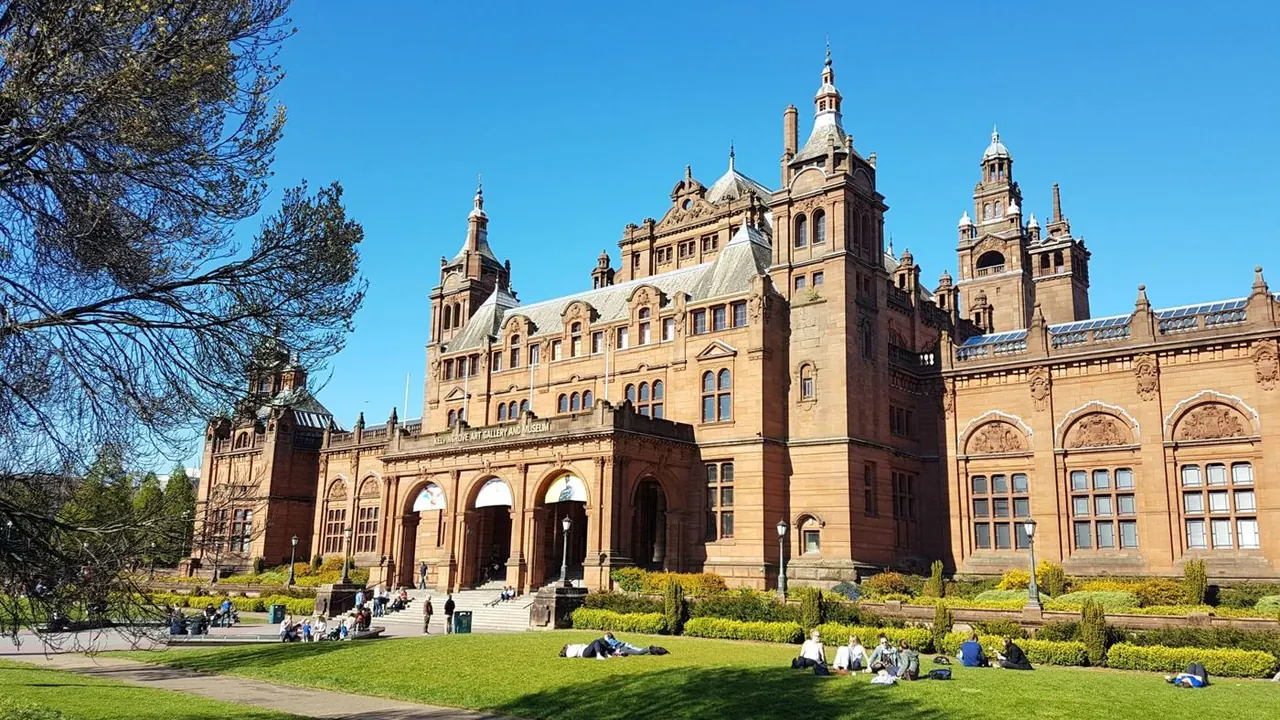
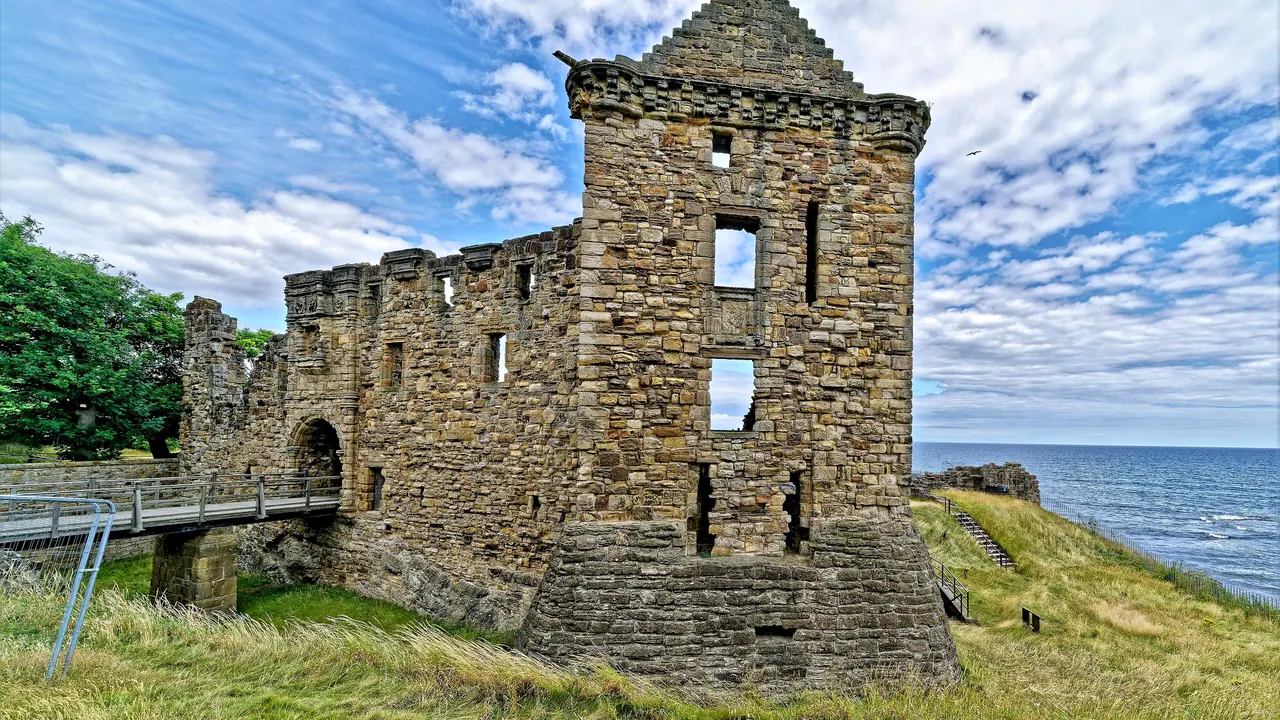
Photos: Glasgow by Stinglehammer, CC BY-SA 4.0, cropped; St Andrews by Holger Uwe Schmitt, CC BY-SA 4.0, cropped.
Glasgow or St Andrews?
Our verdict in twelve categories, each scored against the same fixed benchmark cities, and the climate month by month, so you can choose for your trip.
Choose Glasgow for
- live music and the arts
- nightlife
- shopping
Glasgow suits travellers who want a proper city. It has big free museums, Mackintosh buildings, one of Britain's deepest gig circuits and nights out that run until the clubs close. It is also the cheaper place to sleep and eat, and Loch Lomond and the Highland edge are close enough for a day of walking between city days.
Choose St Andrews for
- beaches
- wellness
St Andrews is for a slower, smaller trip built around sea air, medieval ruins and golf. Everything is a short walk apart, the beaches are on the doorstep and the evenings are quiet. That is the point for couples, golfers and anyone who wants a few restful days on the Fife coast, as long as they accept higher room costs and little to do after dark.
Scoreboard
Twelve categories on one fixed scale from 0 to 100. The shaded stretch is the gap between the two.
Your match
Pick a travel style or drag the sliders, and both match scores follow your weighting.
Wins on live music and the arts and nightlife with your weighting.
Wins on beaches and wellness with your weighting.
What matters to you?
Category by category
What the scores mean for a trip.
Beaches & swimming
Neither is a place for swimming, but St Andrews has much better sand, and it is right in town. West Sands runs long and wide below the dunes and links, East Sands is sheltered for families, and Castle Sands sits under the cliffs, all within walking distance of the cathedral.
From Glasgow, the coast means an hour on the train to Largs, Troon or Ayr. There the appeal is a stroll along the promenade with views to Arran rather than a day on the beach. In both places the water stays cold even in summer, so a sea dip is only for the hardy.
Food & drink
Glasgow has far more range. Its South Asian curry houses, cafés and chip shops with Italian roots, the Finnieston strip of modern Scottish cooking and the small South Side restaurants give you a different neighbourhood for each night, with a long whisky list in the pub afterwards.
St Andrews eats pleasantly but simply. There are cafés, bakeries, a few good restaurants cooking East Neuk crab, lobster and Fife lamb, and the golf hotels' dining rooms. Its high points are the ice cream queues on summer evenings and fish and chips by the harbour in the nearby villages.
Culture & sights
Glasgow has more to see and more days to fill. Kelvingrove and the Burrell Collection are major free museums, the Mackintosh buildings give the city a signature of its own, and the cathedral and Necropolis add a medieval layer beneath the Victorian sandstone streets. Plan on two or three days.
St Andrews is smaller but packed close together: the ruined cathedral and St Rule's Tower, the castle's bottle dungeon and siege tunnels, the university quadrangles and the golf heritage around the Old Course. It makes a charming walk through history that a day or two covers.
Nightlife
This is one of the widest gaps between the two. Glasgow has loud, friendly pubs, polished bars in the Merchant City, late bars around Sauchiehall Street and a respected underground techno and house scene, and nights run hard until the clubs close around 3am.
St Andrews has traditional pubs, golfers' lounges and a few student haunts that only fill up during term. Outside term the town goes quiet early, and anyone wanting a real night out heads to Dundee or Edinburgh.
Nature & outdoors
Glasgow has the bigger landscapes close by. Loch Lomond is under an hour away, with Ben Lomond and Conic Hill above it. The West Highland Way starts in Milngavie on the edge of the city, and Arran's mountains are a ferry ride from the Clyde coast.
St Andrews offers gentler coastal country. The Fife Coastal Path runs past sea stacks and caves, wading birds gather on the Eden estuary and seals haul out by Tentsmuir Forest. It is good for cliff walks, cycling and golf, but for proper hills you need to drive to the Lomond Hills or Perthshire.
Day trips
Both make good bases, but they face different parts of Scotland. Glasgow's strength is its railway: Edinburgh, Stirling and Linlithgow are each under an hour by train, New Lanark is a short trip south, and ferries from the Clyde coast reach Bute and Arran.
St Andrews is best for eastern Scotland close at hand. The East Neuk harbour villages are half an hour or less away, and Falkland Palace and Dundee's V&A and Discovery are near too. Edinburgh makes a fuller day via Leuchars, and Glamis, Scone and Culross really need a car.
Good for families
Glasgow gives children more to do, mostly free and mostly indoors, which matters in the rain. There are the trams and tall ship at the Riverside Museum, the Spitfire in Kelvingrove and the Science Centre on the Clyde, plus big parks such as Pollok with its Highland cattle. The steep central streets are hard work with a buggy.
St Andrews is the gentler choice. It is safe and small enough for older children to roam, with sandcastles on East Sands, a small aquarium, the castle tunnels and Craigtoun Park's miniature railway. There is less to fill several days, so it suits a short, calm stay.
Getting around
Both are easy to get around, but in different ways. Glasgow has a walkable grid centre, a small circular Subway and a large suburban rail network, though bus fares split between several companies can confuse a visitor.
In St Andrews you need no transport at all in town, since the beaches, links, castle and university are a short walk apart. The town has no station, though. Trains leave from Leuchars, about 8km away, and the countryside is far easier by car.
Shopping & style
Glasgow is a real shopping city. It has the pedestrian loop of Buchanan, Sauchiehall and Argyle Streets, the Victorian arcades of Princes Square and the Argyll Arcade, vintage and independent shops in the West End and the weekend Barras market in the East End.
St Andrews is an afternoon's browse along its three main streets. It is strongest in golf gear and Old Course souvenirs, with knitwear, cashmere, tartan and bookshops as well. For anything more, people go to Edinburgh.
Affordability
Glasgow is easier on the wallet. Rooms cost less than in Edinburgh, curry houses and pub lunches keep meals reasonable, and the big civic museums are free. The main extra cost is train fares for day trips.
St Andrews costs more to stay in. Rooms are limited, aimed at golfers and university families, and rise sharply around tournaments and graduation. Walking and buses keep other costs down, but a round on the famous courses is a serious expense, and staying in the East Neuk villages can save money.
Live music & performing arts
Glasgow is far ahead here. Its gig circuit runs from the Barrowland Ballroom through small, famous rooms to the arenas by the river, and Celtic Connections fills the city each winter. Scottish Opera, Scottish Ballet and two major orchestras are all based in the city.
St Andrews has the Byre Theatre, choral and chamber concerts in the university's chapel and halls, and the occasional folk session in a pub, most of it during term. For opera or an orchestra, visitors travel to Edinburgh or Dundee.
Wellness & relaxation
St Andrews is the better place to slow down, though neither is a spa destination. The unhurried pace, walks on West Sands, quiet evenings and full spas at the golf resorts, open to non-residents, make for a restful few days. The sea dip off East Sands is there for the brave.
Glasgow is loud and energetic by nature. Its Victorian swimming clubs in the West End, with Turkish baths, are mainly for members, so relaxing there usually means a hotel spa or a trip out to the lochs.
When should you go?
Pick your month. The climate figures are measured averages, not a forecast.
Glasgow in July
St Andrews in July
Daytime high, °C
Rainfall in the month, mm
Where the figures come from
Glasgow has no rain gauge within 25 km of the centre, so its rainfall comes from a gridded climate dataset read at the city rather than from a gauge further away.
Glasgow's sunshine is measured 57 km from the centre, at Edinburgh Airport.
Temperature and rainfall are climate normals, averaged over the years shown. Glasgow: 1991-2020 (sunshine 1981-2010) normals, Glasgow Airport (11.5 km from centre). St Andrews: 1991-2020 normals, Leuchars (6.5 km from centre).
The two towns follow almost the same temperature curve. Daytime highs reach about 19°C in July and August and drop to around 7°C in midwinter. Neither is ever too hot for walking, and in neither does the sea get warm enough for more than a brisk dip. The real difference is rain and light. Glasgow, on the wetter west side, gets roughly twice as much rain as St Andrews in winter, about 141mm against 62mm in January. October to January is its soggiest stretch, and April to June is its driest.
St Andrews, on the east coast, is also clearly sunnier, with May its brightest month. That makes late spring its best season, and summer adds the warmest days for beach walks. In Glasgow, May and June give the best mix of mild weather and lighter rain. In either place, winter brings short, grey days, which suit Glasgow's indoor museums and gigs better than a seaside town.
Which traveller are you?
For a food and nightlife trip, Glasgow is the clear choice. Curry houses, Finnieston's seafood kitchens and the South Side's small restaurants lead into friendly pubs, Merchant City cocktail bars and basement techno nights. St Andrews mostly goes to bed early.
On a relaxing and wellness trip, St Andrews makes it easier to switch off. The town is small enough that a few days need no planning or transport, and they end early with the sea air. In Glasgow, real rest means leaving for the lochs.
On a golf trip, St Andrews is the obvious choice. The Old Course, the Swilcan Bridge, the British Golf Museum and the links all round town make it a pilgrimage Glasgow cannot match, though a round on the famous courses is costly.
Before you go
| Measure | Glasgow | St Andrews |
|---|---|---|
| Official language | English | English |
| Currency | Pound Sterling (GBP) | Pound Sterling (GBP) |
| Sockets | G230 V, 50 Hz | G230 V, 50 Hz |
| Driving side | Left | Left |
| Time zone | UTC, UTC+1 in summer | UTC, UTC+1 in summer |
| Emergency number | 112 or 999 | 112 or 999 |
| Elevation | 21 m | 24 m |
| Main airport | Glasgow Airport (GLA)11 km from centre95 non-stop destinations | Edinburgh Airport (EDI)56 km from centre163 non-stop destinations |
| Public holidays this year | 10 days | 10 days |
By the numbers
| Measure | Glasgow | St Andrews |
|---|---|---|
| City population | 626,410 | 16,460 |
| People per km² | 190 | - |
| Museums within 10 km | 29 | 5 |
| UNESCO World Heritage sites within 50 km | 2 | 0 |
| Swim season, months above 21 °C | None | None |
Where else could you go?
Every comparison below shares a destination with this one, so you can follow Glasgow or St Andrews somewhere new.
- Edinburghvs St Andrews
- Edinburghvs Glasgow
- Aberdeenvs St Andrews
- Invernessvs St Andrews
- Belfastvs Glasgow
- Invernessvs Glasgow