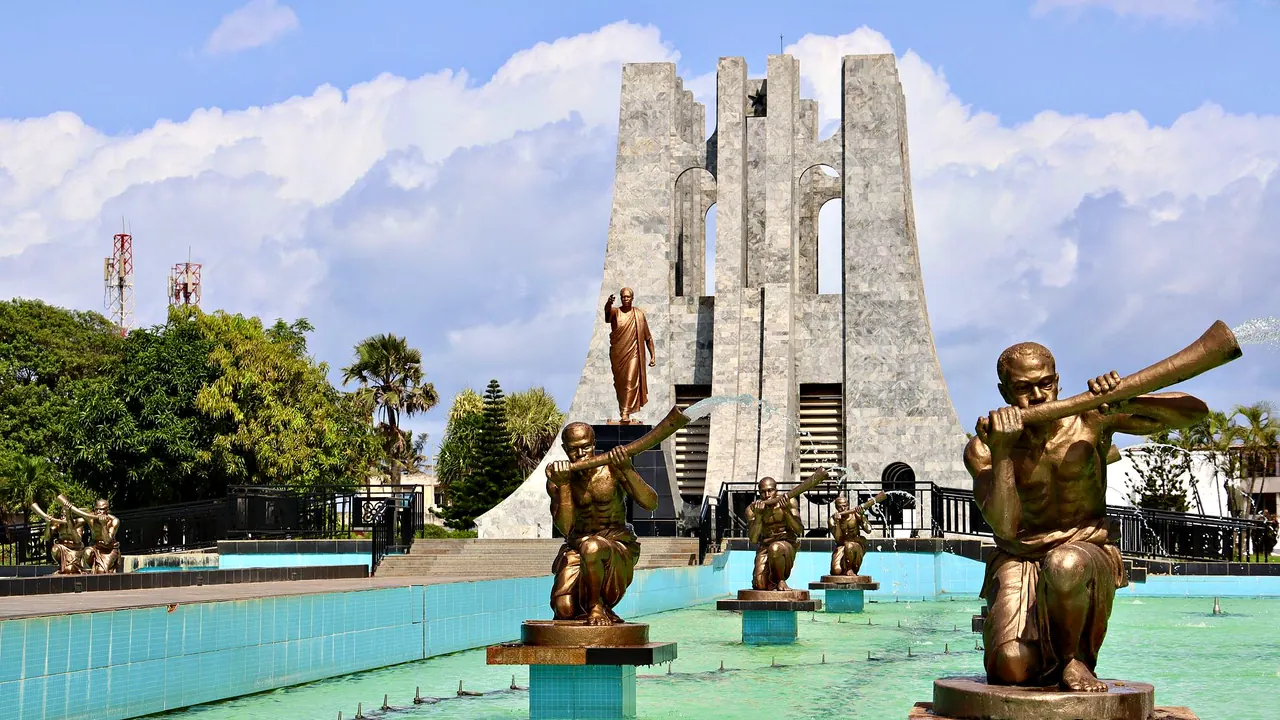
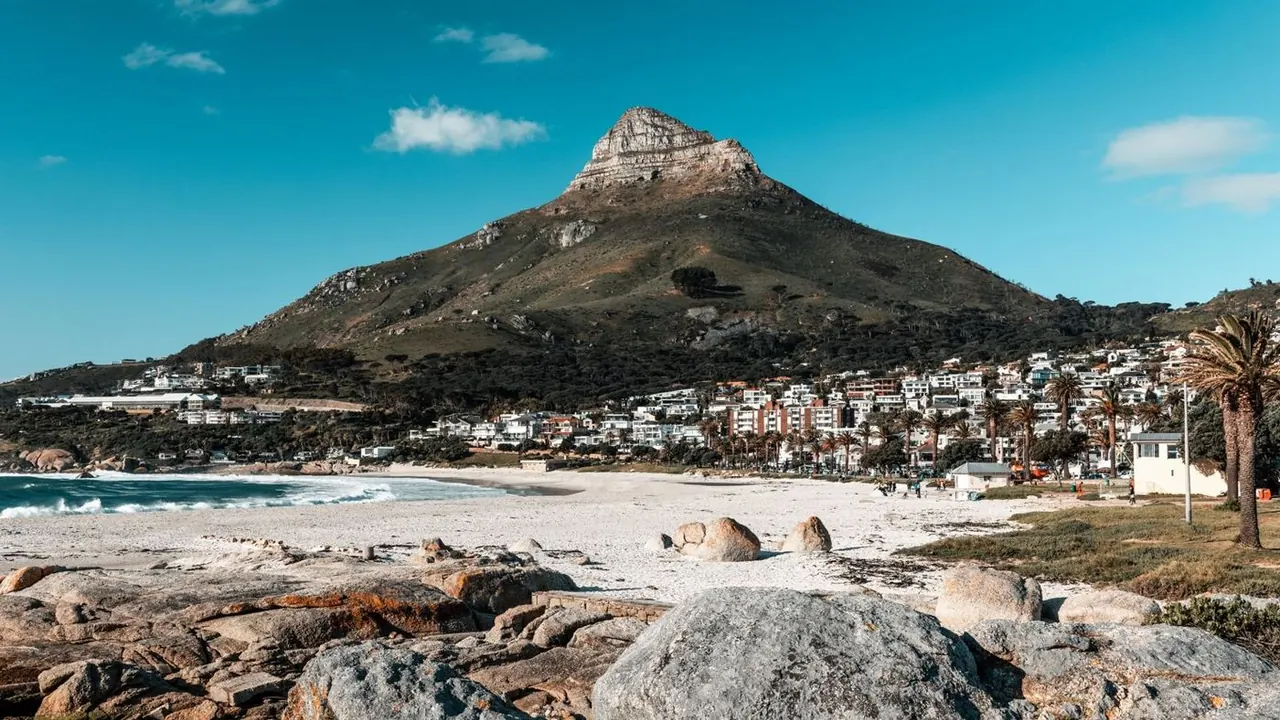
Photos: Accra by Ana Kenk, Pexels License; Cape Town by Stephan Louis, Pexels License.
Accra or Cape Town?
Our verdict in twelve categories, each scored against the same fixed benchmark cities, and the climate month by month, so you can choose for your trip.
Choose Accra for
- nightlife
Accra suits a traveller who wants West Africa at street level: Afrobeats and highlife, kelewele bought under lanterns, wax-print cloth from Makola made up by a tailor, and the story of Ghanaian independence. It works best for people who are happy with heat, traffic and a city that needs a guide or a driver, and above all for anyone who can come in December, when the diaspora comes home and the whole city turns into a party.
Choose Cape Town for
- nature and the outdoors
- day trips
- families
Cape Town is the stronger choice for almost everyone else. Table Mountain, the peninsula and the Winelands give it landscape, food and day trips that Accra cannot match. It is also easier with children, better for slowing down, and good value for visitors from richer countries. Come here for a varied, outdoor trip with long lunches and short drives to the vineyards, and expect to rely on a car.
Scoreboard
Twelve categories on one fixed scale from 0 to 100. The shaded stretch is the gap between the two.
Your match
Pick a travel style or drag the sliders, and both match scores follow your weighting.
Wins on nightlife with your weighting.
Wins on nature and the outdoors and day trips with your weighting.
What matters to you?
Category by category
What the scores mean for a trip.
Beaches & swimming
Accra has the warmer sea by far, but rip currents, heavy swells and litter spoil the city beaches, and Labadi is a place to watch drumming rather than to swim. The better sand is out of town, at Bojo, across a short canoe crossing, or at the surf village of Kokrobite.
Cape Town gives a better beach trip, with a different catch. Clifton and Camps Bay are some of the most beautiful beaches anywhere, but the Atlantic there is cold enough to limit you to a quick plunge. For proper swimming, go to False Bay, where Muizenberg and St James have gentler water and the penguins share Boulders beach with you, though only in summer.
Food & drink
Cape Town eats better overall. It has its own Cape Malay cooking from the Bo-Kaap, ambitious kitchens around Bree Street and Woodstock, line fish by the harbour at Kalk Bay, and wine estates within an hour of town. Accra's range is narrower, and beyond Ghanaian and Lebanese cooking there is not much choice.
What Accra does have is food on the street, which Cape Town lacks. You can work your way through waakye in the morning, kenkey with fried fish at a chop bar and kelewele from corner stalls at night, all at ground level in Osu and Jamestown.
Culture & sights
Both cities tell a hard modern history, but Cape Town gives you more to see and better places to see it. Robben Island, the District Six Museum, the Castle of Good Hope, the museums around the Company's Garden and Zeitz MOCAA fill three or four solid days.
Accra's story is independence. The Nkrumah mausoleum, the Black Star Gate and the Du Bois Centre tell it, alongside the fishing quarter and old forts of Jamestown and the painted fantasy coffins of Teshie. It is absorbing, but the museums are thin, and the great slave-trade castles lie three hours away at Cape Coast.
Nightlife
Both cities are good for going out, but the nights feel different. Accra's run from roadside grills and cold beer to lounges in Osu and Labone, then clubs playing Afrobeats and amapiano until late. People dress sharply, and in December the whole city celebrates.
Cape Town's going-out is based on its streets: rowdy Long Street, cocktails and wine bars on Bree and Kloof, the long-established gay quarter of De Waterkant, and sundowners over the Atlantic. Both cities go quiet out of season, and in both you take a car between districts at night.
Nature & outdoors
Here the gap is widest. In Cape Town the wild landscape starts at the edge of the city centre: Table Mountain, Lion's Head, fynbos running down to Cape Point, penguins at Boulders and whales in False Bay. There is surfing at Muizenberg and the drive along Chapman's Peak.
Accra is flat and built up, and the heat cuts outdoor time short. Achimota Forest gives some shade nearby, but the real green outings mean a drive: the Aburi hills, the baboons and savannah of Shai Hills, or the lake at Akosombo.
Day trips
Cape Town has the Winelands under an hour away: Stellenbosch, Franschhoek and Paarl, with enough estates for several days of tastings and long lunches. Whale-watching at Hermanus adds another good outing.
Accra's most important trip, to the castles at Cape Coast and Elmina, is long enough that most people stay overnight. Nearer outings, such as the Krobo bead villages, Akosombo and Ada Foah, are pleasant but minor.
Good for families
Accra treats children kindly, but a family stay there is built from scattered pieces rather than real attractions. Hotel pools stand in for the sea, air-conditioned malls have play areas for the hottest hours, and the shaded paths of Achimota Forest, the Aburi gardens and the baboons at Shai Hills make good half-day outings. Teenagers who like markets, drumming and history get far more from it than toddlers do.
Cape Town gives a family much more to fill the days. Kirstenbosch has picnic lawns and a treetop walkway among the trees, and many Winelands farm stalls and estates have play areas, so a long lunch works for parents and children alike. It has no big theme park, though, and the sights are spread out enough that a car is close to essential.
Getting around
Neither city has a metro, and in both you will spend most of your time in a car. Cape Town is the easier of the two. The City Bowl and the Waterfront are walkable by day, MyCiTi buses run out to the beaches, and the roads are good enough that hiring a car is a pleasure.
In Accra you depend on ride-hailing through heavy traffic. The trotro minibuses are hard for a newcomer to use, and outside parts of Osu and Jamestown walking is held back by open drains and the midday heat.
Shopping & style
Neither is a shopping destination, and they reward different buyers. Accra is about cloth and craft: wax-print at Makola, kente and carvings at the Arts Centre with some hard bargaining, and fabric made up by a tailor within days. Cape Town is more polished, with the Waterfront mall, local design in Woodstock and on Bree Street, and wine to take home.
Affordability
Cape Town goes further for most visitors. Good restaurants, wine and car hire all cost far less than in Europe or North America, and rooms are expensive only around the December to January peak.
Accra is cheap if you eat at chop bars and drink local beer. But hotels with reliable power and air-conditioning are expensive for the region, as are imported goods and Western-style meals, so a comfortable stay costs more than you might expect.
Live music & performing arts
Accra's music is on the street and in the arenas, while Cape Town's is in a jazz tradition and a handful of steady stages. In Accra that means highlife band nights in garden bars, drumming at cultural centres, big Afrobeats shows in the December season and the Chale Wote festival filling Jamestown with performance. The ship-shaped National Theatre has dance and the national symphony, but its programme is irregular.
Cape Town has Cape jazz, carried abroad by Abdullah Ibrahim, an international jazz festival and Sunday sunset concerts on the lawns at Kirstenbosch. Artscape and the Baxter stage opera, ballet and South African drama on a more regular schedule.
Wellness & relaxation
Accra is a hard city to unwind in. It is hot and loud, the traffic slows everything down, and pampering means a hotel spa or a massage salon. Rest usually means leaving town for a night or two, at a beach lodge in Kokrobite or up in the cooler air of the Aburi hills.
Cape Town has no thermal baths either, but its slow outdoor pace does the job. You can spend long lunches on a wine estate, take an early yoga class on the Atlantic seaboard, or join the morning swimmers in the False Bay tidal pools. The spas on the grander Winelands estates are good and cost less than you might expect.
When should you go?
Pick your month. The climate figures are measured averages, not a forecast.
Accra in July
Cape Town in July
Daytime high, °C
Rainfall in the month, mm
Temperature and rainfall are climate normals, averaged over the years shown. Accra: 1991-2020 normals, Accra (5.9 km from centre). Cape Town: 1991-2020 normals, Cape Town Airport (17.5 km from centre).
Accra is hot all year, with daytime highs of 29°C to 33°C, so in any month the streets are best walked early or late. The main rains fall in May and June, peaking at about 167mm, and a shorter wet spell comes in October. November to February is the driest and sunniest stretch and the best time for a visit. July and August are a little cooler and fairly dry, though cloudier, and the sea dips slightly then but stays warm enough to swim all year.
Cape Town has real seasons, running opposite to Europe. December to March is dry, very sunny and warm, with highs of about 28°C, and this is the only time for the beach. Even then the sea stays cool, below 20°C. June to August is mild and wet, with the most rain in June, and better for museums and wine estates than for the coast. April, May and September to November sit in between and are comfortable for hiking and walking around town.
Which traveller are you?
On an outdoors trip, Cape Town wins easily. You can hike up Table Mountain or Lion's Head from the city, see penguins, seals and whales along the peninsula, and surf or kitesurf. Accra's best green escapes, Aburi and Shai Hills, take a drive and are modest by comparison.
On a family trip with children, Cape Town is the easier and richer choice. It has the aquarium, the cableway, the Boulders penguins and calm tidal pools in False Bay. Accra welcomes children warmly, but the rough surf, the heat, the broken pavements and the need for malaria precautions make every day harder work.
For a trip built around music and the December party season, Accra has something Cape Town does not. Over Christmas the diaspora comes home, and a month of Afrobeats concerts, beach parties and street events fills the city. Cape Town's summer has sundowners and jazz, but nothing on that scale.
Before you go
| Measure | Accra | Cape Town |
|---|---|---|
| Official language | English | English, Zulu, Xhosa, Afrikaans, Venda, Northern Sotho, Swazi, Tswana, Tsonga, Sesotho, Southern Ndebele, South African Sign Language |
| Currency | Ghana Cedi (GHS) | Rand (ZAR) |
| Sockets | G230 V, 50 Hz | CMN230 V, 50 Hz |
| Driving side | Right | Left |
| Time zone | UTC | UTC+2 |
| Emergency number | 999 | 112 |
| Elevation | 61 m | 5 m |
| Main airport | Kotoka International Airport (ACC)6 km from centre36 non-stop destinations | Cape Town International Airport (CPT)18 km from centre45 non-stop destinations |
| Public holidays this year | 11 days | 13 days |
By the numbers
| Measure | Accra | Cape Town |
|---|---|---|
| City population | 1,782,150 | 3,776,313 |
| People per km² | 10,301 | 1,538 |
| Museums within 10 km | 3 | 22 |
| UNESCO World Heritage sites within 50 km | 1 | 3 |
| Swim season, months above 21 °C | 12 months | None |
Where else could you go?
Every comparison below shares a destination with this one, so you can follow Accra or Cape Town somewhere new.
- Stellenboschvs Cape Town
- Johannesburgvs Cape Town
- Windhoekvs Cape Town
- Durbanvs Cape Town
- Swakopmundvs Cape Town
- Victoria Fallsvs Cape Town