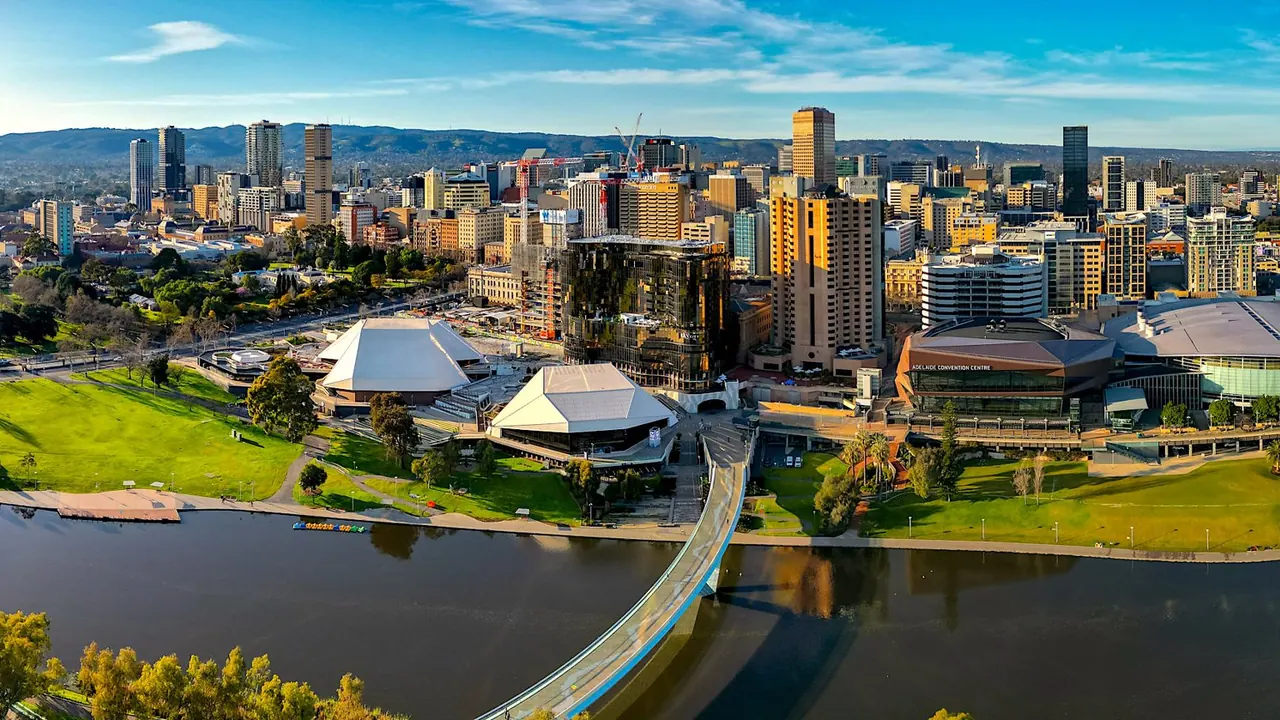
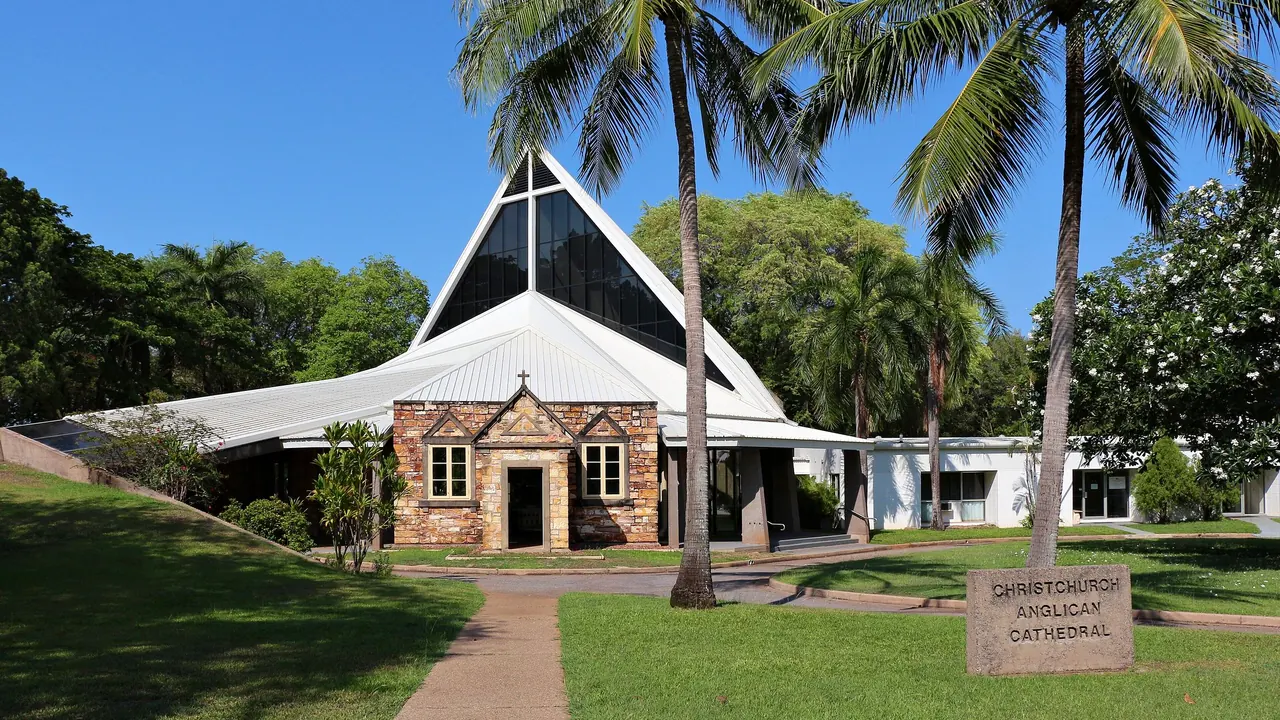
Photos: Adelaide by Ardash Muradian, CC BY-SA 2.0, cropped; Darwin by Bernard Gagnon, CC BY-SA 4.0, cropped.
Adelaide or Darwin?
Our verdict in twelve categories, each scored against the same fixed benchmark cities, and the climate month by month, so you can choose for your trip.
Choose Adelaide for
- beaches
- day trips
- live music and the arts
Adelaide suits travellers who want an easy, well-fed city stay with plenty within reach. Its sheltered swimming beaches, the Central Market, wine country on three sides and a late-summer festival season give it more to fill a week than Darwin. It is also simpler with children, cheaper to stay in and easier to get around. Choose it for long lunches, cellar doors, a swim at sunset and a city that never asks much effort.
Choose Darwin for
- nature and the outdoors
Darwin is for travellers who come for the wild country of the Top End rather than for the city. Waterfalls and swimming holes at Litchfield, crocodile-filled rivers and wetland birdlife are its draw, and on nature it pulls ahead of Adelaide. In town you get sunset markets and a few distinctive war and cyclone sights. Plan on a car or tours, accept that the sea is off limits, and time the trip for the dry season.
Scoreboard
Twelve categories on one fixed scale from 0 to 100. The shaded stretch is the gap between the two.
Your match
Pick a travel style or drag the sliders, and both match scores follow your weighting.
Wins on beaches and day trips with your weighting.
Wins on nature and the outdoors with your weighting.
What matters to you?
Category by category
What the scores mean for a trip.
Beaches & swimming
This is where the two differ most on the ground. Adelaide has a long chain of sheltered, sandy beaches on Gulf St Vincent where swimming is the whole point. The tram runs to Glenelg, and Brighton and Semaphore are quieter, each with a jetty and cafés. The Fleurieu coast, with Port Noarlunga's reef, is within an hour.
Darwin has warmer water and fine sand at Mindil and Casuarina, but box jellyfish and saltwater crocodiles mean nobody swims in the sea. There you swim in the netted Waterfront lagoon, the wave pool and the pools at Litchfield, and you use the beaches for sunsets and picnics.
Food & drink
Adelaide is the stronger place to eat. The Central Market and Chinatown next to it, King George whiting, Spencer Gulf prawns, Hills cheeses and a wine list drawn from vineyards an hour away give it real depth. Gouger Street and the inner suburbs cover everything from Vietnamese to modern Australian tasting menus.
Darwin's best eating is outdoors and Asian-leaning: laksa at Parap on a Saturday and the Mindil sunset stalls in the dry season. Barramundi and mud crab are good, but there is little fine dining, and a week exhausts it.
Culture & sights
Neither city is a great museum destination, but Adelaide offers more. North Terrace gathers the Art Gallery of South Australia, the South Australian Museum's Aboriginal collection and the State Library's Mortlock Wing on one boulevard. The 1830s grid holds sandstone churches and colonial landmarks such as Ayers House.
Darwin's sights are fewer but tell a story you won't find down south. Its museum at Fannie Bay has the Cyclone Tracy gallery, and the 1942 bombing is traced through the oil storage tunnels and East Point's gun emplacements. Little old architecture survived, so an afternoon covers the heritage centre.
Nightlife
Both cities go out early and modestly, so the difference is in mood. Adelaide's evenings are spent in small laneway wine bars around Peel and Leigh Streets and in pubs on Rundle Street, with Hindley Street for a louder late crowd. Festival weeks in late summer liven the city up considerably.
Darwin squeezes most of its night out into Mitchell Street, a loud strip of open-air pubs and backpacker bars that can stay noisy past midnight in the dry season. Beyond that, there are a few waterfront bars for a sunset drink.
Nature & outdoors
Darwin pulls ahead here, because the landscape is the reason to come. Litchfield's waterfalls, magnetic termite mounds and forest pools lie about an hour and a half away. River cruises bring you close to big saltwater crocodiles, and Kakadu is within reach on an overnight trip, though all of it is best in the dry season.
Adelaide's nature is gentler and closer: eucalypt walks up Mount Lofty, Morialta's gorge, koalas in the Hills and dolphins by kayak in the Port River. It is easier to enjoy, but less memorable.
Day trips
Adelaide wins easily. The Barossa's Lutheran villages, McLaren Vale's vineyards running down towards the sea, the Clare Valley's stone towns and Hahndorf's Prussian cottages are all within a short drive. Victor Harbor adds a seaside outing with its horse-drawn tram to Granite Island.
From Darwin, outings are almost all into parks and wetlands rather than towns. The Tiwi Islands' art centres and the war cemetery at Adelaide River are the main cultural stops, and Katherine Gorge is a long day.
Good for families
Adelaide is the easier city with children. It is flat, compact and calm, with shallow beaches reached by tram and adventure playgrounds along the river. Cleland's kangaroos and koalas, the zoo and Monarto's open-range animals are all close by.
Darwin has the more thrilling animal moments: jumping-crocodile cruises, giant saltwater crocodiles seen up close in the centre and fish feeding at Doctors Gully. But the heat wears out small children, the sea is off limits, and most outings need a car.
Getting around
In both cities the wine country or the national parks need a car, but Adelaide is easier in town. Its flat grid is easy on foot or by bike, the city loop and central tram are free, and the tram goes all the way to Glenelg.
Darwin's centre is just as compact, but the midday heat makes even short walks tiring. Buses to Mindil and East Point are infrequent, and there is nothing public to Litchfield or the wetlands, so a hire car or a tour is part of every plan.
Shopping & style
Adelaide gives a shopper more ground to cover, while Darwin's shopping comes down to one thing done well. Rundle Mall's department stores and old arcades, the boutiques of King William Road and Burnside, and local finds such as cellar-door wine, opal and long-established Adelaide chocolates make for a pleasant afternoon or two, even if luxury labels are scarce.
Darwin is the place for Aboriginal art straight from Arnhem Land, the Tiwi Islands and the desert, and buying through galleries tied to community art centres means the artists benefit. Beyond that you have the Smith Street Mall and craft stalls at Mindil and Parap.
Affordability
Adelaide is the cheaper of the two, although Australia is a costly country and neither makes a budget trip. A room usually costs less here than in Darwin, and Darwin's busy dry season falls in Adelaide's quiet winter, when beds are easy to find. Everyday meals around the Central Market and Chinatown are kind to the wallet. The wine country is close enough that one hire car or a single day tour gets you to the Barossa or McLaren Vale and back by evening.
Darwin's costs grow once you leave town. Litchfield, the river cruises and the wetlands are far enough out that a hire car or a run of guided tours is a fixed part of the budget rather than an optional extra, and a drink costs more than in Adelaide's wine bars. You can save at the free museum at Fannie Bay and the outdoor war sites, by eating laksa and market stalls instead of restaurant meals, and by coming in the wet season, when rooms are cheaper if you can put up with the storms.
Live music & performing arts
Adelaide is the stronger stage city, especially in late summer. The Fringe fills parklands and pubs with comedy and cabaret, the Adelaide Festival brings international theatre and opera, and WOMADelaide is held in Botanic Park. The rest of the year, the Festival Centre and the symphony orchestra keep a regular programme going.
Darwin has one big moment, the Darwin Festival each August, with outdoor stages and Aboriginal performance. Otherwise there are touring shows at the Entertainment Centre, local theatre at Brown's Mart and cover bands on Mitchell Street.
Wellness & relaxation
Adelaide's calm comes from its pace rather than from any spa culture, and over a week that does more for rest than anything Darwin offers. Short distances, light traffic, garden walks through the parklands and day spas or vineyard retreats in the Hills make slowing down easy.
Darwin's best moment of rest is natural: a soak in the spring-fed pools at Berry Springs, shaded by monsoon forest and best in the dry season. In town there are only a few hotel spas and massage studios, and from October to April the heat and humidity tire you out more than they restore you.
When should you go?
Pick your month. The climate figures are measured averages, not a forecast.
Adelaide in July
Darwin in July
Daytime high, °C
Rainfall in the month, mm
Temperature and rainfall are climate normals, averaged over the years shown. Adelaide: 1991-2020 normals, Adelaide (West Terrace / ngayirdapira) (3.1 km from centre). Darwin: 1991-2020 normals, Darwin Airport (7.7 km from centre).
The two cities peak at opposite ends of the year. Adelaide is at its best from December to April, when the days are warm and dry and the gulf warms to about 22°C by February, comfortable for swimming. January and February can bring heatwaves that make the afternoons hard going. Spring and autumn are the best seasons for walking in the Hills. The winter months are cool and grey, with highs around 16°C and the most rain of the year in June and July, which is fine for wine country but not for the beach.
Darwin is hot all year, with highs of 31°C to 34°C, so the rain decides when to go. From May to September it barely rains at all and the sunshine is reliable, which makes this the time for the national parks, the markets and the outdoor sights. From October the humidity builds, and from December to March the wet season brings heavy storms, with around 470mm of rain in January, flooded roads and closed waterholes, although the waterfalls are at their fullest. Adelaide's cool, damp winter therefore falls in Darwin's best months, so a winter trip points north and a summer trip points south.
Which traveller are you?
On a beach and sun trip, Adelaide is the clear choice. Glenelg, Henley and Semaphore have calm, sandy water you can actually swim in all summer. Darwin's beaches look inviting, but box jellyfish and crocodiles keep swimmers in the lagoon and pools.
For an outdoors trip, Darwin has the edge. Litchfield's waterfalls and monsoon-forest pools, crocodile cruises on the Adelaide River and the Mary River wetlands are wilder than anything near Adelaide. Adelaide's gentle Hills walks and koala-spotting are pleasant but less dramatic.
On a food and nightlife trip, Adelaide gives you far more. There is the Central Market, Gouger Street, South Australian seafood and wine bars pouring from the Barossa and McLaren Vale. Darwin's laksa and sunset market stalls are fun, but the restaurant scene runs out within a few days.
Before you go
| Measure | Adelaide | Darwin |
|---|---|---|
| Official language | English | English |
| Currency | Australian Dollar (AUD) | Australian Dollar (AUD) |
| Sockets | I230 V, 50 Hz | I230 V, 50 Hz |
| Driving side | Left | Left |
| Time zone | UTC+9:30, UTC+10:30 in summer | UTC+9:30 |
| Emergency number | 000 | 000 |
| Elevation | 1 m | 0 m |
| Main airport | Adelaide International Airport (ADL)6 km from centre35 non-stop destinations | Darwin International Airport / RAAF Darwin (DRW)5 km from centre20 non-stop destinations |
| Public holidays this year | 12 days | 12 days |
By the numbers
| Measure | Adelaide | Darwin |
|---|---|---|
| City population | 1,387,290 | 139,902 |
| People per km² | 1,071 | 3,446 |
| Museums within 10 km | 13 | 6 |
| UNESCO World Heritage sites within 50 km | 0 | 0 |
| Swim season, months above 21 °C | 3 months | 12 months |
Where else could you go?
Every comparison below shares a destination with this one, so you can follow Adelaide or Darwin somewhere new.
- Melbournevs Adelaide
- Canberravs Adelaide
- Hobartvs Adelaide
- Sydneyvs Adelaide
- Port Douglasvs Darwin
- Cairnsvs Darwin