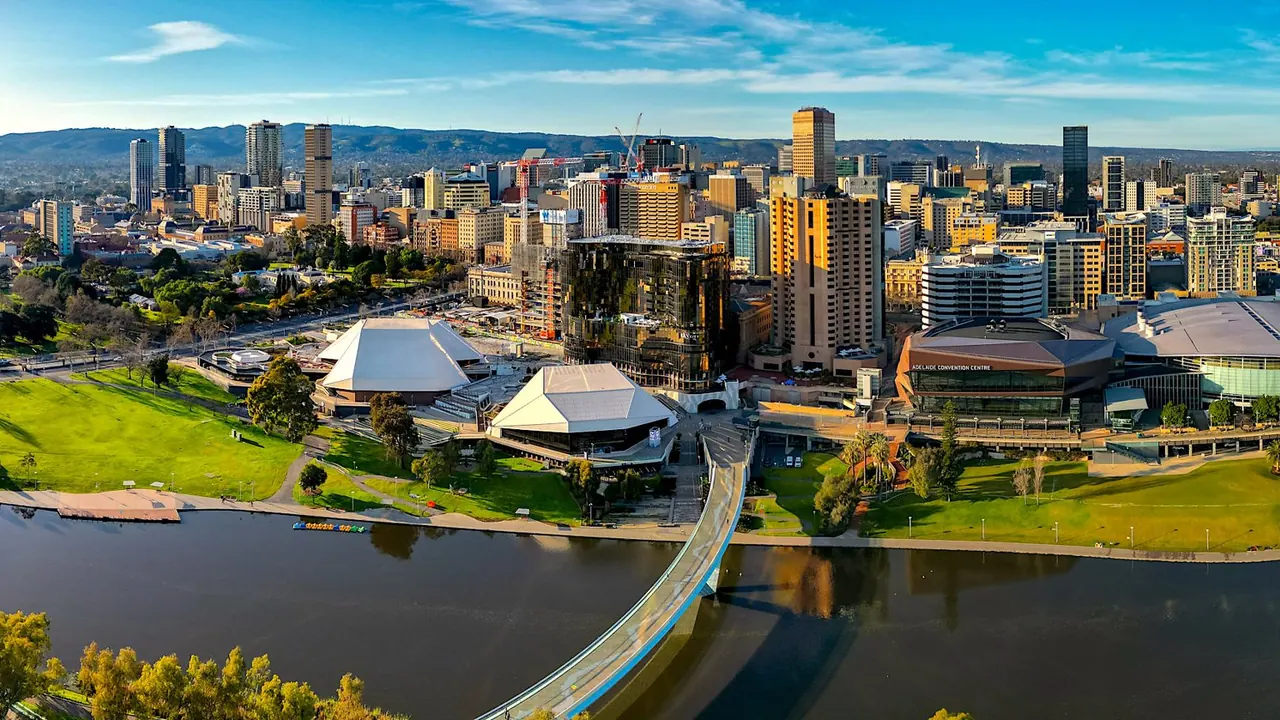
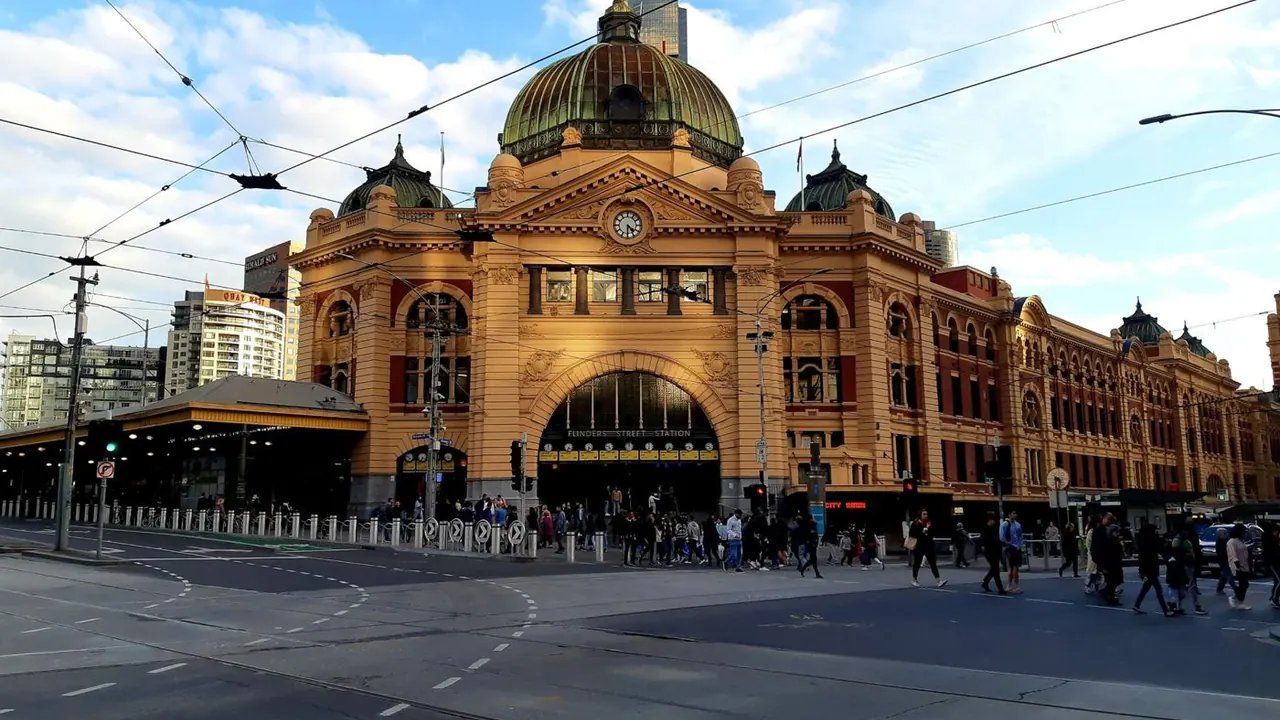
Photos: Adelaide by Ardash Muradian, CC BY-SA 2.0, cropped; Melbourne by Medelam, CC BY-SA 4.0, cropped.
Adelaide or Melbourne?
Our verdict in twelve categories, each scored against the same fixed benchmark cities, and the climate month by month, so you can choose for your trip.
Choose Adelaide for
- beaches
- prices
Adelaide suits a slower, more sociable kind of trip built around the table and the coast. Its sunnier, drier summers and the easy tram ride to Glenelg make it the better base for beach days, and the Barossa, McLaren Vale and the Hills put serious wine country within an hour. It costs a little less than Melbourne and is calmer in the evening, so it works best for couples and families who would rather spend long lunches among the vines than go out late.
Choose Melbourne for
- nightlife
- shopping
- getting around
Melbourne is the stronger choice for travellers who want a big city at full stretch. Its laneway bars and band rooms keep going most nights of the week. The independent shops of Fitzroy and Collingwood and the stages of the Arts Centre give each day more to fill, and one of the world's largest tram networks links it all without a car. Go there for city life, nights out and shows, and accept higher prices and changeable weather as the cost.
Scoreboard
Twelve categories on one fixed scale from 0 to 100. The shaded stretch is the gap between the two.
Your match
Pick a travel style or drag the sliders, and both match scores follow your weighting.
Wins on beaches and prices with your weighting.
Wins on nightlife and shopping with your weighting.
What matters to you?
Category by category
What the scores mean for a trip.
Beaches & swimming
Adelaide has the clear advantage for swimming. A long, continuous strip of sand faces west onto calm Gulf St Vincent, with Glenelg, Henley, Brighton and Semaphore each centred on a jetty and sunsets over the water. The summers that warm it are drier and more settled, and the Fleurieu reefs and coves add clearer water within an hour.
Melbourne's St Kilda, Elwood and the bathing boxes at Brighton are pleasant on a hot afternoon. The bay is a little cooler, though, and the weather can turn within hours. The better sand is on the Mornington Peninsula, a drive away.
Food & drink
Both cities are first-rate places to eat, and they do it differently. Adelaide's cooking is about its own region: King George whiting, Spencer Gulf seafood and Barossa smallgoods at the Central Market, with wine from vineyards an hour away. Melbourne's strength is breadth and coffee, with Greek Lonsdale Street, Italian Lygon Street, Vietnamese Footscray and brunch cafés across Fitzroy. Melbourne also keeps its kitchens going later, which matters if you dine late.
Culture & sights
Melbourne has more to see. The National Gallery of Victoria is a bigger draw than anything on Adelaide's North Terrace, and the gold rush left grand Victorian buildings such as the Royal Exhibition Building, the domed State Library reading room and the bluestone lanes with their street art.
Adelaide's sights sit neatly along one boulevard. The Art Gallery of South Australia and the South Australian Museum are especially strong on Aboriginal art and culture, and the 1830s grid and its parklands can be covered in a day or two. Neither city has a landmark people travel across the world to see.
Nightlife
Melbourne is far ahead after dark. Its bars are hidden up stairwells and on rooftops all over the CBD, Fitzroy and Collingwood have late pubs with a creative crowd, and Chapel Street and St Kilda add clubs and a rougher beachside night. Much of it runs on weeknights as well as weekends.
Adelaide's laneway bars around Peel and Leigh streets are charming and full of local wine, but evenings end early and midweek is quiet. Hindley Street is its only real late strip. The city only matches Melbourne's energy during the late-summer festival weeks.
Nature & outdoors
The two are close here, but the landscapes differ. Adelaide puts its bush right on the doorstep: Mount Lofty and Morialta's gorge are within half an hour, there are dolphins in the Port River, and the cliffs of the Fleurieu are nearby. The country is gentle and becomes hot and dry in summer.
Melbourne's nature is further out but more varied. It has tall mountain ash and tree ferns in the Dandenongs, little penguins and fur seals on Phillip Island, and the surf coast at Torquay. Adelaide's big wildlife trip, Kangaroo Island, needs more than a day.
Day trips
Both cities have wine country about an hour away, but beyond the vineyards the choices differ. Adelaide is the place for wine itself, with the Barossa, McLaren Vale, the Hills and Clare all close, plus Prussian-settler Hahndorf. Melbourne mixes the Yarra Valley and the Mornington Peninsula with gold rush heritage in Ballarat and Bendigo, both reachable by regional train without a car.
Good for families
Both are safe, flat and easy with children. Adelaide offers calm, shallow beaches, Cleland's kangaroos and adventure playgrounds in the parklands, and its small scale keeps days unhurried. Melbourne has more for rainy days, including Scienceworks and Sea Life. It also has outings Adelaide cannot match, such as the Puffing Billy steam train, Luna Park in St Kilda and platypus at Healesville.
Getting around
Melbourne is much easier without a car. Its tram network is one of the world's largest and reaches St Kilda, Fitzroy, Carlton and South Yarra on one card, and regional trains run to Geelong, Ballarat and Bendigo.
Adelaide's flat grid is easy to walk, and the tram to Glenelg is handy. Past that, buses and a few train lines leave gaps, and the Hills, the Barossa and the Fleurieu all need a hire car. The roads are light enough that driving is simple.
Shopping & style
Melbourne is the stronger place to shop. It has the Victorian arcades off Collins Street, luxury labels at its upper end, department stores in Bourke Street Mall, and local designers, record shops and vintage stores in the laneways and along Gertrude and Smith streets.
Adelaide's Rundle Mall and King William Road are pleasant for an afternoon, but the range is narrow. Its best purchases are regional, such as cellar-door wine, opal and Aboriginal art from desert communities.
Affordability
Neither is cheap, but Adelaide goes easier on the budget. Central hotels cost less, and the Central Market and Chinatown make everyday meals reasonable, although touring the wine regions adds the cost of a car or tour. Melbourne charges more for rooms, drinks and coffee. Its free inner tram zone, free major galleries and good cheap eats in Footscray and Richmond help to make up some of the difference.
Live music & performing arts
Melbourne has the fuller calendar through the year. The Arts Centre is home to the Australian Ballet and the symphony orchestra, musicals play in the old theatres east of the CBD, and band rooms in Fitzroy and St Kilda put on gigs most nights. The autumn comedy festival adds weeks of shows.
Adelaide comes close only in late summer, when the Fringe, the Adelaide Festival and WOMADelaide fill the parklands. Outside those weeks, the Festival Centre's programme is sound but smaller.
Wellness & relaxation
Melbourne gives you more ways to unwind properly. It has sea baths with saunas at St Kilda and Brighton, the historic mineral springs of Daylesford and Hepburn Springs, and geothermal hot pools on the Mornington Peninsula.
Adelaide has no bathing culture. Its version of rest is a day spa or a vineyard retreat in the Hills, together with the quiet pace of a small city where little traffic and wide parklands make slowing down easy.
When should you go?
Pick your month. The climate figures are measured averages, not a forecast.
Adelaide in July
Melbourne in July
Daytime high, °C
Rainfall in the month, mm
Temperature and rainfall are climate normals, averaged over the years shown. Adelaide: 1991-2020 normals, Adelaide (West Terrace / ngayirdapira) (3.1 km from centre). Melbourne: 1991-2020 normals, Latrobe University / Kingsbury (13.1 km from centre).
Adelaide has the hotter, drier and sunnier summer. January and February reach about 30°C with very little rain, and the gulf warms to about 22°C by February, so December to April is the time for the beach. Winter turns cool and wet, with rain peaking at about 78mm in June. The most comfortable weather for walking the city and the wine country is in spring and autumn, roughly October to November and March to April, because midsummer afternoons can be too hot for much sightseeing on foot.
Melbourne is milder at both ends, with summer highs nearer 27°C and the bay only reaching about 21°C. Its rain is spread almost evenly through the year rather than falling mostly in winter, and late spring is actually among its wetter spells. There is less sunshine than in Adelaide in every month. That makes Melbourne the easier summer city for walking but the weaker one for swimming. In both cities June to August is cool, grey and best spent indoors.
Which traveller are you?
On a beach and sun trip, Adelaide is the better pick. Its summers are drier and sunnier, the sand runs unbroken along the gulf from Semaphore to Brighton, and the tram drops you at Glenelg. Melbourne's bay swimming depends far more on the weather.
For a food and nightlife trip, Melbourne wins. Both cities eat well, but Melbourne's evenings carry on: laneway cocktail bars, late pubs on Brunswick and Smith streets and clubs on Chapel Street are busy most nights, while Adelaide's bars wind down early outside festival season.
On a shopping trip, choose Melbourne. The glass-roofed Block and Royal arcades, luxury labels on upper Collins Street and local designers and vintage shops in Fitzroy and Collingwood go far beyond Rundle Mall, where Adelaide's best buys are wine, opal and market produce.
Before you go
| Measure | Adelaide | Melbourne |
|---|---|---|
| Official language | English | English |
| Currency | Australian Dollar (AUD) | Australian Dollar (AUD) |
| Sockets | I230 V, 50 Hz | I230 V, 50 Hz |
| Driving side | Left | Left |
| Time zone | UTC+9:30, UTC+10:30 in summer | UTC+10, UTC+11 in summer |
| Emergency number | 000 | 000 |
| Elevation | 1 m | 31 m |
| Main airport | Adelaide International Airport (ADL)6 km from centre35 non-stop destinations | Melbourne Airport (MEL)19 km from centre69 non-stop destinations |
| Public holidays this year | 12 days | 13 days |
By the numbers
| Measure | Adelaide | Melbourne |
|---|---|---|
| City population | 1,387,290 | 5,350,705 |
| People per km² | 1,071 | 535 |
| Museums within 10 km | 13 | 43 |
| UNESCO World Heritage sites within 50 km | 0 | 1 |
| Swim season, months above 21 °C | 3 months | None |
Where else could you go?
Every comparison below shares a destination with this one, so you can follow Adelaide or Melbourne somewhere new.