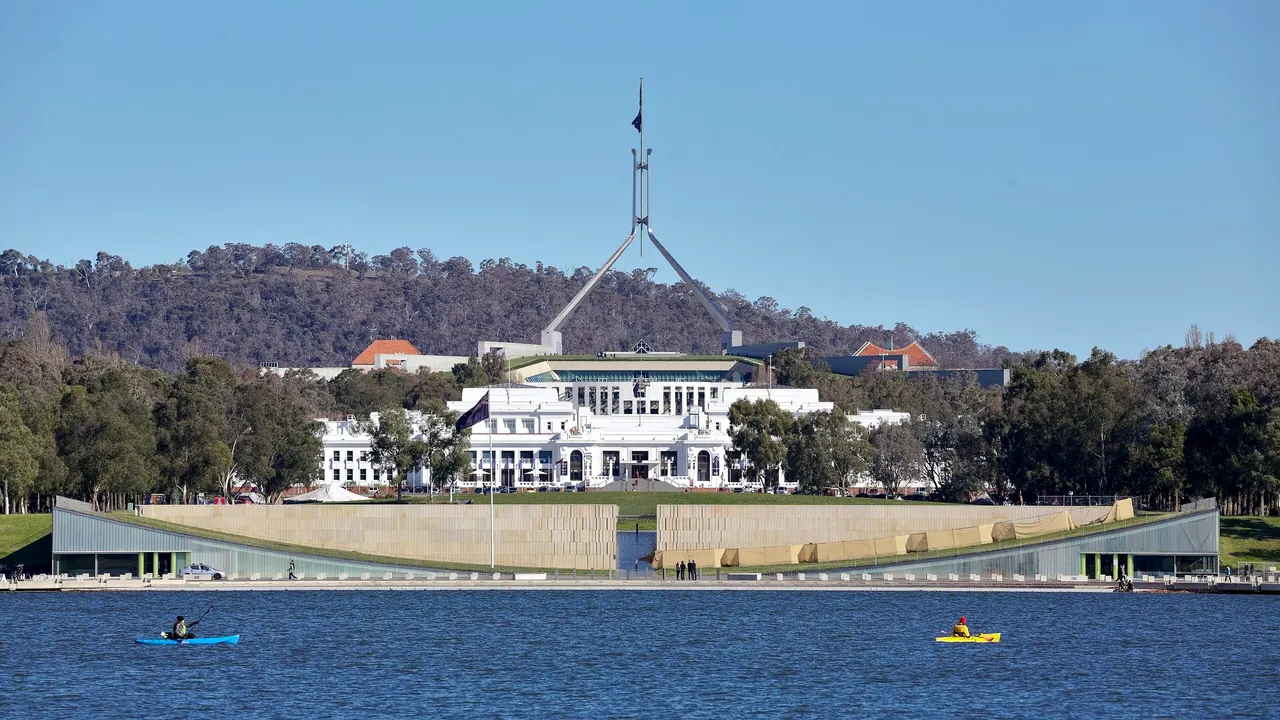
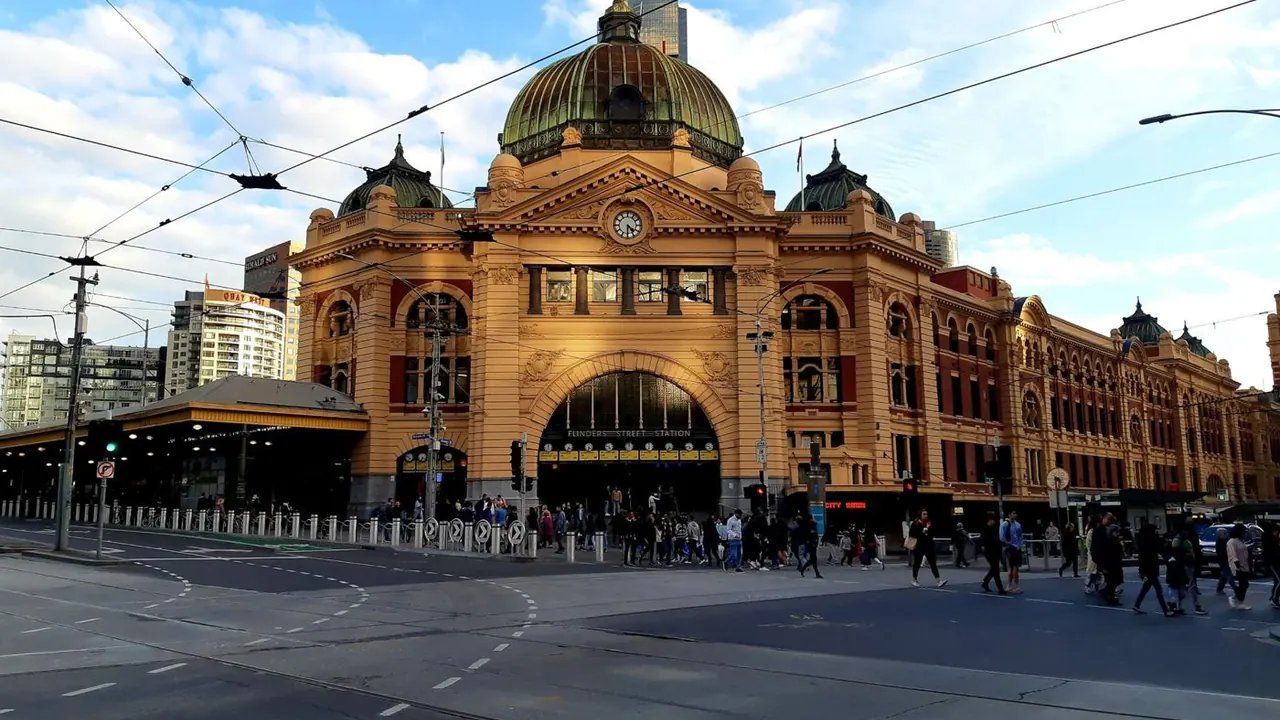
Photos: Canberra by Thennicke, CC BY-SA 4.0, cropped; Melbourne by Medelam, CC BY-SA 4.0, cropped.
Canberra or Melbourne?
Our verdict in twelve categories, each scored against the same fixed benchmark cities, and the climate month by month, so you can choose for your trip.
Choose Canberra for
- prices
Canberra suits a traveller who wants to understand Australia rather than party in it. The national institutions sit together around the lake, most of them free, and the bush starts at the edge of the suburbs, with kangaroos on the reserves and granite ranges to the southwest. It rewards a quiet few days with a car, some cellar doors and early nights. Anyone after a lively evening scene or plenty of shopping will find it thin.
Choose Melbourne for
- nightlife
- shopping
- beaches
Melbourne is the stronger choice for most city trips. It is a place to eat, drink and go out, with laneway bars, a deep live-music and theatre scene, independent shopping and trams that make the inner neighbourhoods easy to reach. Bay beaches, wine valleys and gold-rush towns add variety beyond the city. The cost is a higher bill and weather that can change within the hour.
Scoreboard
Twelve categories on one fixed scale from 0 to 100. The shaded stretch is the gap between the two.
Your match
Pick a travel style or drag the sliders, and both match scores follow your weighting.
Wins on prices with your weighting.
Wins on nightlife and shopping with your weighting.
What matters to you?
Category by category
What the scores mean for a trip.
Beaches & swimming
Canberra is inland, and the nearest sea is a two-hour drive over the Clyde Mountain to Batemans Bay. Summer swimming close to the city means river spots such as Casuarina Sands and Kambah Pool, with no lifeguards, while algae often closes Lake Burley Griffin after warm weather.
Melbourne has real beaches a tram ride from the centre. St Kilda, Elwood and Brighton with its bathing boxes face the calm water of Port Phillip Bay, and the Mornington Peninsula offers more sand and surf. The season is short, but a beach afternoon is a normal part of a summer stay.
Food & drink
Melbourne is a city people visit to eat. Generations of migration fill Greek tavernas on Lonsdale Street, Italian Carlton, Vietnamese Richmond and a large Chinatown, and Queen Victoria Market and the laneway espresso bars add to that. Canberra eats well but on a much smaller scale, mostly brunch cafés in Braddon and the Asian kitchens of Dickson's Woolley Street.
Canberra's own strength is wine. Cellar doors around Murrumbateman, many under forty minutes from the centre, pour cool-climate riesling and shiraz-viognier, and you can reach them more easily than Melbourne's Yarra Valley.
Culture & sights
The two are about even here, but they offer different things. Canberra is a city of national institutions: Parliament House under its grass roof, the Australian War Memorial, the National Gallery's Aboriginal and Torres Strait Islander collection, all set into Walter Burley Griffin's planned landscape. There is almost no old streetscape, so you go from museum to museum rather than wander.
Melbourne is the place to wander. Its gold-rush wealth left Victorian arcades, bluestone lanes, Flinders Street Station and the Royal Exhibition Building, and the street art in the laneways is part of the visit. The National Gallery of Victoria carries the museum side.
Nightlife
Melbourne is one of Australia's best cities for going out. Hidden cocktail and wine bars across the CBD, pubs and late bars on Brunswick and Smith streets and clubs on Chapel Street keep it busy most nights of the week.
Canberra's evenings centre on Lonsdale Street in Braddon and a few Civic laneways. They suit a quiet drink after dinner, and outside parliamentary sitting weeks and university term the city goes very still.
Nature & outdoors
Both are strong outdoor bases, but for different kinds of landscape. Canberra has the wild country closer: eucalypt hills like Mount Ainslie and Black Mountain run between the suburbs, kangaroos graze on the reserves at dusk, and Namadgi's granite summits above 1,800m, with rock-art sites, are only forty minutes away.
Melbourne itself is flat parkland and river paths, so its nature lies further out, and it adds the coast Canberra lacks. That means tall mountain ash forest in the Dandenongs, cliff walks on the Mornington Peninsula, the surf coast at Torquay, and penguins and fur seals on Phillip Island.
Day trips
Melbourne has more places worth a day out. The Yarra Valley and Mornington Peninsula pair wine with food or seaside villages, Ballarat and Bendigo show off gold-rush grandeur and can be reached by train, and Daylesford brings spa towns into the mix.
Canberra's outings are quieter and need a car: the cellar doors of the Yass Valley, galleries in Bungendore, and Braidwood, the best of its heritage towns. They make pleasant drives, but none is a reason to come on its own.
Good for families
Both work well with children, in different ways. Canberra has Questacon, which can fill a whole day with hands-on science, plus Tidbinbilla's kangaroos and the Arboretum playground, all in a calm city where nothing is crowded, though a car makes the distances easier.
Melbourne offers more variety and is easier without a car. Trams and flat streets are good for prams, and there are three different zoos, Luna Park at St Kilda, the Puffing Billy steam railway and an evening penguin parade. Neither city has a theme park.
Getting around
Melbourne is far easier without a car. Its flat central grid is walkable, trams are free within the CBD and run out to Fitzroy, Carlton and St Kilda, and regional trains reach Ballarat and Bendigo.
Canberra was built around the car. Its institutions are spread along wide avenues around the lake, there is just one light rail line, and buses thin out in the evenings. The off-road cycle paths are the pleasant way round, but Namadgi and the wineries need a car.
Shopping & style
Melbourne gives shopping real character. You have mosaic-floored arcades and luxury labels at the top of Collins Street, and independent designers, vintage and homeware shops along Gertrude and Smith streets.
In Canberra shopping is mostly practical, centred on the Canberra Centre mall. Its best finds are at the Old Bus Depot Markets in Kingston on Sunday mornings and in the national museum shops, which are good for Aboriginal art prints.
Affordability
Neither is cheap, as both charge Australian prices for meals, drinks and taxis. Canberra comes out a little gentler because almost all its main sights are free and hotel rooms often get cheaper at weekends, when the political and business travellers leave. Hiring a car eats into that saving.
Melbourne's central hotels are pricey, especially around major sporting events and festivals. The free tram zone, free museums and cheap noodle houses in Footscray and Richmond help keep the daily spend down.
Live music & performing arts
Melbourne is the place to plan a trip around a show. The Arts Centre on St Kilda Road is home to the Australian Ballet and the Melbourne Symphony Orchestra, the old theatres on the east side of the CBD stage the big musicals, and pub band rooms in Fitzroy and St Kilda have live music most nights. The autumn Comedy Festival adds weeks of shows.
Canberra has the Canberra Theatre Centre for touring productions and the Canberra Symphony Orchestra's season. Its best moment is the National Folk Festival at Easter.
Wellness & relaxation
Melbourne has far more for a restorative stay. The sea baths at St Kilda and Brighton put pools and saunas beside the bay, and day trips reach the old mineral springs of Daylesford and Hepburn Springs or the geothermal pools on the Mornington Peninsula.
Canberra has only a few day spas. What restores you there is the pace: quiet lakeside mornings, uncrowded green spaces and early evenings.
When should you go?
Pick your month. The climate figures are measured averages, not a forecast.
Canberra in July
Melbourne in July
Daytime high, °C
Rainfall in the month, mm
Temperature and rainfall are climate normals, averaged over the years shown. Canberra: 1991-2020 normals, Canberra (6.7 km from centre). Melbourne: 1991-2020 (sunshine 1981-2010) normals, Latrobe University / Kingsbury (13.1 km from centre).
Canberra has the bigger swings. Summer days reach around 30°C in January, good for river swimming but tiring for walking between the spread-out institutions, while July highs of about 12°C come with frosty mornings and clear skies. It is also the sunnier of the two all year. April and May are dry and mild, and with spring they make the best time for hiking and sightseeing.
Melbourne stays milder at both ends, with fewer hot spells and slightly warmer winters, but cloudier skies from May to September and rain spread fairly evenly through the year. The bay is warmest from January to March, peaking at about 21°C, and that is the short window for swimming. Spring and autumn suit walking the city, as long as you carry a layer for sudden changes.
Which traveller are you?
For a food and nightlife trip, Melbourne is the clear pick. Migrant kitchens from Lygon Street to Footscray, serious laneway coffee and small bars up stairwells keep evenings full most nights, while Canberra eats well at brunch and then goes to bed early.
On a shopping trip, Melbourne wins easily. Glass-roofed arcades off Collins Street, department stores on Bourke Street and local designers and vintage shops in Fitzroy and Collingwood make for days of browsing. Canberra has a central mall and a Sunday makers' market.
On a tight budget, Canberra goes a little further. Parliament House, the War Memorial and the national galleries are free, and hotel rates often drop at weekends. Melbourne's free tram zone helps, but its rooms and drinks cost more.
Before you go
| Measure | Canberra | Melbourne |
|---|---|---|
| Official language | English | English |
| Currency | Australian Dollar (AUD) | Australian Dollar (AUD) |
| Sockets | I230 V, 50 Hz | I230 V, 50 Hz |
| Driving side | Left | Left |
| Time zone | UTC+10, UTC+11 in summer | UTC+10, UTC+11 in summer |
| Emergency number | 000 | 000 |
| Elevation | 578 m | 31 m |
| Main airport | Canberra Airport (CBR)6 km from centre11 non-stop destinations | Melbourne Airport (MEL)19 km from centre70 non-stop destinations |
| Public holidays this year | 13 days | 13 days |
By the numbers
| Measure | Canberra | Melbourne |
|---|---|---|
| City population | 381,488 | 5,350,705 |
| People per km² | 809 | 535 |
| Museums within 10 km | 20 | 43 |
| UNESCO World Heritage sites within 50 km | 0 | 1 |
| Swim season, months above 21 °C | - | None |
Where else could you go?
Every comparison below shares a destination with this one, so you can follow Canberra or Melbourne somewhere new.
- Sydneyvs Canberra
- Hobartvs Melbourne
- Adelaidevs Melbourne
- Sydneyvs Melbourne
- Byron Bayvs Canberra
- Hobartvs Canberra