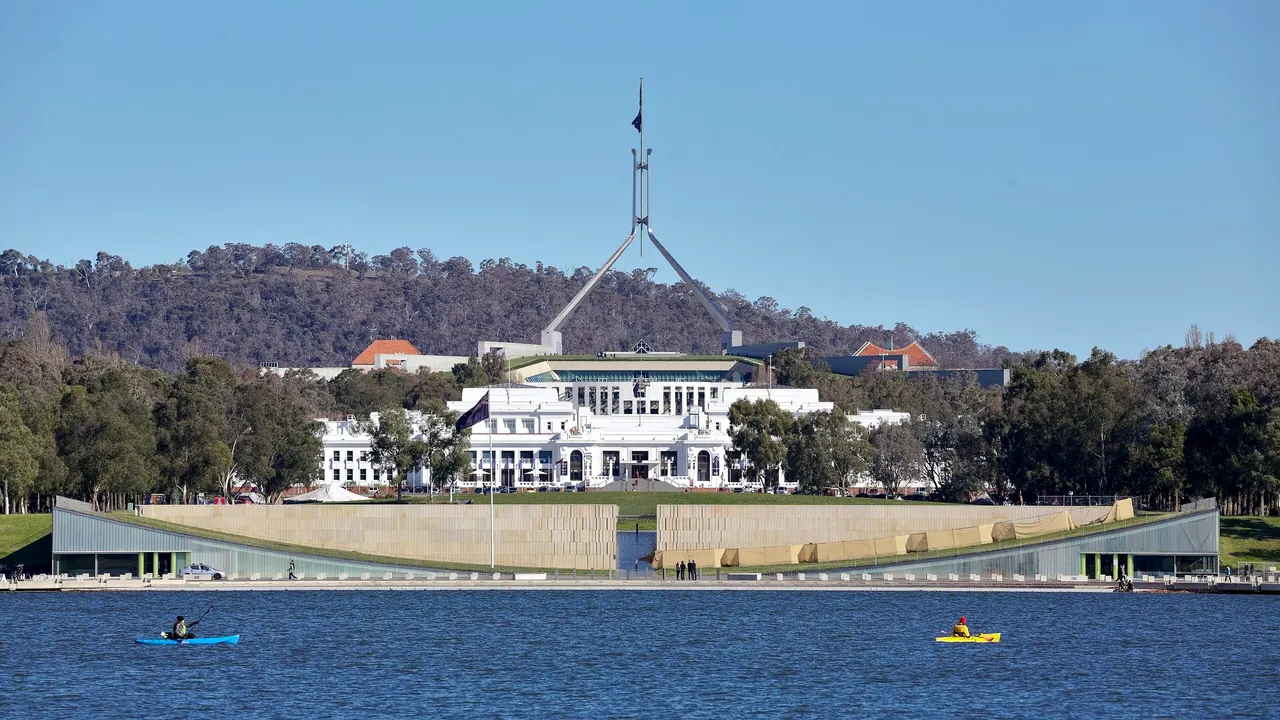
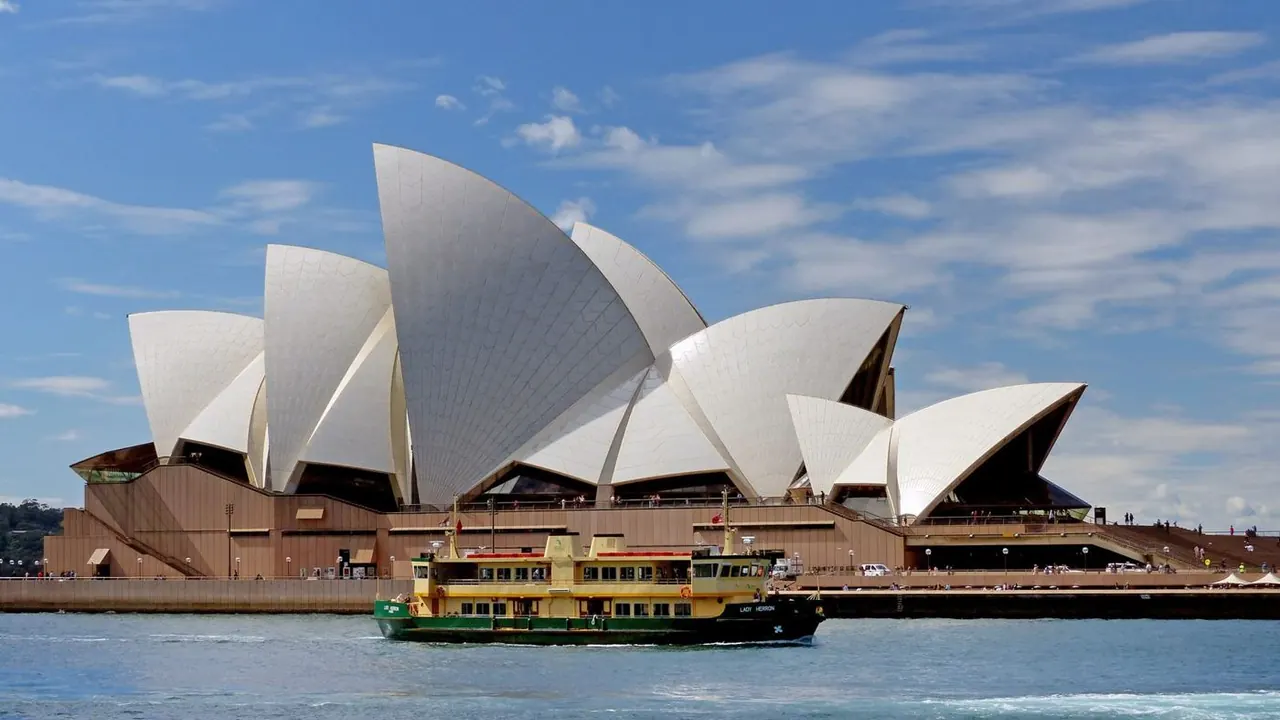
Photos: Canberra by Thennicke, CC BY-SA 4.0, cropped; Sydney by Bernard Spragg, CC0.
Canberra or Sydney?
Our verdict in twelve categories, each scored against the same fixed benchmark cities, and the climate month by month, so you can choose for your trip.
Choose Canberra for
- prices
Canberra suits a traveller who wants to understand Australia rather than lie on its beaches. Parliament House, the War Memorial and the national galleries sit close together around the lake, most of them free. Wooded hills with kangaroos at dusk start at the edge of the suburbs, and cool-climate wineries are a short drive away. It is quiet, uncrowded and somewhat easier on the wallet, but you will want a car, and evenings end early.
Choose Sydney for
- beaches
- live music and the arts
- shopping
Sydney is the better choice for almost everything that makes a classic summer vacation: surf beaches and harbour coves, ferries across the water, seafood and immigrant food suburbs, and a night at the Opera House. It costs more and sprawls further, but a visitor staying near the harbour can do a great deal without ever getting behind the wheel.
Scoreboard
Twelve categories on one fixed scale from 0 to 100. The shaded stretch is the gap between the two.
Your match
Pick a travel style or drag the sliders, and both match scores follow your weighting.
Wins on prices with your weighting.
Wins on beaches and live music and the arts with your weighting.
What matters to you?
Category by category
What the scores mean for a trip.
Beaches & swimming
Canberra has no beach of its own. Summer swimming means river spots such as Casuarina Sands and Kambah Pool, which have no lifeguards, or a lake that algae often closes after hot weather. Real sea time means driving to Batemans Bay as a separate outing.
Sydney is one of the world's great beach cities. A chain of ocean beaches with lifeguards runs through the eastern suburbs, Manly and the Northern Beaches have proper surf, and sheltered harbour coves like Balmoral and Nielsen Park offer calm water and shade.
Food & drink
Canberra eats pleasantly but on a small scale. Brunch cafés in Braddon, Asian kitchens along Dickson's Woolley Street and the older strips of Kingston and Manuka cover most of it. Its real strength is the cool-climate shiraz-viognier and riesling made at cellar doors within forty minutes of the centre.
Sydney goes much deeper. Harbour seafood and oysters are the signature, and whole suburbs are given over to Vietnamese, Lebanese, Indian or Italian cooking. There is also a serious fine-dining tier in Surry Hills and Potts Point. Neither city has a cuisine of its own, but Sydney gives you far more to choose from.
Culture & sights
The two are well matched, but they offer different things. Canberra is a city of national institutions: Parliament House, the Australian War Memorial, the National Gallery and the National Museum, all set within Griffin's planned landscape around the lake. There are almost no old streets, so a visit means going from museum to museum.
Sydney's interest lies more in landmarks and setting. The Opera House and the Harbour Bridge are best seen from a ferry, and The Rocks and the convict-era Hyde Park Barracks hold the colony's oldest fabric. Both cities show strong Aboriginal art, at the National Gallery and at the Art Gallery of New South Wales.
Nightlife
Sydney gives you a proper night out, while Canberra suits a quiet drink. In Canberra, most evenings are spent in the cocktail bars and small breweries of Braddon's Lonsdale Street and the Civic laneways, or on Kingston's quieter strip. Only a few late venues near the bus interchange fill with students at weekends, and the city goes very still midweek and outside term.
Sydney is also built around bars rather than clubs, but there are far more of them: hidden laneway bars in the CBD, harbourside pubs in The Rocks, Oxford Street's LGBTQ scene and later, more alternative nights in Newtown and Enmore.
Nature & outdoors
Both cities have bush close at hand, but Sydney adds the sea. Its clifftop walk from Bondi to Coogee, the coastal trails of the Royal National Park, surfing, harbour kayaking and passing humpback whales give it far more variety. The Blue Mountains are also within reach.
Canberra's strength is height and quiet. Kangaroos graze on reserves inside the city, and the granite summits of Namadgi rise above 1,800m with rock-art sites and winter snow, which is real mountain country that Sydney lacks.
Day trips
Sydney has slightly more within reach. The Hunter Valley's vineyards, the cliff-edge towns of Katoomba and Leura, colonial Parramatta, and Newcastle and Wollongong are all easy outings, and several can be reached by train.
From Canberra, the outings are small country towns: gold-rush Braidwood, the galleries of Bungendore, Goulburn's Victorian streets and the wine roads of Murrumbateman. Both cities share the Southern Highlands around Bowral and Berrima, and from either one a car makes most trips far easier.
Good for families
Both are easy with children, and Sydney has a little more to fill the days. A ferry ride to Taronga Zoo, the aquarium and the ships at the Maritime Museum, the rides at Luna Park and netted harbour beaches make a varied week.
Canberra's highlight is Questacon, whose hands-on floors can take up most of a day. Add Tidbinbilla's kangaroos and koalas and the Arboretum playground, and the city is calm and uncrowded, though without a beach and best done with a car.
Getting around
This is one of the clearest differences between the two. Canberra was laid out for the car. Civic, Braddon and the Parliamentary Triangle are each walkable but far apart, the single light rail line and buses thin out in the evenings, and the lakeside cycle paths are the most pleasant way to link them.
Sydney's trains, metro, light rail and buses run on one card, and the harbour ferries double as sightseeing. Bondi takes a bus and the suburbs sprawl, but a visitor based near Circular Quay rarely needs a car.
Shopping & style
In Canberra, shopping is something to do on the side. There are the chains in the Canberra Centre, a few independent shops in Braddon, and the Old Bus Depot Markets in Kingston on Sunday mornings for local crafts. The national museum shops are good for Aboriginal art prints.
Sydney is a shopping destination in a way Canberra is not. It has flagship stores around Pitt Street Mall, Australian designers in the Victorian galleries of the Queen Victoria Building and the Strand Arcade, terrace boutiques in Paddington, and plenty of the swimwear and resort fashion the country is known for.
Affordability
Neither is cheap, but Canberra is the gentler of the two. Hotel rooms often get cheaper at weekends once the political travellers leave, and almost every major institution is free to enter, though Questacon, the zoo and a hire car add up.
In Sydney, the harbour and beach hotels cost a great deal, especially in summer, and restaurant meals and drinks are expensive. The free coastal walks, beaches and galleries, together with the Asian food courts, help keep daily spending in check.
Live music & performing arts
Sydney is the place to plan a trip around a performance. The Opera House has something on almost every night, and Sydney Theatre Company, Belvoir, Bangarra and the Australian Chamber Orchestra give it real depth. In January, the Sydney Festival brings international work into the city.
Canberra has a steadier, smaller calendar of touring shows at the Canberra Theatre Centre and the symphony orchestra's season, and many big tours skip it. Its high point is the National Folk Festival at Easter.
Wellness & relaxation
Sydney has a bathing culture Canberra lacks. Sea-fed rock pools at Bondi, Bronte and Clovelly, the old-fashioned calm of Wylie's Baths and McIver's Ladies Baths, and a few Korean-style bathhouses all make a dawn swim a real ritual.
Canberra has only a handful of day spas. What it offers instead is the stillness of the city itself, with early nights and quiet mornings by the lake, which suits a gentle break better than a planned wellness trip.
When should you go?
Pick your month. The climate figures are measured averages, not a forecast.
Canberra in July
Sydney in July
Daytime high, °C
Rainfall in the month, mm
Temperature and rainfall are climate normals, averaged over the years shown. Canberra: 1991-2020 normals, Canberra (6.7 km from centre). Sydney: 1991-2020 normals, Sydney Airport (3.7 km from centre).
The two cities have very different climates for being only a few hours apart. Canberra sits inland and has proper seasons. January reaches about 30°C under long, sunny days, which is fine for river swimming but tiring for walking between the institutions. July drops to around 12°C, with frosty mornings and clear skies. Autumn and spring are the best times for both the museums and the hill trails, and April and May are notably dry.
Sydney's coastal climate stays mild. Its winter days hold at about 18°C, so walking the city is pleasant all year. Beach weather runs from December into April, and the sea stays near 23°C through late summer, so swimming carries on into autumn. The trade-off is rain: Sydney is much wetter than Canberra, especially from February to June, when June can bring 121mm. Late winter and spring are drier and sunny, which makes them good months for the coastal walks.
Which traveller are you?
On a beach and sun trip, Sydney is the only real choice. It has patrolled surf from Bondi to Coogee, Manly a ferry ride away and calm harbour coves for gentler swims. Canberra's nearest sea is a two-hour drive over the mountains.
For a food and nightlife trip, Sydney has more to offer. Seafood from Pyrmont, Lebanese food in Lakemba and Vietnamese in Cabramatta beat Canberra's few inner districts. Later bars in Surry Hills and Newtown are livelier than Braddon, where the evening ends early.
On a trip on a tight budget, Canberra stretches the money further. Hotel rooms often get cheaper at weekends, and Parliament House, the War Memorial and the national galleries cost nothing to enter. Sydney's harbour hotels and restaurant meals are among the dearest in the country.
Before you go
| Measure | Canberra | Sydney |
|---|---|---|
| Official language | English | English |
| Currency | Australian Dollar (AUD) | Australian Dollar (AUD) |
| Sockets | I230 V, 50 Hz | I230 V, 50 Hz |
| Driving side | Left | Left |
| Time zone | UTC+10, UTC+11 in summer | UTC+10, UTC+11 in summer |
| Emergency number | 000 | 000 |
| Elevation | 578 m | 6 m |
| Main airport | Canberra Airport (CBR)6 km from centre11 non-stop destinations | Sydney Kingsford Smith International Airport (SYD)9 km from centre99 non-stop destinations |
| Public holidays this year | 13 days | 11 days |
By the numbers
| Measure | Canberra | Sydney |
|---|---|---|
| City population | 381,488 | 5,450,496 |
| People per km² | 809 | 449 |
| Museums within 10 km | 20 | 38 |
| UNESCO World Heritage sites within 50 km | 0 | 2 |
| Swim season, months above 21 °C | - | 6 months |
Where else could you go?
Every comparison below shares a destination with this one, so you can follow Canberra or Sydney somewhere new.
- Melbournevs Canberra
- Byron Bayvs Sydney
- Gold Coastvs Sydney
- Melbournevs Sydney
- Brisbanevs Sydney
- Noosavs Sydney