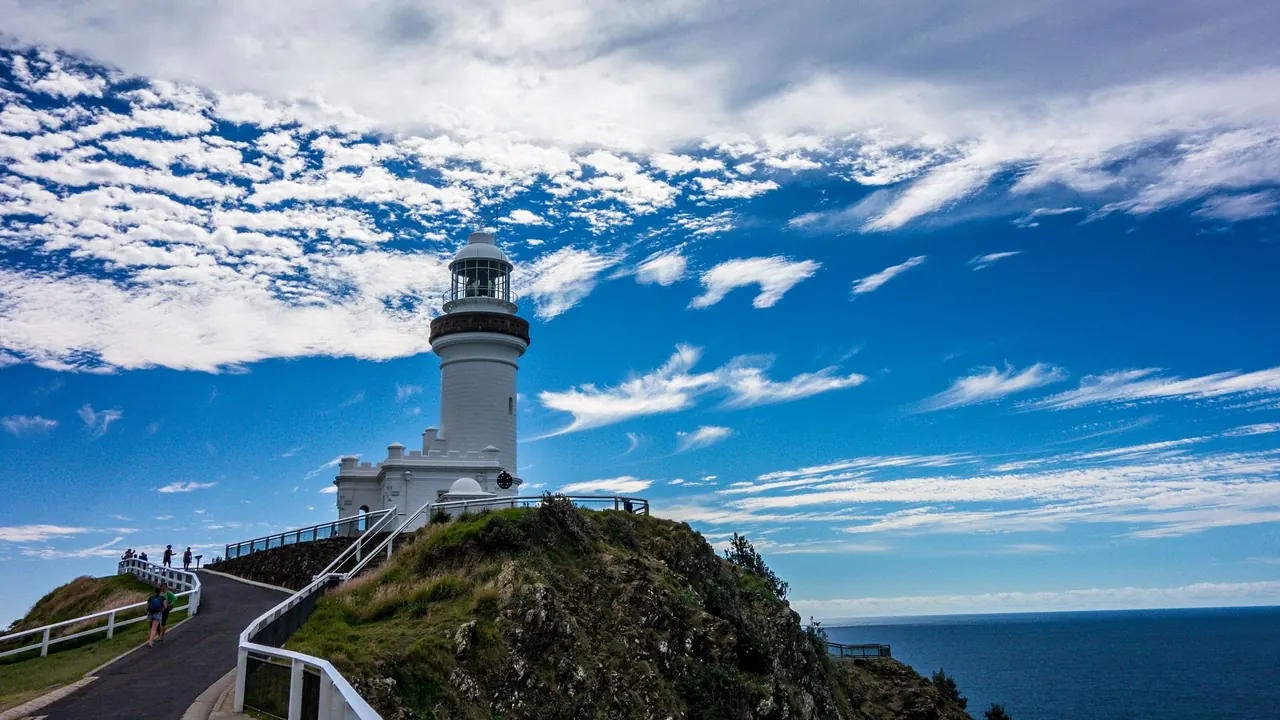
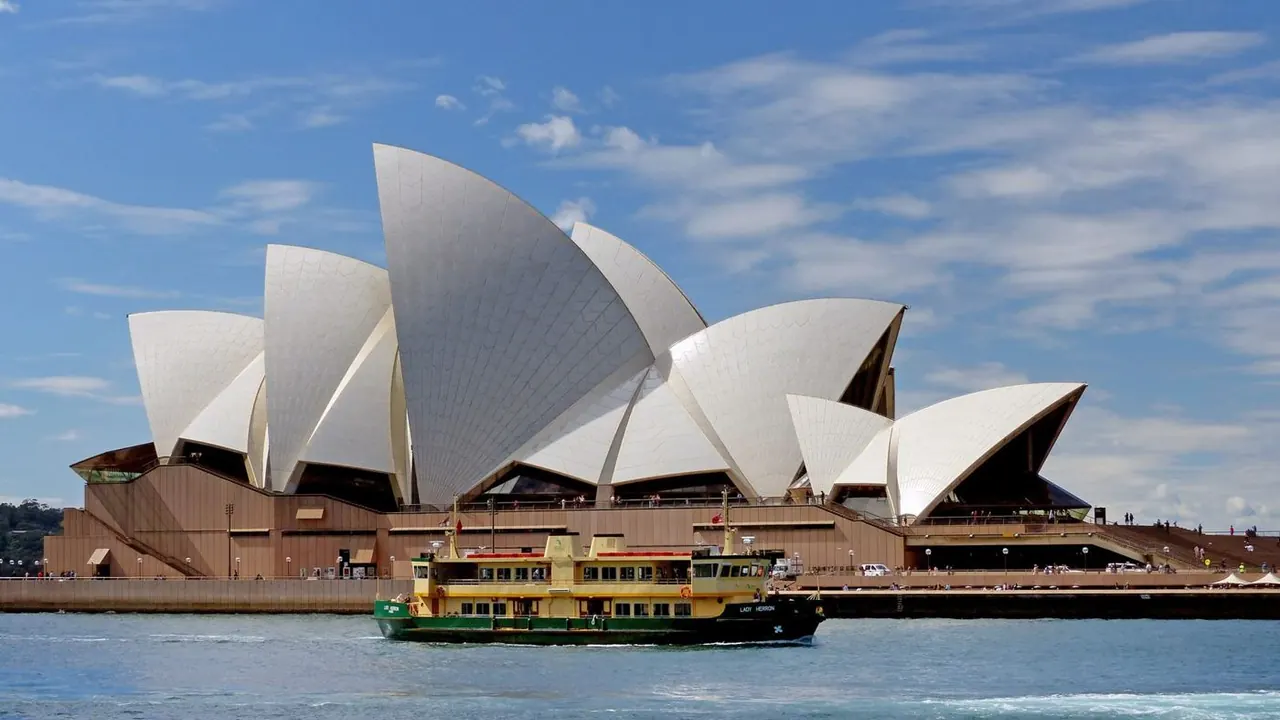
Photos: Byron Bay by Visions of Domino, CC BY 2.0, cropped; Sydney by Bernard Spragg, CC0.
Byron Bay or Sydney?
Our verdict in twelve categories, each scored against the same fixed benchmark cities, and the climate month by month, so you can choose for your trip.
Choose Byron Bay for
- wellness
Byron Bay suits a slow trip built around the sea and your own wellbeing: a dawn swim, a yoga class, the cape walk to the lighthouse and drinks at sunset. Its beaches curve round one bay within walking distance, the hinterland rainforest is close, and the wellness side is much stronger than Sydney's. Come for that rhythm rather than for museums, restaurants or a long night out, and plan on hiring a car.
Choose Sydney for
- culture and sights
- live music and the arts
- getting around
Sydney is the choice if you want a whole city with your coastline. It has more beaches and more kinds of beach, from Bondi's surf to sheltered harbour coves. On top of that it offers the Opera House as a working stage, a far deeper food scene and ferries and trains that make a week without a car easy. Families, culture lovers and anyone who gets restless after a few beach days will be happier here.
Scoreboard
Twelve categories on one fixed scale from 0 to 100. The shaded stretch is the gap between the two.
Your match
Pick a travel style or drag the sliders, and both match scores follow your weighting.
Wins on wellness with your weighting.
Wins on culture and sights and live music and the arts with your weighting.
What matters to you?
Category by category
What the scores mean for a trip.
Beaches & swimming
Both are first-rate surf coasts, but Sydney has more coast and more variety. There is the chain of eastern beaches from Bondi to Coogee and the long run north from Manly to Palm Beach. Calm harbour coves such as Balmoral and Camp Cove add to that, so you can find water to suit any mood or swell, mostly by bus or ferry.
Byron's strengths are that its beaches are close together and warm. Main Beach, The Pass, Wategos and Tallow all sit round one bay within walking distance, and the sea is a few degrees warmer than Sydney's all year. Lifeguard patrols are mainly at Main Beach and Clarkes, though, so there are fewer safe, calm places to swim than in Sydney's sheltered and netted harbour coves.
Food & drink
Byron eats like a well-off small town. You get excellent coffee, long brunches, hinterland produce at the farmers' markets and plenty of plant-based cooking, plus a few ambitious restaurants on farms and in Bangalow.
Sydney works on a different scale. It has the Pyrmont fish market, whole suburbs known for Vietnamese, Lebanese, Indian or Italian cooking, and chef-led dining rooms in Surry Hills and Potts Point. Neither city has a cuisine of its own, but only Sydney can fill a week of dinners without repeating itself.
Culture & sights
The gap here is wide. Byron's sights come down to the Cape Byron lighthouse at the easternmost point of the mainland and the Arakwal Bumberlin connection to the cape, which you mostly meet on a guided walk.
Sydney has the Opera House and the Harbour Bridge, the sandstone lanes of The Rocks, convict history at Hyde Park Barracks and a good set of museums led by the Art Gallery of New South Wales. It is not a dense old city, but it fills a few days of sightseeing in a way Byron cannot.
Nightlife
Byron's nights mean sunset drinks, beer gardens near Main Beach and a couple of late venues full of backpackers, and they are usually over not long after midnight.
Sydney has more range, though not much wilder clubbing. There are laneway cocktail bars in the CBD, harbourside pubs in The Rocks, the LGBTQ scene on Oxford Street and the more alternative inner west around Newtown and Enmore, which stays out later. Neither city is a clubbing destination, but in Sydney you can go to a different district each night.
Nature & outdoors
Both put serious nature within easy reach, and the difference is in the kind of landscape. Byron leans towards the sea and the rainforest. You can snorkel or dive with turtles and grey nurse sharks at Julian Rocks and watch dolphins in the bay, and the subtropical forests of Nightcap and the Border Ranges are about an hour inland.
Sydney's landscape is sandstone and bush. The clifftop walk from Bondi to Coogee runs through the suburbs, the Royal National Park has wild coastal trails to the south, and the eucalyptus valleys of the Blue Mountains are about two hours west. Humpback whales pass both coasts in winter and spring.
Day trips
Neither city is a strong base for day trips, and from both you really need a car. From Byron the outings are to small hinterland towns like Bangalow, Mullumbimby and Nimbin, with the Gold Coast's theme parks an hour away. Sydney's trips are longer drives to bigger names: the Hunter Valley vineyards, Katoomba and Leura in the Blue Mountains and the Southern Highlands, with Newcastle and Wollongong easy by train.
Good for families
Byron is a good town for beach days with children, with rock pools, gentler water at The Pass and Wategos and dolphins in the bay. There is little else built for them unless you drive to the Gold Coast.
Sydney has enough to keep a longer family stay going. Taronga Zoo is a ferry ride away, Darling Harbour has the aquarium and real ships to board, and there are the dinosaurs at the Australian Museum and the old rides at Luna Park. The netted harbour beaches are safe for paddling, and for younger children the ferry ride is an outing in itself.
Getting around
In Byron the centre and the nearest beaches are an easy walk or bike ride on flat ground. Beyond town, though, buses are infrequent and there is no train, so a hire car is close to essential.
Sydney runs trains, the metro, light rail, buses and ferries on one tap-on card. A visitor staying near the harbour can manage without a car, even though the eastern beaches need a bus and the suburbs spread a long way.
Shopping & style
Byron's shopping is one style done well: linen, surfwear, swimwear and crystals in a few central blocks, plus local makers at the Arts and Industry Estate and the artisan markets. You can see it all in an afternoon.
Sydney has the full range. There are flagships and luxury houses around Pitt Street Mall, the Victorian galleries of the Queen Victoria Building and the Strand Arcade, the David Jones department store, and Paddington's boutiques and weekend markets. Both cities are good for swimwear and resort fashion.
Affordability
Both are expensive places to stay, and neither is meaningfully cheaper than the other. Byron's accommodation is among the dearest of any Australian beach town and costs even more on summer and festival weekends, and a hire car adds to the bill.
Sydney's harbour hotels and restaurants are just as dear. Still, capped public transport fares and cheap meals in the Asian food courts give a careful traveller more ways to cut daily costs. In both cities the beaches and coastal walks cost nothing.
Live music & performing arts
Byron's live music happens in pub beer gardens, with roots and surf-rock bands and buskers in summer. Beyond that there is a small community theatre and the annual writers' festival, and for opera, ballet or an orchestra people travel to Brisbane.
Sydney has all of that in town. Opera Australia and the Sydney Symphony play at the Opera House, Sydney Theatre Company and Belvoir stage drama, and Bangarra puts on Aboriginal dance. The Australian Chamber Orchestra has an international reputation, musicals run in the big theatres on George Street, and bands play the small venues of Newtown and Enmore.
Wellness & relaxation
Wellness is part of daily life in Byron. There are several yoga classes a day, breathwork, sound healing, day spas and residential retreats in the hinterland hills, all at an unhurried pace, and the town is calmest in the quiet winter months.
Sydney's version is simpler and more local: a dawn lap in the ocean pools cut into the rocks at Bondi or Bronte, a slow morning at Wylie's or McIver's Baths, and steam at a few Korean-style bathhouses. It is restful, but the city around it moves quickly.
When should you go?
Pick your month. The climate figures are measured averages, not a forecast.
Byron Bay in July
Sydney in July
Daytime high, °C
Rainfall in the month, mm
Temperature and rainfall are climate normals, averaged over the years shown. Byron Bay: 1991-2020 normals, Cape Byron (5.6 km from centre). Sydney: 1991-2020 normals, Sydney Airport (3.7 km from centre).
Byron Bay's summer is warm but wet. From January to March the days reach about 28°C and the sea is at its warmest, but the rain is heavy, peaking in February at over 230mm, and June brings another wet spell. The drier months from July to October have mild days that suit the cape walk and the hinterland waterfalls best, and the sea stays warm enough to swim all year.
Sydney follows the same seasons with a cooler sea and much less rain, so its summer, December to March, is the more reliable time for the beach. The water drops to about 18°C in August and September, and winter days of around 18°C are comfortable for walking the city. Late winter and spring are Sydney's sunniest stretch, with about 248 hours of sunshine in August. Neither city gets too hot for sightseeing, though summer middays are tiring on the coastal tracks.
Which traveller are you?
For a relaxing and wellness trip, Byron Bay is the clear pick. Yoga classes run all day, and spas and hinterland retreats are close by. The whole town keeps an unhurried rhythm of swim, session and sunset. Sydney's ocean pools are lovely, but the city around them moves fast.
On a culture and arts trip, Sydney wins easily. The Opera House stages opera and symphony most nights, the Art Gallery of New South Wales has strong Aboriginal collections and The Rocks keeps the old colonial streets. Byron's heritage comes down to one lighthouse and guided walks on the cape.
For a food and nightlife trip, Sydney gives you far more: seafood from the Pyrmont market, Vietnamese food in Cabramatta and Lebanese in Lakemba, then laneway bars and late nights in Newtown. In Byron the evening means a beer garden at sunset, and it ends soon after midnight.
Before you go
| Measure | Byron Bay | Sydney |
|---|---|---|
| Official language | English | English |
| Currency | Australian Dollar (AUD) | Australian Dollar (AUD) |
| Sockets | I230 V, 50 Hz | I230 V, 50 Hz |
| Driving side | Left | Left |
| Time zone | UTC+10, UTC+11 in summer | UTC+10, UTC+11 in summer |
| Emergency number | 000 | 000 |
| Elevation | 5 m | 6 m |
| Main airport | Ballina Byron Gateway Airport (BNK)21 km from centre2 non-stop destinations | Sydney Kingsford Smith International Airport (SYD)9 km from centre99 non-stop destinations |
| Public holidays this year | 11 days | 11 days |
By the numbers
| Measure | Byron Bay | Sydney |
|---|---|---|
| City population | - | 5,450,496 |
| People per km² | - | 449 |
| Museums within 10 km | 1 | 38 |
| UNESCO World Heritage sites within 50 km | 1 | 2 |
| Swim season, months above 21 °C | 11 months | 6 months |
Where else could you go?
Every comparison below shares a destination with this one, so you can follow Byron Bay or Sydney somewhere new.
- Gold Coastvs Byron Bay
- Brisbanevs Byron Bay
- Canberravs Sydney
- Noosavs Byron Bay
- Gold Coastvs Sydney
- Melbournevs Sydney