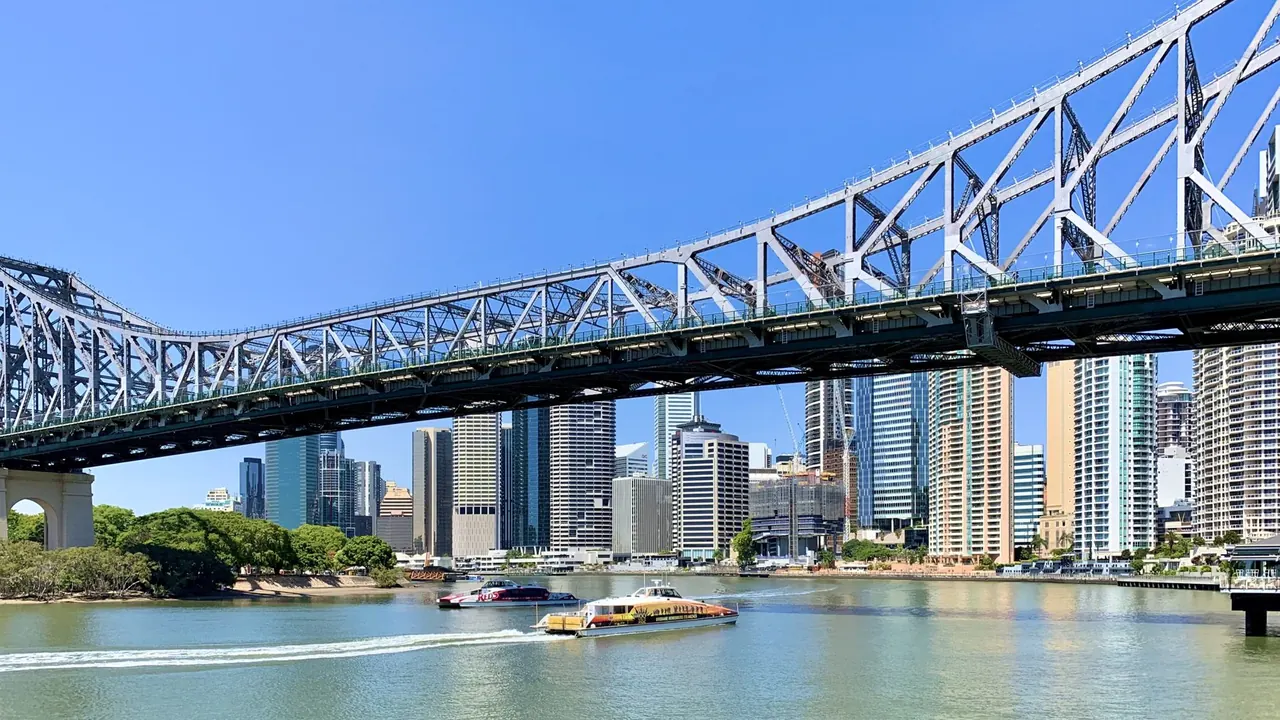
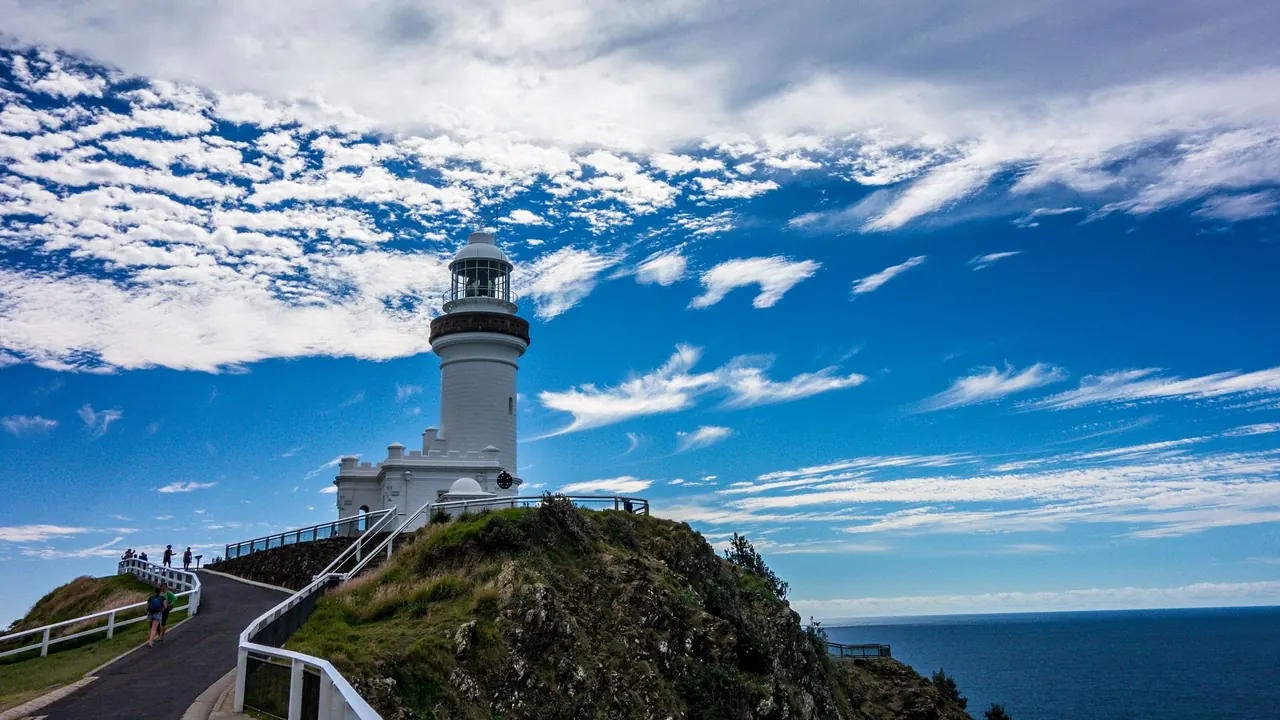
Photos: Brisbane by Kgbo, CC BY-SA 4.0, cropped; Byron Bay by Visions of Domino, CC BY 2.0, cropped.
Brisbane or Byron Bay?
Our verdict in twelve categories, each scored against the same fixed benchmark cities, and the climate month by month, so you can choose for your trip.
Choose Brisbane for
- culture and sights
- live music and the arts
- getting around
Brisbane suits travellers who want a real city with the coast as an extra. You get the galleries and stages of South Bank, the bars and live music of Fortitude Valley, river ferries instead of a hire car, and an easy base for children, with koalas in town and theme parks an hour away. It is also the cheaper place to stay.
Choose Byron Bay for
- wellness
- beaches
- nature and the outdoors
Choose Byron Bay if the sea is the reason for the trip. A string of very different beaches lies within walking distance of town, and the days are slow: surf at The Pass, yoga, the cape walk at dawn and rainforest waterfalls inland. Expect resort prices and plan on a car. Don't come for museums or late nights.
Scoreboard
Twelve categories on one fixed scale from 0 to 100. The shaded stretch is the gap between the two.
Your match
Pick a travel style or drag the sliders, and both match scores follow your weighting.
Wins on culture and sights and live music and the arts with your weighting.
Wins on wellness and beaches with your weighting.
What matters to you?
Category by category
What the scores mean for a trip.
Beaches & swimming
Byron Bay wins easily. Its north-facing bay gives a different beach for every mood within walking distance: the point break at The Pass, the small morning-sun cove at Wategos, patrolled swimming at Main Beach and Clarkes, and long empty sand at Tallow and Belongil. The strong rips are the one caution.
Brisbane is a river city, not a beach town. In the centre you swim at the South Bank lagoon or the public pools, and Moreton Bay is calm but murky. The Gold Coast, the Sunshine Coast and the bay islands are excellent, but each one is a day out.
Food & drink
Both cities live on the same hinterland produce, macadamias and avocados, and both have a strong café and brunch culture. Brisbane has the wider table. There are polished dining rooms in Fortitude Valley and on James Street, cheap Greek and Vietnamese cooking in West End, breweries in the Newstead warehouses, and night food markets.
Byron eats well at breakfast and lunch, with farmers' markets, seafood and a lot of plant-based cooking. A few ambitious farm restaurants, some of them out at Bangalow, raise the standard. In the evening the choice narrows to what a small resort town can support.
Culture & sights
Brisbane is well ahead. The Cultural Centre at South Bank puts the Queensland Art Gallery, the Gallery of Modern Art with its Asia-Pacific and Aboriginal collections, the State Library and the Queensland Museum side by side. Across the river are the sandstone colonial buildings and the Story Bridge, and the timber Queenslander houses of Paddington are worth a stroll.
Byron has the Cape Byron lighthouse at the mainland's most easterly point and very little else to visit. Its deepest heritage is the Arakwal Bumberlin people's bond with the cape, and you learn about it on a guided walk, not in a museum.
Nightlife
Brisbane gives you a proper night out. Fortitude Valley's malls fill at weekends with pubs, rooftop bars and real clubs, and you can drink after work by the river on Eagle Street. Even so, licensing rules close it well before dawn.
Byron's evenings start with sunset drinks in beachside beer gardens. They carry on in a handful of cocktail bars and backpacker-filled late venues, and most of it is done not long after midnight. It is barefoot and friendly, but there is far less choice.
Nature & outdoors
Both share the subtropical rainforest of the old volcanic border country, and in both you can watch humpbacks pass in winter. Byron has the edge because its nature starts in town. The cape track runs through rainforest and over the clifftops, dolphins play in the bay, and Julian Rocks offers diving with turtles, rays and grey nurse sharks.
Brisbane's outdoors means more travelling, but there is a lot of it. Mount Coot-tha and D'Aguilar National Park are on the city's edge, and the river is good for kayaking. Lamington and Springbrook are about an hour and a half away, and you can go out to the sand dunes and shipwreck snorkelling of Moreton Island.
Day trips
Neither city has much heritage within reach, so the day trips differ in mood more than in quality. From Brisbane you head to resorts and gentle hill country: the Gold Coast by train, chic Noosa, the gallery villages of Montville and Maleny, or the gardens of Toowoomba.
Byron's outings are smaller and more alternative. There is Bangalow's heritage main street, farming Mullumbimby, Nimbin with its 1970s counterculture, and the regional art gallery at Murwillumbah. Almost all of them need a car.
Good for families
Brisbane is the easier base with children. In the centre you have the free South Bank lagoon and playgrounds, the hands-on science centre in the Queensland Museum, the koalas at Lone Pine and the river ferries. The Gold Coast theme parks and Australia Zoo each make a doable day out.
Byron is great for beach days, with rock pools, gentle water at Wategos and whales from the cape. Beyond that there is little built for children, the surf needs close watching, and parts of the centre are noisy at night.
Getting around
Brisbane lets you manage without a car for most of a stay. The CityCat ferries are a sightseeing ride in themselves, and suburban trains and busways share one fare system, with a rail link from the airport to the Gold Coast. You only need to drive for the rainforest parks and hinterland villages.
Byron's centre is flat and walkable, and bikes suit the coastal paths. There is no train and the buses are infrequent, though, so the waterfalls and neighbouring towns are a car job, and most visitors pick one up at Ballina or Gold Coast airport.
Shopping & style
The two are broadly level but quite different. Brisbane has range: department stores on the Queen Street Mall, heritage arcades, a short run of luxury labels on Edward Street and antique shops along Paddington's ridge road.
Byron has a look of its own, loose linen, surfwear and bohemian resort fashion. You find it in a few blocks of local labels and at the makers' studios of the Arts and Industry Estate, and you can see it all in an afternoon.
Affordability
Neither is a cheap destination, but Brisbane is easier on the wallet. Public transport costs little, the big galleries and the lagoon are free, and cafés and food markets keep meals casual.
In Byron, accommodation is the big expense. It ranks among the dearest of any Australian beach town and rises further in summer and on festival weekends, when long minimum stays are common. Add resort-priced cafés and a hire car. The free beaches and walks help, but a comfortable stay costs considerably more.
Live music & performing arts
Brisbane has the full formal scene. The Queensland Performing Arts Centre is home to the state's symphony orchestra, opera, ballet and theatre companies. The Powerhouse in New Farm stages comedy and cabaret, the Brisbane Festival fills September, and Fortitude Valley has a long-standing live band circuit.
Byron's music happens in pubs and beer gardens, mostly folk, roots and surf rock, alongside a small community theatre and its well-known writers' festival. For a ballet or an orchestra, Byron people drive to Brisbane.
Wellness & relaxation
This is Byron's other great strength. Yoga, breathwork, massage and residential retreats in the hinterland hills shape the whole rhythm of the town, from an early swim to a quiet sunset. Come in the quieter winter months, when the centre is calm.
Brisbane's version is simpler: heritage open-air pools such as the Spring Hill Baths, hotel day spas and long evenings by the river. Neither place has hot springs. For a real retreat from Brisbane, you have to travel up into the hinterland.
When should you go?
Pick your month. The climate figures are measured averages, not a forecast.
Brisbane in July
Byron Bay in July
Daytime high, °C
Rainfall in the month, mm
Temperature and rainfall are climate normals, averaged over the years shown. Brisbane: 1991-2020 normals, Brisbane (4.5 km from centre). Byron Bay: 1991-2020 normals, Cape Byron (5.6 km from centre).
Brisbane is the warmer and the drier of the two. Summer highs reach about 30°C, and the heavy, humid rain falls mostly from December to March. Winter is dry, mild and sunny, so May to September is the time for walking the streets and the rainforest trails. For beach days on the nearby coasts, the sea is at its warmest from January to March.
Byron Bay is a few degrees cooler all year, which makes its summer easier on the sand. Winter highs of about 19°C feel fresh once you are out of the water, though the sea rarely drops below 21°C. Byron is also much wetter than Brisbane, with around 234mm of rain in February and a second wet spell in June. September and October are warm and fairly dry, which makes them the most reliable months for a week on the beach.
Which traveller are you?
On a beach and sun trip, Byron Bay is the clear choice. Main Beach, The Pass, Wategos and Tallow are all walkable from your room, so the sea is part of every day. In Brisbane, each proper beach day means a trip of about an hour.
For a culture and arts trip, Brisbane is far stronger. The art galleries, museum and state library stand together at South Bank, next to a performing arts centre with opera, ballet and a symphony orchestra. Byron's heritage comes down to its lighthouse and guided walks.
On a relaxing and wellness trip, Byron Bay is built for slowing down. It has yoga classes all day, day spas and alternative therapies, and retreats in the green hinterland hills. Brisbane offers heritage outdoor pools and an easy pace, but proper retreats are a long drive away.
Before you go
| Measure | Brisbane | Byron Bay |
|---|---|---|
| Official language | English | English |
| Currency | Australian Dollar (AUD) | Australian Dollar (AUD) |
| Sockets | I230 V, 50 Hz | I230 V, 50 Hz |
| Driving side | Left | Left |
| Time zone | UTC+10 | UTC+10, UTC+11 in summer |
| Emergency number | 000 | 000 |
| Elevation | 0 m | 5 m |
| Main airport | Brisbane International Airport (BNE)13 km from centre88 non-stop destinations | Ballina Byron Gateway Airport (BNK)21 km from centre2 non-stop destinations |
| Public holidays this year | 11 days | 11 days |
By the numbers
| Measure | Brisbane | Byron Bay |
|---|---|---|
| City population | 2,706,966 | - |
| People per km² | 171 | - |
| Museums within 10 km | 17 | 1 |
| UNESCO World Heritage sites within 50 km | 0 | 1 |
| Swim season, months above 21 °C | 9 months | 11 months |
Where else could you go?
Every comparison below shares a destination with this one, so you can follow Brisbane or Byron Bay somewhere new.
- Gold Coastvs Brisbane
- Gold Coastvs Byron Bay
- Noosavs Brisbane
- Noosavs Byron Bay
- Sydneyvs Byron Bay
- Sydneyvs Brisbane