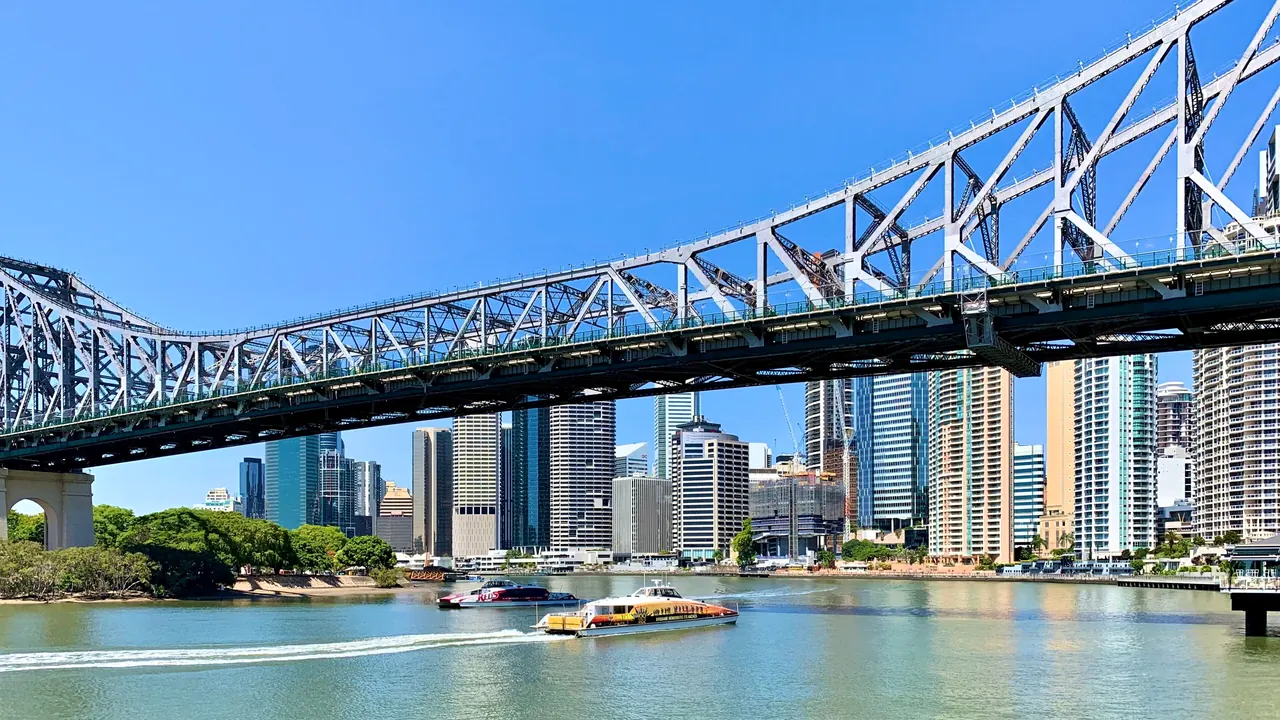
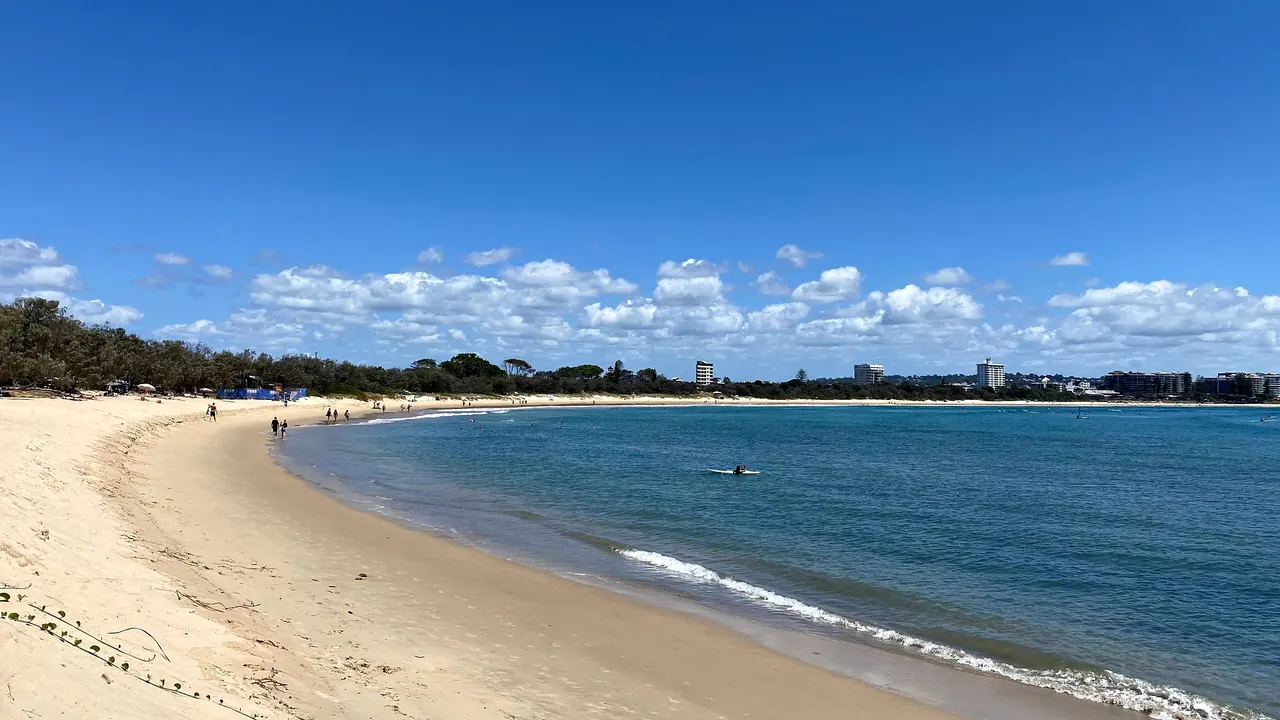
Photos: Brisbane by Kgbo, CC BY-SA 4.0, cropped; Sunshine Coast by -wuppertaler, CC BY 4.0, cropped.
Brisbane or Sunshine Coast?
Our verdict in twelve categories, each scored against the same fixed benchmark cities, and the climate month by month, so you can choose for your trip.
Choose Brisbane for
- culture and sights
- nightlife
- live music and the arts
Brisbane suits travellers who want a city first, with the beach as an option rather than the point. The galleries at South Bank, the bars and live music of Fortitude Valley, the river ferries and a wider spread of restaurants give evenings and rainy days plenty to fill them. Both the Gold Coast and the Sunshine Coast are close enough for a day on the sand.
Choose Sunshine Coast for
- beaches
- wellness
- nature and the outdoors
For a vacation built around the sea, the Sunshine Coast is the better pick. You wake a few minutes from patrolled surf, walk the Noosa headland, spend afternoons in the hinterland and wind down at a slower pace, with more spas around you. What you give up is culture and nightlife: museums, theatre and a proper night out all mean driving back to Brisbane.
Scoreboard
Twelve categories on one fixed scale from 0 to 100. The shaded stretch is the gap between the two.
Your match
Pick a travel style or drag the sliders, and both match scores follow your weighting.
Wins on culture and sights and nightlife with your weighting.
Wins on beaches and wellness with your weighting.
What matters to you?
Category by category
What the scores mean for a trip.
Beaches & swimming
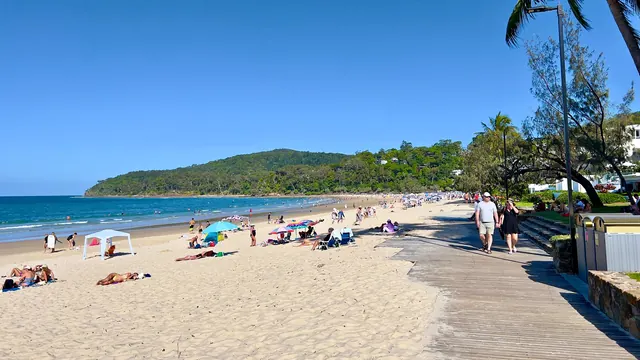
On the Sunshine Coast the beach is right outside the door. About 60km of patrolled surf sand runs from Caloundra to Noosa. Noosa Main Beach faces north and is calm, Mooloolaba has a sheltered front beach, and Coolum and Peregian are wilder and quieter. You can swim before breakfast and again at sunset.
In Brisbane itself the choice is the South Bank lagoon, the public pools and the bayside at Redcliffe and Wynnum, where the water is murky and the shore muddy at low tide. Its good beaches are on the two coasts and the bay islands, and every one of them is a day out.
Food & drink
Brisbane gives you more choice. Fortitude Valley and James Street have the polished dining rooms, West End has cheap Greek and Vietnamese cooking, the warehouses of Newstead and Teneriffe hold breweries, and there are night food markets for grazing.
On the Sunshine Coast the best eating is in Noosa around Hastings Street and on Mooloolaba's harbour, where fish and prawns are eaten outdoors. Beyond those two towns it thins out to surf-club dining rooms and pub bistros that close early. Neither place has a dish of its own, and both cook with the same bugs, prawns, macadamias and avocados.
Culture & sights
The culture is in Brisbane. At the South Bank Cultural Centre, the Queensland Art Gallery and the Gallery of Modern Art hold strong Asia-Pacific and Aboriginal collections, with the Queensland Museum and the State Library next door. Add the sandstone Treasury, City Hall, the Story Bridge and the timber Queenslanders of Paddington, and you have two or three days of sightseeing.
The Sunshine Coast towns grew up as twentieth-century resorts, so their landmarks are mostly natural: the Glass House Mountains, plus the lighthouses at Caloundra and small galleries in Montville and Maleny. Visitors on the coast who want museums drive to Brisbane.
Nightlife
Brisbane offers a real night out, centred on the pubs, rooftop bars and clubs of Fortitude Valley, which fill with a young local crowd at weekends. West End has neighbourhood pubs and the riverfront has terraces with skyline views. Venues close well before dawn, but there is a proper scene.
On the Sunshine Coast an evening usually means sunset drinks at a surf club, a brewery or a long dinner. The few late bars and clubs are on Mooloolaba's esplanade and Ocean Street in Maroochydore, and Noosa's wine bars are mostly quiet by midnight.
Nature & outdoors
Both have a great deal of outdoors, and the Glass House Mountains lie between them. From Brisbane, the bush is close at Mount Coot-tha and D'Aguilar, and the river is good for kayaking and cycling. The Gondwana rainforest of Lamington and Springbrook and the dunes and wreck snorkelling of Moreton Island are longer outings.
On the Sunshine Coast, nature starts at the sand. The Noosa headland track passes koalas in the trees and dolphins below, there are waterfall walks at Kondalilla, the Noosa Everglades are explored by kayak, and in winter humpbacks pass close to shore.
Day trips
Each place makes the other's best day trip. From Brisbane, outings reach both coasts, from the Gold Coast to Noosa, as well as the hill villages and Toowoomba over the range. From the Sunshine Coast, Brisbane gives a day of museums and river, Eumundi has its big market, and a longer run north reaches Rainbow Beach and K'gari. From neither base will you find much heritage, so the best days out are about scenery.
Good for families
Both are very easy with children, but they make different kinds of trip. Brisbane is a city base: the free lagoon at South Bank, the hands-on science centre at the Queensland Museum, the koalas at Lone Pine and the ferry rides. The Gold Coast theme parks are a day out to the south.
The Sunshine Coast is a beach vacation with Australia Zoo and the Mooloolaba aquarium close by, sheltered patrolled bays at Noosa and Caloundra, and self-catering apartments that make family life simple.
Getting around
Brisbane is the easier of the two without a car. The centre is compact, the CityCat ferries run along the river, and suburban trains and busways all share one fare system. You need to hire a car only for the rainforest parks and the hinterland.
On the Sunshine Coast a car is close to essential. Roads are good and distances short, and Noosa Heads and Mooloolaba are pleasant on foot. But local buses are slow and infrequent, trains stop inland, and in the school vacation parking near the beaches gets difficult.
Shopping & style
Brisbane has the wider range. The Queen Street Mall has the department stores and the heritage arcades have small shops. James Street sells local fashion and Paddington has antiques.
On the Sunshine Coast, shopping means resort boutiques and markets. The Eumundi Markets are the standout, with hundreds of craft stalls, and Hastings Street in Noosa has swimwear and homewares boutiques. Neither place is worth travelling to for the shopping alone.
Affordability
Both are expensive by international standards, but you save in different ways. In Brisbane, cheap public transport, free galleries and the free lagoon help keep spending down. On the coast, car hire adds to the bill and Noosa is the costliest base, but self-catering apartments in Mooloolaba, Maroochydore or Caloundra help, and the beaches, park walks and barbecues cost nothing.
Live music & performing arts
Brisbane has the formal stage. The Queensland Performing Arts Centre is home to the state's symphony orchestra, opera, ballet and theatre companies, the Powerhouse in New Farm stages comedy and cabaret, and the Brisbane Festival fills September. Fortitude Valley adds original live bands most nights.
On an ordinary night the Sunshine Coast offers little more than cover bands in surf clubs and touring shows at Caloundra's regional theatre. Its strength is festivals: Woodford Folk Festival at Christmas and New Year, and Noosa's arts and jazz festivals in the cooler months.
Wellness & relaxation
The Sunshine Coast is the better place to unwind. Noosa has the day spas and resort spas, with early yoga classes in the parks by the river. Up in the hinterland around Maleny and Montville, quiet retreats look out over the rainforest.
Brisbane's version is outdoor swimming in heritage pools such as the Spring Hill Baths of 1886, along with hotel spas and an easy pace of life. For a proper retreat, people from the city drive up to hinterland lodges like those. Neither place has thermal springs.
When should you go?
Pick your month. The climate figures are measured averages, not a forecast.
Brisbane in July
Sunshine Coast in July
Daytime high, °C
Rainfall in the month, mm
Where the figures come from
Sunshine Coast's sunshine is measured 83 km from the centre, at Brisbane Airport.
Temperature and rainfall are climate normals, averaged over the years shown. Brisbane: 1991-2020 normals, Brisbane (4.5 km from centre). Sunshine Coast: 1991-2020 normals, Sunshine Coast Airport (5.6 km from centre).
Brisbane and the Sunshine Coast share the same subtropical year, with the coast slightly cooler. December to March is hot, humid and stormy, with highs near 30°C. This is the wettest season in both, and the rain is heaviest on the coast, at about 210mm in February. The sea is at its warmest then, around 26°C, which is ideal for the Sunshine Coast beaches. In Brisbane, though, the midday heat makes walking the streets hard work.
Brisbane dries out from April, and its winter months bring mild highs around 22°C that suit sightseeing and bush walks. The coast stays fairly wet through May and June and only dries out properly in July. From July to September both places are at their best, with dry, sunny days that are warm by day. The sea is near 21°C then, cool but still fine for swimming. The storms start to come back in October, a little earlier on the coast.
Which traveller are you?
On a beach and sun trip, choose the Sunshine Coast. You stay right beside long patrolled surf beaches and calm bays that are good for swimming all year. From Brisbane, every beach day means about an hour each way to the coast or a ferry across the bay.
For a culture and arts trip, Brisbane is the clear choice. Its state galleries, museum and the Performing Arts Centre, with its orchestra, opera and ballet, sit together on the river at South Bank. The coast has only small galleries and a regional theatre.
On a food and nightlife trip, Brisbane wins as well. West End's immigrant cooking, the dining rooms of Fortitude Valley and the riverside breweries give far more variety. The Valley's bars and clubs also stay open well after the coast's surf clubs and Noosa wine bars have gone quiet.
Before you go
| Measure | Brisbane | Sunshine Coast |
|---|---|---|
| Official language | English | English |
| Currency | Australian Dollar (AUD) | Australian Dollar (AUD) |
| Sockets | I230 V, 50 Hz | I230 V, 50 Hz |
| Driving side | Left | Left |
| Time zone | UTC+10 | UTC+10 |
| Emergency number | 000 | 000 |
| Elevation | 0 m | - |
| Main airport | Brisbane International Airport (BNE)13 km from centre89 non-stop destinations | Sunshine Coast Airport (MCY)8 non-stop destinations |
| Public holidays this year | 11 days | 11 days |
By the numbers
| Measure | Brisbane | Sunshine Coast |
|---|---|---|
| Population | 2,706,966 | 284,131 |
| People per km² | 171 | 614 |
| Museums within 10 km | 17 | - |
| UNESCO World Heritage sites within 50 km | 0 | - |
| Swim season, months above 21 °C | 9 months | 10 months |
Where else could you go?
Every comparison below shares a destination with this one, so you can follow Brisbane or Sunshine Coast somewhere new.
- Gold Coastvs Brisbane
- Noosavs Brisbane
- Byron Bayvs Brisbane
- K'garivs Sunshine Coast
- Gold Coastvs Sunshine Coast
- Hunter Valleyvs Sunshine Coast