Australia
Sunshine Coast
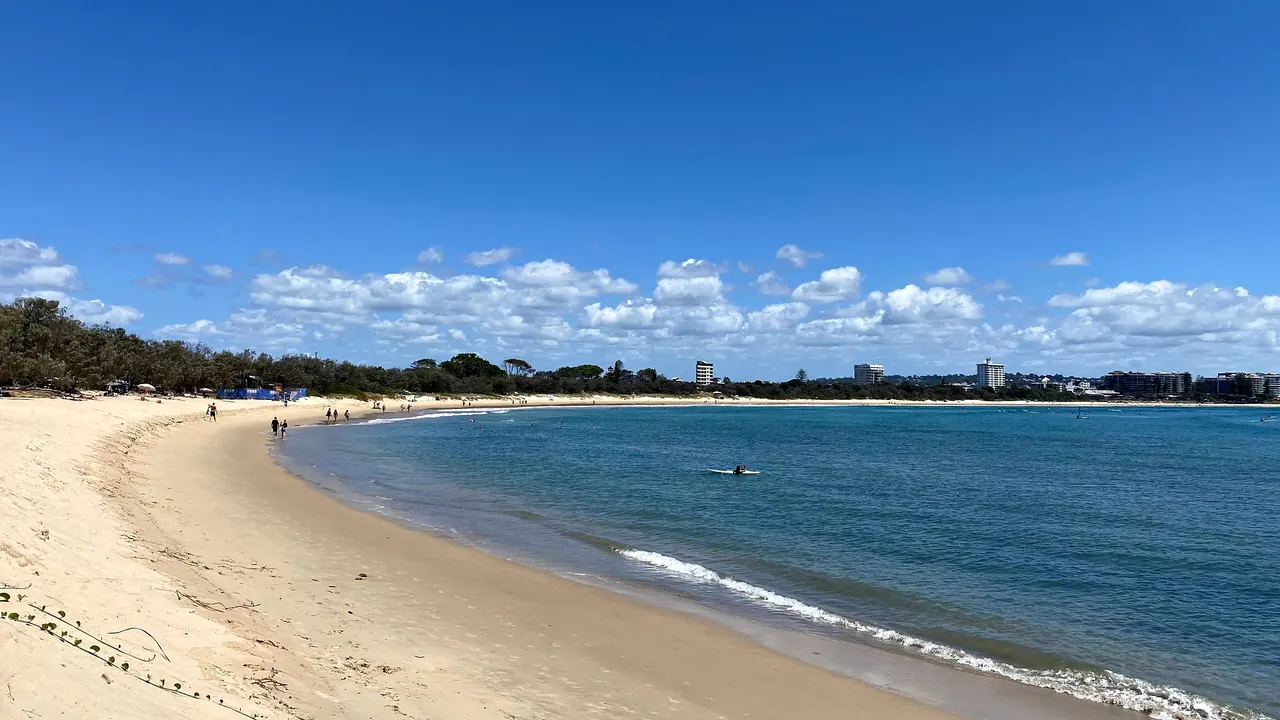
The curve of Mooloolaba beach towards Maroochydore
- Beaches86
- Families78
- Nature & outdoors76
Photo: -wuppertaler, CC BY 4.0, cropped
Match
48
Every category weighted equally
- Beach & sun55
- Culture & arts39
- Food & nightlife41
- Family trip56
- Outdoors55
- Relax & unwind54
- Shopping & style43
- On a budget46
Sunshine Coast in twelve categories
Our verdict on each, scored 0 to 100 against the same fixed benchmark cities, so a score means the same thing on every page.
Beaches & swimming. Scores 86 out of 100.
Food & drink. Scores 52 out of 100.
Culture & sights. Scores 14 out of 100.
Nightlife. Scores 27 out of 100.
Nature & outdoors. Scores 76 out of 100.
Day trips. Scores 48 out of 100.
Good for families. Scores 78 out of 100.
Getting around. Scores 48 out of 100.
Shopping & style. Scores 38 out of 100.
Affordability. Scores 32 out of 100.
Live music & performing arts. Scores 27 out of 100.
Wellness & relaxation. Scores 52 out of 100.
Sunshine Coast category by category
Beaches & swimming
86This is a coast built around the beach. About 60km of sand runs from Caloundra in the south to Noosa in the north, broken by rocky headlands and river mouths. Most of it faces the open Pacific, so the main beaches are surf beaches with lifeguards and flags. The water is warm enough to swim all year, around 26°C in summer and 21°C in winter. Most days start or end on the sand.
Noosa Main Beach faces north and is the calmest, which makes it good for children and for learning to surf. Mooloolaba has a sheltered front beach with a promenade of cafés behind it. Caloundra's small bays, such as Kings and Bulcock, are calm and have tidal pools. Coolum and Peregian are wilder and quieter. In summer the sea brings box-free but occasional bluebottle days, and storms can close beaches. Always swim between the flags.
Food & drink
52Eating here is relaxed and coastal. Expect grilled fish, Moreton Bay bugs and prawns, café breakfasts on terraces facing the sea, and modern Australian cooking that uses local produce. Noosa, around Hastings Street and the river, has the most polished restaurants. Mooloolaba's waterfront and harbour are good for seafood eaten outdoors. The hinterland adds farm-gate produce such as macadamias, ginger, avocados, cheese and strawberries, and small breweries and wineries are spread across the region.
The food is good, but there is not much depth. There is no local cuisine to discover, and outside the main towns most meals are pub bistros, surf-club dining rooms and chain cafés. Restaurants close early by city standards.
Culture & sights
14Heritage is thin on this coast. The towns grew up as beach resorts in the twentieth century, so there is little historic architecture. The landmarks are mostly natural ones, such as the Glass House Mountains, which are sacred to the Jinibara and Kabi Kabi peoples. Small regional galleries and craft studios in Caloundra, Noosa and the hinterland villages of Montville and Maleny fill an afternoon. A few heritage-listed buildings remain, including the lighthouses at Caloundra. Visitors who want museums travel to Brisbane for the day.
Nightlife
27Evenings here are mild. Most people have sunset drinks at a surf club, a beer at a brewery or a long dinner. Mooloolaba's esplanade and Ocean Street in Maroochydore have most of the late bars and a handful of clubs. They are busiest on weekends and during the summer school vacation. Noosa runs to wine bars and cocktails on Hastings Street, and most of them are quiet by midnight. Anyone who wants a real night out drives to Brisbane.
Nature & outdoors
76The landscape is gentle and green. Rainforest and volcanic peaks sit only a short drive from the surf. Noosa National Park's coastal track follows the headland past rocky points where koalas sit in the trees and dolphins swim below. Inland, the Glass House Mountains rise straight out of the pine forest, and short climbs such as Ngungun and Tibrogargan give wide views. On the Blackall Range, the hinterland has waterfall walks at Kondalilla and Mapleton Falls and the multi-day Sunshine Coast Great Walk.
North of Noosa, the Noosa Everglades are a still, tea-coloured river system that visitors explore by kayak or on a slow cruise. Beyond them is the four-wheel-drive beach of the Cooloola section of Great Sandy National Park. Humpback whales pass close to shore between June and October. Surfing, stand-up paddling and diving on the wreck off Mooloolaba fill the rest of the outdoor calendar.
Day trips
48There are only a few day trips. Brisbane is the main one, about an hour to an hour and a half south by car or train, with its museums, river and South Bank. Inland, the hinterland villages make an easy circuit: Montville for craft galleries, Maleny for its dairy country and Eumundi for its large weekly market. North of Noosa, Rainbow Beach and its coloured sand cliffs are a longer outing. From there, guided four-wheel-drive tours cross to K'gari for a very full day. Beyond that the region is mostly beach and farmland.
Good for families
78This is one of the easiest places in the country to take children. Australia Zoo, the Irwin family's zoo at Beerwah, is a full day of crocodile shows and close-up animal encounters. Mooloolaba has an aquarium on the waterfront with seal presentations. A small theme park near Woombye adds rides and wildlife.
The beaches are what make it work, though. Noosa Main Beach and the bays at Caloundra are sheltered and patrolled. Many beaches have shaded playgrounds and barbecue areas, and the outdoor, informal way of life suits children. Self-catering apartments are the normal way to stay. Rooms and beaches fill up during the Queensland school vacation periods, and the summer sun is strong, so plan days around the morning and late afternoon.
Getting around
48Most visitors hire a car. The roads are good and the distances short. The drive from Caloundra to Noosa takes about an hour, and the hinterland villages are under half an hour inland. Noosa Heads and Mooloolaba are pleasant to walk around. Local buses connect the coastal towns but are slow and infrequent. Trains from Brisbane stop at stations inland, which leaves a bus or taxi ride to the beach. During the summer school vacation, traffic and parking around Noosa and Mooloolaba get difficult.
Shopping & style
38Most shopping here is resort and market shopping. The Eumundi Markets, held in a hinterland town since the late 1970s, are the highlight, with hundreds of stalls selling local crafts, leather, ceramics, clothing and produce. Hastings Street in Noosa has resort-wear, swimwear and homewares boutiques. The hinterland villages sell art, pottery and fudge to day-trippers. Maroochydore has the region's big shopping centre, and every beach town has surf shops. There is no luxury or department-store shopping to speak of.
Affordability
32This is an expensive coast. Eating out, drinks and car hire all cost what they do elsewhere in Australia, which is high by international standards. Noosa is the priciest base, especially in summer and during the school vacation periods. Self-catering apartments in Mooloolaba, Maroochydore and Caloundra cost less and suit families. Much of the best of the region is free, including the beaches, the national park walks, the hinterland lookouts and barbecues in the parks.
Live music & performing arts
27There is not much to see on an ordinary night. Caloundra has a regional theatre that hosts touring shows, comedy and concerts. Surf clubs and pubs have local bands at weekends, mostly playing covers and acoustic sets. The festival calendar adds more. Over the Christmas and New Year period, the Woodford Folk Festival takes over a site at the southern edge of the hinterland, and Noosa holds arts and jazz festivals in the cooler months. For opera, orchestras or major theatre, visitors drive to Brisbane.
Wellness & relaxation
52The pace of the coast is restful, but there is no bathing tradition. Noosa has the most day spas and resort spas, along with yoga studios and early-morning classes held in parks by the river. Up on the Blackall Range, around Maleny and Montville, the hinterland has quiet retreats and guesthouses with rainforest views. These suit a few days of doing very little. There are no thermal springs or public bathhouses, so the wellness offer depends on spas and the slow rhythm of beach-town life.
Where to stay in Sunshine Coast
Noosa is the polished end of the coast and the priciest base. If you stay around Hastings Street and the river, the calm, north-facing Main Beach, the best restaurants and the headland track through the national park are all within walking distance. The Everglades and the Eumundi market are a short drive away. It suits couples, food lovers and families with young children, as long as they book early for the summer school vacation.
Mooloolaba, with Maroochydore next door, is the practical middle of the coast. The sheltered front beach, the esplanade cafés and the aquarium work well for families, self-catering apartments cost less, and most of the region's late bars are here. Caloundra, at the southern end, is quieter. Its calm bays and tidal pools suit small children, and it has the shortest drive to Australia Zoo and Brisbane. Between the two ends, Coolum and Peregian suit a quiet stay beside wilder surf beaches.
Inland, the guesthouses around Maleny and Montville on the Blackall Range are the choice for waterfall walks, rainforest views and a few slow days, and the beach is under half an hour away. Distances are short, so on a first visit one base on the coast and a hire car cover the whole region. On a longer trip, a few nights in the hinterland make a good second stay.
When should you go?
Pick a month to see what it is like. The climate figures are measured averages, not a forecast.
Sunshine Coast in July
Daytime high, °C
Rainfall in the month, mm
The whole year
Shaded against this destination’s own year: the deepest cell is its best month for that figure and the palest its weakest.
Where the figures come from
Sunshine Coast's sunshine is measured 83 km from the centre, at Brisbane Airport.
Temperature and rainfall are climate normals, averaged over the years shown. Sunshine Coast: 1991-2020 normals, Sunshine Coast Airport (5.6 km from centre).
Before you go
| Measure | Sunshine Coast |
|---|---|
| Official language | English |
| Currency | Australian Dollar (AUD) |
| Sockets | I230 V, 50 Hz |
| Driving side | Left |
| Time zone | UTC+10 |
| Emergency number | 000 |
| Main airport | Sunshine Coast Airport (MCY)8 non-stop destinations |
| Public holidays this year | 11 days |
By the numbers
| Measure | Sunshine Coast |
|---|---|
| Population | 284,131 |
| People per km² | 614 |
| Swim season, months above 21 °C | 10 months |
Compare Sunshine Coast with
Every comparison with a written verdict behind it.