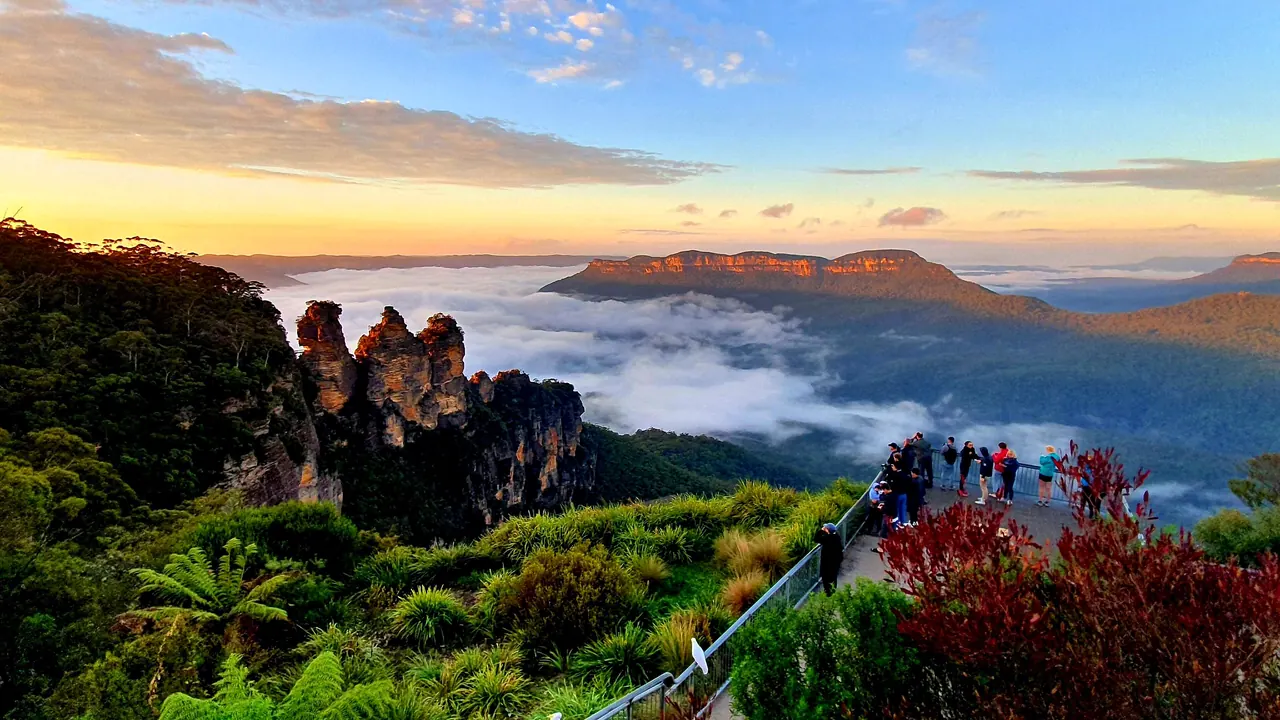
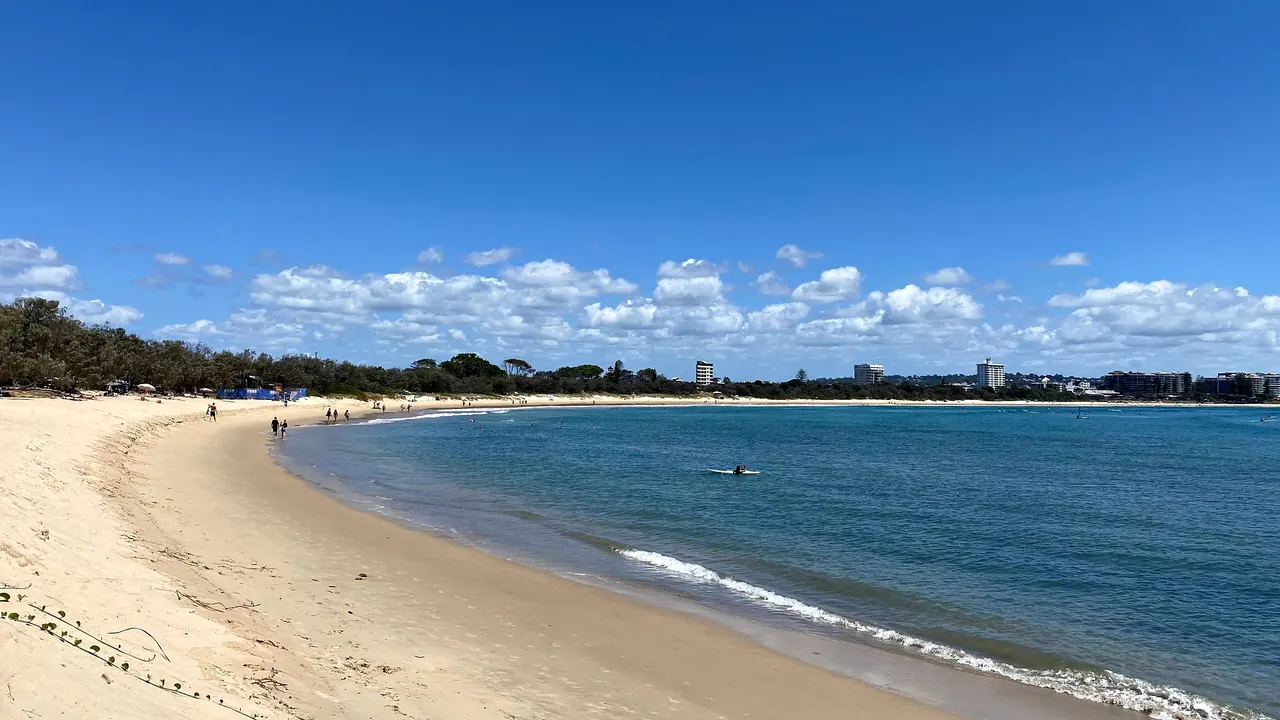
Photos: Blue Mountains by Abracadebra68, CC BY-SA 4.0, cropped; Sunshine Coast by -wuppertaler, CC BY 4.0, cropped.
Blue Mountains or Sunshine Coast?
Our verdict in twelve categories, each scored against the same fixed benchmark cities, and the climate month by month, so you can choose for your trip.
Choose Blue Mountains for
- culture and sights
- nature and the outdoors
- getting around
The Blue Mountains suit walkers and couples who want a cool, quiet escape. Clifftop tracks leave straight from the village streets, the gorges and slot canyons are among the finest anywhere, and evenings mean a fire, a good dinner in Leura or Blackheath and an early night. The villages sit along a railway line, so you can stay without a car and still spend a day in Sydney. You give up the sea and almost all nightlife.
Choose Sunshine Coast for
- beaches
- families
- nightlife
Choose the Sunshine Coast for a warm, easy beach vacation, especially with children. Days revolve around patrolled surf beaches and calm bays, with Australia Zoo, hinterland rainforest and the Noosa headland to fill the rest, and the food and evenings are livelier, if still mild. In return you lose the drama of the mountain landscape and the old resort heritage, and you will almost certainly need a car.
Scoreboard
Twelve categories on one fixed scale from 0 to 100. The shaded stretch is the gap between the two.
Your match
Pick a travel style or drag the sliders, and both match scores follow your weighting.
Wins on culture and sights and nature and the outdoors with your weighting.
Wins on beaches and families with your weighting.
What matters to you?
Category by category
What the scores mean for a trip.
Beaches & swimming
There is no real contest here. The Blue Mountains are inland sandstone country. Swimming there means cold, shaded creek pools such as the Blue Pool near Glenbrook, or a separate trip of about two hours down to Sydney's beaches.
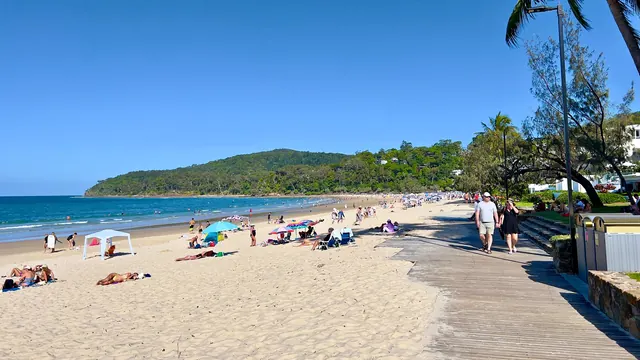
The Sunshine Coast is the opposite: a long run of surf beaches between Caloundra and Noosa, with flags and lifeguards. Noosa Main Beach and the Caloundra bays are calm, and the sea is warm enough to swim in through the winter as well.
Food & drink
Neither region has a cuisine of its own, but the Sunshine Coast eats with more range. It has seafood by the harbour at Mooloolaba, the polished restaurants around Hastings Street in Noosa, and hinterland produce such as macadamias, ginger and cheese.
The Blue Mountains are about long breakfasts, bakeries and high tea with a valley view. A few serious kitchens in Leura and Blackheath use farm produce and Central West wine, but evenings in the smaller villages end early.
Culture & sights
The Blue Mountains have more to look at, though neither region is a culture destination. Katoomba's Art Deco shopfronts, the Federation cottages of Leura, the Edwardian hotel at Medlow Bath, the Norman Lindsay Gallery and the old coaching inns at Mount Victoria and Hartley fill a couple of days. Some tracks also pass Darug and Gundungurra rock art.
The Sunshine Coast grew up as a twentieth-century resort and has little old architecture beyond the Caloundra lighthouses. Its great landmark is natural, the Glass House Mountains, and for museums you go to Brisbane.
Nightlife
After dark the Blue Mountains have very little to offer. A couple of Katoomba pubs and a small bar fill up at weekends, the other villages are quiet after dinner, and most visitors end a day on the tracks by a fire.
The Sunshine Coast has the only real night out of the two. There are late bars and a handful of clubs along Mooloolaba's esplanade and Ocean Street in Maroochydore, as well as wine and cocktail bars on Hastings Street in Noosa, though those are mostly quiet by midnight. For anything bigger, people drive to Brisbane.
Nature & outdoors
Both are fine regions for the outdoors, but the Blue Mountains are the more dramatic. Sheer sandstone cliffs drop into deep eucalypt valleys, and tracks such as the National Pass and the descent into the Grose Valley start right from the villages. Canyoning, climbing, the Six Foot Track and the Jenolan Caves add more.
The Sunshine Coast is softer and more varied. It has koalas on the Noosa headland, the volcanic peaks of the Glass House Mountains, the falls at Kondalilla, kayaking in the Noosa Everglades and humpback whales offshore in winter and spring. Its strength is that you can combine rainforest and sea in a single day.
Day trips
The Blue Mountains offer the wider choice. Sydney is a train ride away, with colonial Parramatta on the line. Gold-rush Bathurst, the Hawkesbury towns of Windsor and Richmond and the Mudgee cellar doors each lie in a different direction.
From the Sunshine Coast, Brisbane is closer, and the hinterland villages and the Eumundi market make a gentle loop. Beyond Rainbow Beach and the long tours across to K'gari, though, the list soon runs out.
Good for families
The Sunshine Coast is set up for children in a way the mountains are not. Australia Zoo, the aquarium at Mooloolaba, sheltered patrolled beaches with playgrounds and barbecues, and self-catering apartments all make a long stay easy.
The Blue Mountains have a few memorable outings, such as the Scenic Railway, the cableways and the Jenolan Caves, but little else built for children. The long staircases and unfenced lookouts also mean small children need close watching.
Getting around
The Blue Mountains are the easier region without a car. The villages sit in a line along the railway from Sydney, several classic walks start near a station, and a sightseeing bus links the lookouts around Katoomba and Leura. Only the outlying valleys, Mount Wilson and the caves really need a car.
On the Sunshine Coast the train stops inland, the local buses are slow, and most visitors hire a car. The drives are short, though, and Noosa Heads and Mooloolaba are pleasant to walk around.
Shopping & style
In the Blue Mountains, shopping is a slow afternoon's browse. You can wander past the boutiques, homewares and sweet shops of Leura Mall, and look for antiques, second-hand books and vintage finds in the old shopfronts of Katoomba and Blackheath.
The Sunshine Coast gives you more to buy and more places to buy it. The Eumundi Markets have hundreds of craft, ceramics and produce stalls. Hastings Street in Noosa has resort-wear and swimwear, and Maroochydore has a large shopping centre for everyday needs. Neither region has luxury or department-store shopping.
Affordability
Both regions cost about what Australia costs, and in both the best things, the walks and the lookouts, are free. In the Blue Mountains the savings come from the cheap train up from Sydney, the plainer motels and hostels in Katoomba and staying midweek, while the cableways and cave tours add up quickly. On the Sunshine Coast, the savings come from a self-catering apartment in Mooloolaba, Maroochydore or Caloundra rather than Noosa, though car hire usually adds to the bill.
Live music & performing arts
For opera or major theatre you have to go to Sydney or Brisbane from either region. Even so, the Sunshine Coast has more going on. There are touring shows at Caloundra's regional theatre, weekend bands at the surf clubs, the Woodford Folk Festival over Christmas and New Year, and Noosa's jazz and arts festivals.
The Blue Mountains offer community theatre and folk sets in the pubs. They are liveliest in winter, with Katoomba's midwinter festival and the Christmas-in-July dinners.
Wellness & relaxation
In substance the two are much the same: day spas, resort treatment rooms, yoga and no thermal waters in either. What differs is the mood. The Blue Mountains mean cool air, fireplaces and clifftop retreats for a slow weekend as a couple, while the Sunshine Coast means early yoga by the river in Noosa, unhurried beach mornings or a rainforest guesthouse near Maleny.
When should you go?
Pick your month. The climate figures are measured averages, not a forecast.
Blue Mountains in July
Sunshine Coast in July
Daytime high, °C
Rainfall in the month, mm
Where the figures come from
Sunshine Coast's sunshine is measured 83 km from the centre, at Brisbane Airport.
Temperature and rainfall are climate normals, averaged over the years shown. Blue Mountains: 1991-2020 normals, Katoomba (1.4 km from centre). Sunshine Coast: 1991-2020 normals, Sunshine Coast Airport (5.6 km from centre).
The Blue Mountains are at their best in spring and autumn, when the days are mild and ideal for long walks. Summer days are warm rather than hot up on the ridge, but January to March is the wettest stretch, with February reaching about 195mm, and summer can also bring bushfire closures. Winter is crisp and sometimes frosty, with highs of around 10°C. That suits fireside stays and clear walking days, and late winter into spring is the driest time.
The Sunshine Coast is warm all year. Summer highs reach about 29°C and the sea is warm enough to swim in every month, never dropping much below 21°C. Summer and autumn are wet and humid, with rain lasting into May. Late winter and spring, from August to November, are the driest and sunniest months and the most comfortable for both beach and walking. When the mountains are cold, the coast is at its most pleasant.
Which traveller are you?
On a beach and sun trip the Sunshine Coast is the obvious choice. It has long patrolled surf beaches, calm bays and a sea warm enough to swim in all year. The Blue Mountains offer only cold creek pools, and Sydney's beaches are a separate outing.
For an outdoors trip the Blue Mountains have the edge. World Heritage cliffs, the Grand Canyon track and the Grose Valley start at the edge of the villages, and the slot canyons around Blackheath draw abseilers. The Sunshine Coast's rainforest and headland walks are gentler.
On a family trip with young children the Sunshine Coast is easier. Australia Zoo, the Mooloolaba aquarium and sheltered beaches with playgrounds fill the days. The mountains have the Scenic Railway and the Jenolan Caves, but they also have steep stairways and unfenced drops.
Before you go
| Measure | Blue Mountains | Sunshine Coast |
|---|---|---|
| Official language | English | English |
| Currency | Australian Dollar (AUD) | Australian Dollar (AUD) |
| Sockets | I230 V, 50 Hz | I230 V, 50 Hz |
| Driving side | Left | Left |
| Time zone | UTC+10, UTC+11 in summer | UTC+10 |
| Emergency number | 000 | 000 |
| Main airport | Sydney Kingsford Smith International Airport (SYD)99 non-stop destinations | Sunshine Coast Airport (MCY)8 non-stop destinations |
| Public holidays this year | 11 days | 11 days |
By the numbers
| Measure | Blue Mountains | Sunshine Coast |
|---|---|---|
| Population | 30,049 | 284,131 |
| People per km² | 21 | 614 |
| Swim season, months above 21 °C | - | 10 months |
Where else could you go?
Every comparison below shares a destination with this one, so you can follow Blue Mountains or Sunshine Coast somewhere new.
- K'garivs Sunshine Coast
- Great Ocean Roadvs Blue Mountains
- Whitsundaysvs Sunshine Coast
- K'garivs Blue Mountains
- Tasmaniavs Blue Mountains
- Kangaroo Islandvs Blue Mountains