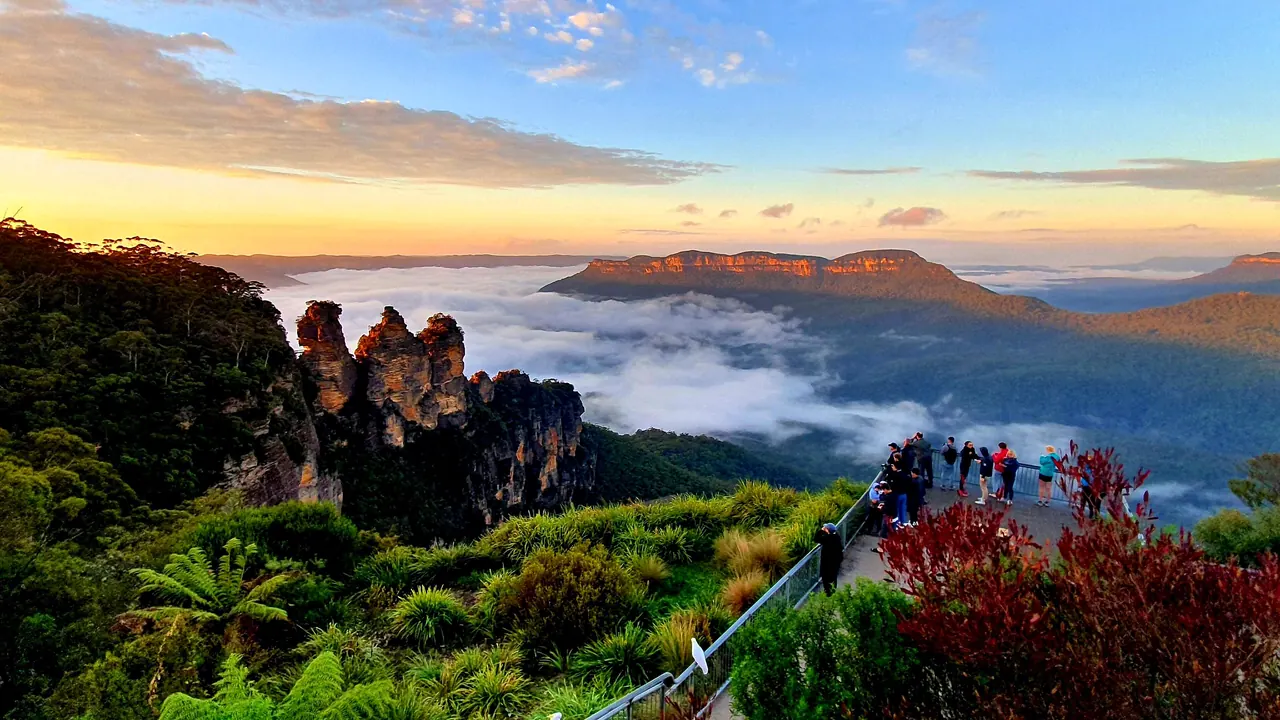
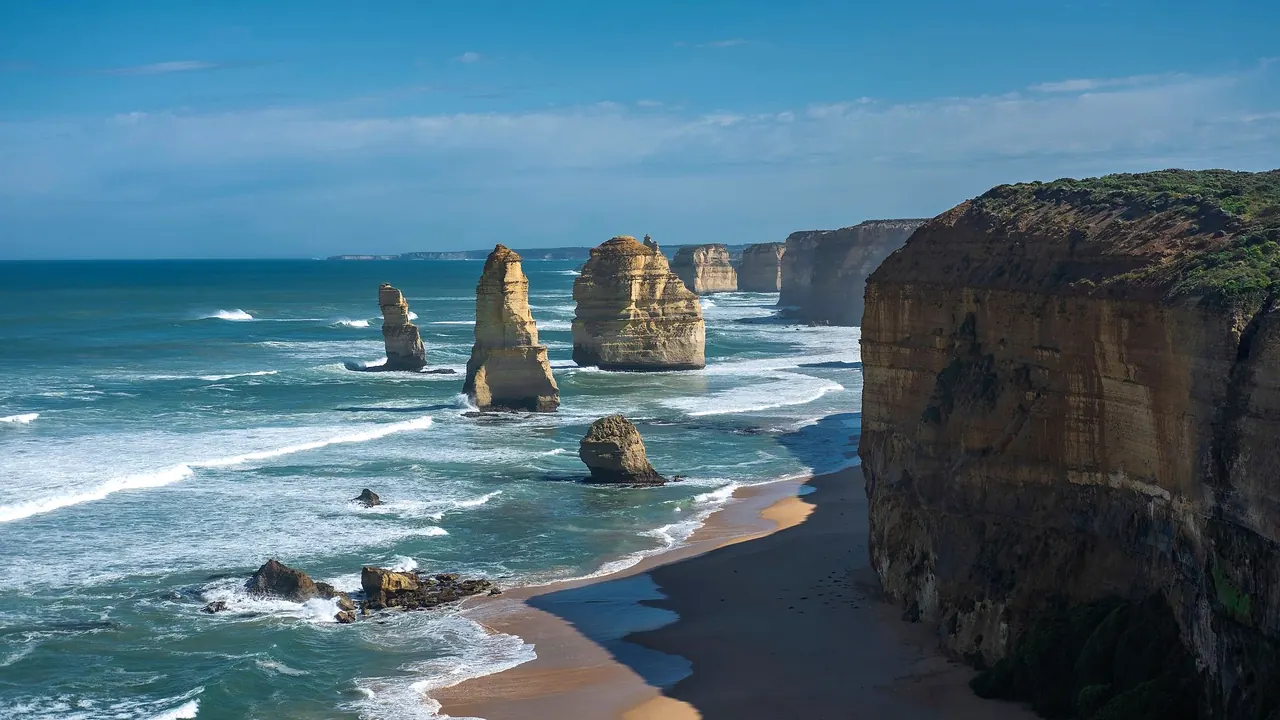
Photos: Blue Mountains by Abracadebra68, CC BY-SA 4.0, cropped; Great Ocean Road by Joe Kent, Pexels License.
Blue Mountains or Great Ocean Road?
Our verdict in twelve categories, each scored against the same fixed benchmark cities, and the climate month by month, so you can choose for your trip.
Choose Blue Mountains for
- getting around
- wellness
- culture and sights
The Blue Mountains suit walkers without a car, and anyone who wants a slow cottage retreat close to Sydney. Trains from the city stop in the same villages where the clifftop and valley tracks begin, so a long weekend of walking, spa visits and evenings by the fire takes little planning. On a wet afternoon you can fill the time with the old guesthouses and galleries of Leura and Katoomba.
Choose Great Ocean Road for
- beaches
- food and drink
- families
Choose the Great Ocean Road if you want the sea in the picture: patrolled surf beaches at Lorne and Torquay, limestone stacks at the Twelve Apostles and koalas in the gums. It is a road trip at heart, best done by car over two or three nights, and it rewards travellers who want to swim, surf and spot wildlife rather than settle into one village.
Scoreboard
Twelve categories on one fixed scale from 0 to 100. The shaded stretch is the gap between the two.
Your match
Pick a travel style or drag the sliders, and both match scores follow your weighting.
Too close to call, level with your weighting
Wins on getting around and wellness with your weighting.
Wins on beaches and food and drink with your weighting.
What matters to you?
Category by category
What the scores mean for a trip.
Beaches & swimming
The Great Ocean Road is the only one of the two with a coast. Its patrolled town beaches at Torquay, Anglesea, Lorne and Apollo Bay make proper beach days possible in summer, and Bells Beach is there for surfers. The sea stays cool, though, and the dramatic stretches near Port Campbell are too rough for swimming.
In the Blue Mountains, swimming means cold creek pools such as those near Glenbrook and the plunge pools below waterfalls. That is a pleasant dip on a hot day, not a beach. The nearest sand is in Sydney, a separate day out.
Food & drink
Both eat in much the same way, with cafés and brunch rather than a regional cuisine, and neither is worth the trip for food alone. The coast has a slight edge thanks to the sea: fish and chips on the foreshore, crayfish and abalone in season, and farm-driven restaurants and craft breweries in the Otway hinterland.
The mountains answer with long breakfasts, bakeries and high tea in the old guesthouses, and the more serious cooking is concentrated in Leura and Blackheath. Expect kitchens to close early in the smaller villages.
Culture & sights
Neither has a list of major sights, but the mountains have a little more to see: Art Deco Katoomba, Federation cottages in Leura, the Norman Lindsay Gallery at Faulconbridge, and Darug and Gundungurra rock engravings along some tracks. The coast's history is maritime and wartime instead, from the Memorial Arch honouring the soldiers who built the road to Cape Otway Lightstation, Flagstaff Hill in Warrnambool and the bluestone streets of Port Fairy.
Nightlife
Both go quiet after dinner, so neither suits anyone looking for a night out. The small difference is the season. Torquay and Lorne liven up on summer weekends and around New Year, when young Melburnians arrive, while Katoomba's few pubs fill mainly at weekends and a mountain evening is more often spent by a fire.
Nature & outdoors
Both are among Australia's great landscapes, and the difference lies in the kind of scenery. The Blue Mountains are gorge country, seen from the clifftops and then walked into: sandstone cliffs, eucalypt valleys under a blue haze, and stairways down to waterfalls. Canyoning, abseiling and climbing around Blackheath and Mount Wilson add to it, and much of it starts at the edge of the villages.
The Great Ocean Road gives you sea and rainforest instead: the limestone stacks of the Twelve Apostles and Loch Ard Gorge, and tree ferns and glow worms in the Otways. Wildlife is easier to find there too, with koalas at Kennett River and southern right whales off Warrnambool in winter. For a multi-day walk, the coast has the Great Ocean Walk and the mountains have the Six Foot Track.
Day trips
Each has a state capital within reach, but the outings feel different. From the mountains, Sydney is a train ride away and easy without a car, with Parramatta's colonial buildings on the way and gold-rush Bathurst over the range to the west.
On the coast, the choice depends on which end you stay at. From Torquay you can reach Melbourne, Geelong, the Bellarine wineries and Ballarat. From Port Fairy, the Budj Bim Cultural Landscape lies inland. Along the middle of the road there is little beyond the forest and the shore.
Good for families
For families, the difference is between a few short outings and a whole beach vacation. The Blue Mountains have short, memorable thrills: the steep Scenic Railway and the cableways at Katoomba, the lit chambers of the Jenolan Caves, and easy walks such as the Wentworth Falls circuit. Beyond those there is little built for children, and the longer tracks run to hundreds of steps.
The Great Ocean Road is a coast families have returned to every summer for generations. Beach houses and caravan parks sit a short walk from patrolled sand, Torquay has surf schools and there are koalas to spot at Kennett River. Settle in one town, because the winding drives upset young stomachs and the sea is cold for small swimmers. In both places the clifftop lookouts need a firm hand.
Getting around
The Blue Mountains are far easier without a car. The villages sit in a line along the railway from Sydney, several classic walks start near a station, and a sightseeing bus links the main lookouts around Katoomba and Leura. You only need a car for places off the ridge, such as the Megalong Valley or the Jenolan Caves.
The Great Ocean Road is a driving trip by definition. The bends between Lorne and Apollo Bay are slow behind caravans in summer and the regional coach is too sparse to rely on. The full road deserves two or three nights rather than one rushed day from Melbourne.
Shopping & style
Neither is a place to go shopping. The mountains offer a little more browsing, with boutiques and galleries on Leura Mall and antiques and second-hand books in Katoomba and Blackheath. The coast's one real draw is the strip of surfwear outlets in Torquay, where several big surf brands began, plus makers' markets in summer.
Affordability
The train is what separates them. A cheap fare from Sydney takes you to the Blue Mountains villages and the tracks that start beside them, and Katoomba has the widest range of hostels, plain motels and cottages, so you can do a mountain stay without a car at all.
On the Great Ocean Road you pay for a hire car and fuel from the first day, and beach houses in Lorne and Torquay are expensive in season. Caravan parks, campgrounds and cooking for yourself bring the cost down. In both, the walks and lookouts are free, and meals cost about what they do anywhere in Australia.
Live music & performing arts
Live performance is thin in both, and theatre or concerts mean a trip to Sydney or Melbourne. What differs is the season. The coast's one big occasion is the Port Fairy Folk Festival over a long weekend in March, while the mountains have the most going on in winter, with Katoomba's midwinter street festival and Christmas-in-July dinners with carols.
Wellness & relaxation
The mountains are the better place to switch off, after more than a century as Sydney's retreat. Day spas in Leura, Katoomba and Blackheath, clifftop hotels with treatment rooms and small yoga retreats in the bush suit a slow weekend for couples, with walks, massages and cool air.
The coast has fewer spas, mostly in Lorne and Torquay, and how restful it is depends on the season: empty beaches and forest cabins with fires in winter, crowds in summer. Neither has thermal springs.
When should you go?
Pick your month. The climate figures are measured averages, not a forecast.
Blue Mountains in July
Great Ocean Road in July
Daytime high, °C
Rainfall in the month, mm
Temperature and rainfall are climate normals, averaged over the years shown. Blue Mountains: 1991-2020 normals, Katoomba (1.4 km from centre). Great Ocean Road: 1991-2020 normals, Aireys Inlet (12.2 km from centre).
The two are almost equally warm in summer, with daytime highs in the low to mid twenties from December to February, but the rain falls differently. In the Blue Mountains summer is the wet season, and February is the wettest month at around 195mm, so tracks get slippery and cloud can hide the valleys. Winter is cold, around 10°C by day, but noticeably drier. September and October in spring, and April in autumn, bring mild and steadier walking weather, and these are the mountains' best months.
On the Great Ocean Road the pattern runs the other way. Summer is the driest part of the year, and January to March is the only time the sea, at around 18°C, tempts most people in without a wetsuit. From May to September it turns wetter and cooler, with July the wettest month. Even then the coast stays milder than the mountains, so winter there is cool and blustery rather than cold.
Which traveller are you?
On a beach and sun trip, the Great Ocean Road is the clear choice. Lorne, Anglesea and Apollo Bay have patrolled beaches for long summer days on the sand, and Torquay has surf schools and Bells Beach. The mountains have only cold creek pools.
For a relaxing and wellness trip, the Blue Mountains suit better. Leura and Blackheath have day spas and clifftop retreat hotels, and the cool air and evenings by the fire set a slow pace. On the coast, finding the same calm means avoiding the crowded summer weeks.
On a trip on a tight budget, the Blue Mountains go further. Come midweek and outside the cold-weather peak, and spend your days on the tracks rather than on the cableways and cave tours, which take most of the money. The coast costs most in summer, just when its beaches are worth it.
Before you go
| Measure | Blue Mountains | Great Ocean Road |
|---|---|---|
| Official language | English | English |
| Currency | Australian Dollar (AUD) | Australian Dollar (AUD) |
| Sockets | I230 V, 50 Hz | I230 V, 50 Hz |
| Driving side | Left | Left |
| Time zone | UTC+10, UTC+11 in summer | UTC+10, UTC+11 in summer |
| Emergency number | 000 | 000 |
| Main airport | Sydney Kingsford Smith International Airport (SYD)99 non-stop destinations | Melbourne Airport (MEL)70 non-stop destinations |
| Public holidays this year | 11 days | 13 days |
By the numbers
| Measure | Blue Mountains | Great Ocean Road |
|---|---|---|
| Population | 30,049 | - |
| People per km² | 21 | - |
| Swim season, months above 21 °C | - | None |
Where else could you go?
Every comparison below shares a destination with this one, so you can follow Blue Mountains or Great Ocean Road somewhere new.
- Tasmaniavs Great Ocean Road
- Kangaroo Islandvs Great Ocean Road
- Sunshine Coastvs Blue Mountains
- K'garivs Blue Mountains
- Tasmaniavs Blue Mountains
- Kangaroo Islandvs Blue Mountains