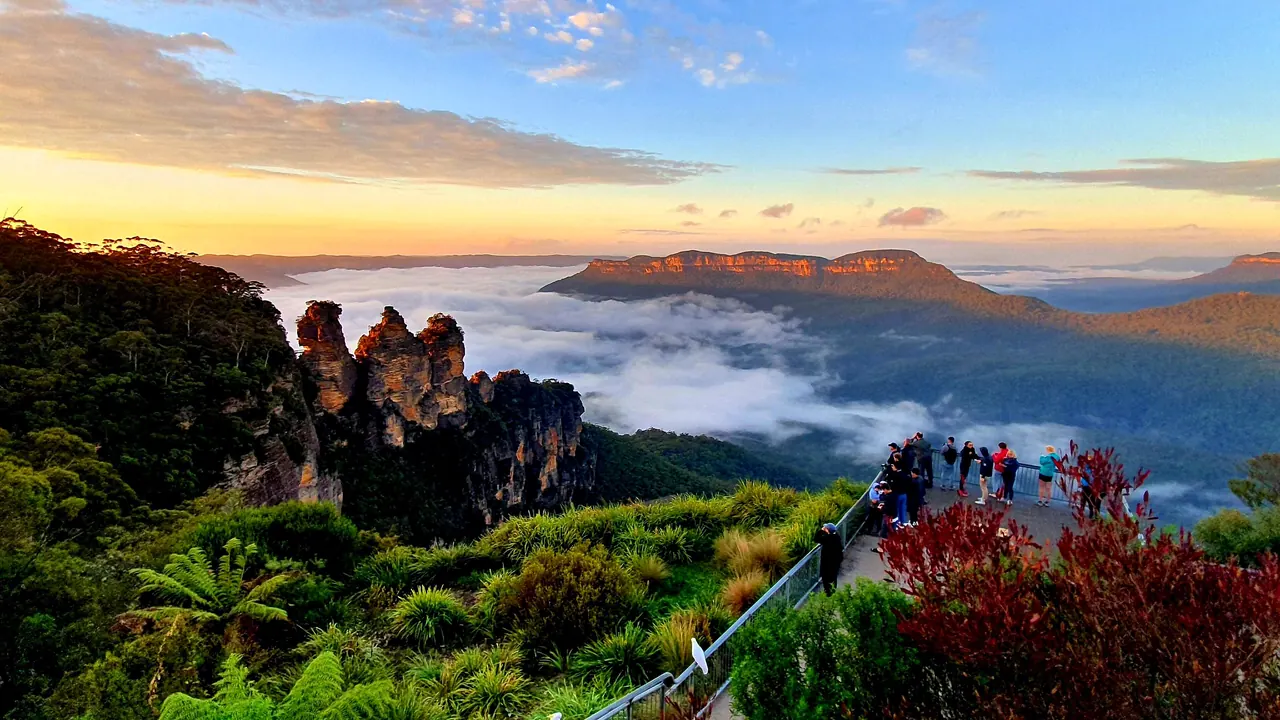
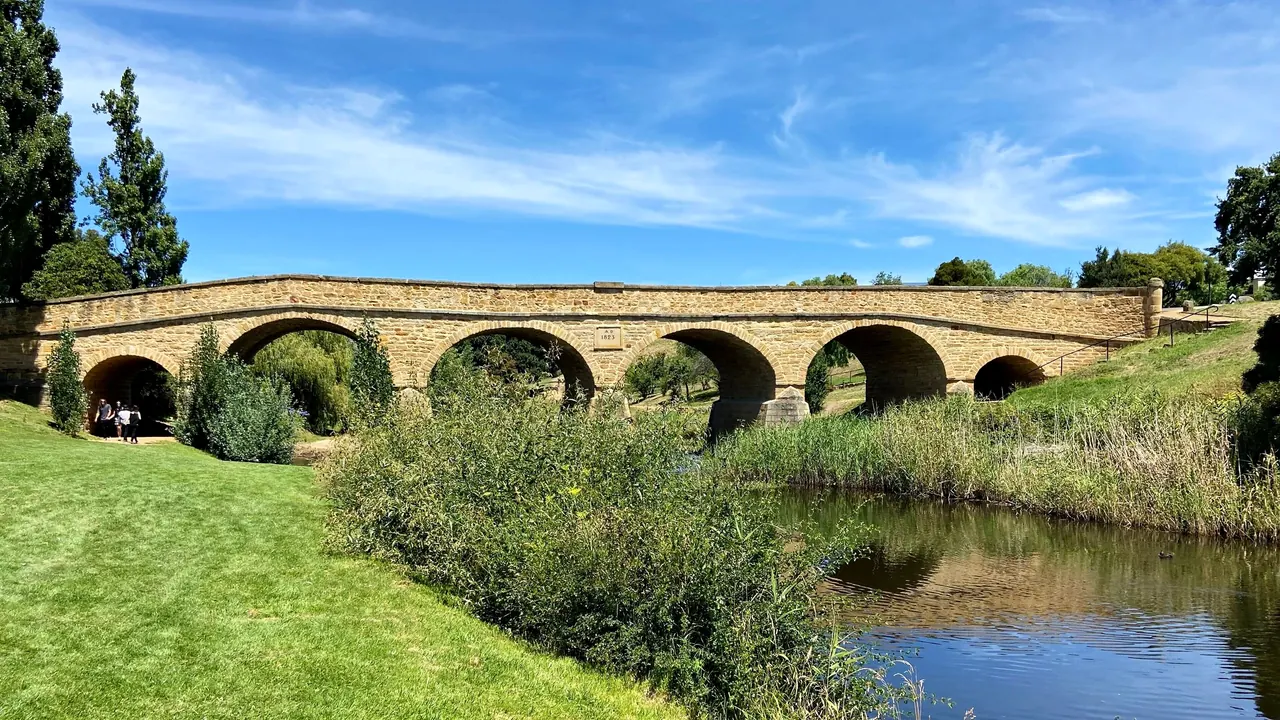
Photos: Blue Mountains by Abracadebra68, CC BY-SA 4.0, cropped; Tasmania by jacobharrisau, CC BY-SA 2.0, cropped.
Blue Mountains or Tasmania?
Our verdict in twelve categories, each scored against the same fixed benchmark cities, and the climate month by month, so you can choose for your trip.
Choose Blue Mountains for
- getting around
- prices
- wellness
The Blue Mountains suit a short, focused walking trip, especially from Sydney. The trains climb straight to the ridge villages, the cliff-edge tracks start at the end of the street in Katoomba, Leura and Blackheath, and you can do a great deal without a car. Evenings are slow and quiet, by a fire or over a long dinner. Choose it for a few days of walking, canyoning and cottage rest, not for food, art or nightlife.
Choose Tasmania for
- beaches
- food and drink
- culture and sights
Tasmania rewards a longer road trip with more to fill it. The wilderness is just as fine, and you also get the east coast beaches, MONA and Port Arthur, Hobart's Georgian waterfront and some of the best oysters, pinot noir and whisky in Australia. The cost is time behind the wheel on winding roads and a bigger budget. Go if you want food, history and wildlife woven around the walking.
Scoreboard
Twelve categories on one fixed scale from 0 to 100. The shaded stretch is the gap between the two.
Your match
Pick a travel style or drag the sliders, and both match scores follow your weighting.
Wins on getting around and prices with your weighting.
Wins on beaches and food and drink with your weighting.
What matters to you?
Category by category
What the scores mean for a trip.
Beaches & swimming
The Blue Mountains have no coast at all. Swimming there means cold, shaded creek pools such as the Blue Pool and Jellybean Pool near Glenbrook, or the water below a waterfall, and the sea is a separate day trip down to Sydney.
Tasmania has real beaches, and very beautiful ones: Wineglass Bay on the Freycinet Peninsula, the white sand and orange-lichened boulders of the Bay of Fires, and the quiet bays near Hobart. The water stays cold even in high summer, so these are beaches for walking and a quick swim rather than lazy days in the sea. Still, it is coast you can actually visit, which the mountains cannot give you.
Food & drink
Tasmania is a destination for food and drink in its own right. Menus name the bay the oysters came from or the farm that raised the beef. The Salamanca market and the waterfront fish punts make Hobart a pleasure to graze, and the Tamar and Coal River valleys produce pinot noir, sparkling wine and single malt worth driving for.
Eating in the Blue Mountains is the comfortable food of a weekend retreat: long breakfasts, bakeries and high tea with a view over the valleys in Leura and Blackheath, plus a few serious restaurants. It is enjoyable but limited, and kitchens in the small villages close early.
Culture & sights
Tasmania has two sights of national importance. One is MONA, cut into the sandstone above the Derwent. The other is Port Arthur, one of several UNESCO-listed convict sites on the island. Add Battery Point's Georgian streets and the sandstone villages of Richmond and Ross, and history and art can fill several days.
The mountains' heritage is that of an old Sydney resort: Art Deco shopfronts in Katoomba, Federation gardens in Leura, the Norman Lindsay Gallery and Darug and Gundungurra rock art along some tracks. It is charming but slight, and two days covers it.
Nightlife
Neither is a place for a big night out, but Tasmania at least has Hobart. On weekends the sandstone pubs and wine bars around Salamanca and the bar strip in North Hobart fill up until around midnight. In the Blue Mountains, a couple of Katoomba pubs are about all there is, and most visitors spend the evening by the fire after a day of walking.
Nature & outdoors
Both are World Heritage country and among the finest landscapes in Australia, but the scale is very different. The Blue Mountains are compact: one sandstone plateau cut by gorges. Classic walks like the Grand Canyon track and the National Pass start at the edge of the villages, and some of the best slot-canyon abseiling anywhere is near Blackheath.
Tasmania's wilderness covers a far larger area and more kinds of landscape: glacial lakes and dolerite peaks at Cradle Mountain, the six-day Overland Track, sea cliffs on the Three Capes walk and pink granite at Freycinet. The wildlife goes well beyond the mountains' lyrebirds and wallabies, with devils, platypus, penguins and wombats. It simply takes much longer to get between these places.
Day trips
There is about the same amount to do on day trips from each, but the outings are of different kinds. From the mountains, the big one is Sydney itself, two hours by train, with Parramatta's colonial buildings on the way and gold-rush Bathurst or the Hawkesbury towns in the other direction.
Tasmania has no big city to visit, but its day trips are full of food and character: the ferry to Bruny Island for oysters and cheese, cider in the Huon Valley, Richmond's colonial village, and the Tamar wine route or Georgian Ross from Launceston.
Good for families
Both work equally well for active families without theme parks. In the Blue Mountains, the steep Scenic Railway, the cableways and the lit caverns of Jenolan are the highlights, and the distances are short, but many lookouts sit above unfenced drops. In Tasmania it is the animals that win children over, with devils and wombats in sanctuaries and penguins coming ashore at dusk, but the long, winding drives can wear young passengers down.
Getting around
The Blue Mountains are much easier without a car. The villages sit in a line along the railway from Sydney, good walks start near stations at Wentworth Falls, Leura and Blackheath, and a hop-on bus links the Katoomba lookouts. You only really need to drive for the Megalong Valley, Mount Wilson or Jenolan.
In Tasmania a hire car is close to essential. The buses miss most national parks, and the hilly roads make journeys slow: Cradle Mountain is four hours or more from Hobart. Only central Hobart and Battery Point are pleasant to explore on foot.
Shopping & style
Neither is a shopping destination, and each sells what it makes. In the mountains you browse the boutiques and chocolate shops of Leura Mall and the antiques and second-hand books of Katoomba and Blackheath. Tasmania's highlight is the Saturday market at Salamanca, with Huon pine woodwork and knitwear, and the farm gates sell leatherwood honey, cheese and whisky to take home.
Affordability
Both are expensive, but the Blue Mountains are somewhat easier on the budget. The train from Sydney is cheap, the lookouts and tracks cost nothing, and Katoomba has the plainest beds. Prices only really climb on weekends and in school vacation periods.
Tasmania has fixed costs that build up: a hire car, fuel, national park passes, and scarce, highly priced rooms near Freycinet and Cradle Mountain in summer. Cabins, campsites and picnics from farm gates help, as does travelling in spring or autumn.
Live music & performing arts
Tasmania has a real if modest arts scene in Hobart. The Tasmanian Symphony Orchestra plays its season on the waterfront, and the Theatre Royal, open since 1837, stages drama and touring shows. In July the Festival of Voices fills churches and halls with choirs.
The mountains rely on community theatre in Katoomba and Springwood and folk sets in the pubs. Oddly, both places come most alive in winter: the mountains have Katoomba's midwinter street festival and Christmas-in-July dinners, but these are cosy local events rather than a programme to travel for.
Wellness & relaxation
Both are good for slowing down, though in different ways. The Blue Mountains have been Sydney's retreat since the late nineteenth century, so a weekend of day spas in Leura, a clifftop hotel treatment room or a bush yoga retreat is easy to arrange and close at hand.
Tasmania's rest comes more from the pace of the whole island. Its spas sit in upmarket lodges at Cradle Mountain and Freycinet, and it has the one warm pool at Hastings Caves, plus winter sea swims and waterside saunas around Hobart.
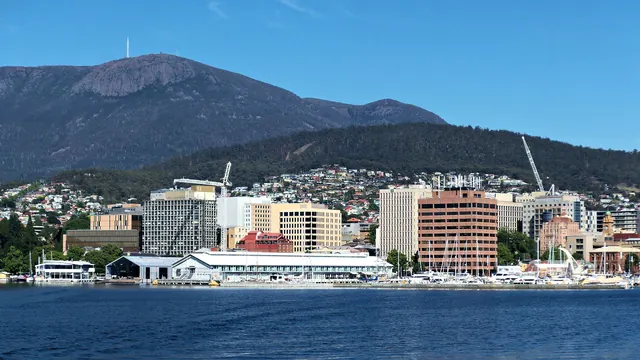
When should you go?
Pick your month. The climate figures are measured averages, not a forecast.
Blue Mountains in July
Tasmania in July
Daytime high, °C
Rainfall in the month, mm
Temperature and rainfall are climate normals, averaged over the years shown. Blue Mountains: 1991-2020 normals, Katoomba (1.4 km from centre). Tasmania: 1991-2020 normals, Hobart (3 km from centre).
These figures are for the ridge around Katoomba and for the area where most Tasmania visitors stay. The two have surprisingly similar temperatures, but the rain is very different. The Blue Mountains peak at about 24°C in January, which is pleasant for walking, but summer is also the wet season there, with February the wettest month at around 195mm, along with storms and the risk of bushfire closures. Winter is crisp and dry, with highs near 10°C in July. The mountains are at their best for walking in spring and autumn, roughly September to November and April to May.
Tasmania is drier and more even through the year, with no real wet season. It gets its most sunshine in December and January, and summer is mild rather than hot. The sea peaks at only about 17°C in February, so even at its warmest the beach means a brisk dip. Winter highs of around 13°C are milder than in the mountains, and Hobart's midwinter festivals give that season its own reason to visit. For walking the highlands, December to March is the most reliable time.
Which traveller are you?
On a trip on a tight budget, the Blue Mountains are the easier choice. The train from Sydney is cheap, almost every lookout and track is free, and Katoomba has hostels and plain motels. You can manage without the hire car and fuel that Tasmania demands.
For a culture and arts trip, Tasmania is far richer. MONA alone justifies the journey, Port Arthur and the other convict sites tell a story found nowhere else, and Hobart has a symphony orchestra and Australia's oldest working theatre. The mountains offer mostly resort-era heritage.
On a food and nightlife trip, choose Tasmania. You can eat Bruny Island oysters, buy from the Salamanca market and visit Tamar Valley cellar doors, then spend an evening in the waterfront pubs and North Hobart bars. In the mountains it is high tea and early nights, with Sydney the nearest real night out.
Before you go
| Measure | Blue Mountains | Tasmania |
|---|---|---|
| Official language | English | English |
| Currency | Australian Dollar (AUD) | Australian Dollar (AUD) |
| Sockets | I230 V, 50 Hz | I230 V, 50 Hz |
| Driving side | Left | Left |
| Time zone | UTC+10, UTC+11 in summer | UTC+10, UTC+11 in summer |
| Emergency number | 000 | 000 |
| Main airport | Sydney Kingsford Smith International Airport (SYD)99 non-stop destinations | Hobart International Airport (HBA)9 non-stop destinations |
| Public holidays this year | 11 days | 9 days |
By the numbers
| Measure | Blue Mountains | Tasmania |
|---|---|---|
| Population | 30,049 | 539,590 |
| People per km² | 21 | - |
| Swim season, months above 21 °C | - | None |
Where else could you go?
Every comparison below shares a destination with this one, so you can follow Blue Mountains or Tasmania somewhere new.
- Great Ocean Roadvs Tasmania
- Great Ocean Roadvs Blue Mountains
- Sunshine Coastvs Blue Mountains
- K'garivs Blue Mountains
- Kangaroo Islandvs Tasmania
- Kangaroo Islandvs Blue Mountains