Australia
Hobart
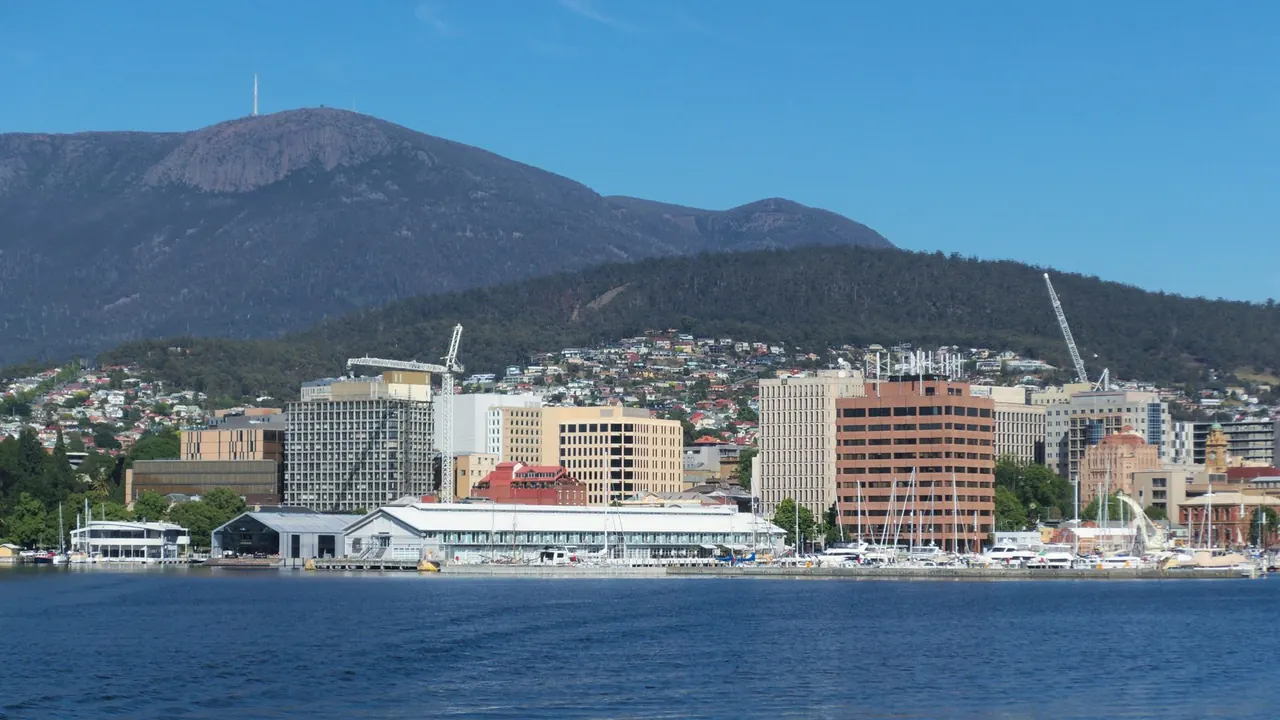
Hobart below kunanyi/Mount Wellington
- Nature & outdoors85
- Food & drink60
- Day trips60
Photo: Gary Houston, CC0
Match
48
Every category weighted equally
- Beach & sun47
- Culture & arts49
- Food & nightlife45
- Family trip51
- Outdoors55
- Relax & unwind49
- Shopping & style47
- On a budget47
Hobart in twelve categories
Our verdict on each, scored 0 to 100 against the same fixed benchmark cities, so a score means the same thing on every page.
Beaches & swimming. Scores 30 out of 100.
Food & drink. Scores 60 out of 100.
Culture & sights. Scores 56 out of 100.
Nightlife. Scores 30 out of 100.
Nature & outdoors. Scores 85 out of 100.
Day trips. Scores 60 out of 100.
Good for families. Scores 56 out of 100.
Getting around. Scores 45 out of 100.
Shopping & style. Scores 38 out of 100.
Affordability. Scores 35 out of 100.
Live music & performing arts. Scores 45 out of 100.
Wellness & relaxation. Scores 40 out of 100.
Hobart category by category
Beaches & swimming
30Hobart has sand within easy reach. Sandy Bay and Long Beach sit in the suburbs along the Derwent, Kingston Beach is a short drive south, and Seven Mile Beach runs along a long, quiet curve east of the airport. The estuary and the sheltered bays are calm, and locals do swim on warm summer days.
The water is the limit. It rarely gets above 18°C even in February, and many days in a Tasmanian summer are cool and windy. Visitors use the beaches for walks and the odd brisk dip, not to spend whole days in the water. Anyone who wants a swimming vacation should look elsewhere.
Food & drink
60Eating in Hobart is about the island's produce: Pacific oysters and mussels from the east coast and the channel, salmon, scallop pies, cheeses, cherries and berries in summer, and lamb and beef from the midlands. The waterfront around Constitution Dock has fish punts selling fish and chips straight off the water. On Saturdays Salamanca Market and the Sunday farm-gate markets in the city centre are the easiest way into it.
Tasmania makes good cool-climate pinot noir, sparkling wine and single malt whisky, and you can taste all three in town or a short drive out in the Coal River Valley. The restaurant scene is good for a city this size, with some ambitious produce-driven kitchens, but it is small. The range of cuisines is narrow and many places shut early.
Culture & sights
56Hobart is Australia's second-oldest city, and its early colonial past is still visible. Salamanca Place is a row of 1830s sandstone warehouses on the waterfront. Battery Point, just behind it, is a hill of Georgian cottages and narrow lanes that you can walk in an hour. The Tasmanian Museum and Art Gallery covers convict history, the Aboriginal people of the island and Antarctic exploration. The Cascades Female Factory, part of the UNESCO-listed convict sites, tells the story of the women transported here.
The main sight is MONA, the Museum of Old and New Art, cut into a riverside cliff upstream and usually reached by ferry. It is provocative and unlike any other museum. Beyond these, the list is short. Two or three days cover the city.
Nightlife
30Going out in Hobart mostly means pubs, wine bars and whisky bars. The sandstone strip of Salamanca Place and the waterfront fill up on Friday and Saturday nights, and Elizabeth Street in North Hobart has a run of pubs and small bars with more of a local crowd. There are a few late venues for dancing, but no club scene to speak of.
Outside weekends and the busy summer stretch around New Year, when yacht crews and visitors fill the docks, the city winds down early. It suits a long dinner and a nightcap more than a big night out.
Nature & outdoors
85Nature is Hobart's strongest card. kunanyi/Mount Wellington rises straight behind the city to about 1,270m, with a summit road, a dense network of trails through fern gullies and up to the dolerite Organ Pipes, and mountain-bike descents back towards town. The Derwent estuary is good for kayaking and sailing, and the Royal Tasmanian Botanical Gardens and the Queens Domain sit right by the centre.
Within a couple of hours you reach some of Australia's wildest coast. The Tasman Peninsula has the highest sea cliffs in the southern hemisphere and the multi-day Three Capes walk. Bruny Island has penguins, white wallabies and seabird cruises along its cliffs. Mount Field National Park has tall eucalypt forest and waterfalls, and the Huon Valley leads to the edge of the southwest wilderness. Summers are mild, and the mountain can see snow in any season.
Day trips
60The best day out is Port Arthur, about an hour and a half away on the Tasman Peninsula. It is a convict prison settlement with ruined stone buildings set in green parkland, and the most visited of Australia's UNESCO-listed convict sites. Richmond is half an hour away, a Georgian village with the country's oldest bridge still in use, surrounded by the cellar doors of the Coal River Valley.
To the south, the Huon Valley and the D'Entrecasteaux Channel have orchards, cider makers and small waterside towns. A car ferry crosses to Bruny Island for oysters, cheese and lighthouse views. Inland, the sandstone midland towns of Ross and Oatlands make a pleasant drive north. A car is almost essential for all of these.
Good for families
56Hobart is small, calm and safe, and that makes it easy with children. The biggest draw is the wildlife sanctuaries a short drive north, where children can see Tasmanian devils, wombats and feed kangaroos. The state museum's natural history galleries, the Botanical Gardens, the docks with their fishing boats and the Saturday market all fill a day in the city.
There is no large aquarium, zoo or theme park, and the cool, changeable weather limits beach days. Families get the most from Hobart with a car and a taste for the outdoors: short forest walks, penguin and wildlife spotting and the open grounds of Port Arthur go down well with older children.
Getting around
45The centre is compact. The CBD, the waterfront, Salamanca Place and Battery Point are all within a short walk of each other, though the streets climb steeply away from the water. Public transport is a modest bus network, plus a ferry up the river to MONA and a few commuter ferries across the Derwent.
The bus to the top of kunanyi/Mount Wellington is limited, and once you leave the city a car becomes the practical choice. Port Arthur, Richmond, Bruny Island and the national parks are all much easier with a hire car, and most visitors who come for more than the city rent one.
Shopping & style
38The shopping event is Salamanca Market on Saturdays, when hundreds of stalls line the sandstone waterfront selling produce, woodwork, knitwear, ceramics and jewellery. During the week, craft galleries in the Salamanca warehouses sell Huon pine and other Tasmanian timbers, local glass and art. You will also find Tasmanian gin, whisky and leatherwear to take home.
The CBD's malls and arcades cover everyday needs, and there are a few independent fashion and homeware shops in North Hobart and Sandy Bay. There is no luxury or flagship shopping, so treat it as a place for local crafts and food rather than fashion.
Affordability
35Hobart has Australian price levels. Restaurant meals, wine, beer and coffee are expensive by European standards. Accommodation is somewhat cheaper than in the largest mainland cities, but rooms fill up through summer and around the New Year yacht race, and the good waterfront hotels charge accordingly.
Car hire and fuel add to the cost, since most visitors need a car. Entry to the main sights is not cheap either. Market food, pub meals, self-catering with excellent local produce and the free walks on the mountain and around the city keep a stay manageable.
Live music & performing arts
45Hobart's stages are small but old. The Theatre Royal, a Georgian playhouse from the colonial era, is the oldest working theatre in Australia, and its intimate horseshoe auditorium hosts drama, comedy and touring productions. The Tasmanian Symphony Orchestra plays a regular season at the Federation Concert Hall on the waterfront. A modest circuit of pubs in North Hobart and around the docks puts on live bands and folk music.
Much of the city's artistic reputation comes from the festivals linked to MONA. They bring experimental music, performance and art to the city, and the midwinter one gives the cold, dark months an unusual pull. Outside the festival seasons, the choice on any given night is limited, so it helps to plan around the orchestra's calendar or the theatre's programme.
Wellness & relaxation
40Hobart's appeal for rest is its pace. It is a small, quiet city of sandstone and water, where mornings on the waterfront, long lunches and walks in the Botanical Gardens set the rhythm. Clean air and uncrowded streets make it easy to slow down.
There is no bathing tradition of its own. Wellness means hotel spas, a few day spas and massage studios, and hardy winter swims in the Derwent that some locals favour. Visitors looking for something more restorative tend to book a lodge or retreat in the surrounding countryside rather than stay in town.
When should you go?
Pick a month to see what it is like. The climate figures are measured averages, not a forecast.
Hobart in July
Daytime high, °C
Rainfall in the month, mm
The whole year
Shaded against this city’s own year: the deepest cell is its best month for that figure and the palest its weakest.
Temperature and rainfall are climate normals, averaged over the years shown. Hobart: 1991-2020 normals, Hobart (2.3 km from centre).
Before you go
| Measure | Hobart |
|---|---|
| Official language | English |
| Currency | Australian Dollar (AUD) |
| Sockets | I230 V, 50 Hz |
| Driving side | Left |
| Time zone | UTC+10, UTC+11 in summer |
| Emergency number | 000 |
| Elevation | 54 m |
| Main airport | Hobart International Airport (HBA)17 km from centre9 non-stop destinations |
| Public holidays this year | 9 days |
By the numbers
| Measure | Hobart |
|---|---|
| City population | 197,451 |
| People per km² | 116 |
| Museums within 10 km | 8 |
| UNESCO World Heritage sites within 50 km | 1 |
| Swim season, months above 21 °C | None |
Compare Hobart with
Every comparison with a written verdict behind it.