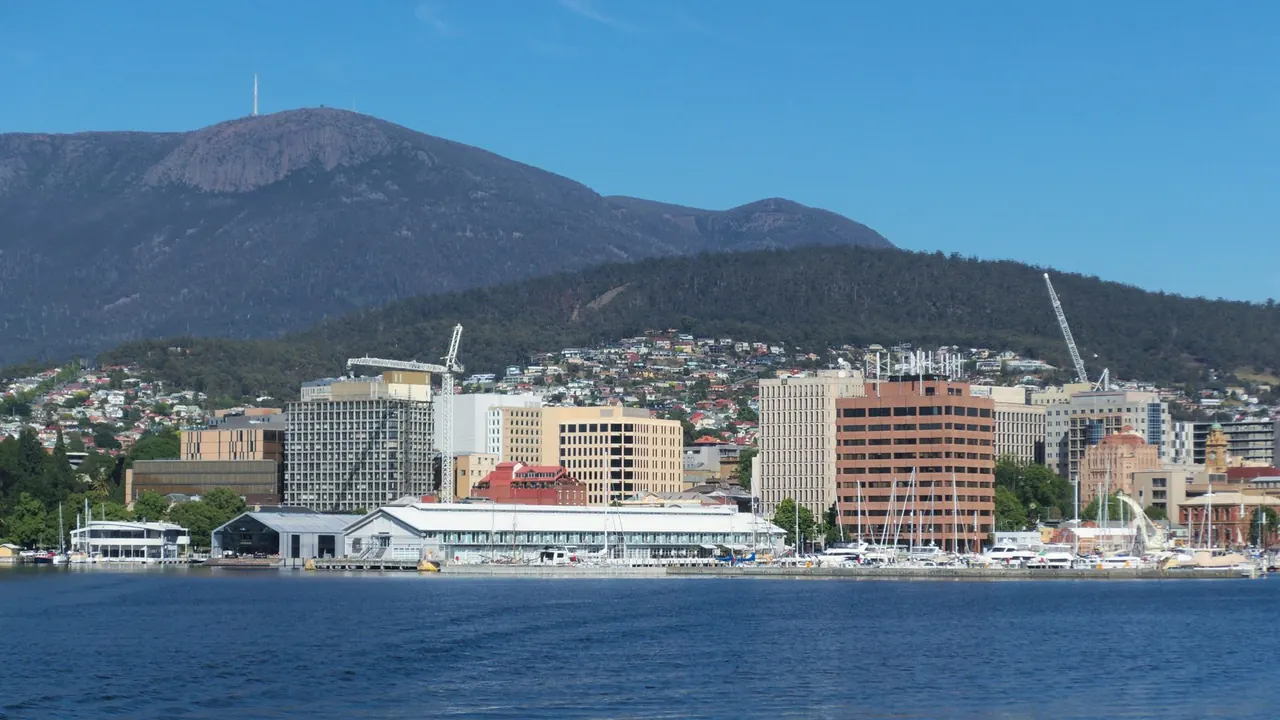
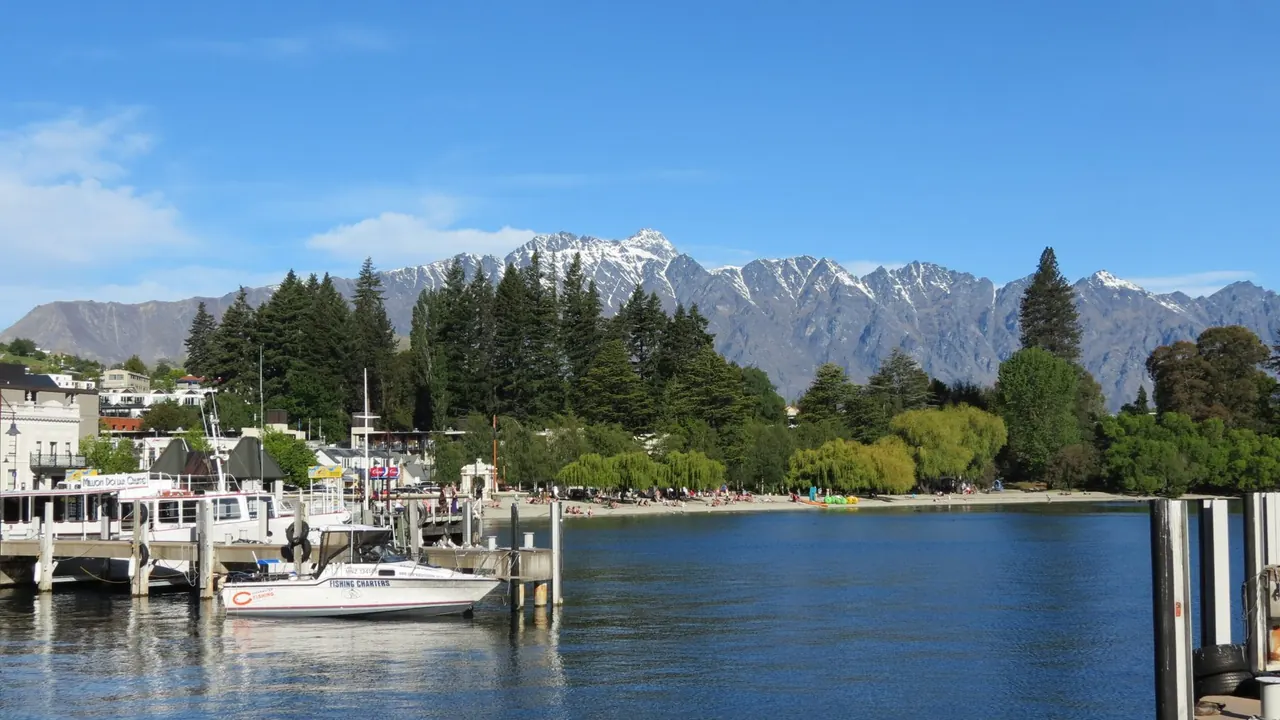
Photos: Hobart by Gary Houston, CC0; Queenstown by Robert Linsdell, CC BY 2.0, cropped.
Hobart or Queenstown?
Our verdict in twelve categories, each scored against the same fixed benchmark cities, and the climate month by month, so you can choose for your trip.
Choose Hobart for
- culture and sights
- live music and the arts
- food and drink
Hobart is the better pick for a trip that mixes landscape with history, food and an evening out at the theatre. Its sandstone waterfront, Georgian lanes, convict sites and the provocative MONA give it a cultural depth Queenstown cannot match, and island oysters, cool-climate wine and whisky make eating well part of the point. It is also the gentler choice on the wallet, and the wild coast of the Tasman Peninsula and Bruny Island still lies within a couple of hours.
Choose Queenstown for
- nightlife
- nature and the outdoors
- families
Queenstown belongs to people who want the mountains to be the whole trip. The Remarkables, Lake Wakatipu, the Routeburn Track and the ski fields are on the doorstep, and the bungy, jet-boat and paragliding operations make it the place for adrenaline. Evenings are livelier too, with a young crowd filling the bars after a day outside, though there is little to see in town and everything costs a lot.
Scoreboard
Twelve categories on one fixed scale from 0 to 100. The shaded stretch is the gap between the two.
Your match
Pick a travel style or drag the sliders, and both match scores follow your weighting.
Wins on culture and sights and live music and the arts with your weighting.
Wins on nightlife and nature and the outdoors with your weighting.
What matters to you?
Category by category
What the scores mean for a trip.
Beaches & swimming
Neither city is a place to plan swimming around, but Hobart offers more. It has proper sand at Long Beach, Kingston Beach and Seven Mile Beach, and the sheltered estuary is calm enough for a brisk sea swim on a warm day.
Queenstown has no sea at all. Its snowmelt lake stays colder still, so swimming means a quick plunge off the jetty or from the small shingle beach. Lake Hayes and Moke Lake are the gentler option in midsummer.
Food & drink
Hobart eats better and more distinctively. Its food comes from the island itself: oysters and mussels from the channel, salmon, scallop pies, midland lamb, Salamanca Market and the fish punts at Constitution Dock. Coal River Valley pinot, sparkling wine and single malt whisky round it out.
Queenstown has more casual choice than its size suggests, from burger counters and pie shops to lodge-style dining, but nothing you could call a local cuisine. Its strength is the Gibbston Valley cellar doors, where a long lunch among the vines is the best meal of the trip.
Culture & sights
There is a wide gap here. Hobart is Australia's second-oldest city. It has Salamanca's 1830s warehouses, Battery Point's cottages, the Cascades Female Factory and the state museum's convict and Antarctic galleries, and MONA is reason enough to come on its own. Two or three days are well spent.
Queenstown was built for the scenery around it. The 1912 TSS Earnslaw and a few gold-rush stone buildings fill a morning, and the gold-rush story is told better in Arrowtown than in town.
Nightlife
Queenstown has the livelier nights. Seasonal workers, backpackers and skiers keep the dance bars around Shotover and Camp streets going past midnight, especially on winter weekends, and it suits groups in their twenties.
Hobart's evenings are quieter and more grown-up: wine and whisky bars along Salamanca Place and pubs on Elizabeth Street in North Hobart. Outside weekends and the New Year yacht season, it winds down early.
Nature & outdoors
Both are outstanding, but Queenstown is in a class of its own. The Remarkables and Lake Wakatipu start at the edge of town, the Routeburn Track and Mount Aspiring are a drive away, and this is where commercial bungy began at the Kawarau Bridge. Paragliding, canyon swings and winter skiing are all close by.
Hobart's outdoors are wild in their own way. kunanyi/Mount Wellington and its Organ Pipes rise behind the city, the Tasman Peninsula has its huge sea cliffs, and Bruny Island has penguins. The appeal is coast and forest rather than alpine adventure.
Day trips
Hobart has the stronger and more varied excursions. Port Arthur's convict ruins are a day out of real historical weight, Georgian Richmond is half an hour away, and the Huon Valley orchards, Bruny Island and the midland towns of Ross and Oatlands add variety.
Queenstown has charming Arrowtown, Wanaka over the Crown Range and the wine country around Cromwell, but the list thins quickly after that. Milford Sound is magnificent, but it means three to four hours on the road each way.
Good for families
Both are safe, small and easy with children, but the days look different. In Hobart, the highlights are wildlife sanctuaries with Tasmanian devils and wombats, the museum's natural history galleries and running around the open grounds of Port Arthur.
Queenstown's family days are more active: the gondola and luge, jet boats, the lake steamer and ski schools in winter. The adventure activities it is famous for have age and weight limits that leave younger children out.
Getting around
Both centres are walkable and both make a car close to essential beyond town. Hobart's waterfront, CBD and Battery Point sit close together on steep streets, and there is a pleasant ferry up the river to MONA.
Queenstown's centre is flatter and even smaller, and buses and a water taxi reach Frankton and Arrowtown. Its single road into town gets congested at busy times, and winter mountain driving can call for chains.
Shopping & style
Salamanca Market is the best browsing in either place. On Saturdays its stalls fill the sandstone waterfront with woodwork, knitwear, ceramics and jewellery, and through the week the warehouse galleries sell Huon pine, Tasmanian glass and local art. A few independent fashion and homeware shops in North Hobart and Sandy Bay add a little variety.
Queenstown's Mall is mostly for kitting out an adventure. It has specialist ski, bike and hiking shops, merino and possum-wool knitwear, greenstone jewellery and plenty of souvenirs. Apart from a summer craft market by the wharf, there is little to browse beyond that.
Affordability
Hobart is the cheaper stay of the two, though neither is cheap. Meals, wine and coffee carry Australian prices, and car hire and fuel are the main extra, since most visitors drive out to Port Arthur or Bruny Island. Self-catering with Tasmanian produce, market food, pub meals and the free trails on kunanyi/Mount Wellington keep the bill in check.
Queenstown costs more on almost every count. Rooms and meals carry resort prices, highest in the ski season and over Christmas. The activities that are the reason to come, from bungy jumps and jet boats to scenic flights and lift passes, add up quickly. Hostels, apartments with kitchens and the Frankton supermarkets help, but it is a trip to budget for carefully.
Live music & performing arts
Hobart has a real if small stage life. The Theatre Royal's Georgian horseshoe auditorium has drama, comedy and touring shows, the Tasmanian Symphony Orchestra plays at the Federation Concert Hall, and the festivals linked to MONA bring experimental music and performance.
Queenstown has no orchestra, opera or theatre season. Live music mostly means a covers band in an après bar, with touring acts and the winter festival as occasional extras.
Wellness & relaxation
Neither has a bathing tradition, so relaxation depends on the pace each place sets. In Hobart, the quiet city itself is restful: waterfront mornings, long lunches and the Botanical Gardens, with countryside retreats for anything more.
Queenstown's best unwinding is a private cedar hot tub above the Shotover or a lodge spa after skiing. Its centre is built around adrenaline, so a calm stay means sleeping out towards Arrowtown or Glenorchy.
When should you go?
Pick your month. The climate figures are measured averages, not a forecast.
Hobart in July
Queenstown in July
Daytime high, °C
Rainfall in the month, mm
Where the figures come from
Queenstown has no weather station within reach, so its figures come from a gridded climate model rather than a measured record, and read a broad area rather than the city itself.
Temperature and rainfall are climate normals, averaged over the years shown. Hobart: 1991-2020 normals, Hobart (2.3 km from centre). Queenstown: 1991-2020 normals, TerraClimate 4 km grid at the town, no weather station within 90 km.
Both cities are at their warmest from December to March, but neither is a beach destination. Hobart reaches about 23°C in January, with long sunny days, and the Derwent never gets warm enough for more than a quick dip. It is also fairly dry all year, with the wettest weather in late winter and spring. Autumn is mild, calm and good for walking, and winter is cool but rarely harsh, which suits a city break built around museums and the midwinter festival.
Queenstown is a few degrees cooler in summer and much colder in winter, with July highs near 6°C. That cold is what brings the snow, so June to September is ski season. Rain falls in every month and is much heavier than in Hobart, peaking around 200mm in September. For walking and cycling, the best months are late summer and the clear, still days of autumn.
Which traveller are you?
On a culture and arts trip, Hobart is the clear choice. It has the convict sites, the state museum, Battery Point's Georgian lanes, MONA, Australia's oldest working theatre and a symphony orchestra. Queenstown has a steamship and a gondola view, and little else.
For an outdoors trip, Queenstown wins. You can walk from the town streets onto Ben Lomond, reach the Routeburn Track by car, ride through the gorges and jet-boat the Shotover canyons. Hobart's mountain and coast are superb, but they are a step behind.
For skiers, only Queenstown makes sense. Coronet Peak and the Remarkables are a short drive away, Cardrona and Treble Cone are a little further, and the bars are busy with après-ski in the evenings. Hobart's mountain gets snow but has no ski fields.
Before you go
| Measure | Hobart | Queenstown |
|---|---|---|
| Official language | English | English, New Zealand Sign Language, Māori |
| Currency | Australian Dollar (AUD) | New Zealand Dollar (NZD) |
| Sockets | I230 V, 50 Hz | I230 V, 50 Hz |
| Driving side | Left | Left |
| Time zone | UTC+10, UTC+11 in summer | UTC+12, UTC+13 in summer |
| Emergency number | 000 | 111 |
| Elevation | 54 m | 324 m |
| Main airport | Hobart International Airport (HBA)17 km from centre9 non-stop destinations | Queenstown Airport (ZQN)7 km from centre7 non-stop destinations |
| Public holidays this year | 9 days | 12 days |
By the numbers
| Measure | Hobart | Queenstown |
|---|---|---|
| City population | 197,451 | 29,000 |
| People per km² | 116 | - |
| Museums within 10 km | 8 | 0 |
| UNESCO World Heritage sites within 50 km | 1 | 0 |
| Swim season, months above 21 °C | None | - |
Where else could you go?
Every comparison below shares a destination with this one, so you can follow Hobart or Queenstown somewhere new.