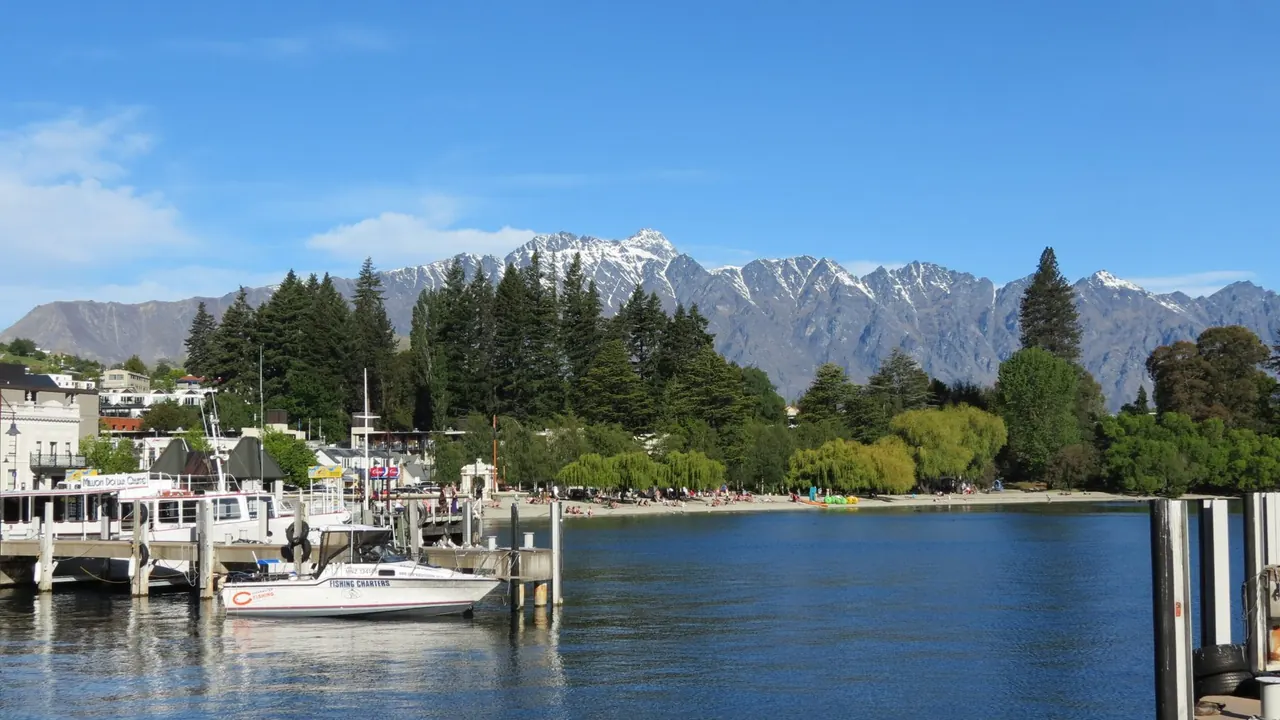
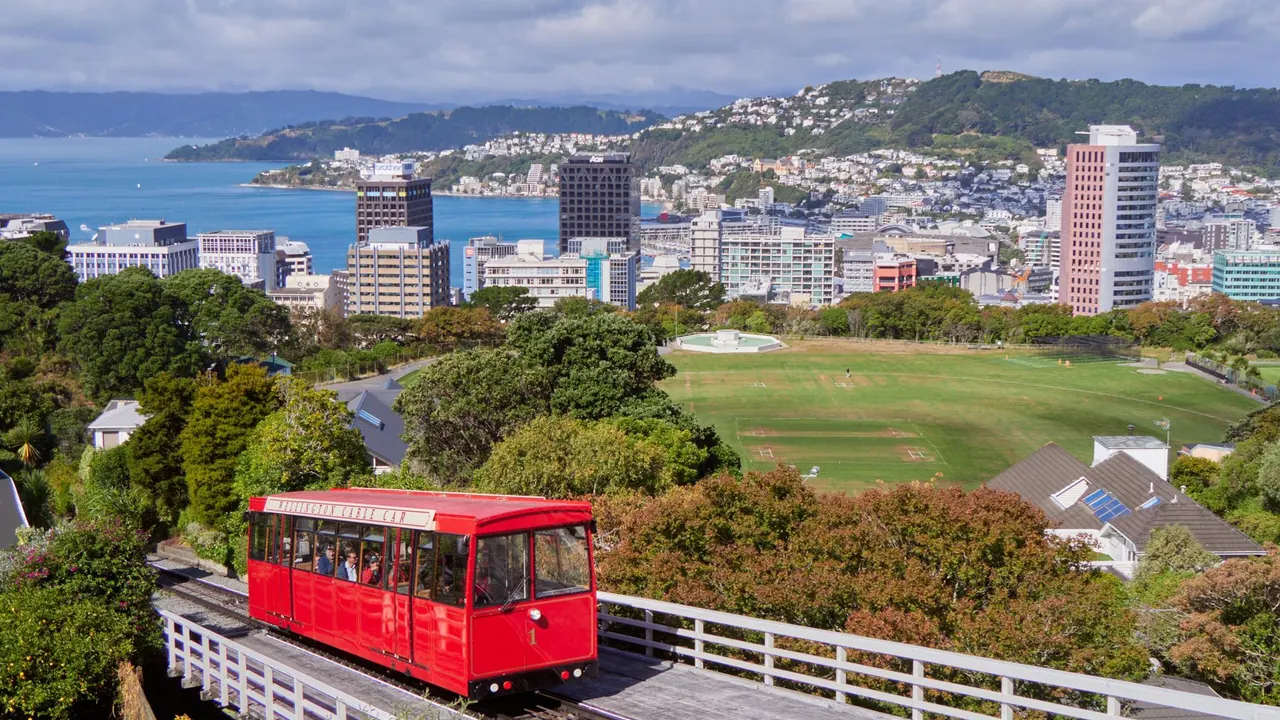
Photos: Queenstown by Robert Linsdell, CC BY 2.0, cropped; Wellington by lumoplank, CC0.
Queenstown or Wellington?
Our verdict in twelve categories, each scored against the same fixed benchmark cities, and the climate month by month, so you can choose for your trip.
Choose Queenstown for
- nature and the outdoors
- wellness
- day trips
Queenstown is the pick for anyone whose ideal day is spent outside. Mountains, a glacial lake, ski fields, long walking tracks and the whole run of bungy, jet boats and paragliding sit within easy reach of the town. In return, there is little in the way of museums, theatre or city life, and the bill for activities mounts quickly.
Choose Wellington for
- live music and the arts
- culture and sights
- getting around
Wellington suits travellers who want a real city with good outdoor country close by. Te Papa, the national orchestra and ballet, a strong coffee and craft-beer culture and a centre you can cross on foot make it the better choice for a few days of culture, food and easy walking. It also has the milder winter of the two.
Scoreboard
Twelve categories on one fixed scale from 0 to 100. The shaded stretch is the gap between the two.
Your match
Pick a travel style or drag the sliders, and both match scores follow your weighting.
Wins on nature and the outdoors and wellness with your weighting.
Wins on live music and the arts and culture and sights with your weighting.
What matters to you?
Category by category
What the scores mean for a trip.
Beaches & swimming
Neither city is a beach destination, but Wellington gives you more to work with. Oriental Bay is a sandy city beach with pontoons a short walk from the centre, sheltered coves such as Scorching Bay lie around the Miramar Peninsula, and Lyall Bay has surf. The sea is still cool and the wind can spoil a warm day.
Queenstown has no sea at all. Its swimming means a bracing jump into snow-fed Lake Wakatipu from the town jetty or the shingle of Queenstown Bay. Shallower Lake Hayes and Moke Lake warm up a little more in midsummer.
Food & drink
Wellington eats better and more widely. Its strengths are serious coffee roasters, craft-beer taprooms around Cuba Street, Cook Strait seafood, and the Asian and Pacific cooking found in the lanes and at the weekend markets.
Queenstown has many places to eat for its size, but they lean towards burgers, pies and polished lodge dining, all at resort prices. Its trump card is wine. A long lunch at a Gibbston Valley cellar door is a highlight of the region, and Wellington's nearest equivalent is Martinborough, more than an hour away.
Culture & sights
The gap here is wide. Wellington is the capital and has the national museum: Te Papa covers Māori and Pacific heritage and the country's story, and around it are the Beehive, the wooden Gothic church of Old St Paul's and the vast timber Government Buildings. That is two or three days of solid sightseeing.
Queenstown has the 1912 steamship TSS Earnslaw, a few gold-rush stone buildings and the gondola view, and that is about all. Its history is told better in Arrowtown, and a museum lover will be finished in a morning.
Nightlife
The two are broadly level, but the evenings feel quite different. Queenstown's nights are run by seasonal workers, backpackers and skiers, so they mean après-ski, packed dance bars and a loud centre on winter weekends. A couple of nights covers most of it.
Wellington splits in two. Courtenay Place is for late bars and student crowds, while Cuba Street has craft beer, cocktails and wine bars for a calmer, creative crowd. It is better for conversation than dancing, and it goes quiet midweek.
Nature & outdoors
Queenstown is one of the great outdoor bases. The Remarkables rise above the lake, Ben Lomond can be climbed from town, the Routeburn and Mount Aspiring National Park lie beyond Glenorchy, and Coronet Peak and Cardrona are close for skiing. It is also where commercial bungy began, with jet boating, canyon swings and skydiving all based here.
Wellington is unusually wild for a capital. It has the town belt, birdsong at Zealandia, the seal colony at Red Rocks, good mountain biking at Makara Peak and Kapiti Island offshore. These are rewarding half days rather than alpine adventures, and the wind often decides the plan.
Day trips
Queenstown has the better outings close by. The gold-rush village of Arrowtown is about twenty minutes away, Wanaka is an hour over the Crown Range, and the wine and orchard country around Cromwell makes an easy day. Milford Sound is the famous long day out.
From Wellington, the main outing is to the Wairarapa, crossing the Remutaka hills to cycle Martinborough's vineyards and browse Greytown's colonial main street. The Kāpiti Coast makes a gentle trip by train, but beyond that most places are too far for a day.
Good for families
Both cities are safe and easy with children, but the days look different. Queenstown is about doing things: the gondola and luge, kiwi at the wildlife park, jet-boat rides and ski schools in winter. The headline thrills have age and weight limits, though, and the big sights involve long drives.
Wellington's days centre on Te Papa's hands-on galleries and earthquake house, with the zoo, Zealandia, the cable car and the Space Place observatory close by. It needs a wet-weather plan, and the steep streets are hard going with a pushchair.
Getting around
Wellington is much easier without a car. The flat strip from the railway station to Courtenay Place takes under half an hour to walk, and the cable car, suburban trains, harbour ferry and buses cover most of the rest. The hills and the wind are the only real obstacles.
Queenstown's centre takes minutes to cross on foot, and buses and a water taxi reach Frankton and Arrowtown. The wineries, trailheads, Glenorchy and Wanaka really call for a car, though. The single Frankton road clogs at busy times, and winter mountain driving can mean carrying chains.
Shopping & style
Wellington offers more varied browsing. Lambton Quay has chain stores and New Zealand fashion labels, while Cuba Street adds vintage clothing, record shops, second-hand books and small design stores.
Queenstown's Mall is mostly ski, bike and hiking shops, along with souvenirs and a summer craft market by the wharf. Merino and pounamu greenstone are worth buying in either city, but neither is a reason to travel.
Affordability
Both are expensive, but Queenstown is the harder on a budget. Its rooms are dearer in the ski season and late summer, and the activities that draw people there, such as jet boats, scenic flights and lift passes, add up quickly.
Wellington is costly too, especially when conferences fill the hotels. Its main sights cost nothing, however: Te Papa, the Botanic Garden, the town belt and the waterfront are all free, and you can walk everywhere in the centre. That keeps daily spending lower.
Live music & performing arts
Here Wellington is far stronger. It is home to the New Zealand Symphony Orchestra at the Michael Fowler Centre and the Royal New Zealand Ballet at the St James Theatre. Add busy professional and fringe theatres, small music venues around Cuba Street, and the New Zealand Festival of the Arts in late summer.
In Queenstown, an evening of live music usually means a covers band in a pub. The winter festival is its one real burst of performance.
Wellness & relaxation
Neither city has thermal springs, but Queenstown does relaxation a little better. Options include private cedar hot tubs above the Shotover River, lodge spas around the lake and towards Arrowtown, and the quiet at the head of the lake in Glenorchy. For real calm, it is best to stay outside the busy adventure town.
In Wellington, unwinding is low-key: the heated harbourside pool at Oriental Bay, a day spa, the Botanic Garden or a long coffee by the water.
When should you go?
Pick your month. The climate figures are measured averages, not a forecast.
Queenstown in July
Wellington in July
Daytime high, °C
Rainfall in the month, mm
Where the figures come from
Queenstown has no weather station within reach, so its figures come from a gridded climate model rather than a measured record, and read a broad area rather than the city itself.
Wellington's sunshine is measured 47 km from the centre, at Paraparaumu Aerodrome.
Temperature and rainfall are climate normals, averaged over the years shown. Queenstown: 1991-2020 normals, TerraClimate 4 km grid at the town, no weather station within 90 km. Wellington: 1961-1990 (sunshine 1991-2020) normals, Wellington Aerodrome Aws (5.3 km from centre).
Queenstown has the sharper seasons. In January and February days reach about 20°C, which is warm enough for walking, cycling and a quick plunge in the lake, and autumn stays pleasant into April. From May it turns cold, and by July highs are around 6°C. That suits the ski fields rather than strolling the lakefront. Rain falls all year but is heaviest in spring, and September is the wettest month at about 200mm.
Wellington is milder and more even. Winter highs seldom drop below 12°C and summer runs a degree or so warmer than in Queenstown, so its streets are comfortable to walk in any month. The wet months are June to August, while January to March are the driest and sunniest. The sea peaks at about 17°C in February, so swimming is for calm days only.
Which traveller are you?
On an outdoors trip, Queenstown is the clear choice. Alpine walks such as the Routeburn, cycle trails through the gorges, ski fields in winter and the original Kawarau bungy all start close to town, and Wellington's coastal and bush walks cannot match that scale.
For a culture and arts trip, Wellington is far ahead. Te Papa, Parliament and Old St Paul's fill the days, and the national orchestra, the Royal New Zealand Ballet and busy theatres fill the evenings. Queenstown has almost nothing comparable to offer.
For a short city break, Wellington works better. Its flat centre is walkable from end to end, and the cafés, Cuba Street bars, waterfront and cable car all fit into two or three days without a car. In Queenstown, much of the best is a drive out of town.
Before you go
| Measure | Queenstown | Wellington |
|---|---|---|
| Official language | English, New Zealand Sign Language, Māori | English, New Zealand Sign Language, Māori |
| Currency | New Zealand Dollar (NZD) | New Zealand Dollar (NZD) |
| Sockets | I230 V, 50 Hz | I230 V, 50 Hz |
| Driving side | Left | Left |
| Time zone | UTC+12, UTC+13 in summer | UTC+12, UTC+13 in summer |
| Emergency number | 111 | 111 |
| Elevation | 324 m | 0 m |
| Main airport | Queenstown Airport (ZQN)7 km from centre7 non-stop destinations | Wellington International Airport (WLG)5 km from centre20 non-stop destinations |
| Public holidays this year | 12 days | 12 days |
By the numbers
| Measure | Queenstown | Wellington |
|---|---|---|
| City population | 29,000 | 216,200 |
| People per km² | - | 487 |
| Museums within 10 km | 0 | 12 |
| UNESCO World Heritage sites within 50 km | 0 | 0 |
| Swim season, months above 21 °C | - | None |
Where else could you go?
Every comparison below shares a destination with this one, so you can follow Queenstown or Wellington somewhere new.