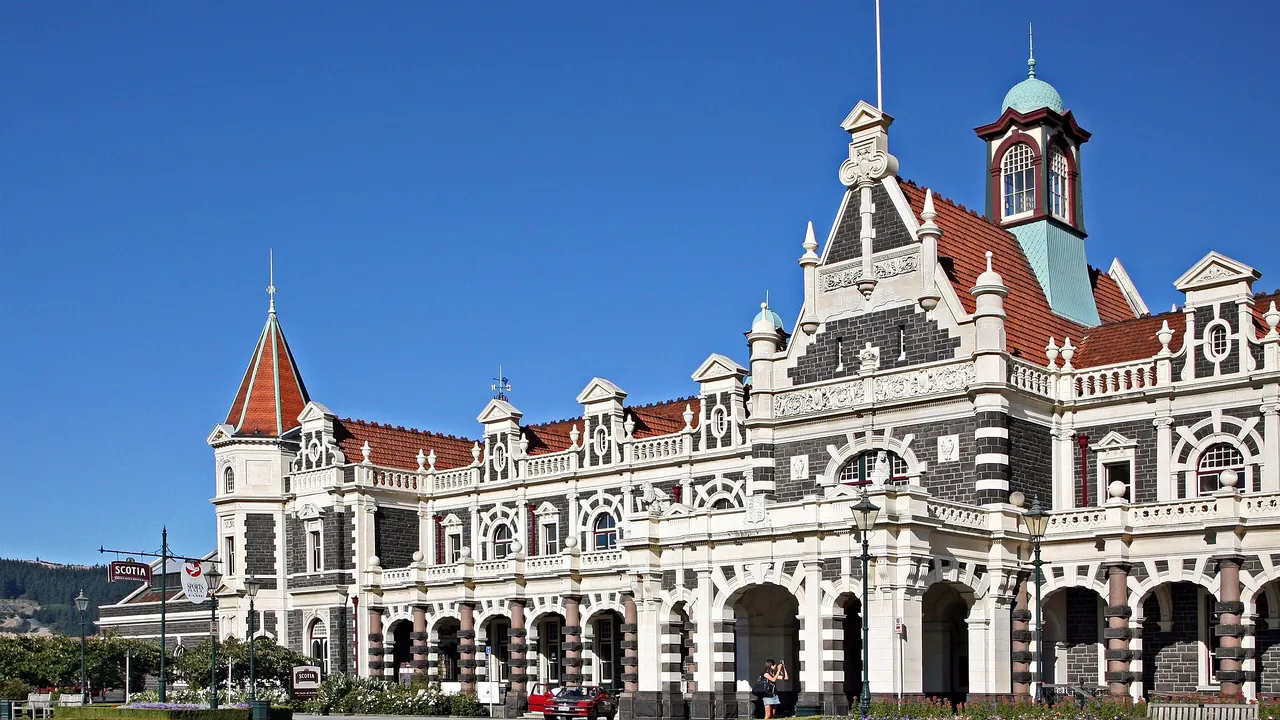
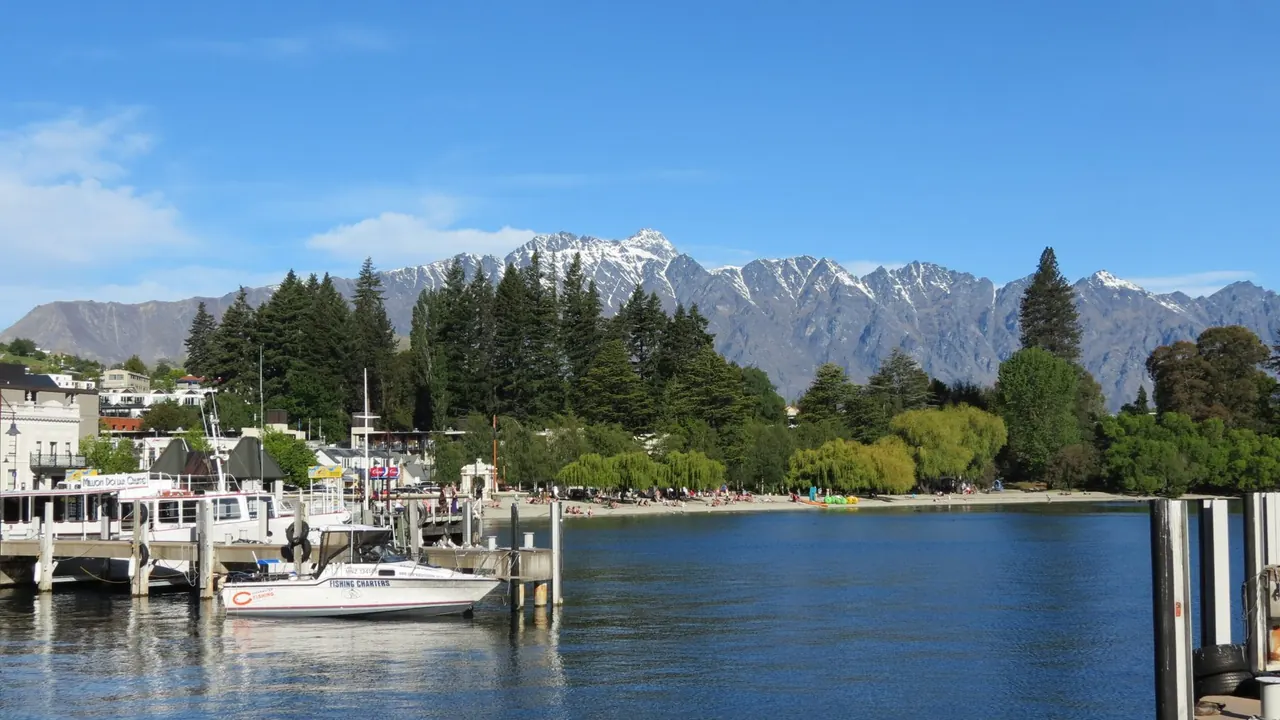
Photos: Dunedin by W. Bulach, CC BY-SA 4.0, cropped; Queenstown by Robert Linsdell, CC BY 2.0, cropped.
Dunedin or Queenstown?
Our verdict in twelve categories, each scored against the same fixed benchmark cities, and the climate month by month, so you can choose for your trip.
Choose Dunedin for
- culture and sights
- prices
- live music and the arts
Dunedin suits travellers who want a proper city with its history still standing. The Victorian and Edwardian streets around the Octagon, good museums, an easy university-town café life and rare wildlife on its edge make for a calm, varied trip. It is also the cheaper of the two, and the albatross and penguins of the Otago Peninsula give it a strong outdoor draw of its own.
Choose Queenstown for
- nature and the outdoors
- nightlife
- wellness
Choose Queenstown when the landscape is the whole point. Lake Wakatipu, the Remarkables, the Routeburn Track and the ski fields put mountains, trails and adrenaline sports right outside the door, and the bars are livelier after dark. It costs a good deal more, and there is very little in the way of museums or theatre.
Scoreboard
Twelve categories on one fixed scale from 0 to 100. The shaded stretch is the gap between the two.
Your match
Pick a travel style or drag the sliders, and both match scores follow your weighting.
Too close to call, 2 points apart
Wins on culture and sights and prices with your weighting.
Wins on nature and the outdoors and nightlife with your weighting.
What matters to you?
Category by category
What the scores mean for a trip.
Beaches & swimming
Dunedin at least has a real ocean beach inside the city. St Clair and St Kilda make one long stretch of sand, and quieter bays lie out on the peninsula. The Southern Ocean water is cold and full of rips, though, so you walk the esplanade, swim between the flags, or use the heated saltwater pool.
Queenstown has no sea at all. Its shore on Lake Wakatipu is shingle, and the snowmelt water allows only a short plunge, often off the town jetty. Lake Hayes and Moke Lake are gentler in midsummer, but neither city is a place to plan a beach trip around.
Food & drink
The two are level on food, but they feed you differently. Dunedin eats from its own region. The Saturday farmers' market by the railway station brings in Otago cheese, stone fruit and smoked fish, and the southern table means blue cod, Bluff oysters in season and the toasted cheese roll. Its drink is beer, from the old Rattray Street brewery to small craft producers, though dinner has little depth beyond that.
Queenstown cooks for the people passing through, so it has more variety but fewer local roots, with burger counters, pie shops, ramen and lodge-style plates of lamb and venison. Its drink is pinot noir. Gibbston Valley is a short drive up the Kawarau Gorge, and a long lunch at a cellar door among the vines is the meal Dunedin cannot match.
Culture & sights
Here Dunedin is far ahead. The Flemish-style railway station, First Church, the bluestone university clocktower, Olveston and Larnach Castle add up to one of the country's most complete Victorian cityscapes. Otago Museum, Toitū and the Public Art Gallery fill two or three unhurried days.
Queenstown has the 1912 steamship TSS Earnslaw, a few 1860s stone buildings and the gondola view, but no museum worth planning around. Its gold-rush story is better told in Arrowtown.
Nightlife
Queenstown has more going on after dark. Seasonal workers, backpackers and skiers keep the dance and cocktail bars around Shotover and Camp streets loud past midnight, with après-ski in winter and lakefront terraces in summer. It is mostly bars rather than clubs, though.
Dunedin's nights depend on the university term. The Octagon and George Street fill from Thursday to Saturday while students are in town, but otherwise the evening means a quiet craft beer or a glass of wine in the old warehouse streets.
Nature & outdoors
Both are excellent, but Queenstown is in a class of its own. Mountains rise straight from the lakeshore. There are walks up Ben Lomond, the Routeburn and Mount Aspiring National Park, gorge cycle trails, jet boats and the bungy jumping that began at Kawarau Bridge, with ski fields within a short drive in winter.
Dunedin's appeal is wildlife rather than mountains. It has the only mainland royal albatross colony at Taiaroa Head, yellow-eyed penguins at dusk, sea lions at Sandfly Bay and the Orokonui forest birds. Tunnel Beach and Mount Cargill add good walks.
Day trips
Queenstown has the better choice of outings close by. Arrowtown, with its miners' cottages and Chinese settlement, is twenty minutes away, Wanaka is an hour over the Crown Range, and the vineyards of Gibbston and Bannockburn are close. Milford Sound is the famous long day out.
Dunedin's best outing is Oamaru's limestone harbour quarter and its blue penguins, by way of Moeraki, with Port Chalmers nearer to hand. The old goldfields towns of Clyde and Alexandra can be reached from both cities, but from Dunedin they make a much longer day.
Good for families
Both are safe, easy places with children, but the fun is of a different kind. Dunedin is about animals and learning: albatross, sea lions, penguin tours at dusk, the hands-on science centre and butterfly house at Otago Museum, and the aviary in the Botanic Garden. Cold summer days and steep streets with a pushchair are the downside.
Queenstown has more rides. Families come for the gondola and luge, jet boats, the lake steamer, kiwi at the wildlife park and ski schools in winter. Many of the headline thrills have age and weight limits, however.
Getting around
Dunedin's problem is its terrain. The flat valley floor links the Octagon, the station and the university, and buses reach St Clair and the Botanic Garden. Beyond that the streets climb steeply, and the albatross colony, the penguin beaches and Larnach Castle lie along narrow peninsula roads with little public transport.
Queenstown's bottleneck is the single Frankton road into town, which backs up at busy times. The lakefront centre is tiny, buses run to Arrowtown and the airport, and a water taxi crosses to Frankton. Wineries, Glenorchy and the trailheads still call for a car, and winter mountain roads sometimes need chains.
Shopping & style
Dunedin is the place for local design and books. Its designers favour dark, practical clothing, a long-running student fashion show keeps that scene going, and second-hand bookshops and vintage stores suit its literary reputation.
Queenstown sells the mountains instead: specialist ski, bike and hiking shops around the Mall, greenstone jewellery, possum-wool knitwear and galleries of landscape painting, plus a lakefront craft market on summer weekends. In either city, shopping fills an afternoon rather than shaping the trip.
Affordability
Dunedin is the easier city on the budget. Its rooms are among the cheaper in the country, students keep the cafés reasonably priced, and the museum, art gallery, Toitū and gardens are free. Guided wildlife tours and car hire are where the money goes.
Queenstown charges resort prices for rooms, meals and drinks, and its jet boats, bungy jumps, scenic flights and lift passes are the reason to come. Self-catering and the free trails help, but it still takes careful budgeting.
Live music & performing arts
Dunedin has the livelier stage. It still has the Dunedin Sound, the jangly 1980s indie rock carried on in small venues, plus touring shows and comedy at the Regent on the Octagon and orchestral concerts in the Town Hall. Even so, the programme follows the university calendar.
In Queenstown, live music mostly means a covers band in an après bar, with occasional touring acts and the concerts of the winter festival.
Wellness & relaxation
Queenstown does pampering better, though neither has a bathing tradition. It has private cedar hot tubs above the Shotover River, a soak after a day on the slopes, lodge spas around the lake and the quiet of Glenorchy, but you need to stay out of the busy, adrenaline-driven centre.
Dunedin offers calm rather than treatments: the heated saltwater pool facing the surf at St Clair, light traffic, and slow mornings in the Botanic Garden.
When should you go?
Pick your month. The climate figures are measured averages, not a forecast.
Dunedin in July
Queenstown in July
Daytime high, °C
Rainfall in the month, mm
Where the figures come from
Dunedin has no weather station within reach, so its figures come from a gridded climate model rather than a measured record, and read a broad area rather than the city itself.
Queenstown has no weather station within reach, so its figures come from a gridded climate model rather than a measured record, and read a broad area rather than the city itself.
Temperature and rainfall are climate normals, averaged over the years shown. Dunedin: 2001-2020 normals, NASA POWER reanalysis grid, no weather station within 90 km. Queenstown: 1991-2020 normals, TerraClimate 4 km grid at the town, no weather station within 90 km.
Dunedin's weather hardly changes through the year. Summer days peak at about 16°C, winter is cool rather than harsh, and the rain is light and spread evenly across the months. The streets are comfortable for walking in any season, but it is never warm enough for a real beach day. The sea reaches only 14°C even in late summer, so swimmers head for the heated pool at St Clair.
Queenstown swings much further. Highs reach about 20°C in January and February, which are the best months for walking, cycling and a quick dip in the smaller lakes. July days are cold at around 6°C, which suits skiers rather than sightseers. It is also the wetter of the two all year, and spring is its wettest season, with about 200mm in September, so late spring and summer are the safer choice for a walking trip.
Which traveller are you?
On a culture and arts trip, Dunedin is the clear choice. It has gold-rush architecture, Olveston and Larnach Castle, Otago Museum and Toitū, and an indie music tradition still played in its pubs. Queenstown's sights are done in a morning.
For an outdoors trip, Queenstown wins. You can climb Ben Lomond from town, the Routeburn starts beyond Glenorchy, and there are gorge cycle trails, jet boats, bungy and four ski fields close by. Dunedin's peninsula wildlife is superb, but its range is narrower.
On a trip with a tight budget, Dunedin goes much further. Students keep its cafés cheap, and its gardens, galleries and coastal walks cost nothing. Queenstown charges resort prices for rooms and meals, and its activities are the main expense.
Before you go
| Measure | Dunedin | Queenstown |
|---|---|---|
| Official language | English, New Zealand Sign Language, Māori | English, New Zealand Sign Language, Māori |
| Currency | New Zealand Dollar (NZD) | New Zealand Dollar (NZD) |
| Sockets | I230 V, 50 Hz | I230 V, 50 Hz |
| Driving side | Left | Left |
| Time zone | UTC+12, UTC+13 in summer | UTC+12, UTC+13 in summer |
| Emergency number | 111 | 111 |
| Elevation | 19 m | 324 m |
| Main airport | Dunedin International Airport (DUD)24 km from centre4 non-stop destinations | Queenstown Airport (ZQN)7 km from centre7 non-stop destinations |
| Public holidays this year | 12 days | 12 days |
By the numbers
| Measure | Dunedin | Queenstown |
|---|---|---|
| City population | 106,200 | 29,000 |
| People per km² | 32 | - |
| Museums within 10 km | 11 | 0 |
| UNESCO World Heritage sites within 50 km | 0 | 0 |
| Swim season, months above 21 °C | None | - |
Where else could you go?
Every comparison below shares a destination with this one, so you can follow Dunedin or Queenstown somewhere new.
- Christchurchvs Dunedin
- Christchurchvs Queenstown
- Wellingtonvs Dunedin
- Wellingtonvs Queenstown
- Rotoruavs Dunedin
- Rotoruavs Queenstown