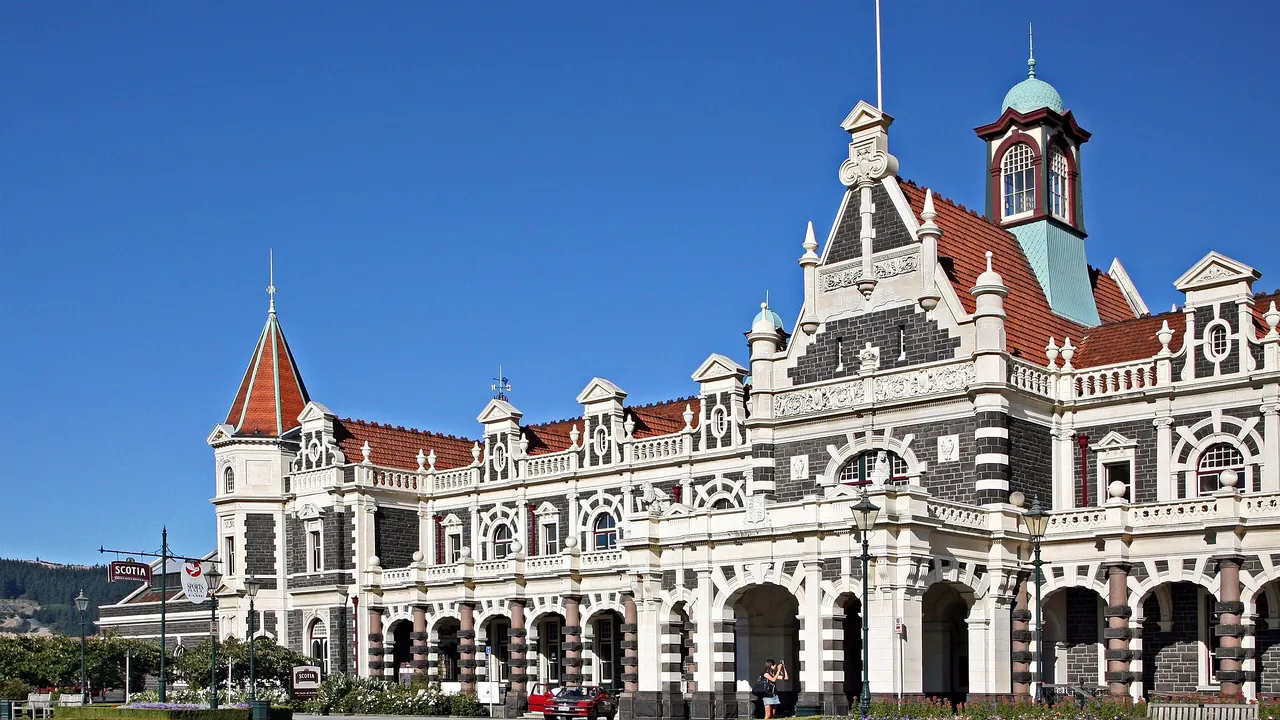
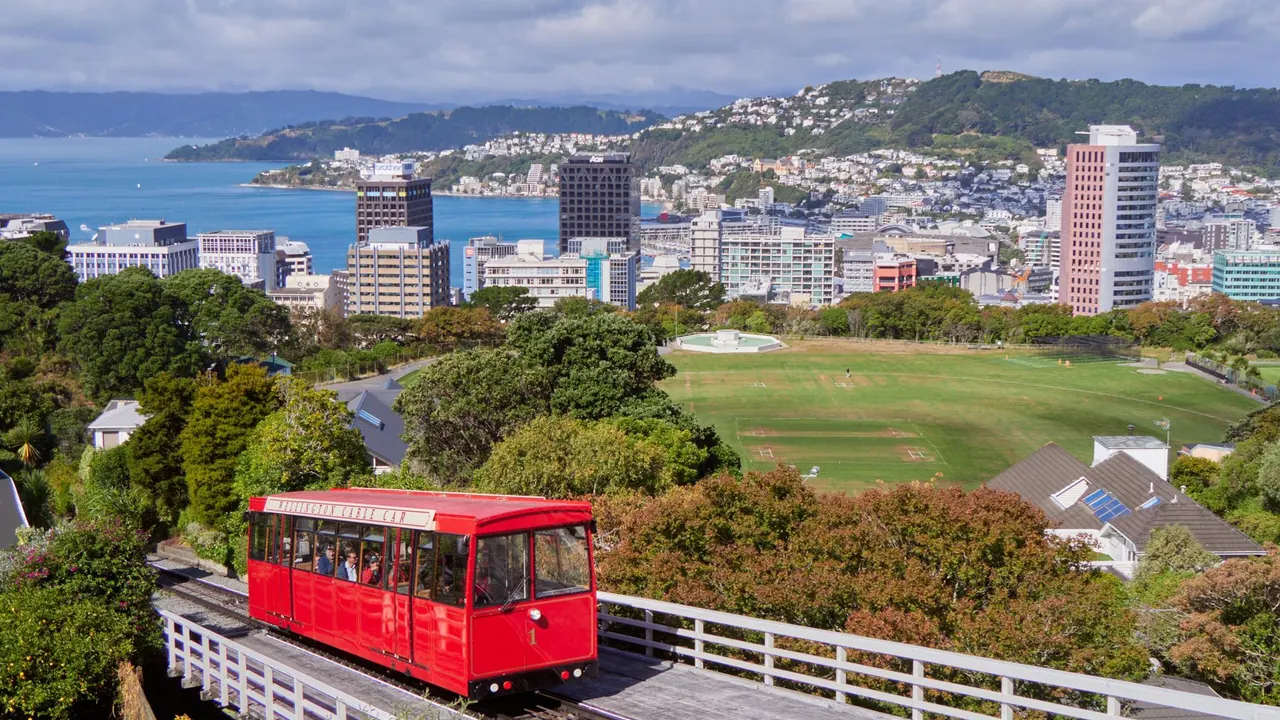
Photos: Dunedin by W. Bulach, CC BY-SA 4.0, cropped; Wellington by lumoplank, CC0.
Dunedin or Wellington?
Our verdict in twelve categories, each scored against the same fixed benchmark cities, and the climate month by month, so you can choose for your trip.
Choose Dunedin for
- culture and sights
- prices
- nature and the outdoors
Dunedin suits travellers who come for wildlife and history. Albatross, penguins and sea lions live on the Otago Peninsula at the edge of the city. The gold-rush Victorian streets and Larnach Castle are best seen slowly, and rooms cost a little less. Plan to hire a car or book a tour, and expect quiet evenings.
Choose Wellington for
- getting around
- live music and the arts
- food and drink
For a livelier city stay, Wellington is the better choice. You eat and drink better there, and it has the national orchestra, the national ballet and theatre all year. Its sights sit along a waterfront you can walk, and Te Papa and the cable car keep children busy. The cost is wind, and heavy rain in winter.
Scoreboard
Twelve categories on one fixed scale from 0 to 100. The shaded stretch is the gap between the two.
Your match
Pick a travel style or drag the sliders, and both match scores follow your weighting.
Wins on culture and sights and prices with your weighting.
Wins on getting around and live music and the arts with your weighting.
What matters to you?
Category by category
What the scores mean for a trip.
Beaches & swimming
Neither city is a beach destination, and there is little between them. Dunedin has one long open surf beach, St Clair and St Kilda. The swell and rips mean you swim between the flags, and the water never gets much warmer than 14°C.
Wellington's sand is more sheltered. Oriental Bay, right by the centre, has pontoons and a diving platform, and the Miramar Peninsula has calm coves such as Scorching Bay. The water is a few degrees warmer, but the wind can spoil a good morning.
Food & drink
Wellington is the better place to eat. It has a deeper coffee and roasting culture, and taprooms are spread around Cuba Street and Te Aro. Cuba Street's lanes, Courtenay Place and the waterfront offer casual, international and smarter dinners, with strong Asian and Pacific influences.
Dunedin's food is more limited. Its strengths are the Saturday farmers' market by the railway station, southern dishes such as blue cod and the cheese roll, and a long brewing tradition. Dinner around the Octagon is fine but there is not much choice.
Culture & sights
Dunedin has more history to see. Gold-rush money left a Victorian and Edwardian city that is still largely standing, from the Flemish-style railway station and the bluestone university clocktower to Olveston and Larnach Castle. Otago Museum and Toitū cover Māori, Pacific and settler history.
Wellington is a young capital, and its sights centre on Te Papa, the national museum. Close by are Parliament and the Beehive, Old St Paul's and the huge timber Government Buildings. Te Papa is an outstanding museum, but the streets around it are mostly modern.
Nightlife
Wellington is the better city for a night out. Courtenay Place has late bars and a few clubs, Cuba Street's lanes have cocktail and wine bars, and everything is close enough to move between on foot. Friday and Saturday nights are properly busy.
In Dunedin, going out depends on the university calendar. In term, the Octagon and George Street are busy from Thursday to Saturday, but outside term the city goes quiet early. Neither city suits serious clubbing.
Nature & outdoors
Both cities have wild country right on their doorstep and are equally strong for the outdoors. What differs is what you do there. Dunedin is about wildlife: albatross at Taiaroa Head, yellow-eyed penguins at dusk, sea lions on the peninsula beaches, and the sea-carved sandstone of Tunnel Beach.
Wellington suits more active days. There is mountain biking at Makara Peak and in the town belt, the climb up Mount Victoria, the coast walk to the Red Rocks seals, and Zealandia's forest birds a bus ride away. Both are windy and changeable, so bring layers.
Day trips
Day trips from Dunedin are mostly about heritage, and from Wellington mostly about wine. From Dunedin, the best outing is Oamaru's white limestone Victorian harbourside, where little blue penguins come ashore at dusk, with the fishing village of Moeraki on the way. Inland are the gold-rush towns and, if you have a long day, the Central Otago vineyards.
From Wellington, the best choice is the Wairarapa over the Remutaka hills. You can cycle between Martinborough's pinot noir vineyards and walk the colonial main streets of Greytown and Featherston. Beyond these, neither city offers much. A car is easiest from either, though the train reaches Wellington's Kāpiti Coast.
Good for families
Both are safe, relaxed cities with children, but Wellington has more to fill the days. Te Papa has hands-on galleries and an earthquake house. Add the waterfront playgrounds, the cable car up to the Space Place observatory and the zoo, and there are good plans for both wet and dry days.
Dunedin's best moments with children involve animals, such as watching albatross over Taiaroa Head or a penguin tour at dusk. The Otago Museum science centre and butterfly house help on a wet day. Summers are cooler, and the peninsula needs a car, so a family trip here takes more planning.
Getting around
Wellington is much easier without a car. Most sights lie on its flat central strip, which you can walk from the railway station to Courtenay Place in under half an hour. The cable car, suburban trains, the Days Bay ferry and buses cover the rest.
Dunedin's centre is also compact, but its main attractions are not in it. The albatross, the penguins and Larnach Castle are reached by narrow, winding peninsula roads with little public transport, so most visitors hire a car or book a tour that includes transport.
Shopping & style
Dunedin's shopping is mostly on George Street, which has national chains and a small local fashion scene known for dark, practical clothes. There are also second-hand bookshops and merino knitwear. That fills an hour or two, but you run out of shops quickly.
Wellington is better for an afternoon of browsing. Cuba Street and its lanes have vintage clothing, record shops and small design stores, and Lambton Quay covers the chains and New Zealand labels. Pounamu greenstone and Māori and Pacific crafts are good things to take home.
Affordability
Neither city is cheap, but Dunedin costs a little less. Rooms are reasonably priced outside graduation and big sports weekends, and the students keep cafés and casual food affordable. The wildlife tours and a hire car soon add up, though.
Wellington's central hotels are expensive, especially when conferences fill the city, and beer and wine cost a lot. The savings come from free sights such as Te Papa and a centre small enough that you rarely need transport.
Live music & performing arts
Wellington has far more to see on stage. The New Zealand Symphony Orchestra and the Royal New Zealand Ballet are based there, theatre companies perform all year, and the Festival of the Arts brings international theatre, dance and music in late summer.
Dunedin is known for the Dunedin Sound, the jangly indie rock of the 1980s, which lives on in small venues. The Regent hosts touring shows and the Town Hall holds orchestral concerts. You can usually find a gig, but there is not enough on stage to plan a trip around.
Wellness & relaxation
Neither city has a spa culture, and both offer the same simple kind of rest. Each has a heated pool by the water: Dunedin's is a saltwater pool on the St Clair esplanade facing the surf, and Wellington's is at Oriental Bay on the harbour.
Dunedin is the quieter of the two, with light traffic and few crowds. In Wellington, unwinding means a harbour walk or a bush track in the town belt, and for thermal pools you have to travel several hours north.
When should you go?
Pick your month. The climate figures are measured averages, not a forecast.
Dunedin in July
Wellington in July
Daytime high, °C
Rainfall in the month, mm
Where the figures come from
Dunedin has no weather station within reach, so its figures come from a gridded climate model rather than a measured record, and read a broad area rather than the city itself.
Wellington's sunshine is measured 47 km from the centre, at Paraparaumu Aerodrome.
Temperature and rainfall are climate normals, averaged over the years shown. Dunedin: 2001-2020 normals, NASA POWER reanalysis grid, no weather station within 90 km. Wellington: 1961-1990 (sunshine 1991-2020, rainfall 1991-2020) normals, Wellington Aerodrome Aws (5.3 km from centre).
Dunedin stays cool all year. Summer days peak at about 16°C and the sea at 14°C, so even January is better for coast walks and wildlife than for swimming. Rain is spread fairly evenly through the year, and midsummer is a little wetter than in Wellington. The driest months, July to September, are also the coldest, which makes long days outdoors raw. December to March is the time to come.
Wellington is a few degrees warmer in every month. January and February bring days near 21°C, the warmer sea of the two and the most sunshine. That is the best time for the harbour coves and coast walks, though it is still not proper beach weather. Rain builds through autumn and is heaviest from May to July, peaking at about 116mm in July, and June is the dullest month. August and September are drier and brighter again. Neither city ever gets too hot for walking the streets.
Which traveller are you?
On a food and nightlife trip, Wellington is the clear choice. It has a deep café and craft-beer culture, and Cuba Street and Courtenay Place put dinner, cocktail bars and late venues a short walk apart. Weekends stay lively whether or not the students are in term.
For a short city break without a car, Wellington also works better. Most sights lie on a flat central strip you can walk in half an hour, and Te Papa is free. In the evenings there is theatre, ballet or live music in Te Aro.
For wildlife watchers, Dunedin has something Wellington cannot match. Taiaroa Head has the only mainland royal albatross colony, yellow-eyed penguins come ashore at dusk and sea lions rest on peninsula beaches. A guided tour from the city reaches them all.
Before you go
| Measure | Dunedin | Wellington |
|---|---|---|
| Official language | English, New Zealand Sign Language, Māori | English, New Zealand Sign Language, Māori |
| Currency | New Zealand Dollar (NZD) | New Zealand Dollar (NZD) |
| Sockets | I230 V, 50 Hz | I230 V, 50 Hz |
| Driving side | Left | Left |
| Time zone | UTC+12, UTC+13 in summer | UTC+12, UTC+13 in summer |
| Emergency number | 111 | 111 |
| Elevation | 19 m | 0 m |
| Main airport | Dunedin International Airport (DUD)24 km from centre4 non-stop destinations | Wellington International Airport (WLG)5 km from centre20 non-stop destinations |
| Public holidays this year | 12 days | 12 days |
By the numbers
| Measure | Dunedin | Wellington |
|---|---|---|
| City population | 106,200 | 216,200 |
| People per km² | 32 | 487 |
| Museums within 10 km | 11 | 12 |
| UNESCO World Heritage sites within 50 km | 0 | 0 |
| Swim season, months above 21 °C | None | None |
Where else could you go?
Every comparison below shares a destination with this one, so you can follow Dunedin or Wellington somewhere new.
- Queenstownvs Dunedin
- Christchurchvs Wellington
- Christchurchvs Dunedin
- Rotoruavs Wellington
- Aucklandvs Wellington
- Queenstownvs Wellington